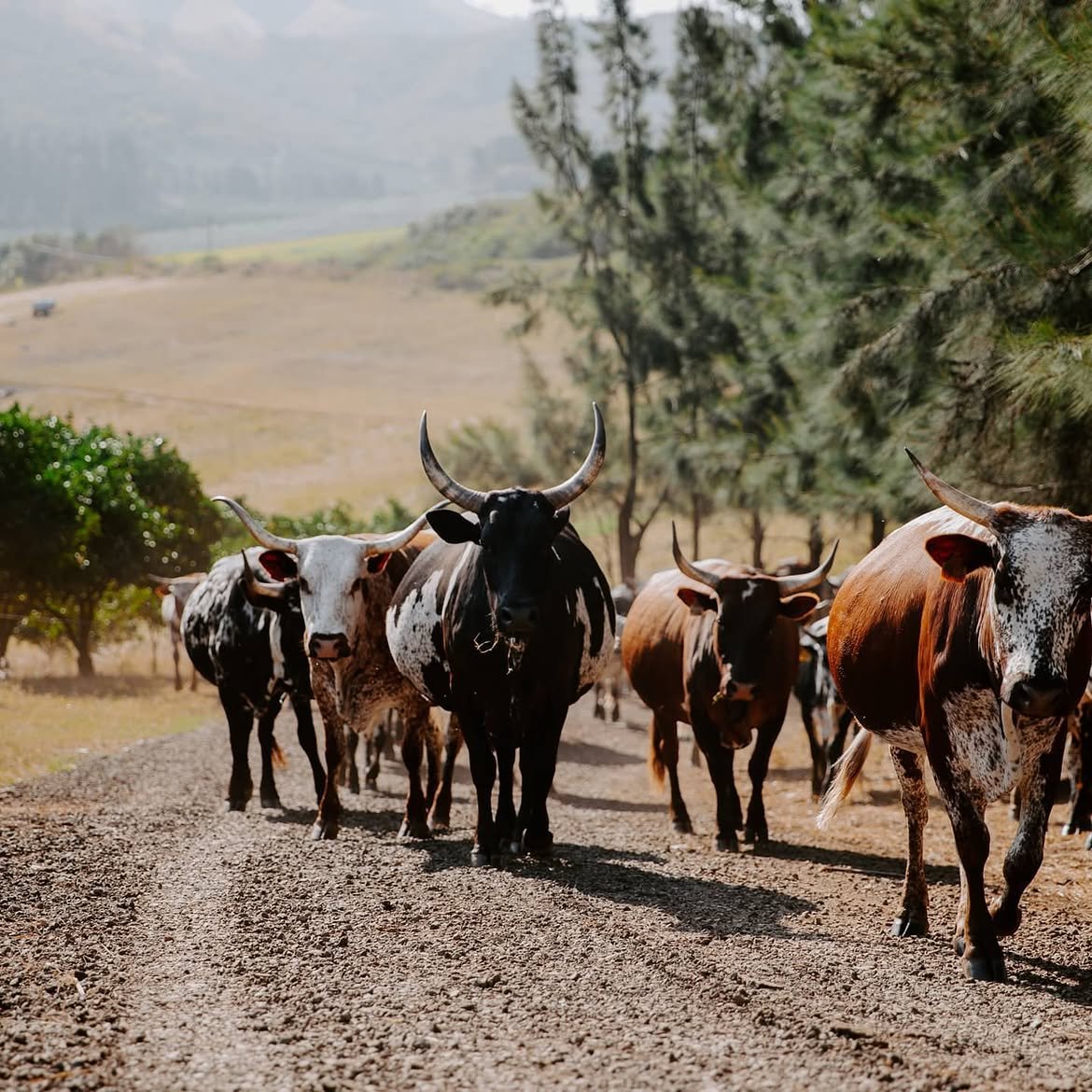
Most people who go into livestock farming in South Africa start with the animal. They see a good Bonsmara herd or a pen of Boer goats and decide that is what they want to farm. The farmers who last usually start somewhere else: with the veld, the water and the buyer. The animal comes after that.
This country is built for livestock. Most of our farmland is too dry or too unreliable for crops, but it will carry cattle, sheep and goats for generations if it is not pushed too hard. The problem is that it is very easy to push it too hard in your first two years, and very expensive to fix afterwards.
This guide to livestock farming for beginners covers what a new farmer needs to get right before the first animal comes off the truck: which species fits your farm, which breeds suit your district, the grazing, water and handling you need, the health programme, the law, and how you are going to sell.
Why Livestock Farming in South Africa Makes Sense
Drive from the Eastern Cape to Limpopo and you pass through grassland, Karoo, thornveld and bushveld. Very little of it gets enough reliable rain to grow a crop year after year. Nearly all of it can feed grazing or browsing animals when the stocking rate is right.
Livestock also gives you room to move. You do not have one harvest a year; you can sell animals in most months. You can grow a herd slowly from its own offspring. And the same farm can often carry more than one species, because cattle and sheep eat grass, goats eat bush, and pigs live in a house on a small piece of ground.
None of that makes it easy money. In a dry year the farmer who is overstocked buys feed, sells thin animals at a poor price, and damages the veld for the next season as well. The margin in livestock farming in South Africa comes from management, and most of this guide is about that.
Choosing Your Species: Cattle, Sheep, Goats or Pigs
The right species is the one your land, your pocket and your time can carry, and that you can sell. Here is how the four compare on a working farm.
| Species | Land and feed | Starting investment | Time to first income | Best suited to |
|---|---|---|---|---|
| Cattle | Most grazing per animal | Highest per animal | Slowest: nine-month pregnancy, one calf a year | Larger farms with good grass and water |
| Sheep | Grass and Karoo veld, less land per animal | Moderate | Lambs can be sold within months | Grassland and Karoo, mutton and wool markets |
| Goats | Browse bush and shrubs other stock leave | Moderate | Kids can be sold within months | Bushveld and mixed veld, strong informal demand |
| Pigs | Small area, but nearly all feed is bought | Housing and feed are the big costs | Fastest: short pregnancy, large litters | Farmers near feed suppliers and abattoirs |
Cattle
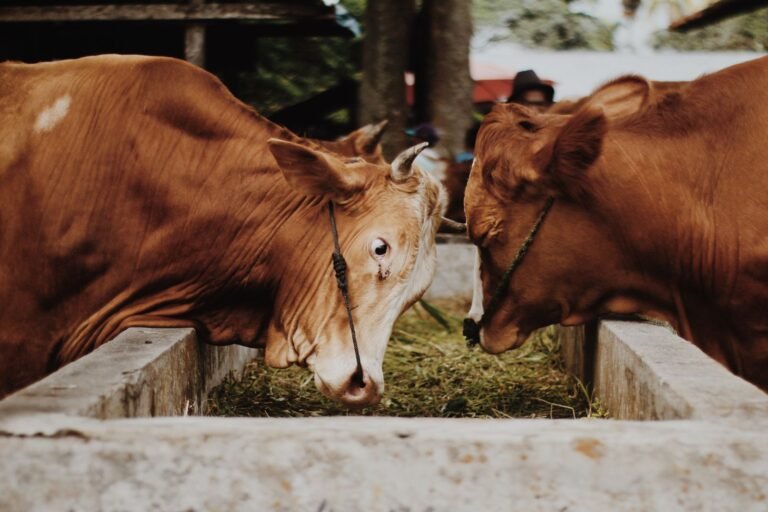
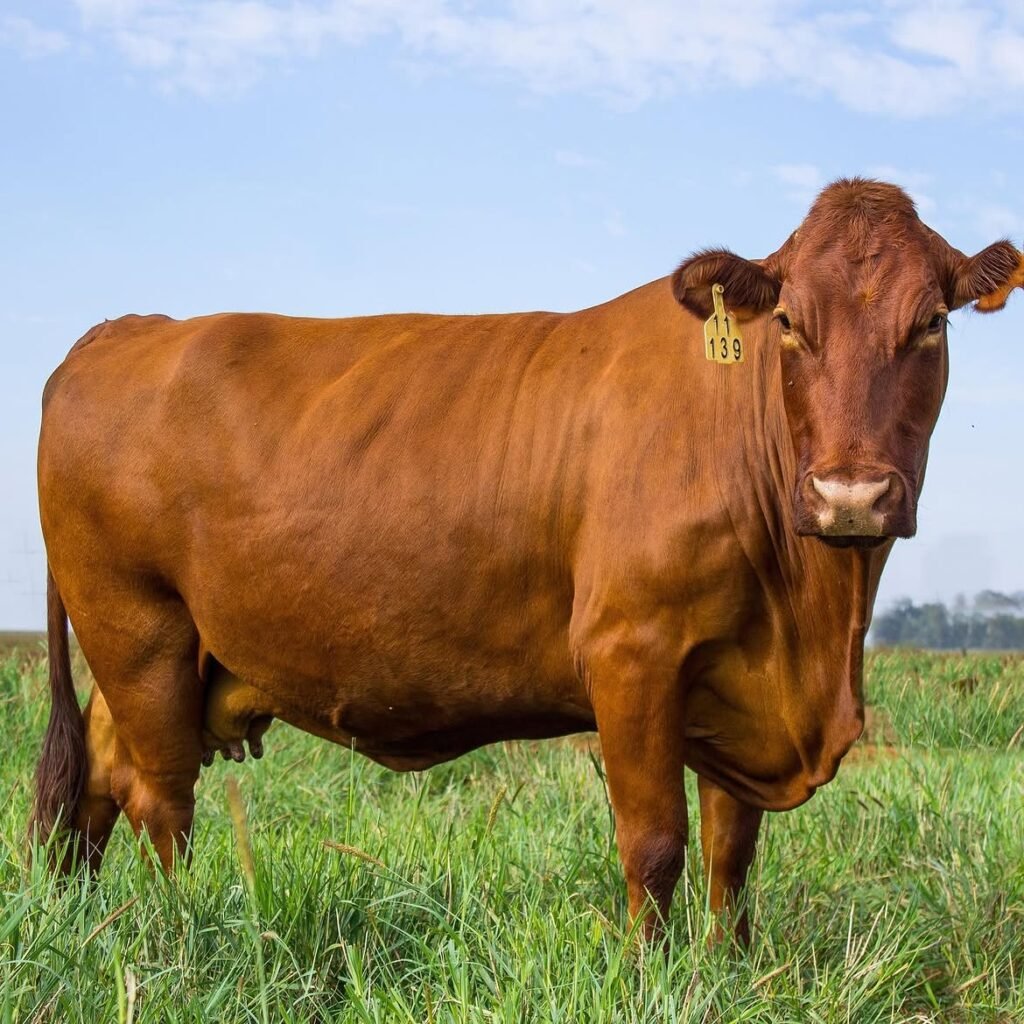
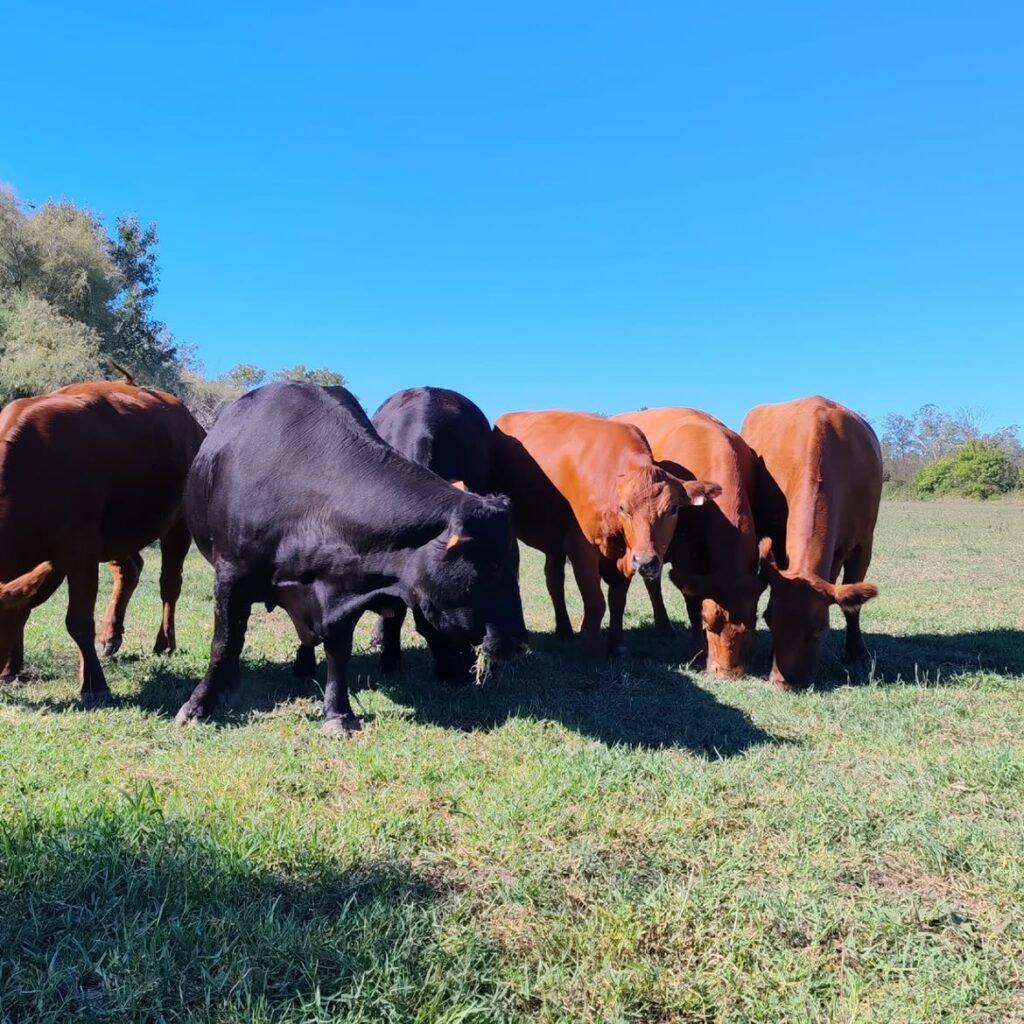
Cattle are the backbone of the industry, and they are also the slowest money. A heifer bought today may only wean her first calf two years from now, and then she gives you one calf a year if everything goes right. What you get in return is an animal that holds its value, is fairly forgiving on good veld, and can be sold as a weaner, a breeding animal or for slaughter. Most commercial beef farmers here run a cow-calf system and sell weaners to feedlots.
The breed choice matters more in cattle than anywhere else, because you live with it for years. The indigenous Nguni is small, fertile and very tick-tolerant. The Bonsmara was developed here for our conditions and is the most widely farmed beef breed in the country. The Brahman handles heat well and is often used in crossbreeding. See all the cattle breeds we supply. For the full picture, read our guide to cattle farming in South Africa.
Sheep
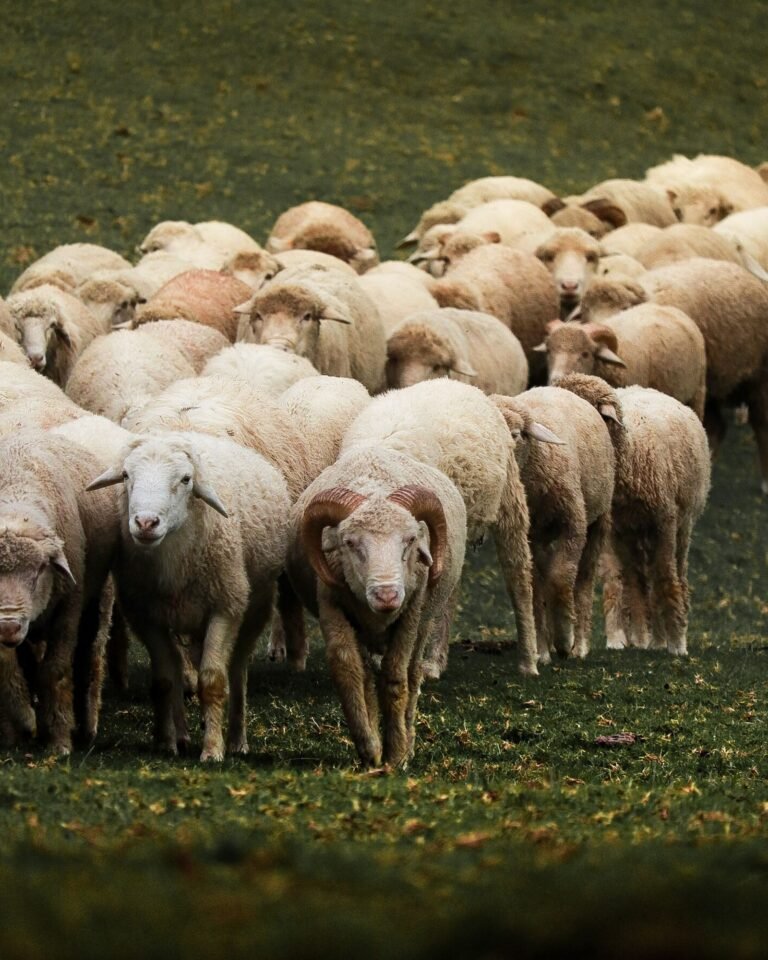
Sheep need less land per head than cattle and turn over faster, because lambs can be sold within months of birth. You choose between meat and wool. The Dorper and Meatmaster are hair sheep bred for meat, and they shed rather than needing shearing. The Merino and Dohne Merino give you a wool cheque as well as lambs, but need more handling.
The hard truth about sheep is losses. Jackals, caracals and stock thieves all find sheep easy. If you cannot kraal them at night or fence them properly, count on losing some. Read our complete guide to Dorper sheep for more on the country’s most popular meat sheep.
Goats
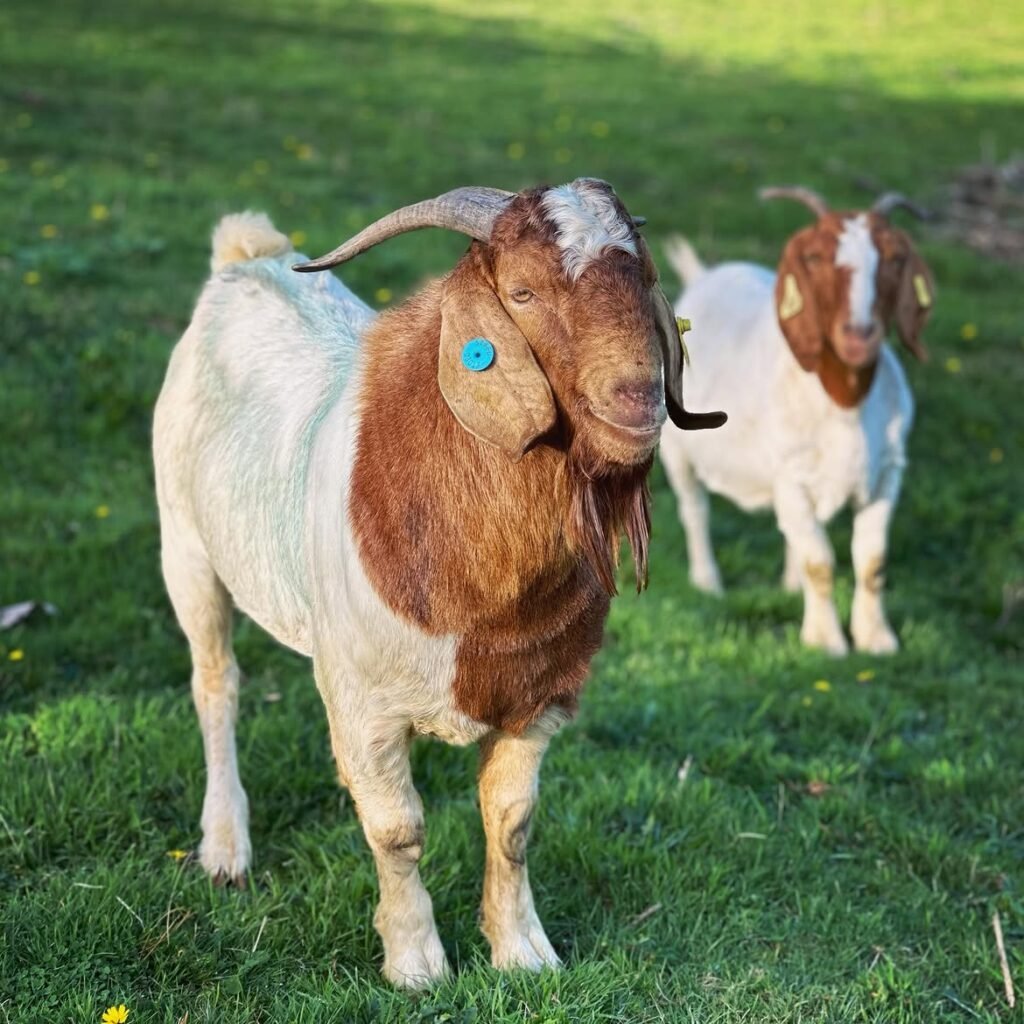
Goats eat what cattle and sheep walk past. On bush-encroached veld they turn thornbush and shrubs into meat, which makes them valuable on mixed farms. There is strong demand for goats, especially in the cultural and ceremonial market, where buyers often come to the farm. The Boer goat, Kalahari Red and Savanna are hardy meat breeds. Saanen and Toggenburg are dairy breeds for farmers who want milk or cheese. Goats are clever and good at escaping, so fencing that holds cattle will not always hold a goat. See our goat breeds. Our guide to goat farming in South Africa covers them in detail.
Pigs
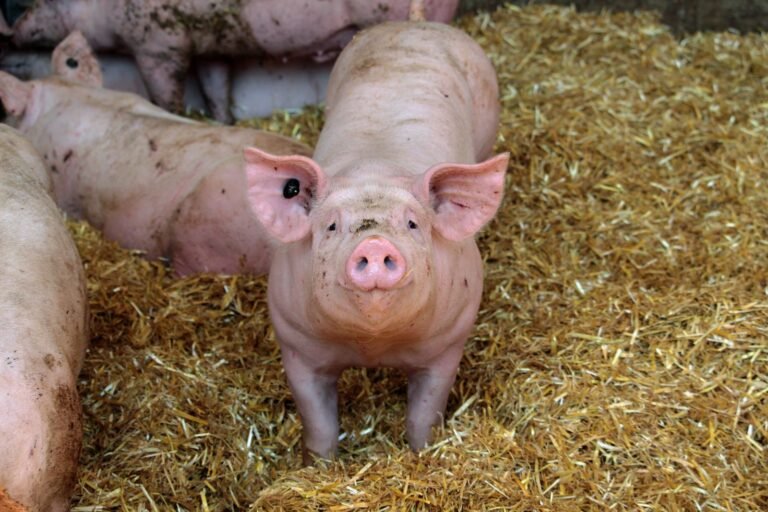
Pigs are a different business altogether. A sow can farrow twice a year with a big litter, so numbers grow quickly. But pigs do not graze their way to market; nearly everything they eat is bought, so the feed price decides whether you make money. They also need proper housing and very strict biosecurity. The Large White, Landrace and Duroc are the main commercial breeds. See our pig breeds. Our guide to pig farming in South Africa covers housing, feeding and biosecurity in detail.
Matching Breeds to Your Region and Climate
A breed that does well in the Free State grassland can battle in hot, tick-heavy bushveld, and the other way round. Adaptation shows up in fertility first: a stressed cow or ewe simply does not conceive as often. As a rough guide:
- Hot, dry areas and bushveld (parts of Limpopo, North West and the Northern Cape): heat-tolerant, tick-resistant animals such as Nguni, Brahman and Bonsmara cattle, Dorper and Meatmaster sheep, and Boer, Kalahari Red and Savanna goats.
- Grassland (much of the Free State, the Mpumalanga highveld and parts of KwaZulu-Natal): a wider range of beef breeds, and wool or dual-purpose sheep such as Merino and Dohne Merino.
- Karoo (Nama-Karoo and Succulent Karoo): hardy small stock at low stocking rates.
- Coastal and higher-rainfall areas (parts of the Eastern Cape, Western Cape and KwaZulu-Natal): more intensive systems, planted pastures and dairy.
The best advice on breeds is usually over your neighbour’s fence. Ask the farmers around you what does well on their veld, what they have given up on and why. Your local extension officer is also worth a visit, and the Agricultural Research Council publishes useful research on breeds and production systems.
How to Start Livestock Farming: What You Need Before You Buy
Land and grazing capacity
Every farm can only feed so many animals over the long run. That is its grazing capacity, measured in hectares per large stock unit (LSU). One LSU is roughly one mature cow; about six sheep or goats together make up one LSU.
The numbers vary enormously. High-rainfall grassland may carry an LSU on a few hectares; parts of the Karoo need many times that. The Department of Agriculture publishes long-term grazing capacity norms for every part of the country, and your extension officer can give you the figure for your farm. Stock below it, especially while you are learning. Overstocking is the single most common way new farmers lose money, and it hurts twice: thin animals now, and poorer veld for years. Our guide to sustainable livestock farming goes into stocking rates in more detail.
Water
Before you count animals, count litres. A cow can drink 40 litres or more a day in summer, and a sheep or goat several litres in the heat. Multiply that by your herd and by a week of borehole breakdown, and you know how much storage you need. Every camp you use needs a water point, and if everything depends on one borehole and one pump, you need a backup plan before you need it.
Fencing and handling facilities
Good fences keep animals in, keep predators and thieves out, and let you rest camps. Just as important is a crush and kraal, or proper handling pens. Every dosing, vaccination, marking, pregnancy check and loading goes through them. Working animals without a crush is slow, dangerous for people and stressful for stock, and jobs that are hard to do tend not to get done. Small stock in predator or theft areas need a secure kraal at night.
A budget that goes beyond the purchase price
The animals are only part of the bill. Add transport, fencing and water, vaccines and remedies, lick and supplementary feed for winter and dry spells, marking equipment, labour, and a cash reserve for the year things go wrong. Experienced farmers will tell you the same thing: start smaller than you can afford, and let the herd grow as your management and your veld prove they can carry it.
Animal Health: Vaccinations and Disease Prevention
On a livestock farm, prevention is cheap and treatment is expensive, if treatment works at all. Sit down with a local vet or animal health technician and draw up a vaccination and parasite programme for your species and your district, then put the dates on the calendar.
- Cattle: depending on your area, programmes commonly cover anthrax, botulism, blackquarter and lumpy skin disease. Vaccinating heifers against brucellosis is compulsory by law, using a registered vaccine (S19 for heifer calves of 4 to 8 months, or RB51).
- Sheep and goats: pulpy kidney and other clostridial diseases, and in many areas bluetongue and Rift Valley fever. Wireworm is the big one in summer rainfall areas; check eyelids for paleness and dose on need rather than by habit, so the worms do not build resistance.
- Pigs: biosecurity is the main defence, especially against African swine fever. Never feed swill containing pork, keep pig-proof fencing, and keep visitors and vehicles away from the pig houses.
Every new animal is a possible disease risk, however good it looks. Keep new arrivals apart from your own stock for at least 28 days, watch them daily, and report any suspected notifiable disease to your state veterinarian straight away.
The Rules Every Livestock Farmer Must Follow
Marking and identification
Under the Animal Identification Act (Act 6 of 2002), cattle, sheep, goats and pigs must carry a permanent identification mark registered in the owner’s name, applied by branding or tattooing in the prescribed position and size. Ear tags are useful for management but do not replace a registered mark. If you buy animals and want to sell them on, mark them with your own mark within 14 days of becoming the owner, and when you sell, give the buyer a document of identification. Register your mark with the Department of Agriculture before your first animals arrive, not after.
Documents when moving animals
The Stock Theft Act (Act 57 of 1959) requires documents of identification and removal certificates when livestock is moved or sold. Unmarked animals without papers are a problem for you and a gift to a thief. Make sure every animal you buy comes with the right paperwork, and keep your copies.
Foot-and-mouth disease movement controls
Foot-and-mouth disease (FMD) has affected several provinces in recent years, and movement controls are in force. Cloven-hoofed animals from infected or disease management areas may only move with an official veterinary movement permit issued by the state veterinarian for that consignment, and animals moved under permit must be quarantined on arrival. Standstill orders can apply in outbreak zones, and illegal movement is a criminal offence. The rules change as the situation develops, so phone your local state vet before you buy, sell or transport animals. The RPO (Red Meat Producers Organisation) also posts FMD and traceability updates for livestock farmers. A reputable seller will help you with this rather than avoid it.
How Farmers Sell Livestock in South Africa
Know who is going to buy your animals before you buy your first one. The main routes to market are:
- Auctions: the most common route for weaners, breeding stock and slaughter animals, with the price set by bidding on the day.
- Feedlots: many cattle farmers sell weaned calves straight to feedlots for finishing.
- Abattoirs: finished animals sold for slaughter, usually paid on carcass weight and grade.
- Private and informal sales: to other farmers, butchers and households, including the cultural and ceremonial market for goats and cattle, which pays well for the right animal at the right time.
- Breeding stock: if you breed good animals, you can sell replacement females and rams, bucks or bulls to other farmers.
Prices follow the red meat market and the season. Read the auction reports for your area, learn when demand peaks (festive season and cultural events push goat and sheep demand, for example), and plan your sales around it where you can.
Buying Your First Animals
Your starting animals set the level of your herd or flock for years, so this is not the place to save money. For a full step-by-step checklist, read our guide to buying livestock in South Africa. When you buy:
- Know what the animals are for (breeding, growing out or meat) before you look at them.
- Handle them. Check condition by feeling the back and ribs, open the mouth, watch them walk, check udders on females and testicles on males.
- Ask about vaccination and dosing history, and where the animals were bred. Animals from similar veld and climate settle faster.
- Make sure they carry registered marks and come with identification and movement documents.
- Get the quote, the animals and the delivery terms in writing, and pay only into the seller’s business account on an official invoice.
- Make sure the quote lists the specific animals, their age group and the delivery terms before you pay.
Our how to buy page explains how buying from DRM Livestock works, step by step.
A Simple Plan for Your First Year
If you are working out how to start livestock farming without losing money, treat the first year as a year for learning your farm, not for building the biggest herd in the district. A staged year keeps the risk small.
- Before buying (months 1 to 3): get your grazing capacity norm, fix fences and handling facilities, secure water in every camp you will use, register your identification mark, and agree a vaccination and dosing programme with a vet.
- Buying your starter group: a manageable number of good, adapted animals from a traceable source, with the right marks and papers. Quarantine them on arrival.
- First season: walk the veld and look at the animals often. Rotate camps before the grass is gone, not after. Write down every birth, death, treatment and sale. Join a local farmers’ or study group; you will learn more there in a year than from any book.
- End of the year: go through your records. Which animals weaned well? How did the veld hold up? Did costs match the budget? Use the answers to decide whether to grow, cull or change direction.
Growing slowly from a sound base is almost always cheaper than recovering from an overstocked, underprepared start.
Common Mistakes New Livestock Farmers Make
- Overstocking. Too many animals for the veld means thin stock, feed bills and damage that takes years to heal.
- Underestimating water. One borehole with no backup is one breakdown away from a crisis.
- Buying on price alone. Cheap animals that are sick, infertile or poorly adapted are the most expensive ones you will ever own.
- Skipping the paperwork. Unmarked animals and missing documents create legal trouble and make theft easy.
- No health programme. Most expensive losses are preventable with vaccines and dosing on time.
- No market plan. Animals ready to sell with no buyer lined up end up sold at whatever the day offers.
- Poor records. Without records you cannot tell which animals pay their way and which ones you are carrying.
All Our Livestock Guides
- Cattle Farming in South Africa | A Practical Guide for 2026
- Bonsmara Cattle Prices in South Africa (2026): What Buyers Really Pay
- Nguni Cattle Prices in South Africa: What Buyers Pay in 2026
- Weaner Prices in South Africa (2026): What Calves Are Worth Now
- Brahman Cattle in South Africa: A Complete Farmer’s Guide
- Bonsmara Cattle in South Africa: A Complete Breed Guide
- Angus Cattle in South Africa: A Complete Breed Guide
- Common Cattle Diseases in South Africa: Signs, Prevention and Control
- Feeding Cattle in South Africa: A Practical Guide for Every Season
- Brahman vs Bonsmara: Which Beef Breed Suits Your Farm?
- Bonsmara vs Nguni: Which Cattle Breed Suits Your Farm?
- Angus vs Simmentaler: Which Beef Breed Suits Your Farm?
- Goat Farming in South Africa | A Practical Guide for 2026
- Boer Goats in South Africa: A Complete Breed Guide
- Common Goat Diseases in South Africa: Signs, Prevention and Treatment
- Feeding Goats in South Africa: A Practical Guide for Every Stage
- Goat Breeding in South Africa: From Mating to Kidding
- Goat Housing in South Africa: How to Build a Shelter That Works
- Kalahari Red Goats in South Africa: A Complete Farmer’s Guide
- Savanna Goats in South Africa: A Complete Farmer’s Guide
- Boer Goat Prices in South Africa (2026): What Farmers Really Pay
- Kalahari Red vs Boer Goats: Which Meat Goat Suits Your Farm?
- Saanen vs Toggenburg Goats: Which Dairy Goat Suits Your Farm?
- Dorper Sheep in South Africa | Farming, Breeding, Meat & Buying Guide 2026
- Dorper Sheep Farming in South Africa | Costs, Returns and Management
- Dorper Sheep Breeding | How to Choose Ewes, Rams and Replacement Stock
- Dorper Sheep for Meat Production | Growth, Feeding and Slaughter Management
- Dorper Sheep Prices in South Africa | What Buyers Should Expect to Pay
- Sheep Prices in South Africa (2026): Lamb, Mutton and Breeding Stock
- Common Sheep Diseases in South Africa: Signs, Prevention and Control
- Feeding Sheep in South Africa: A Practical Guide for Every Stage
- Sheep Breeding in South Africa: From Mating to Lambing
- Meatmaster Sheep in South Africa: A Complete Farmer’s Guide
- Dorper vs Meatmaster: Which Sheep Breed Suits Your Farm?
- Ile de France Sheep in South Africa: A Complete Farmer’s Guide
- Merino Sheep in South Africa: A Complete Breed Guide
- Dohne Merino Sheep in South Africa: A Complete Breed Guide
- Merino vs Dohne Merino: Which Wool Sheep Suits Your Farm?
- Pig Farming in South Africa | A Practical Guide for 2026
- How to Start a Small Piggery in South Africa: A Step-by-Step Guide
- Large White Pigs in South Africa: A Complete Breed Guide
- Landrace Pigs in South Africa: A Complete Breed Guide
- Common Pig Diseases in South Africa: Signs, Prevention and Control
- Pig Housing in South Africa: How to Design a Piggery That Works
- Feeding Pigs: A Stage-by-Stage Guide for South African Farmers
- Pig Breeding in South Africa: From Mating to Weaning
- Pig Prices in South Africa (2026): What Farmers Are Really Paid
- Large White vs Landrace vs Duroc: Which Pig Breeds Suit Your Piggery?
- Buying Livestock in South Africa: A Beginner’s Guide in 8 Steps (2026)
- Sustainable Livestock Farming in South Africa | A Practical Guide
Frequently Asked Questions
Which livestock is best for beginners in South Africa?
Many people new to livestock farming in South Africa start with sheep or goats because they need less land and less money per animal than cattle, and they produce saleable offspring sooner. The best choice still depends on your veld, water, local market and experience.
How much land do I need to start livestock farming?
It depends on your area’s grazing capacity. In high-rainfall grassland a cow may need only a few hectares, while in the Karoo it needs many times more. Ask your extension officer for the grazing capacity norm for your farm and stock below it.
Do I have to brand or tattoo my livestock?
Yes. The Animal Identification Act requires cattle, sheep, goats and pigs to carry a permanent identification mark registered in the owner’s name. Ear tags on their own do not meet the legal requirement.
Do I need a permit to move livestock?
Livestock must always move with the correct identification documents. Where foot-and-mouth disease controls apply, cloven-hoofed animals also need an official veterinary movement permit from the state veterinarian. Check the current rules with your state vet before moving animals.
Which cattle breeds are best for hot areas?
Breeds adapted to heat and ticks, such as Nguni, Brahman and Bonsmara, are widely used in the hot and bushveld regions of South Africa.
Is livestock farming profitable in South Africa?
It can be, but profit comes from management more than from the species. Farmers who stock within their grazing capacity, keep animals healthy, keep records and sell into a reliable market have the best chance.
Where can I buy livestock in South Africa?
Livestock is sold at auctions, by breeders and by suppliers such as DRM Livestock. Whoever you buy from, check the seller’s registered company details and get everything in writing before you pay. Browse the breeds we supply or request a quote.
Final Thoughts
Good livestock farming in South Africa starts long before the truck arrives. Pick a species and breeds that suit your veld and climate, stock below your grazing capacity, sort out your water, follow the identification and movement rules, and know how you will keep animals healthy and who will buy them. Start small, listen to the farmers around you, and grow as your veld and your experience allow.
When you are ready to stock your farm, tell us what you need and we will send availability, prices and delivery costs in a written quote.
Looking to buy livestock?
Tell us the breed, age group, quantity and delivery area. We reply with availability, pricing and transport costs, usually within one working day.
DRM LIVE STOCK is a registered South African livestock company (Company No. K2023207798, VAT No. 4640323079) based at 135 Rocklands Rd, Uitenhage Farms, Gqeberha. We supply cattle, goats, sheep and pigs, with delivery across South Africa.