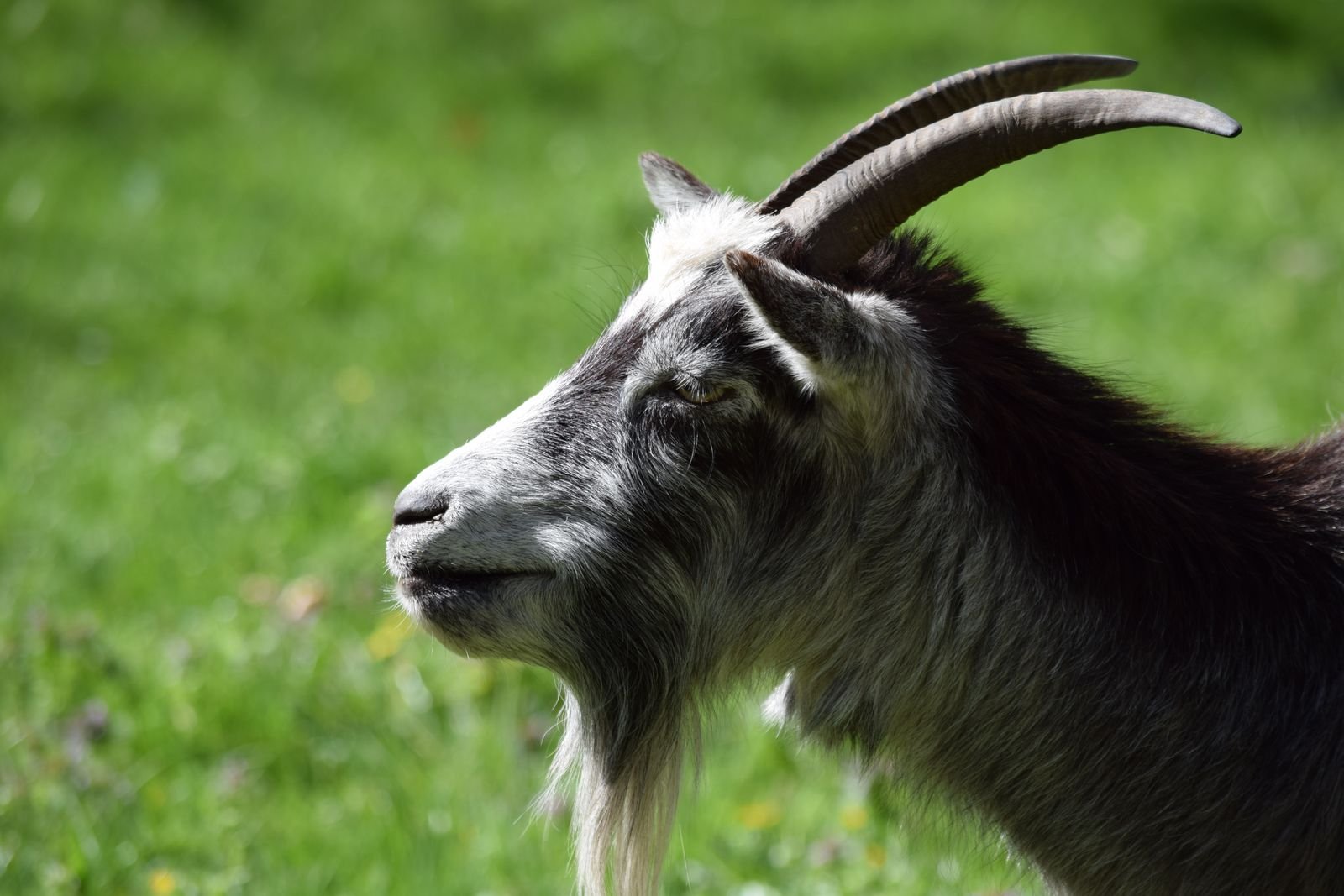
Goat breeding is where a goat herd makes or loses its money. Every doe that misses a season, every kid lost at birth and every buck that does not cover his does is income you never get back. The good news is that goats are naturally fertile, and a well-run breeding programme with fit does, a proven buck and a planned kidding season will do most of the work for you.
This guide covers goat breeding in South Africa step by step: when to breed young does, preparing does and bucks, the heat cycle, running the mating season, pregnancy and the goat gestation period, kidding, and caring for newborn kids. The figures come from South African and international sources, and they apply to meat goats such as Boer, Kalahari Red and Savanna goats as well as dairy breeds.
Goat Breeding at a Glance
| Item | Typical figure |
|---|---|
| Puberty | About 6 to 9 months |
| First mating | 9 to 12 months and about 60% of adult weight |
| Heat cycle | About 18 to 21 days |
| Heat lasts | About 36 hours |
| Gestation (pregnancy) | About 150 days, or five months |
| Bucks needed | About 1 buck per 30 to 40 does |
| Mating season | About 36 to 42 days, covering two heat cycles |
| Pregnancy scanning | From about 30 to 40 days after mating |
1. When to Breed Young Does
Does reach puberty early, at about six to nine months, according to the MSD Veterinary Manual, but reaching puberty does not mean a doe is ready to breed. MSD recommends breeding does at 60% to 65% of their mature body weight, and a Farmer’s Weekly guide to the goat breeding season suggests 9 to 12 months or about 60% of adult weight.
For Boer goats, a 2026 mating guide on AgriOrbit sets a stricter bar: young does should weigh at least 40 kg and be older than 12 months before their first mating. A doe bred too young and too small often has a difficult kidding, a weak kid and stunted growth herself, and she may struggle to get back in kid.
Mate young does separately from mature does where you can, and do not put a very big buck on a small doe for her first mating, as Farmer’s Weekly advises.
2. Preparing Does for Goat Breeding
In goat breeding, the weeks before mating decide how many does conceive and how many carry twins.
- Body condition. Farmer’s Weekly puts the ideal condition score at 3 on a five-point scale. Very thin does conceive poorly, and very fat does often have problems later in pregnancy.
- Flushing. Put does on better feed before and during mating. AgriOrbit recommends flush feeding from two weeks before the breeding season until a month after the buck comes out. Our guide to feeding goats covers flushing in more detail.
- Health. AgriOrbit suggests giving vitamins and minerals about six weeks before mating, and treating for parasites and trimming hooves shortly before mating.
- Vaccination. Vaccinate against enzootic abortion where it occurs. AgriOrbit notes that first-time does should get the live vaccine at least six weeks before mating, and that it protects for five years. Our guide to goat diseases in South Africa covers abortion diseases and vaccines.
3. Choosing and Preparing the Buck for Goat Breeding
Your buck is half of every kid you breed, so he deserves as much attention as the does. Choose a buck from a herd with good fertility, growth and mothering records, with sound feet and legs, a correct mouth and two well-formed testicles of equal size.
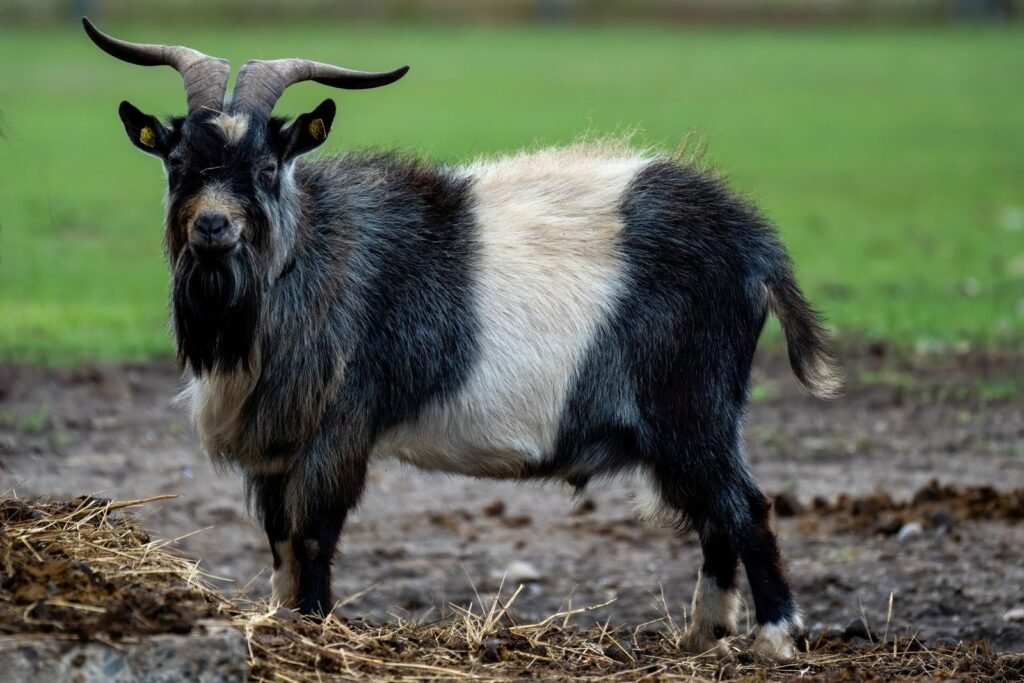
Start preparing him well before the season. Bucks need good feeding for several weeks before mating, because sperm takes weeks to develop and a buck that is thin or sick will not cover all his does. During mating, a buck running with does full time can lose a lot of condition, so AgriOrbit suggests giving him concentrate morning and evening.
Ask your vet to check bucks for breeding soundness before the season, especially older bucks or new purchases. One infertile buck can leave a whole group of does empty.
4. The Heat Cycle and Signs of Heat
Understanding the heat cycle is the basis of goat breeding. Does come into heat roughly every three weeks. MSD gives an average cycle of about 21 days with heat lasting about 36 hours, while AgriOrbit puts the cycle at 17 to 21 days for Boer goats. Goats are seasonal breeders that come into heat more readily as the days shorten, although breeds in South Africa can breed over a long season.
Farmer’s Weekly lists the main signs of heat:
- The doe stands still and does not move away when the buck approaches.
- She rubs against the fence where the buck is standing.
- She mounts other goats or lets them mount her.
Many does also wag their tails, bleat more and show a swollen, slightly red vulva with some clear discharge.
5. Running the Mating Season
For goat breeding on a commercial scale, most farmers in South Africa use a fixed mating season rather than leaving bucks with the does all year. This gives you a short, predictable kidding season, even groups of kids and much easier management. Farmer’s Weekly recommends a mating season of about 36 days, long enough for each doe to come on heat twice, while AgriOrbit suggests about 42 days, or two full cycles.
A few practical points:
- Buck ratio. Farmer’s Weekly suggests one buck per 30 does, AgriOrbit one per 35, and MSD one per 40. Use more bucks for young bucks, large camps and rough terrain.
- Teasing. Placing bucks in a pen next to the does for 7 to 10 days before mating helps bring does into heat together, according to Farmer’s Weekly.
- Marking. A marking harness or crayon on the buck shows which does have been covered and which are cycling again.
- Timing. Plan the season so kids are born when the veld is at its best, or when you can feed does well in late pregnancy and lactation.
Some farmers aim for three kiddings in two years by mating again soon after kidding. It can raise output, but only if does are well fed and in good condition. Otherwise, it drags them down.
6. Pregnancy and the Goat Gestation Period
The goat gestation period is about 150 days, or roughly five months, according to MSD. Pregnancy can be confirmed by scanning from about 30 days after mating, and the best window for counting foetuses is 40 to 70 days. Farmer’s Weekly suggests scanning 40 days after mating, giving does that are not pregnant a second chance with a buck, and culling those that still fail to conceive.
The last six weeks of pregnancy matter most, because that is when the kids grow fastest. Feed does well in this period, give a broad-spectrum vaccine about six weeks before kidding as AgriOrbit recommends, and avoid stressing them in the last four to six weeks, since stressed does can abort. Farmer’s Weekly suggests a protein lick from about four weeks before kidding.
7. Kidding: The Final Stage of Goat Breeding
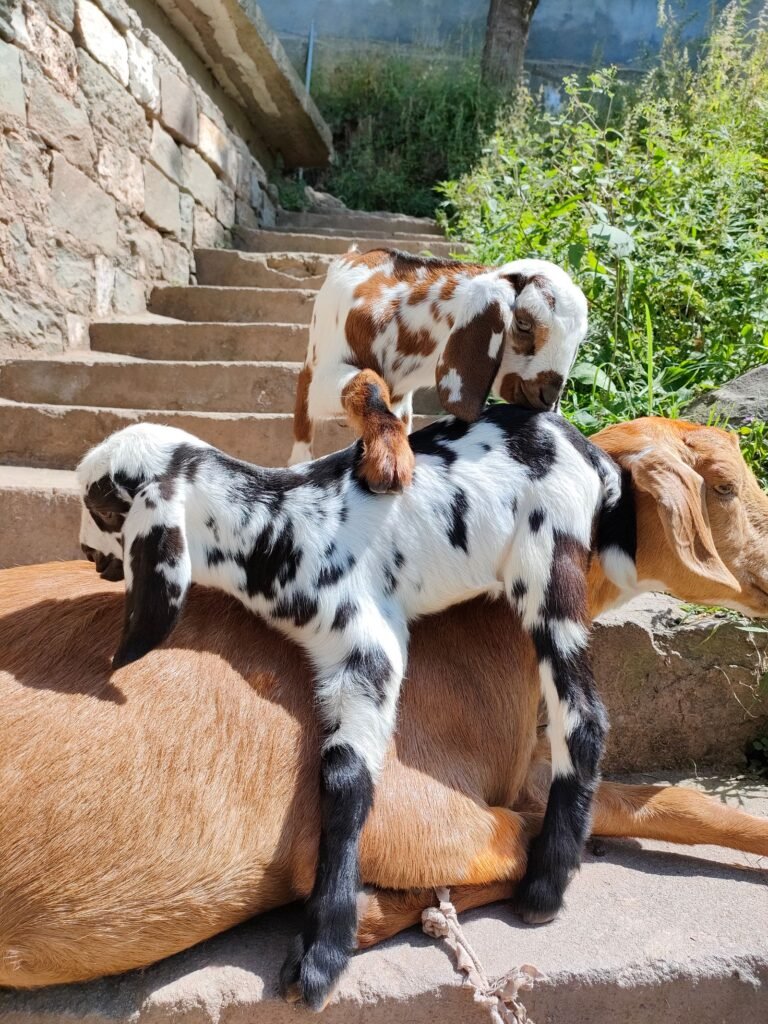
As kidding approaches, move pregnant does to smaller camps close to the homestead, about five to seven days before they are due, as Farmer’s Weekly suggests. Signs that a doe is close to kidding include a filling udder, restlessness, separating from the herd, pawing the ground and a discharge from the vulva.
Most does kid without help. According to MSD, the first kid should be born within about an hour of strong straining starting, and the afterbirth should come away within 12 hours after the last kid. Call your vet or an experienced helper if a doe strains for a long time without progress, or if a kid is coming the wrong way. Work with clean hands or gloves, plenty of lubricant and gentle pressure, and never pull hard.
Keep does with newborn kids in a small pen for a few days so they bond. Farmer’s Weekly suggests three to five days and AgriOrbit about a week, with udders checked at least twice a day in the first days.
8. Caring for Newborn Kids
The first hours of a kid’s life decide whether it survives.
- Colostrum. Kids should stand and suckle within about 30 minutes of birth, according to MSD, and certainly within the first hour or two. Kids that do not suckle should get colostrum by bottle or tube. MSD recommends at least 10% of body weight in good colostrum in the first 24 hours.
- Navel care. Dip the navel in iodine soon after birth to prevent infection.
- Warmth and shelter. Newborn kids chill quickly in cold, wet or windy weather. Make sure they have dry shelter.
- Watch the doe. A doe with a hard, hot or empty udder, or one that rejects her kid, needs attention straight away.
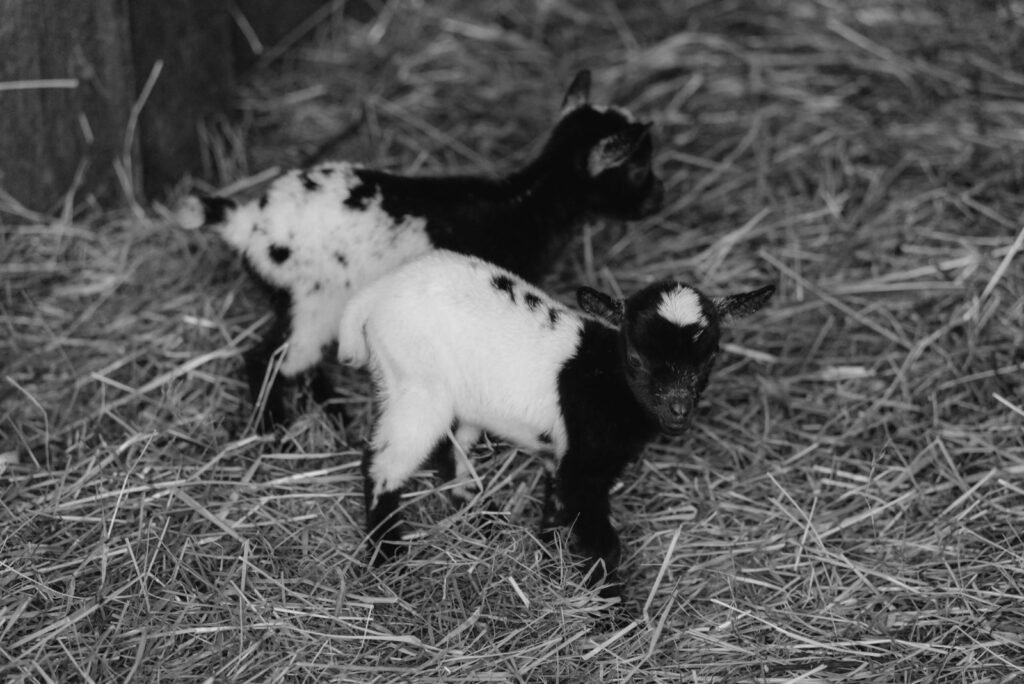
From there, creep feed from about two to three weeks and weaning at around three to four months set kids up for growth. Our guide to Boer goats in South Africa and our wider guide to goat farming in South Africa cover the rest of the year.
Keep Breeding Records
Good goat breeding depends on good records, and good records make goat breeding decisions easy. For every doe, note the mating date, the buck used, the kidding date, the number of kids born and weaned, and any problems. After a couple of seasons, the records show you which does to keep, which bucks breed the best kids and which does to cull.
Common Goat Breeding Mistakes
- Breeding does too young or too small. Wait until they reach about 60% of adult weight.
- Thin does at mating. Poor condition means fewer twins and more empty does.
- Too few bucks. Does left uncovered cost you a season.
- Untested bucks. An infertile buck can leave a whole group empty.
- Leaving bucks in all year. Kids arrive at all times, often in the wrong season.
- Neglecting late pregnancy. Small, weak kids and pregnancy toxaemia follow.
Frequently Asked Questions
How long are goats pregnant?
The goat gestation period is about 150 days, or roughly five months.
At what age can a doe be bred?
Does reach puberty at about six to nine months, but they should only be bred once they reach about 60% of their adult weight, usually at 9 to 12 months. For Boer goats, many breeders wait until does weigh at least 40 kg and are over a year old.
How often do goats come on heat?
About every 18 to 21 days, with each heat lasting about a day and a half.
How many does can one buck cover?
About 30 to 40 does in a mating season, depending on the buck’s age and condition and the size of the camp.
How long should the mating season be?
About 36 to 42 days, so that each doe has two chances to come on heat and be covered.
How many kids does a goat have?
Does commonly have one to three kids. Twins are common in well-fed, mature does of meat breeds such as the Boer goat.
When should kids drink colostrum?
As soon as possible, ideally within 30 minutes to an hour of birth, with at least 10% of their body weight in colostrum in the first day.
Final Thoughts
Successful goat breeding comes down to timing and preparation: does bred at the right size and condition, fit and fertile bucks, a short planned mating season, good feeding in late pregnancy and close attention at kidding. Get those right and keep records, and your herd will produce more kids, more evenly, year after year. If you are building or improving a breeding herd, have a look at our Boer goats for sale and Kalahari Red goats for sale, or send us your requirements and we will get back to you with a written quote, including delivery to your farm.
Looking to buy goats?
Tell us the breed, age group, quantity and delivery area. We reply with availability, pricing and transport costs, usually within one working day.
DRM LIVE STOCK is a registered South African livestock company (Company No. K2023207798, VAT No. 4640323079) based at 135 Rocklands Rd, Uitenhage Farms, Gqeberha. We supply cattle, goats, sheep and pigs, with delivery across South Africa.