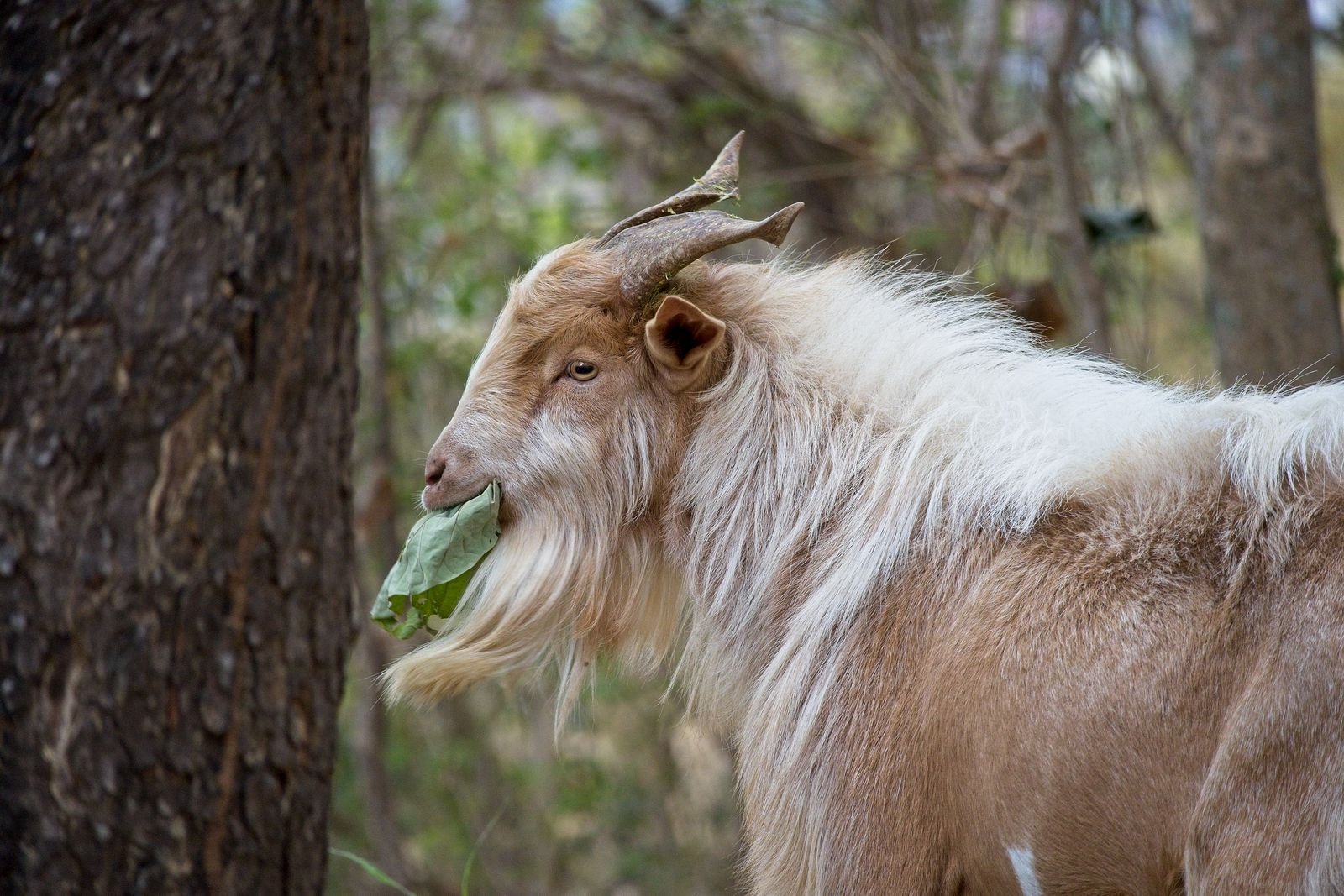
Feeding goats well is what separates a herd that kids every year and sells heavy, even kids from one that just survives. Goats are tough, but they are not cheap to keep badly. A doe that goes into winter thin, kids late in poor condition and runs out of milk will cost you more in lost kids than any bag of pellets. Get the feeding right at the few stages that really matter, and the rest of goat farming gets a lot easier.
This guide covers feeding goats in South Africa from start to finish: how goats eat, how much they need, what to feed at each stage of the year, licks and minerals, water, kids and bucks, and the mistakes that cost farmers money. It applies to meat goats such as Boer, Kalahari Red and Savanna goats, with notes for dairy goats where they differ.
Feeding Goats at a Glance
| Stage | What matters most | Typical supplement |
|---|---|---|
| Dry does on good veld | Browse, fibre, salt and phosphate | Salt and phosphate lick |
| Mating (flushing) | Rising condition two weeks before to a month after mating | Extra energy and protein |
| Last six weeks of pregnancy | Rapid kid growth, energy and protein | Production lick plus pellets or good hay |
| Kidding and early lactation | Milk for the kids | Lactation pellets or complete feed |
| Kids from 2 to 3 weeks | Protein for growth | Creep feed, then growth pellets |
| Winter and dry season | Energy and protein from poor veld | Winter or production lick, hay |
1. How Goats Eat: Browsers, Not Grazers
The first rule of feeding goats is to remember they are not small cattle or woolly sheep. Goats are browsers. Given the choice, they eat leaves, twigs, pods and shrubs before grass, and they pick the most nutritious parts of each plant. That is why goats do so well on bushveld and in the Karoo, where cattle and sheep struggle.
Goats also need plenty of fibre. According to a 2026 Boer goat nutrition guide on AgriOrbit, Boer goats need about 23% fibre in their diet, compared with about 14% for sheep, and fibre must always be available. A Farmer’s Weekly guide based on the ARC’s Goatkeepers’ Animal Healthcare Manual says goats should ideally spend six to eight hours a day grazing and browsing.
In practice, that means:
- Stock your veld to its browse, not just its grass. Goats on grass-only camps need more supplementation.
- Run goats with cattle where you can. They eat different plants, so the two compete less than you might expect.
- Do not lock goats in pens all day on concentrates. Their gut is built for fibre.
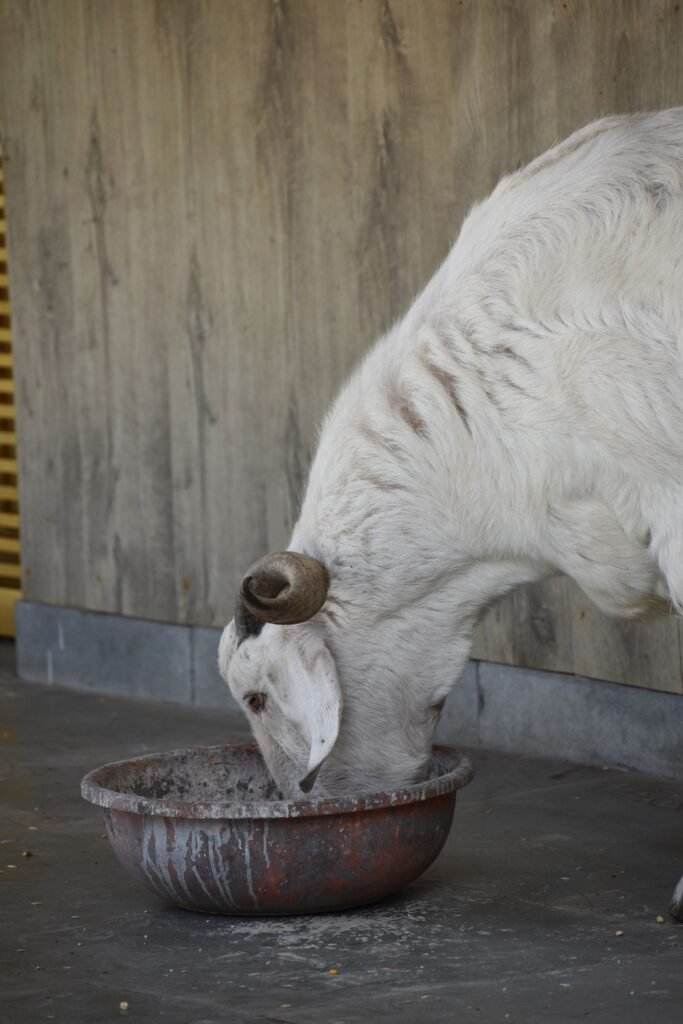
2. How Much Do Goats Eat?
According to the Merck Veterinary Manual, goats can eat up to about 6.5% of their body weight as dry matter a day, though most eat less on poor veld. A 60 kg doe can therefore take in a few kilograms of dry feed on good browse, far more than she would if all you gave her was a scoop of pellets.
When feeding goats, supplements are there to fill the gaps the veld leaves. As a guide, the Farmer’s Weekly feeding guide suggests about 400 g of concentrate a day for an adult goat that is not pregnant, when the veld cannot provide enough, while the AgriOrbit guide suggests 200 to 500 g of lactation pellets per doe in late pregnancy, depending on veld quality and body condition. Watch body condition and adjust. Merck puts the ideal body condition score at 2.5 to 3 on a five-point scale.
3. Feeding Goats Through the Breeding Year
The AgriOrbit guide lists the critical feeding periods for Boer goats. These are the times when spending on feed pays back most:
- Flushing, from two weeks before mating to a month after. Does that are gaining condition at mating conceive better and carry more twins. Move them to better veld or add a little energy and protein.
- The last six weeks of pregnancy. Kids grow fastest in the final six weeks. Underfed does give birth to small, weak kids and risk pregnancy toxaemia. Farmer’s Weekly notes that does should gain about 7 to 9 kg over the last six weeks of a five-month pregnancy.
- The first month after kidding. This is when milk production peaks. Give lactation pellets or a complete feed for the first two weeks, then reduce gradually. Lucerne hay is the best roughage, though also the most expensive.
- The first six months of a kid’s life, covered in the next section.
Protein matters as much as energy. Merck recommends at least 12% crude protein in the diet in late pregnancy, and up to 16% for does carrying twins or triplets. Our guide to Boer goats in South Africa covers mating seasons and kidding in more detail. Our guide to goat breeding takes you through the mating season itself.
4. Feeding Goat Kids
Kids that get a good start sell heavier and sooner. The basics of feeding goats at this age:
- Colostrum first. Every kid must drink colostrum within the first few hours after birth.
- Creep feed from two to three weeks. Farmer’s Weekly recommends starting a creep feed ration at about three weeks, and the AgriOrbit guide says kids should get a complete ration from two weeks to six months old, usually creep pellets followed by growth pellets.
- Protein, not just maize. Kids need protein to grow frame and muscle. A ration that is mostly maize puts on fat, not growth.
- Weaning. Farmer’s Weekly suggests weaning male kids at 12 to 15 weeks and female kids and castrates at 15 to 18 weeks, with good grazing for at least three months afterwards. Kids barely gain weight for the first ten days after weaning, so plan sales accordingly.
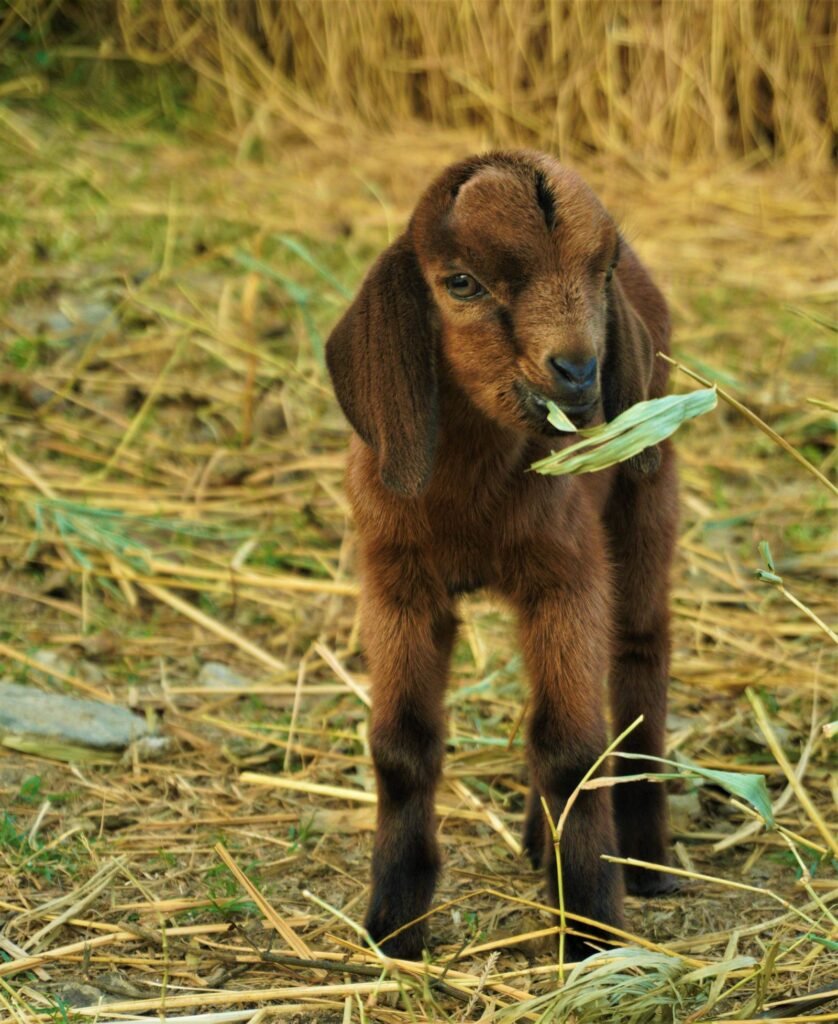
A kid with a pot belly and a rough coat is usually not getting enough milk. Check the doe’s udder and condition, and step in with extra feed for the doe or creep feed for the kid.
5. Feeding Goats in Winter and Drought
Most South African veld loses a lot of its feeding value from autumn through winter. This is where licks earn their place:
- Summer on good veld: a salt and phosphate lick is usually enough for dry goats.
- Autumn: a transition lick as the grass loses quality.
- Winter and drought: a production or high-energy lick, plus hay where the veld is very poor. Farmer’s Weekly notes that a urea-molasses lick supplies nitrogen and energy that help goats digest dry forage.
Licks containing urea must be used exactly as the label says, introduced slowly and kept dry, because too much urea at once can kill. Planted pastures such as oats or rye are valuable in the cold months, and silage or maize mixed with a commercial supplement can carry goats through a hard winter.
When feeding goats anything new, change the ration slowly. Both guides warn against sudden changes: introduce new feed over about a week, and be especially careful with maize. Too much grain at once can cause acidosis, which can kill, and sudden rich feeding also raises the risk of pulpy kidney. Our guide to goat diseases in South Africa covers both.
6. Minerals and Water
Feeding goats the right minerals catches many farmers out:
- Copper. Merck notes that goats need much more copper than sheep, about 15 to 25 mg per kg of dry matter compared with 5 to 8 mg for sheep, and are prone to deficiency if fed mineral mixes made for sheep. Use licks and pellets formulated for goats. Sheep are the opposite and are easily poisoned by copper, as our guide to feeding sheep explains.
- Salt. Farmer’s Weekly suggests adding a spoon of salt and a mineral and vitamin mix to supplementary feed. Salt also encourages goats to drink.
- Calcium and phosphorus. Keep the ratio at roughly 1.5 to 2 parts calcium to 1 part phosphorus, as Merck recommends. This matters most for bucks and wethers.
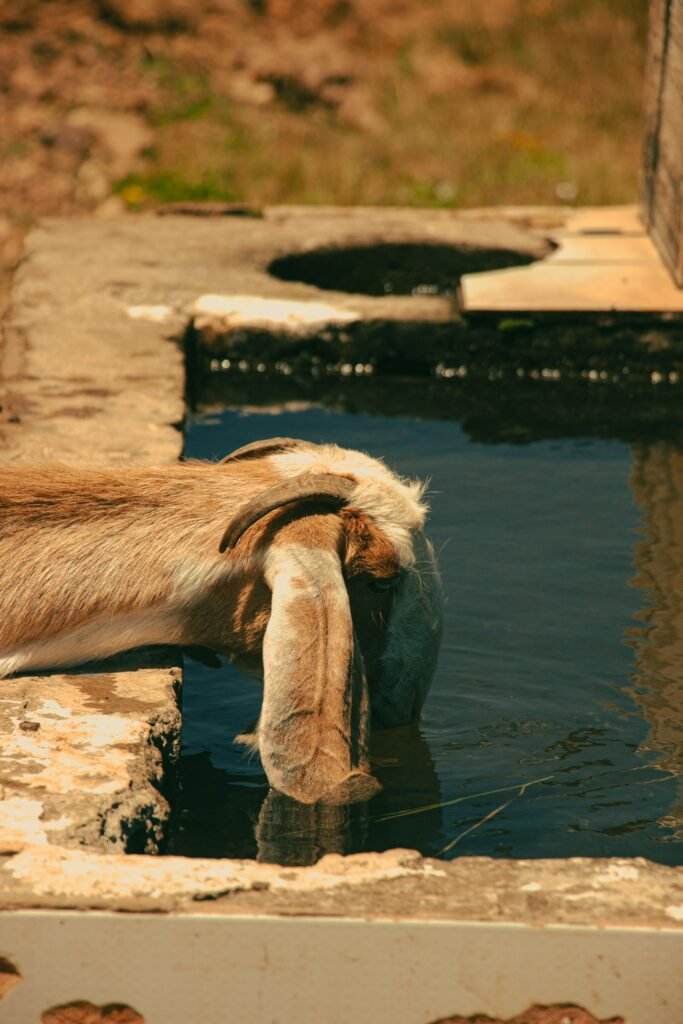
Water is the cheapest feed you have, and the one most often neglected. Goats need clean water at all times. Merck puts maintenance needs at about 1.5 to 3.3 litres a day, with lactating does needing far more, and warns that goats can die from losing about 10% of their body water. If water is not available all day, Farmer’s Weekly advises offering it at least four times a day. Check troughs daily and clean them often, because goats will refuse dirty water.
7. Feeding Bucks
Bucks need to be fit, not fat, going into the mating season. Start improving their feeding six to eight weeks before mating, because sperm takes weeks to develop and a buck that loses condition during mating will not cover all the does.
The biggest danger with bucks and wethers is urinary stones. According to the University of Maryland Extension, diets high in grain and phosphorus raise the risk, so keep forage as the main part of the diet, keep the calcium to phosphorus ratio around 2:1 and make sure there is plenty of clean water. Many commercial goat feeds include ammonium chloride to help prevent stones. A buck straining to urinate is an emergency, so call your vet straight away.
Dairy Goats
Feeding goats for milk is a different job. Dairy goats such as Saanens and Toggenburgs need far richer feeding than meat goats. Merck notes that high-producing dairy does have metabolic demands similar to high-yielding dairy cows, may need up to 20% crude protein in early lactation, and are prone to acidosis on high-energy rations. Feed them good lucerne or a balanced dairy ration, and split concentrates into several small meals. Our comparison of Saanen vs Toggenburg goats covers the two main dairy breeds.
Common Mistakes When Feeding Goats
- Feeding on the ground. Goats waste feed and pick up worms. Use troughs and racks and clean them regularly.
- Using sheep licks. Goats need more copper than sheep. Use products made for goats.
- Too much maize. It causes acidosis and fat rather than growth.
- Feeding late in pregnancy only. Flushing and good condition at mating matter just as much.
- Sudden feed changes. Always change over about a week.
- Running out of water. A goat without water stops eating, milking and growing.
For the bigger picture, including housing, breeding and selling, see our guide to goat farming in South Africa. If you keep pigs as well, our guide to feeding pigs covers rations for every stage.
Frequently Asked Questions
What do goats eat?
Goats are browsers. They prefer leaves, twigs, pods and shrubs, but also eat grass, hay and supplements. On good veld, browse and grass supply most of what they need, with a salt and phosphate lick. In winter and around kidding, they need extra energy and protein.
How much should I feed a goat per day?
It depends on the veld and the stage of production. As a guide, about 400 g of concentrate a day is suggested for an adult non-pregnant goat when veld is short, and 200 to 500 g of lactation pellets for does in late pregnancy, adjusted to body condition.
When should I start feeding goats extra before kidding?
From about six weeks before kidding, when the kids grow fastest. Does should gain condition through this period rather than lose it.
Can goats eat sheep licks?
It is better not to. Goats need much more copper than sheep, and mixes made for sheep can leave goats deficient. Use licks formulated for goats.
When should goat kids start eating creep feed?
From about two to three weeks old. Creep pellets help kids grow faster and make weaning easier.
How much water does a goat drink?
About 1.5 to 3.3 litres a day at maintenance, and much more when milking or in hot weather. Clean water should be available at all times.
Why is my buck struggling to urinate?
It may be urinary stones, often linked to grain-heavy diets and poor calcium to phosphorus balance. It is an emergency, so call your vet immediately.
Final Thoughts
Feeding goats well comes down to a few simple principles: let them browse, keep fibre and clean water in front of them, feed extra at the stages that count, and use goat-specific licks and minerals. Do that, and your does will kid more often, milk better and raise heavier kids. If you are building or adding to a herd, have a look at our Boer goats for sale and Kalahari Red goats for sale, or send us your requirements and we will get back to you with a written quote, including delivery to your farm.
Looking to buy goats?
Tell us the breed, age group, quantity and delivery area. We reply with availability, pricing and transport costs, usually within one working day.
DRM LIVE STOCK is a registered South African livestock company (Company No. K2023207798, VAT No. 4640323079) based at 135 Rocklands Rd, Uitenhage Farms, Gqeberha. We supply cattle, goats, sheep and pigs, with delivery across South Africa.