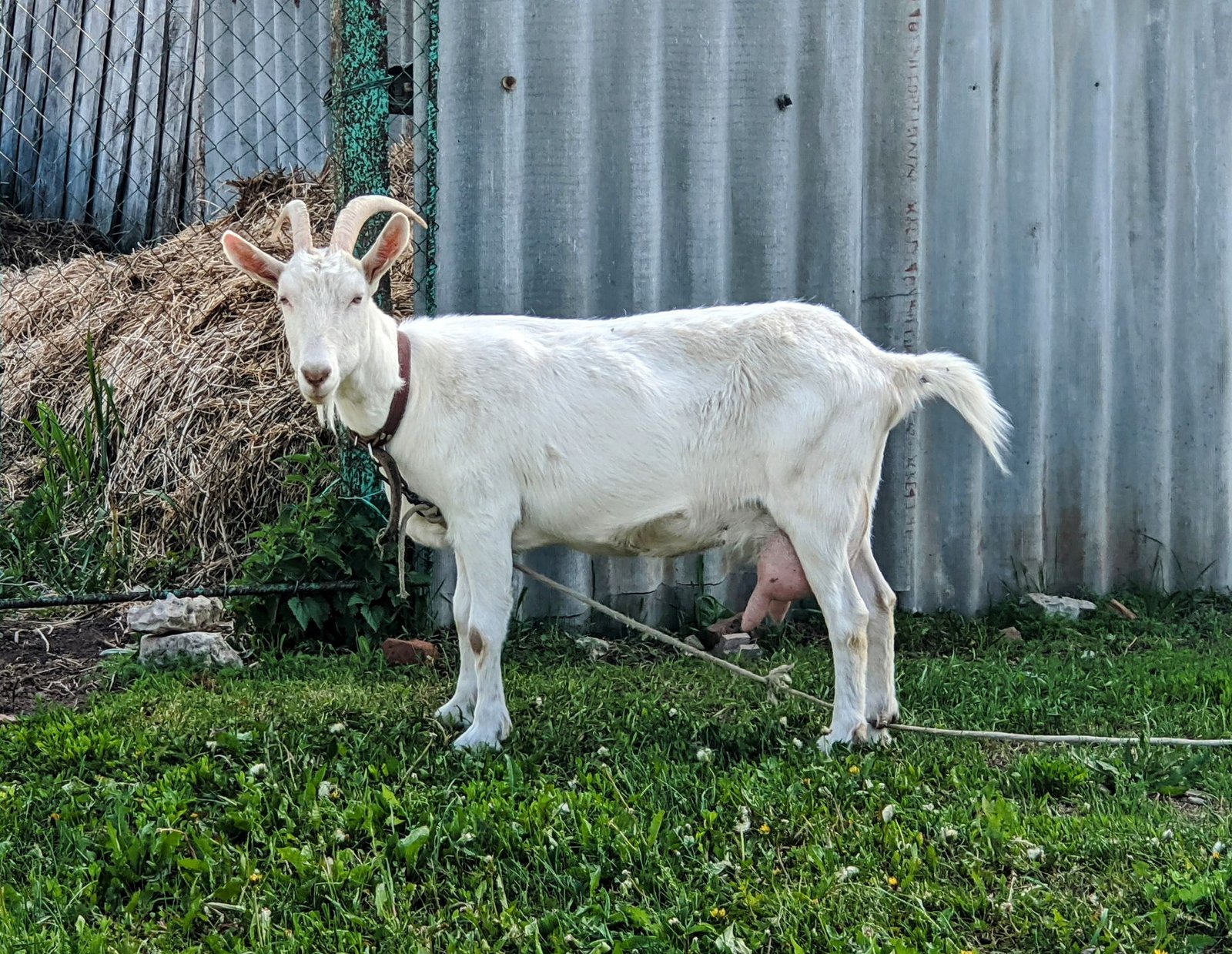
Saanen vs Toggenburg is the question most people ask when they decide to milk goats in South Africa. Both breeds come from the Swiss Alps, both have been bred for milk for well over a century, and both will fill a bucket twice a day if you feed and manage them properly. But they are not the same goat. The Saanen is the big white volume producer, the breed many commercial goat dairies are built on. The Toggenburg is the smaller brown goat with the white face stripes, known for good udders, steady milk over a long lactation and slightly richer milk.
If you are planning a small home dairy, a cheese business or a commercial goat milk operation, the choice matters. This guide covers the seven differences that matter most, with figures from breed authorities and South African research and farms, so you can pick the right dairy goat for your conditions and your market.
Saanen vs Toggenburg at a Glance
| Saanen | Toggenburg | |
|---|---|---|
| Origin | Saanen (Saane) Valley, Switzerland | Toggenburg Valley (Obertoggenburg), Switzerland |
| Colour | White or light cream | Light fawn to dark chocolate, with white ears, face stripes and legs |
| Doe weight | About 64 to 65 kg | At least 55 kg |
| Height at withers | About 81 cm (does), 94 cm (bucks) | About 79 cm (does), 90 cm (bucks) |
| Milk fat | 3% to 4% | 3% to 4%, averaging about 3.7% |
| Main strength | High milk volume, calm routine animal | Good udders, persistent lactation, richer milk |
| Climate | Best in cooler conditions, needs shade | Best in cooler conditions, least suited to tropical heat |
Weights, heights and fat figures come from Oklahoma State University and the New South Wales Department of Primary Industries breed profiles for the Saanen and the Toggenburg. Individual goats and herds vary a lot, so treat these as breed guides.
1. Where the Saanen and Toggenburg Come From
Both breeds are Swiss, and both were shaped by farmers in high mountain valleys who needed goats that would milk well on summer pastures and hay through the winter.
The Saanen comes from the Saanen Valley in the canton of Bern. Its size, calm nature and heavy milk production made it one of the most widely farmed dairy goats in the world, and it is the foundation of many commercial goat dairies today.
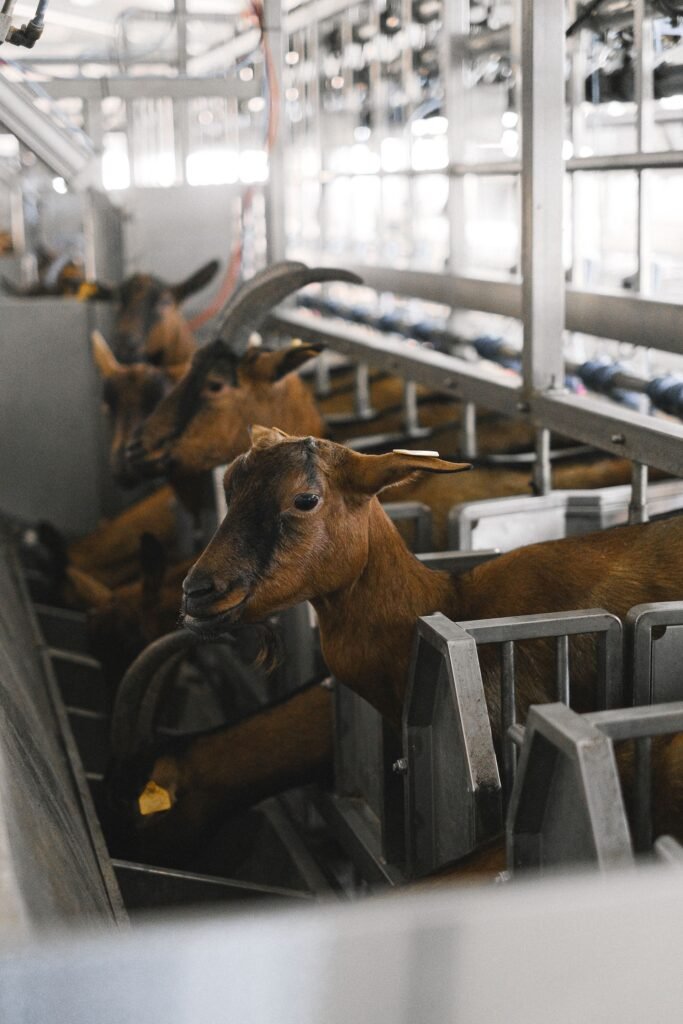
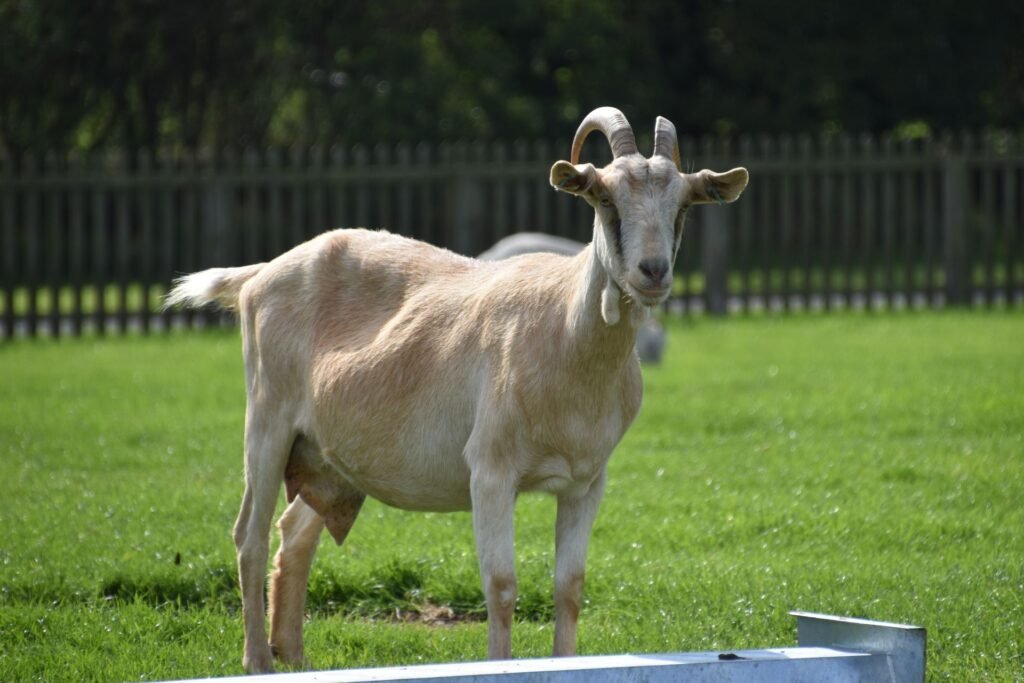
The Toggenburg comes from the Toggenburg Valley in north-eastern Switzerland, around Obertoggenburg. Oklahoma State University credits it as the oldest known dairy goat breed, and the NSW Department of Primary Industries describes it as the first officially recognised breed of dairy goat. Its markings are so distinctive that it is one of the easiest goats in the world to recognise: a brown body with white ears, two white stripes down the face and white lower legs.
In South Africa, dairy goat breeders are represented by the South African Milch Goat Breeders’ Society, a good first contact for registered breeders and breed information.
2. Saanen vs Toggenburg Milk Yield
This is where the Saanen earns its reputation. It is the heavier milker of the two, and the NSW Department of Primary Industries notes plainly that Toggenburgs do not generally produce as much milk as Saanens.
South African figures bear this out. On the Bettiesville farm near Lambert’s Bay, where the Hugo family milk Saanens for cheese, the farmer told Farmer’s Weekly that a healthy Saanen doe should produce between 2.5 and 3 litres of milk a day.
A study of dairy goats kept under extensive conditions in Limpopo, published in the Asian Journal of Animal and Veterinary Advances in 2011, found Saanen does averaging 1.45 kg of milk a day against 0.56 kg for Toggenburgs. The researchers noted that all the breeds produced less than they do under improved management, which is a useful reminder: dairy goats only milk to their potential when they are fed and housed for it.
So if your business depends on litres, whether you sell raw milk, supply a processor or make cheese in volume, the Saanen is usually the stronger choice.
3. Saanen vs Toggenburg Butterfat, Milk Quality and Cheese
The Toggenburg fights back on quality. Oklahoma State University gives an average fat test of about 3.7% for the breed, and in the Limpopo study the Toggenburg had the highest milk fat of the three breeds tested, with the Saanen lowest. The NSW profiles put both breeds in the 3% to 4% fat range, so the difference is real but not huge.
For a cheese maker, fat and protein matter because they drive how much cheese you get from every litre. Richer milk gives a better yield per litre, but a Saanen still usually produces more total fat and protein simply because it gives more milk. Some cheese makers run Saanens for volume and add a few Toggenburgs or other richer-milking does to lift the average.
Goat milk and goat cheese sell well in health shops and delis, and some people who struggle with cow’s milk prefer goat milk. Soft cheeses like chèvre, feta and halloumi are popular products. The Bettiesville farm, for example, sells chèvre, feta and halloumi under its own brand, mainly to health shops.
4. Saanen vs Toggenburg Size, Build and Udders
The Saanen is the bigger goat. Does weigh about 64 to 65 kg and stand about 81 cm at the withers, with bucks around 94 cm. A bigger doe usually means more feed, but also more milk and a heavier cull value at the end of her working life.
The Toggenburg is a medium-sized goat, slightly smaller than the other Swiss breeds, with does of at least 55 kg and about 79 cm tall. The breed is known for excellent udder development. The NSW Department of Primary Industries says Toggenburgs have consistently good udders and are known for persistent milk production over long periods. A doe that holds her milk well through a long lactation can be worth as much as one that peaks high and drops off quickly.
Whichever breed you buy, look closely at the udder: well attached, even halves, teats of a good size for your milking method, and no lumps or hard quarters.
5. Saanen vs Toggenburg in Heat and Housing
Both breeds come from cool Alpine valleys, and both are happiest in cooler conditions. That matters in South Africa.
The Saanen is sensitive to strong sunlight. Oklahoma State University and the NSW Department of Primary Industries both say the breed performs best in cooler conditions and that shade is essential. White goats with pale skin can burn, and heat stress cuts milk yield quickly. A tan-skinned Saanen copes better with sun than a pink-skinned one.
The Toggenburg also prefers cool weather, and the NSW profile describes it as the least suited of the dairy breeds to tropical conditions. Its darker coat does not make it a hot-climate goat.
In practice, both breeds do best in the cooler, higher-rainfall areas and in well-ventilated, shaded housing. In hot parts of the country, plan for shade cloth, good airflow, plenty of clean water and milking times in the cool of the day. Dairy goats are usually kept intensively or semi-intensively, fed mainly on good hay with a concentrate matched to their stage of production, as on the Bettiesville farm. Our guide to goat housing covers shelter design and ventilation in more detail.
6. Temperament and Milking
In the Saanen vs Toggenburg comparison, both breeds are pleasant dairy animals, but they have different personalities.
Saanens are described by the NSW Department of Primary Industries as usually very docile animals that like to keep to a routine, which makes them well suited to machine milking. They respond quickly to affection. For a commercial dairy with a set milking routine, that calm, predictable nature is a big advantage.
Toggenburgs are more lively. The same source says they have a decided personality and character, and are very alert and extremely active. They respond well to training and adapt easily to machine milking. A Toggenburg herd can be a pleasure to work with, but expect goats that test fences and gates more than a group of placid Saanens.
Whatever the breed, dairy goats are milked twice a day, about 12 hours apart, seven days a week. That routine is the real commitment in goat dairying, and you need reliable labour to keep it going.
7. Breeding and Kidding
Both breeds usually breed seasonally, and does kid after a pregnancy of about 150 days, often with twins. The Bettiesville farm reported a kidding rate of about 200%, with young does bred from at least 14 months of age and 36 kg body weight, and about one mature buck for every 35 does.
Kids are the second income on a goat dairy. Doe kids from good milkers are valuable as replacements or breeding stock, while buck kids are usually sold. Because dairy goats are not meat breeds, some dairy farmers use a Boer buck on the does they do not need for replacements, to breed meatier kids for sale. If you do this, keep your best does pure so you always have replacements.
Starting a Small Goat Dairy with Saanen vs Toggenburg Does
If you are new to dairy goats, start smaller than you think. Five to ten good does are enough to learn milking, hygiene, feeding and kidding without being overwhelmed. It is far easier to grow a herd that works than to rescue one that is too big for your time and your feed supply.
Before you buy a single goat, sort out three things. First, a clean milking area with a raised milking stand, running water and a way to cool milk quickly. Milk that is not cooled fast spoils fast. Second, a reliable supply of good hay and a concentrate suited to lactating does, because a dairy goat cannot milk well on poor feed. Third, a market. Talk to the health shops, delis, restaurants or neighbours you plan to sell to, and check what the law requires in your area before selling raw milk or cheese to the public.
Keep simple records from the start: the milk each doe gives, when she kidded, how many kids she had, and any health problems. After one season you will know which does to keep, which to breed replacements from and which to sell. Those records are also worth money when you sell breeding stock later.
Which Breed Suits Your Dairy?
The Saanen vs Toggenburg choice usually comes down to a few questions.
- Do you sell on volume or on quality? If you sell litres, the Saanen’s higher yield usually wins. If you make specialist cheese or want richer milk, a few Toggenburgs can help.
- How hot is your farm? Both prefer cooler areas. In hot regions, plan for shade and ventilation from day one, and choose Saanens with pigmented skin where you can.
- How will you milk? Both adapt to machine milking. The Saanen’s calm, routine nature suits larger commercial units especially well.
- How much feed can you supply? Bigger, higher-producing Saanens need more feed. A smaller Toggenburg herd may suit a farm with limited hay.
- What is available near you? Buying from a nearby, healthy herd with milk records is often better than chasing a breed from far away.
Some small dairies keep both: Saanens for the bulk of the milk and a few Toggenburgs for richer milk, a longer lactation and a bit of variety in the herd.
Buying Saanen or Toggenburg Goats
Whichever side of the Saanen vs Toggenburg question you land on, buy carefully. Ask for milk records where they exist, check each doe’s udder and teats, and make sure the animals come from a healthy herd. Check the seller’s registered company details, get a written quote that lists the animals, their age and breeding status, and pay only against an official invoice. Keep new goats apart from your herd for a few weeks when they arrive. Our guide to buying livestock in South Africa covers each step, and our goat farming guide covers feeding, housing and health.
DRM Livestock supplies Saanen goats and Toggenburg goats to farms across South Africa. If you are also thinking about meat goats, read our comparison of Kalahari Red vs Boer goats.
Frequently Asked Questions
What is the main difference in Saanen vs Toggenburg goats?
The Saanen is a large white dairy goat bred for high milk volume and a calm, routine temperament. The Toggenburg is a smaller brown goat with white face stripes, known for good udders, persistent lactation and slightly richer milk.
Which goat gives more milk, Saanen or Toggenburg?
The Saanen. A healthy Saanen doe on a well-run South African farm can give about 2.5 to 3 litres a day, and in a Limpopo study under extensive conditions Saanens averaged 1.45 kg a day against 0.56 kg for Toggenburgs.
Which goat has richer milk?
The Toggenburg usually has slightly higher butterfat. Oklahoma State University gives an average of about 3.7%, and the Limpopo study found the highest fat in Toggenburg milk. Both breeds fall in the 3% to 4% range.
Can Saanen goats handle South African heat?
They can, with good management. Saanens are sensitive to strong sun and perform best in cooler conditions, so they need shade, ventilation and plenty of water. Tan-skinned animals cope better than pink-skinned ones.
Are Toggenburg goats good for beginners?
Yes, if you are ready for an active, intelligent goat. Toggenburgs are alert and respond well to training, but they are livelier than Saanens and test fences more.
How often do dairy goats need milking?
Twice a day, about 12 hours apart, every day of the week while they are in milk.
Can you cross Saanen and Toggenburg goats?
Yes. Crossing the two can combine the Saanen’s volume with the Toggenburg’s udder quality. Keep good milk records so you know which does to breed replacements from.
Final Thoughts
The Saanen vs Toggenburg choice comes down to what your dairy needs. The Saanen gives you the most milk, a big frame and a calm goat that loves routine. The Toggenburg gives you excellent udders, a long, steady lactation and slightly richer milk in a smaller, livelier package. Both need cool, shaded housing, good feed and twice-daily milking to do their best. Match the breed to your climate, your market and your labour, and buy from healthy herds you can verify. If you would like current prices for Saanen or Toggenburg goats delivered to your farm, send us your requirements and we will get back to you with a written quote.
Looking to buy goats?
Tell us the breed, age group, quantity and delivery area. We reply with availability, pricing and transport costs, usually within one working day.
DRM LIVE STOCK is a registered South African livestock company (Company No. K2023207798, VAT No. 4640323079) based at 135 Rocklands Rd, Uitenhage Farms, Gqeberha. We supply cattle, goats, sheep and pigs, with delivery across South Africa.