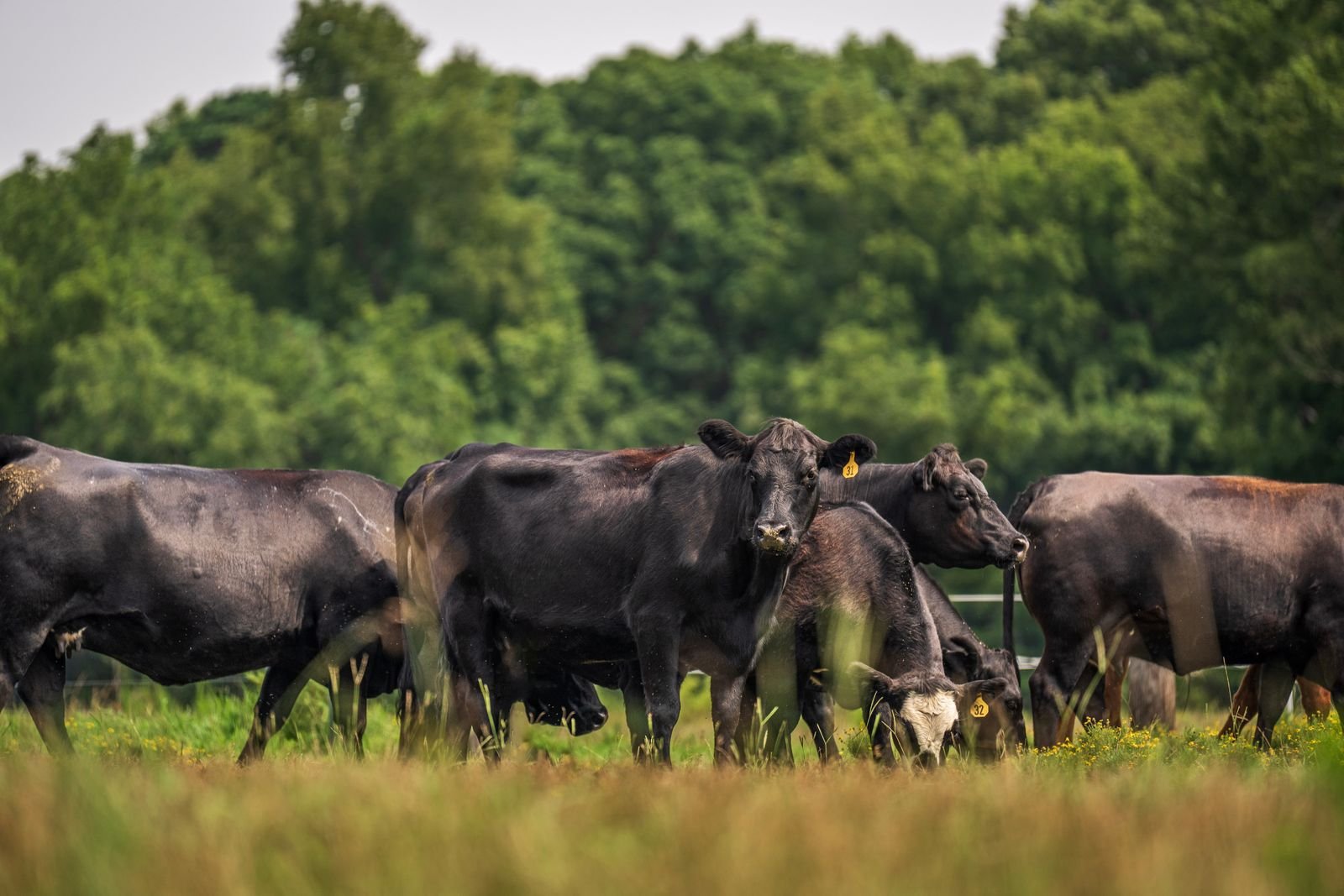
Angus cattle are one of the most popular beef breeds in the world, and South African farmers have been breeding them for well over a century. They are black or red, naturally hornless, easy calving and known for some of the best-marbled beef of any breed. They are also one of the breeds we work with most at DRM Livestock, especially for farmers who want a fertile, easy-care cow that weans a good calf and produces beef that consumers ask for by name.
This guide covers what you need to know about Angus cattle in South Africa: where the breed comes from, what Angus cows and bulls look like, fertility and mothering, growth and beef quality, how the breed copes with South African conditions, its use in crossbreeding, what Angus cattle cost in 2026, and what to check before you buy.
Angus Cattle at a Glance
| Trait | Angus |
|---|---|
| Origin | North-east Scotland (Aberdeenshire and Angus) |
| In South Africa since | The late 1800s |
| Breed society | Founded in South Africa in 1917 |
| Colours | Black and red |
| Horns | Naturally polled (hornless) |
| Mature weight | Cows about 545 kg, bulls about 850 kg (international average) |
| Birth weight | About 35 kg |
| Main strengths | Easy calving, fertility, mothering, marbled beef, temperament |
1. Where Angus Cattle Come From
The Angus was developed in north-east Scotland, in the counties of Aberdeen and Angus, from local hornless, mostly black cattle. According to Oklahoma State University’s breed profile, breeders such as Hugh Watson of Keillor and William McCombie of Tillyfour shaped the breed in the late 1700s and 1800s, selecting for black, polled cattle, and Scottish Angus genetics later spread to the United States, Australia, Argentina and beyond.
The breed reached South Africa in the late 1800s. Farmer’s Weekly records that ten Angus cattle arrived on J Newburg’s farm in the Free State in 1895. The Aberdeen-Angus Cattle Breeders’ Society of South Africa was founded in 1917 with 12 members, as a later Farmer’s Weekly profile explains, and today Angus cattle are farmed across the country, with strong numbers in the Free State, KwaZulu-Natal and the Western Cape.
2. What Angus Cattle Look Like
Angus cattle are medium-framed, deep-bodied and well muscled, with short legs for their size. Two things make them easy to spot:
- Colour. They are solid black or solid red. Black Angus and Red Angus are the same breed in South Africa, and both are registered with the same society.
- No horns. Angus cattle are naturally polled. According to Angus SA, as quoted by Farmer’s Weekly, about 90% of crossbred calves from Angus bulls are also born hornless, which saves you dehorning.
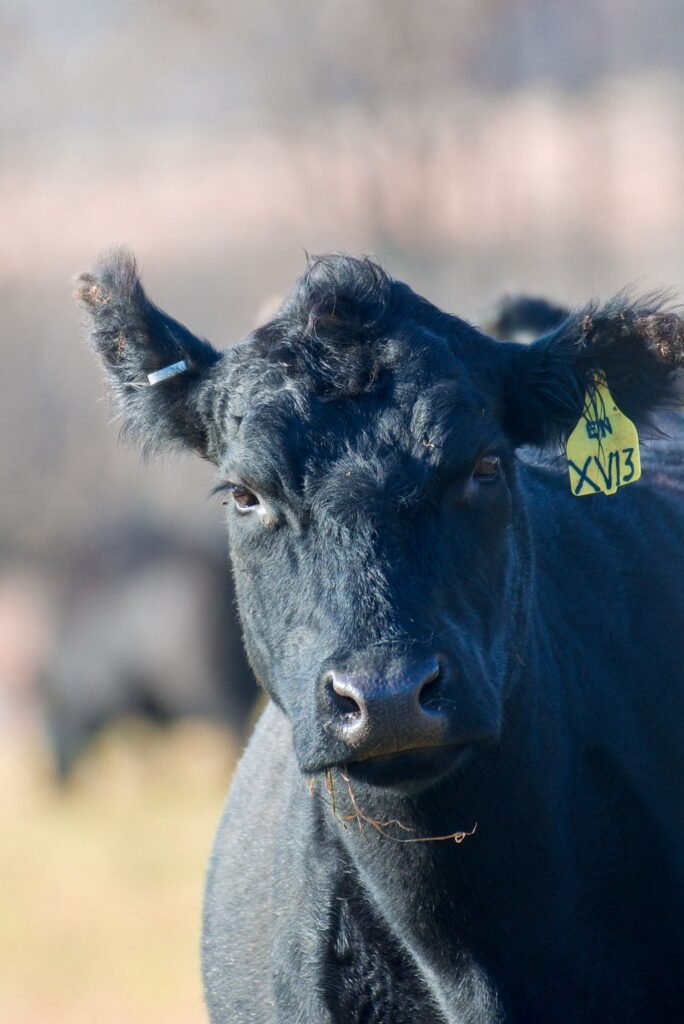
Farmer’s Weekly quotes international averages of about 545 kg for mature Angus cows and about 850 kg for bulls, although weights vary a lot with veld, feeding and bloodline. Angus cows are moderate in size, which helps them stay in condition and get back in calf on the veld.
3. Fertility, Calving Ease and Mothering
This is where Angus cattle earn their place in a herd. According to Angus SA, as reported by Farmer’s Weekly:
- Easy calving. Angus cows usually need little or no help at calving, and calves are born at an average of about 35 kg.
- Early maturity and fertility. Angus heifers mature early, at about 8 to 12 months, so they can calve for the first time at a young age, and the breed is known for high fertility.
- Good mothers. Angus cows have functional udders with small teats, good milk and strong mothering instincts, and they can wean calves weighing about 45% of their own body weight.
- Low maintenance. Cows make good use of most types of roughage and need relatively little upkeep.
Low birth weights make Angus bulls a popular choice for mating heifers of other breeds too, because they reduce calving problems in first-calf heifers. Even so, check the birth weight figures of any bull you buy, because they vary between bloodlines.
4. Growth and Beef Quality
Angus beef has a worldwide reputation for marbling, the fine streaks of fat inside the meat that make it tender, juicy and full of flavour. Angus SA describes Angus carcasses as naturally marbled, with a high dressing percentage and a carcass size the market likes, and Farmer’s Weekly describes the beef as fine-textured, tender and flavourful.
The breed also converts feed efficiently, and according to Angus SA, South African Angus breeders have improved growth figures well above national averages while keeping birth weights at or below the national average. Angus-sired weaners are in demand from feedlots and from buyers supplying branded Angus beef.
5. Angus Cattle in South African Conditions
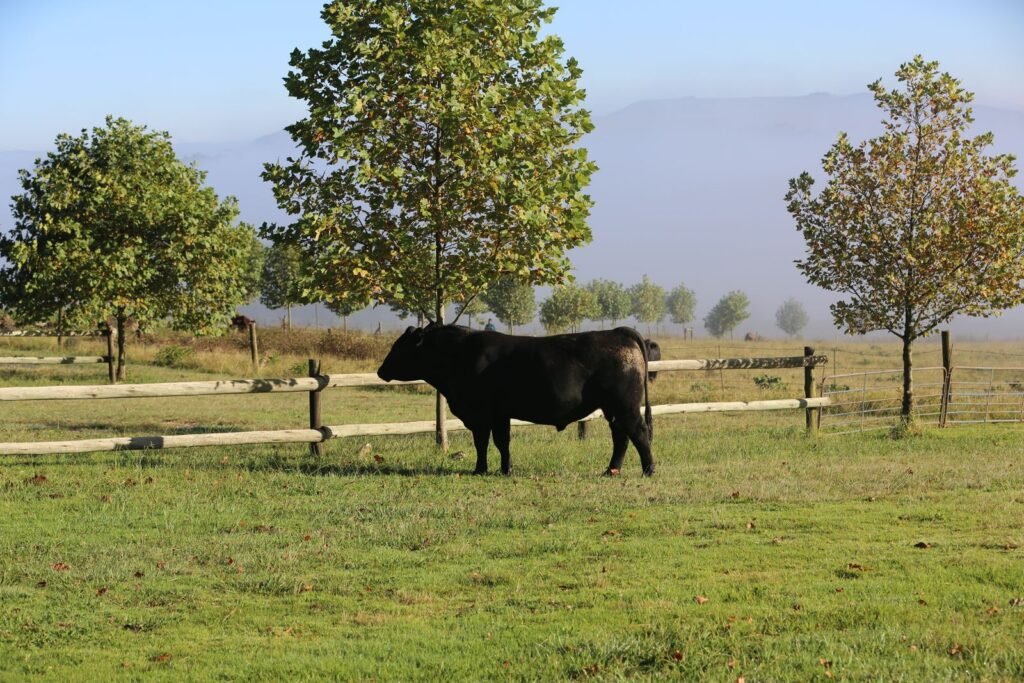
Angus cattle are a British breed, so they do best where conditions are not too extreme. Farmer’s Weekly notes that Black Angus are especially popular in the Western Cape and eastern Free State because they handle cold, harsh winters well. Angus SA points out that their dark skin protects against sunburn and that eye cancer is rare in the breed.
Heat and ticks are the main challenges. In the hot, humid, tick-heavy bushveld and lowveld, Angus cattle are more vulnerable than adapted breeds such as the Bonsmara, Brahman or Nguni. Many farmers in hot areas therefore use Angus bulls in a crossbreeding programme rather than running a pure Angus herd. Wherever you farm, give Angus cattle shade and water in summer and keep a careful tick programme. Our guide to cattle diseases in South Africa covers redwater, gallsickness and the other tick-borne diseases.
6. Angus Cattle in Crossbreeding
Angus genetics combine well with many other breeds. Common uses in South Africa include:
- Angus bulls on heifers of other breeds, for easier first calvings.
- Angus bulls on adapted cows such as Bonsmara, Brahman-type or Nguni cows, to add marbling, growth and a polled, uniform calf, while the cow brings adaptation.
- Angus-cross cows as fertile, milky mothers in a crossbreeding herd.
For a closer look at how Angus compares with a bigger, faster-growing European breed, see our comparison of Angus vs Simmentaler.
7. What Angus Cattle Cost in 2026
Angus prices depend on the type of animal and the sale. As one 2026 reference point, at the 17th Angus Alliance production auction in Kroonstad on 26 August 2026, stud bulls averaged R86,818 and two bulls reached a top price of R170,000, while cows averaged R38,000, pregnant cows R31,500, pregnant heifers R30,250 and open heifers R22,562, according to African Farming. Commercial Angus and Angus-cross weaners sell on weight, so see our guide to weaner prices in South Africa for current figures.
8. Buying Angus Cattle: What to Check
- Records. Ask for birth weight, weaning weight and fertility figures, and breeding values for bulls where available.
- Calving ease. If you plan to use a bull on heifers, choose one with a low birth weight figure.
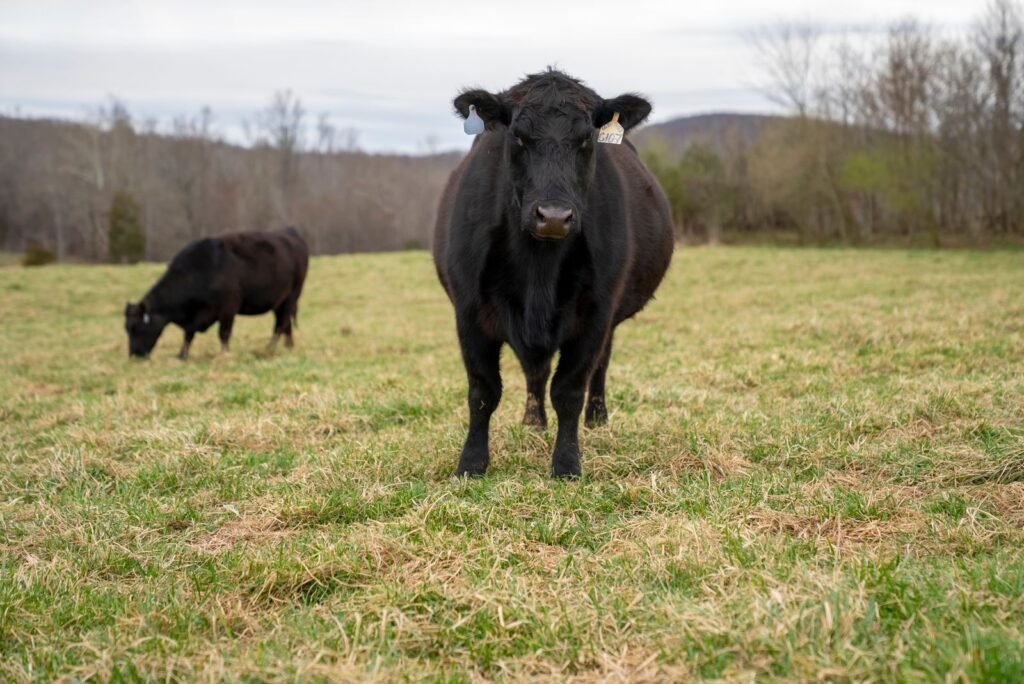
- Conformation. Look for sound feet and legs, a deep body, a good udder on cows and well-formed testicles on bulls.
- Adaptation. Cattle raised in conditions like yours settle faster. Animals moving into tick areas need a vaccination and tick plan with your vet.
- Health and paperwork. Check vaccination history, including brucellosis, and the current movement rules, including foot-and-mouth requirements.
Our guides to buying livestock in South Africa and cattle farming in South Africa cover the rest of the process.
Frequently Asked Questions
When did Angus cattle come to South Africa?
In the late 1800s. Farmer’s Weekly records ten Angus cattle arriving on a Free State farm in 1895, and the breed society was founded in 1917.
What is the difference between Black Angus and Red Angus?
Mainly colour. In South Africa both are the same breed and are registered with the same society. Both are polled, fertile and known for marbled beef.
Are Angus cattle good for beginners?
Yes, in the right area. They are calm, easy calving and fertile. In very hot, tick-heavy regions, an adapted breed or an Angus cross may be easier.
How heavy do Angus cattle get?
International averages put mature cows at about 545 kg and bulls at about 850 kg, but weights vary with feeding, veld and bloodline.
Why are Angus bulls used on heifers?
Angus calves are born relatively light, at about 35 kg on average, so Angus bulls help reduce calving problems in first-calf heifers.
Are Angus cattle hornless?
Yes. Angus cattle are naturally polled, and most crossbred calves from Angus bulls are also born without horns.
How much does an Angus cow cost?
At an August 2026 production auction in Kroonstad, cows averaged R38,000, pregnant cows R31,500 and pregnant heifers R30,250, with open heifers at R22,562.
Final Thoughts
Angus cattle bring together the traits most beef farmers want: easy calving, fertile and motherly cows, calm temperaments, no horns and beef that buyers pay for. In cooler areas they make an excellent pure herd, and in hotter regions they add real value in a crossbreeding programme with adapted cows. If you are building or improving a herd, have a look at our Angus cattle for sale, or send us your requirements and we will get back to you with a written quote, including delivery to your farm.
Looking to buy cattle?
Tell us the breed, age group, quantity and delivery area. We reply with availability, pricing and transport costs, usually within one working day.
DRM LIVE STOCK is a registered South African livestock company (Company No. K2023207798, VAT No. 4640323079) based at 135 Rocklands Rd, Uitenhage Farms, Gqeberha. We supply cattle, goats, sheep and pigs, with delivery across South Africa.