Weaner prices in South Africa have had a remarkable 2026. At the end of September, weaner calves of 200 to 250 kg were averaging close to R49/kg live weight, with the best lots fetching more than R51/kg. A year earlier, the average for 2025 as a whole was under R37/kg. For a cow-calf farmer, that is the difference between a calf worth about R8,000 and one worth more than R10,000.
This guide explains how weaner prices work, what happened in 2026 and why, how much a weaner calf is worth today, what affects the price of your own calves, and what the market experts expect for the rest of the year. If you buy weaners to grow out, the same figures tell you what you should expect to pay.
Weaner Prices in South Africa at a Glance
| Date | Weaner price | Source |
|---|---|---|
| 2025 average | R36.84/kg | Absa AgriTrends, via Farmer’s Weekly |
| 2 September 2026 | R47.66/kg (200 to 250 kg) | AMT |
| Week ending 18 September 2026 | R47.42/kg, up 27.9% year on year | RPO |
| 28 September 2026 | R50.35/kg (farm gate) | Absa and RPO, via AgriOrbit |
| 30 September 2026 | R48.85/kg national average (200 to 250 kg); top 40% R51.72/kg | AMT |
| 2026 full-year forecast | R43.48/kg average | Absa AgriTrends |
| 2027 forecast | R45.22/kg average | Absa AgriTrends |
Different sources measure slightly different things, such as national averages, farm-gate prices or the top share of sales, so their figures never match exactly. All are live-weight prices per kilogram, excluding VAT. Weaner prices change every week, so always check the latest figures before you buy or sell.
1. How Weaner Prices Work
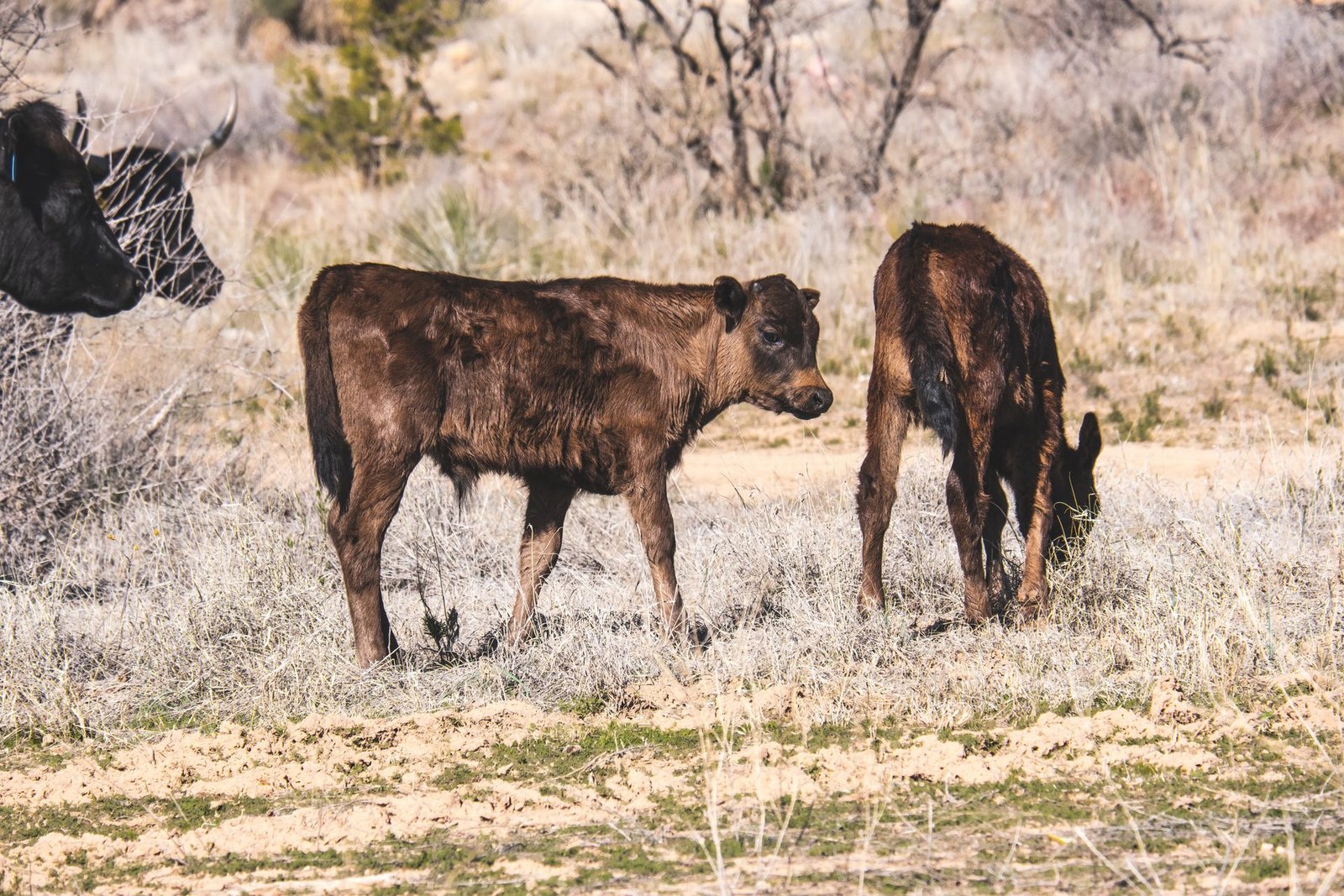
A weaner is a calf that has just been taken off its mother, usually at about six to eight months old. Most weaners in South Africa are bought by feedlots, which finish them on a grain-based ration before slaughter, or by backgrounders who grow them out on veld or pasture first.
Weaners are sold on live weight. The price is quoted in rand per kilogram, and the most widely reported weight class is 200 to 250 kg. Market analysts such as AMT report a national average as well as the average for the top 40% and top 10% of sales, which shows how much more the best calves earn.
The Red Meat Producers’ Organisation (RPO) also publishes a weekly cattle and sheep market report with the weaner price and its weekly, monthly and yearly changes. Many farmers receive weekly price updates by SMS from their producer organisation.
2. What Happened to Weaner Prices in 2026
The weaner market has risen strongly over the past year. According to Absa’s AgriTrends report, summarised by Farmer’s Weekly on 1 October 2026, weaner prices in July 2026 were 32.2% higher than a year earlier. The 2025 average was R36.84/kg, and Absa forecasts an average of R43.48/kg for 2026 as a whole.
The second half of the year has been even stronger. AMT recorded an average of R47.66/kg for 200 to 250 kg calves on 2 September, and R48.85/kg on 30 September, a rise of 3% in the last week of the month alone. The RPO’s report for the week ending 18 September put the price at R47.42/kg, 27.9% higher than a year before.
3. Why Weaner Prices Are So High
Several things have pushed weaner prices up at the same time.
- Fewer calves coming from neighbouring countries. AMT notes that foot-and-mouth disease in Namibia has restricted exports from there, and that Botswana remains closed for livestock exports. South African feedlots normally buy a share of their calves from these countries.
- Feedlots rebuilding. After the disruptions caused by foot-and-mouth disease, feedlots are not yet at full capacity and are competing for calves. AMT reported that lighter bull calves in particular were achieving very strong prices.
- Farmers holding on to calves. Better grazing has given producers more choice about when to sell. AMT observed that more producers appear to be keeping their calves longer and finishing them themselves, and Absa noted that farmers are retaining breeding cows to rebuild herds.
- Cheaper feed. Lower maize prices make it cheaper for feedlots to finish cattle, so they can afford to pay more for calves. Absa reported that the beef-to-maize price ratio was 9.1% better than in 2025.
4. Weaner Prices by Province
Weaner prices vary across the country, mainly because of the distance to the big feedlots and the cost of transport. In AMT’s overview for 30 September 2026:
| Province | Average weaner price (200 to 250 kg) |
|---|---|
| North West | R51.01/kg |
| Free State | R48.77/kg |
| Western Cape | R44.86/kg |
Earlier in the month, on 2 September, AMT reported R49.33/kg in North West, R47.56/kg in the Free State and R45.90/kg in the Eastern Cape. Farmers close to the big feedlots in the North West and Free State usually get the best prices, while those far from the feedlots pay more to transport their calves.
5. The Warning Sign: Weaner Prices vs Slaughter Prices
Feedlots make money on the difference between what they pay for a calf and what they earn for the finished animal, less the cost of feed. When weaner prices rise faster than slaughter prices, that margin gets squeezed.
On 30 September 2026, AMT put the A2/3 slaughter price at R64.96/kg, while the weaner price had risen to more than 75% of that figure. AMT described this as a warning sign if slaughter prices do not catch up within about 120 days, which is roughly how long a calf spends in the feedlot. It also suggested that the market may be splitting into two, with large, export-focused feedlots better able to justify high calf prices than smaller feedlots selling only into the local market.
For cow-calf farmers, the message is simple: prices are excellent right now, but they depend on feedlots being able to make money. If slaughter prices stay flat, weaner prices could come under pressure.
6. What Is a Weaner Calf Worth?
Because weaners are sold on live weight, you can estimate their value by multiplying the weight by the price per kilogram. Using AMT’s national average of R48.85/kg on 30 September 2026 as an example:
| Weaner weight | At R48.85/kg (national average) | At R51.72/kg (top 40%) |
|---|---|---|
| 180 kg | About R8,790 | About R9,310 |
| 200 kg | About R9,770 | About R10,340 |
| 220 kg | About R10,750 | About R11,380 |
| 250 kg | About R12,210 | About R12,930 |
These are illustrations, not quotes. What you actually receive depends on the buyer, the weight class, your calves’ sex, type and condition, and the costs of selling. If you sell at a public auction, for example, Farmer’s Weekly has reported commission of about 8%, which on a R10,750 calf would be about R860.
7. What Affects the Price of Your Weaners
Two calves of the same weight can sell for very different prices. Buyers look at:
- Weight class. Feedlots have preferred weight ranges, and calves outside them may earn less per kilogram. Heavier calves usually bring more per head but often slightly less per kilogram.
- Sex. Bull calves usually grow faster in the feedlot and tend to earn more per kilogram than heifers.
- Breed and frame. Feedlots favour calves that grow fast and finish at a good weight. Calves from small-framed breeds can be discounted, which is why many farmers with indigenous cows use a beef bull. Our guide to Nguni cattle prices explains how this works.
- Uniformity. A lot of even calves of the same type, age and weight is easier for a feedlot to manage and usually earns more than a mixed group.
- Condition and health. Healthy, well-grown calves that have been vaccinated, dosed and weaned properly perform better in the feedlot and attract better buyers.
- Distance. The further your calves must travel, the more transport costs, and the more weight they lose on the way.
- Paperwork. Calves must carry the correct identification marks and be moved with the necessary permits and health documents, especially in areas affected by foot-and-mouth disease restrictions.
How to Sell Weaners: Auction, Feedlot or Private Sale
Most weaners in South Africa are sold in one of three ways:
- Public and production auctions. Competition between buyers can push prices up, especially for good, even lots. Farmer’s Weekly reported commission of about 8% at public auctions, while private auctions may negotiate lower rates of around 5%.
- Direct to a feedlot. Many farmers sell straight to a feedlot buyer, with the calves weighed on the farm or on arrival. You save auction commission, but make sure you understand the weighing conditions, any deductions and when you will be paid.
- Private and online sales. Selling to other farmers or through online livestock platforms can work well for small numbers, or for heifers that buyers want for breeding.
Whichever way you sell, compare offers on the price you will actually receive per calf after commission, transport and any deductions, not just the headline price per kilogram.
Weaner Price Outlook for the Rest of 2026
Most analysts expect weaner prices to stay firm towards the end of the year:
- The RPO’s report for week 38 expected prices to keep rising beyond November into December and January, citing the declining supply of weaners. It gave a forecast of about R48/kg for October, with a likely range of R42 to R55/kg based on 17 years of data.
- AMT said in early September that the question was whether prices could move back above R50/kg in November and December.
- Absa forecasts an average of R45.22/kg for 2027, slightly above its 2026 average forecast.
The main risks are a drop in slaughter prices, new foot-and-mouth disease outbreaks or movement restrictions, and a dry season that forces farmers to sell calves early. None of these can be predicted with certainty, so treat forecasts as a guide, not a promise. Our guide to cattle diseases in South Africa explains how to protect your herd.
Buying Weaners to Grow Out
If you plan to buy weaners and grow them on veld or pasture before selling them to a feedlot, high weaner prices cut both ways. You pay more to buy, but you also expect to sell at a strong price later. The key is to work out your margin before you buy:
- Estimate how much weight the calves will gain on your grazing and how long it will take.
- Add the costs of supplements, dipping, dosing, vaccination, transport and any losses.
- Compare the expected sale value with the purchase price plus those costs.
Buy healthy, even calves from sellers you can verify, and quarantine new arrivals before mixing them with your own cattle. Our guide to cattle farming in South Africa covers grazing, health and management in more detail.
Which Breeds Produce the Best Weaners?
Feedlots want calves that grow fast, convert feed efficiently and finish with a good carcass. Breeds and crosses that do well in this market include the Bonsmara, Simmentaler, Angus and Brahman, as well as crossbred calves out of hardy indigenous cows.
For breed-by-breed comparisons, read our guides to Bonsmara cattle prices, Brahman vs Bonsmara and Angus vs Simmentaler.
Frequently Asked Questions
What are weaner prices in South Africa right now?
At the end of September 2026, AMT reported a national average of R48.85/kg for weaners of 200 to 250 kg, with the top 40% of sales averaging R51.72/kg. Farm-gate figures from Absa and the RPO were about R50.35/kg.
How much is a 200 kg weaner calf worth?
At the late-September 2026 average of R48.85/kg, a 200 kg weaner would be worth about R9,770 before selling costs. Better-than-average calves could earn over R10,000.
Why are weaner prices so high in 2026?
Fewer calves are coming from Namibia and Botswana because of disease and export restrictions, feedlots are rebuilding after foot-and-mouth disease, many farmers are holding on to their calves, and lower maize prices have improved feedlot margins.
Are weaner prices per kg live weight or carcass weight?
Weaner prices are quoted per kilogram of live weight. Slaughter cattle, by contrast, are usually paid per kilogram of carcass weight.
Do bull calves sell for more than heifers?
Usually, yes. Bull calves tend to grow faster in the feedlot, so they generally earn more per kilogram than heifers of the same weight.
Where can I check weekly weaner prices?
The RPO publishes a weekly cattle and sheep market report, AMT publishes a weekly livestock market overview, and AgriOrbit publishes farm-gate prices from Absa and the RPO.
Will weaner prices go up or down?
Most analysts expect prices to stay firm into December and early 2027, but much depends on slaughter prices, disease outbreaks and the season. Always check the latest weekly figures.
Final Thoughts
Weaner prices in South Africa are at some of the best levels farmers have seen, close to R49/kg on average and above R51/kg for the best calves. That makes this a good time to sell well-grown, even calves, and a good time to make sure your herd is producing the kind of calves feedlots want. If you are building or improving a cow herd, have a look at our Bonsmara cattle for sale and other breeds, or send us your requirements and we will get back to you with a written quote, including delivery to your farm.
Looking to buy livestock?
Tell us the breed, age group, quantity and delivery area. We reply with availability, pricing and transport costs, usually within one working day.
DRM LIVE STOCK is a registered South African livestock company (Company No. K2023207798, VAT No. 4640323079) based at 135 Rocklands Rd, Uitenhage Farms, Gqeberha. We supply cattle, goats, sheep and pigs, with delivery across South Africa.