Brahman vs Bonsmara is a question that comes up on almost every beef farm in the warmer parts of South Africa. Both breeds were built for heat, both handle ticks better than purely European cattle, and both sell well. Yet they are very different animals. The Brahman is a zebu breed from the United States with Indian roots, known for toughness, heat tolerance and the hybrid vigour it brings to crossbred calves. The Bonsmara is a South African composite, bred on performance records to wean heavy, even calves for the feedlot market.
So the real question is not which breed is better, but which one suits your veld, your climate, your market and the way you manage cattle. This guide covers the seven differences that matter most, with figures from breed sources and from 2026 auctions, so you can make that call with real numbers in front of you.
Brahman vs Bonsmara at a Glance
| Brahman | Bonsmara | |
|---|---|---|
| Type | Zebu (Bos indicus), developed in the United States from Indian cattle | South African composite: 5/8 Afrikaner, 3/16 Hereford, 3/16 Shorthorn |
| In South Africa since | 1954, when the first animals were imported from Texas | Developed from the 1930s, established as a breed in 1964 |
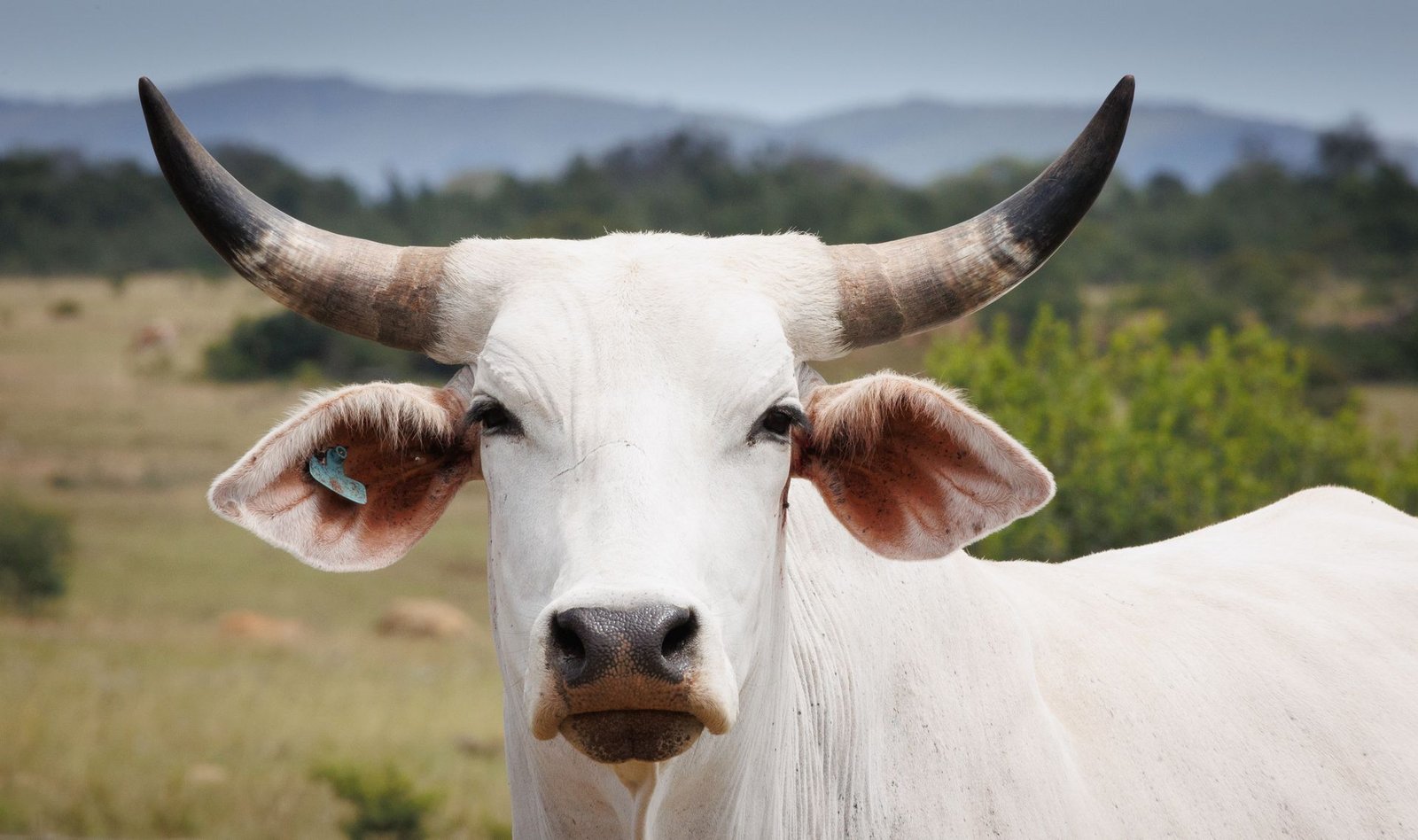
| Colour | Grey (white) or red | Red |
| Mature cow weight | About 450 to 635 kg | About 500 to 550 kg |
| Mature bull weight | About 725 to 1,000 kg | Around 900 kg |
| Main strength | Heat, tick and insect tolerance, and hybrid vigour in crosses | Weaning weight, fertility records and a calf the feedlots know |
| Best suited to | Hot, humid or tick-heavy bushveld, and crossbreeding programmes | Commercial weaner production on reasonable veld |
Brahman weights come from Oklahoma State University’s breeds database and are based on American cattle, so South African herds on natural veld are often lighter. Bonsmara weights come from breed profiles published by ProAgri. Treat all of these as breed guides rather than promises, because nutrition and management make a big difference. For more on the breed, read our complete guide to Bonsmara cattle.
1. Where the Brahman and Bonsmara Come From
The Brahman story starts in India, with zebu cattle that were shipped to the United States from the middle of the 1800s. American ranchers in the Gulf Coast states crossed and selected these cattle into a breed that could handle heat, humidity and insects, and the name Brahman was formally adopted when the American Brahman Breeders Association was set up in 1924, according to the Brahman Cattle Breeders’ Society of South Africa.
The first Brahmans reached southern Africa in 1954, when a Windhoek breeder imported a small group of bulls and heifers from Texas. The breed grew quickly from the 1960s, and today it has more than 56,000 registered animals and about 360 active breeders, making it the third-largest registered breed in the country, as reported by Farmer’s Weekly in January 2026. Our full guide to Brahman cattle in South Africa covers the breed’s history, red and grey types and 2026 prices in more detail.
The Bonsmara was bred at home. From the 1930s, Professor Jan Bonsma and the Department of Agriculture crossed British beef bulls on Afrikaner cows at the Mara and Messina research farms, looking for cattle with British growth and Afrikaner hardiness. The final formula settled at 5/8 Afrikaner, 3/16 Hereford and 3/16 Shorthorn, and the breed was established in 1964. Within 25 years it had become the dominant beef breed in South Africa, according to Farmer’s Weekly.
That history explains a lot. The Brahman was shaped to survive heat and insects. The Bonsmara was shaped by the scale and the weighing crate, with every stud animal measured and recorded from the start.
2. Brahman vs Bonsmara in Heat, Ticks and Tough Conditions
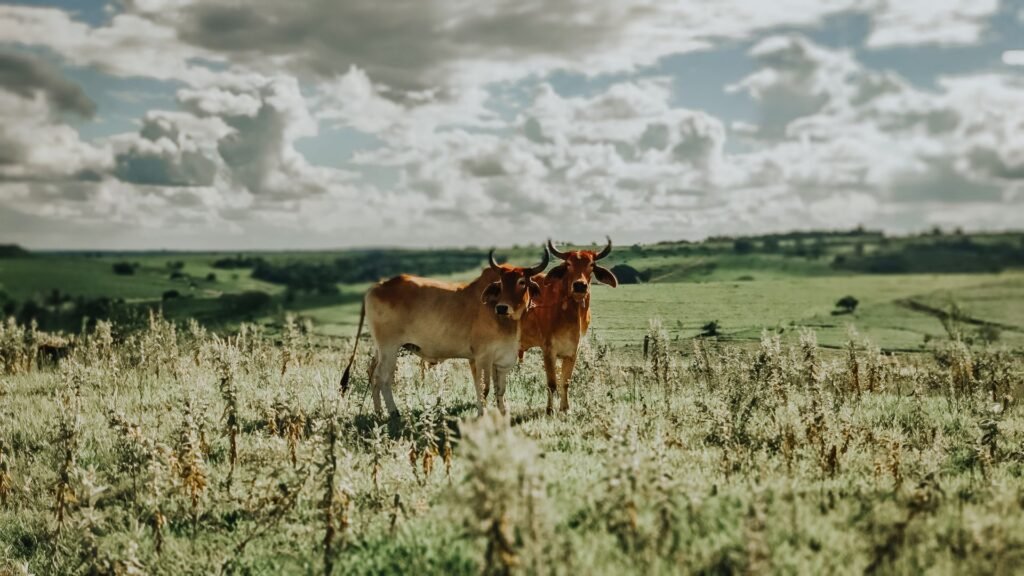
This is the Brahman’s strongest card. Oklahoma State University notes that the breed has more highly developed sweat glands than European cattle, produces less internal body heat in hot weather, and shows little effect from temperatures up to and beyond about 40°C. Its loose skin, short glossy coat and dark pigmented skin all help it cope with sun and heat, and an oily secretion from the skin is reported to help repel insects.
In practice, farmers value the Brahman in the Lowveld, the hot bushveld of Limpopo and North West, and the humid coastal areas, where heat stress, ticks and flies wear down less adapted cattle. Farmer’s Weekly describes hardiness and resistance to parasites such as ticks, together with performance in dry conditions, as the reasons the breed was imported in the first place.
The Bonsmara is far from soft. Its Afrikaner blood gives it good heat tolerance and better resistance to ticks and tick-borne diseases than purely European breeds, and it is farmed successfully from dry Kalahari veld to the wetter east. But when you compare the two directly in the hottest, most humid and most tick-heavy areas, most cattlemen would give the Brahman the edge on pure adaptation.
3. Brahman vs Bonsmara Size, Growth and the Weaner Calf
On paper, Brahman bulls and cows can be as big as Bonsmaras or bigger. What matters more on a weaner farm is how many kilograms of calf you sell per cow, and here the Bonsmara has built its whole reputation.
The Bonsmara was selected on measured growth and weaning weight for decades. All stud cattle must be weighed and inspected, and breeders run their own feed-efficiency testing stations. The result is a medium-framed red cow that weans a heavy calf on reasonable veld, and a uniform weaner that feedlot buyers know and like. Farmer’s Weekly reports that more than 80% of Bonsmara bulls are bought by commercial farmers, which tells you who the breed is really built for.
The Brahman also records growth, using the Breedplan system to track birth weight, 200-, 400- and 600-day weights, cow weights and feed intake, and South African Brahman societies started calculating genomically enhanced breeding values in November 2023. Brahman calves are small at birth, about 27 to 29 kg in the Oklahoma State figures, which helps with easy calving. Where the Brahman really adds weight, though, is in crossbred calves, which we come back to in section 6.
4. Brahman vs Bonsmara Fertility and Mothering
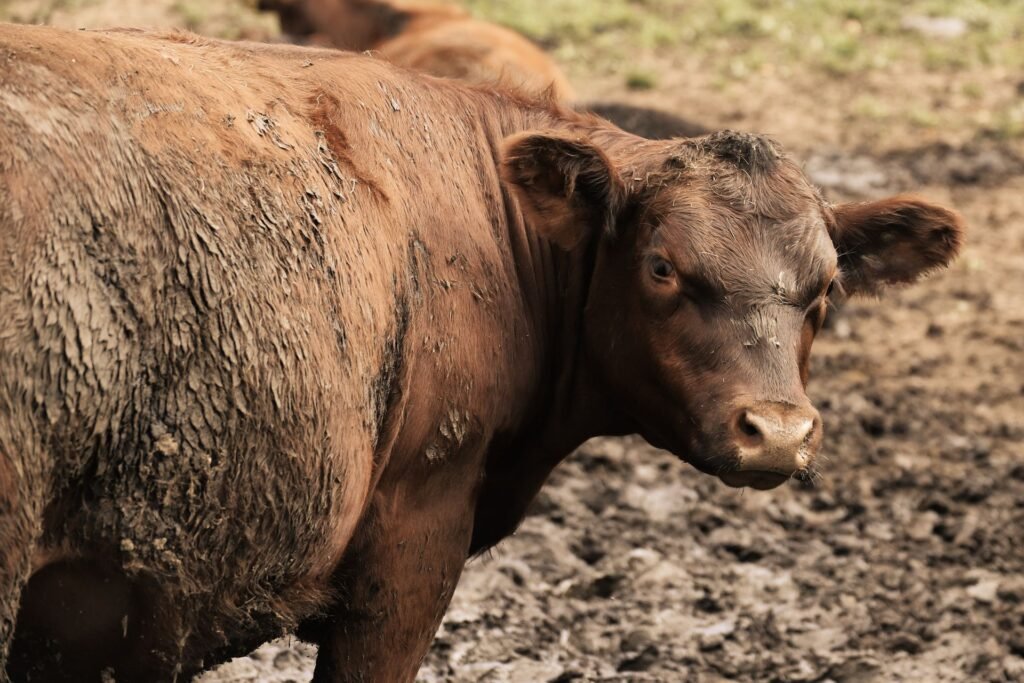
Both breeds are good mothers when they are well fed and well managed. Brahman cows are known for strong mothering and for protecting their calves, and Farmer’s Weekly lists mothering ability among the breed’s key traits. They also tend to stay productive for many years in hot conditions where other breeds lose condition.
The Bonsmara’s advantage is its records. Fertility and inter-calving period have been measured and selected for since the breed began, so a commercial farmer buying a bull from a good stud can see how the bull’s dam and sisters performed. On a farm where the aim is a calf from every cow every year, that information is worth a great deal.
One practical point for farmers new to zebu cattle: like most Bos indicus breeds, Brahman heifers generally reach puberty later than composite and British-type heifers. If you want Brahman or high-Brahman heifers to calve at around two years, they need good nutrition from weaning onwards. Plan your heifer programme around that before you buy.
5. Temperament and Handling
Temperament is where the Brahman vs Bonsmara debate often gets heated, and many people have strong opinions about the Brahman. Oklahoma State University describes the breed as intelligent, inquisitive and shy, and notes that Brahmans respond well to careful, kind handling and can become very docile. The flip side is that they remember rough treatment, so they suit farmers who work their cattle quietly, with good handling facilities.
Bonsmaras are generally regarded as calm and easy to work, and temperament is part of what breeders select for. Either way, calm handling from birth, good crushes and a consistent routine matter more than the breed name. Bad handling can make any herd difficult.
6. Crossbreeding: Where Brahman and Bonsmara Meet
The Brahman’s biggest influence on South African beef may be through crossbred cattle. Crossing a zebu breed with a non-zebu breed gives strong hybrid vigour, or heterosis, which shows up as better growth, fertility and survival in the calves. The Brahman is part of several well-known composite breeds, including the Brangus, Braford, Simbra and Santa Gertrudis, as Farmer’s Weekly points out.
Some commercial farmers use a Brahman bull on Bonsmara or other red cows to add heat tolerance and hybrid vigour, and some use a Bonsmara bull on Brahman-type cows to add growth and a more uniform weaner. The key is planning. Decide early whether you will keep crossbred heifers as replacements or sell all the calves, and make sure your buyers want the type of weaner you will produce.
The Bonsmara, being a stabilised composite, breeds true when you mate Bonsmara to Bonsmara. That makes herd management simple: one breed, one type of bull, and replacement heifers that look like their mothers.
7. Brahman vs Bonsmara Prices in 2026
Recent auctions give a useful picture of Brahman vs Bonsmara prices for breeding stock. Always compare like with like, because stud animals, commercial females and weaners are completely different markets.
Brahman. At the Kroon Vee winter auction near Vryburg on 23 May 2026, Manso-line bulls averaged R78,000 and red bulls R71,666, with the top bull selling for R140,000. Stud heifers averaged about R37,000 and commercial females R22,700 to R24,900, according to African Farming. At the Brahman SA national auction near Potchefstroom, reported by AgriOrbit in September 2026, 16 stud bulls averaged R135,000 with a top price of R220,000, and stud cows with calves averaged R82,000.
Bonsmara. At 2026 Bonsmara production auctions, bull averages ranged from R40,400 to R135,740. Commercial open heifers averaged R13,875 to R15,800, pregnant heifers R17,250 to R30,000 and cows with calves R22,387 to R46,143. The full auction list is in our guide to Bonsmara cattle prices in South Africa.
| Category (2026 auctions) | Brahman | Bonsmara |
|---|---|---|
| Bulls, production auction average | R71,666 to R78,000 (Kroon Vee) | R40,400 to R135,740 |
| Stud bulls, national or top sales | R135,000 average (national auction) | Top bulls R220,000 to R650,000 |
| Commercial females | R22,700 to R24,900 average | R13,875 to R46,143 average, depending on type |
Two things stand out. First, good working bulls of both breeds cost in the same broad range at production auctions, roughly R60,000 to R100,000. Second, the headline stud prices can be far higher. A Serfbred in-calf Brahman cow sold for R1.2 million in November 2022, a South African record for a beef stud female at the time, as reported by Farmer’s Weekly. Prices like that reflect elite genetics for stud breeders, not what a commercial farmer needs to pay.
Which Breed Suits Your Farm?
The Brahman vs Bonsmara decision usually comes down to a few honest questions about your farm.
- How hot, humid and tick-heavy is your area? The hotter and more humid it is, and the heavier the tick and fly load, the stronger the case for the Brahman or Brahman-cross cattle.
- Who buys your calves? If you sell weaners straight to feedlots, the Bonsmara’s uniform red calf is a known product. If you run a crossbreeding programme, the Brahman’s hybrid vigour can lift the whole herd.
- How do you manage your heifers? Bonsmara heifers are simpler to get calving at two years. Brahman heifers need a good nutrition plan.
- How do you handle your cattle? Brahmans reward quiet, patient handling and good facilities. If your team and handling setup are rough, sort that out first, whatever breed you choose.
- What do your neighbours run successfully? The breed that thrives on farms like yours is usually a sound starting point.
Many farmers end up using both, with Bonsmara cows as the base herd and Brahman genetics for heat and hardiness, or the other way round. There is no rule that says you must choose only one. For a wider view of the options, see our guide to cattle farming in South Africa and our comparison of Bonsmara vs Nguni cattle.
Buying Brahman or Bonsmara Cattle
Whichever side of the Brahman vs Bonsmara question you land on, buy with care. Check the seller’s registered company details, get a written quote that lists the animals, their age group, breeding status and delivery terms, and pay only against an official invoice. For breeding animals, ask for performance records and a veterinary health status. Our guide to buying livestock in South Africa covers each step in more detail.
DRM Livestock supplies Brahman cattle and Bonsmara cattle to farms across South Africa, and we can also quote on Nguni cattle if you want an indigenous option.
Frequently Asked Questions
What is the main difference in Brahman vs Bonsmara cattle?
The Brahman is a zebu breed developed in the United States from Indian cattle, known mainly for heat, tick and insect tolerance and for hybrid vigour in crosses. The Bonsmara is a South African composite of 5/8 Afrikaner, 3/16 Hereford and 3/16 Shorthorn, selected on performance records for weaning weight and fertility.
Which is bigger, the Brahman or the Bonsmara?
In Brahman vs Bonsmara terms, they are similar in size. Brahman cows weigh about 450 to 635 kg and bulls about 725 to 1,000 kg in American figures, while Bonsmara cows weigh about 500 to 550 kg and bulls around 900 kg. Feeding and veld have a big effect on both.
Which breed is better for hot, tick-heavy areas?
The Brahman usually has the edge in the hottest, most humid and most tick-heavy areas, thanks to its sweat glands, loose skin, pigmented skin and short coat. The Bonsmara also handles heat and ticks well because of its Afrikaner blood.
Are Brahman cattle more expensive than Bonsmaras?
Not necessarily. At 2026 production auctions, Brahman bulls at Kroon Vee averaged R71,666 to R78,000, while Bonsmara bull averages ranged from R40,400 to R135,740. Brahman stud females at the national auction sold for more than typical Bonsmara commercial females, but they are a different market.
Can you cross Brahman and Bonsmara cattle?
Yes. Crossing a zebu breed like the Brahman with a composite like the Bonsmara gives hybrid vigour in the calves. Plan your replacement heifers and check that your buyers want the crossbred weaners before you start.
Are Brahman cattle difficult to handle?
Brahmans are intelligent and sensitive. They respond well to calm, careful handling and can become very docile, but they remember rough treatment. Good handling facilities and a quiet routine make a big difference.
Which breed is better for beginners?
Many beginners find the Bonsmara easier, because it breeds true, is well known at auctions and comes with plenty of performance data. The Brahman is an excellent choice in very hot or tick-heavy areas, as long as you plan heifer nutrition and handle the cattle quietly.
Final Thoughts
The Brahman vs Bonsmara choice comes down to your farm. The Brahman gives you heat and tick tolerance, a strong mother and powerful hybrid vigour in crossbred calves. The Bonsmara gives you decades of performance records, a uniform red weaner the feedlots know, and a herd that breeds true. Match the breed to your climate, your veld and your market, and buy from sellers you can verify. If you would like current prices for Brahman or Bonsmara cattle delivered to your farm, send us your requirements and we will get back to you with a written quote.
Looking to buy cattle?
Tell us the breed, age group, quantity and delivery area. We reply with availability, pricing and transport costs, usually within one working day.
DRM LIVE STOCK is a registered South African livestock company (Company No. K2023207798, VAT No. 4640323079) based at 135 Rocklands Rd, Uitenhage Farms, Gqeberha. We supply cattle, goats, sheep and pigs, with delivery across South Africa.