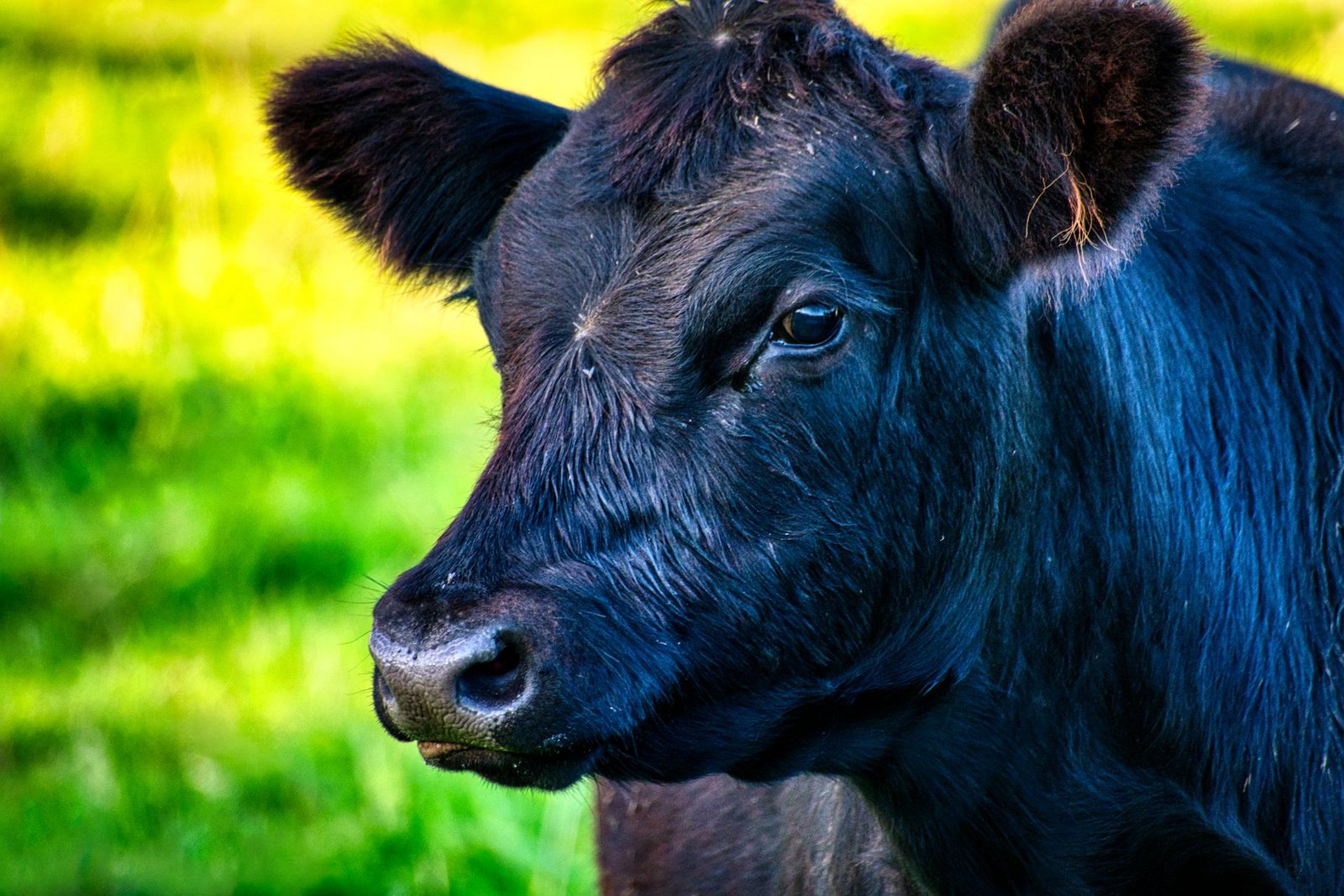
Angus vs Simmentaler is a choice that comes up on many beef farms in the cooler parts of South Africa, from the eastern Free State to the KwaZulu-Natal Midlands and the Western Cape. Both are European beef breeds, both have been farmed here for more than a century, and both have strong breed societies behind them. But they bring very different things to a herd. The Angus is the compact, polled, early-maturing British breed famous for easy calving and marbled beef. The Simmentaler is the big Swiss dual-purpose breed, with more milk in the cow and more weight on the weaner.
So the useful question is not which breed is better, but which one earns more on your veld, with your management and your buyers. This guide covers the seven differences that matter most, with figures from the breed societies, South African research and 2026 auctions.
Angus vs Simmentaler at a Glance
| Angus | Simmentaler | |
|---|---|---|
| Origin | Scotland | Simme Valley, Switzerland |
| In South Africa since | 1895, first import to the Free State | 1905, first stud near Bloemfontein |
| Breed society founded | 1917 | 1964 |
| Type | Beef breed, early maturing | Dual-purpose, milk and beef |
| Colour and horns | Black or red, naturally polled | Red or yellow and white, horned and polled lines |
| Mature cow weight | About 545 kg | About 543 kg at calving |
| Main strength | Calving ease, fertility, marbling | Milk, weaning weight, growth |
Angus figures come from the Angus Society of South Africa, as reported by Farmer’s Weekly. Simmentaler figures come from a review of the breed’s performance in southern Africa presented to the World Simmental-Fleckvieh Federation. Both are breed sources, so treat the numbers as guides and judge individual animals on their own records.
1. Where the Angus and Simmentaler Come From
The Angus comes from north-east Scotland, where it was developed in the 1700s as a hardy, hornless beef animal. According to Farmer’s Weekly, the first Angus reached South Africa in 1895, when ten cattle arrived on the farm of J Newburg in the Free State. The Aberdeen-Angus Cattle Breeders’ Society of South Africa was founded in 1917 with 12 members, and by 2022 it had about 140 registered stud breeders, with around 2,300 commercial beef farmers using Angus genetics. For the breed on its own, see our full guide to Angus cattle.
The Simmentaler comes from the Simme Valley in Switzerland, where it was bred for milk, beef and draught work. The Simmentaler Cattle Breeders’ Society records that the first Simmentalers arrived in 1905, when President M.T. Steyn established a stud near Bloemfontein. The breed took off after strong results in official interbreed tests in the 1960s, large imports followed from Namibia and Europe, and a breed society for southern Africa was formed in 1964. The society describes the Simmentaler as the third-largest non-dairy breed in southern Africa, after the Bonsmara and the Brahman.
That history still shows. The Angus was built as a pure beef animal with easy fleshing and early maturity. The Simmentaler was built as a big, milky, all-round farm animal, and that milk is still its biggest selling point.
2. Angus vs Simmentaler Size, Growth and Weaning Weight
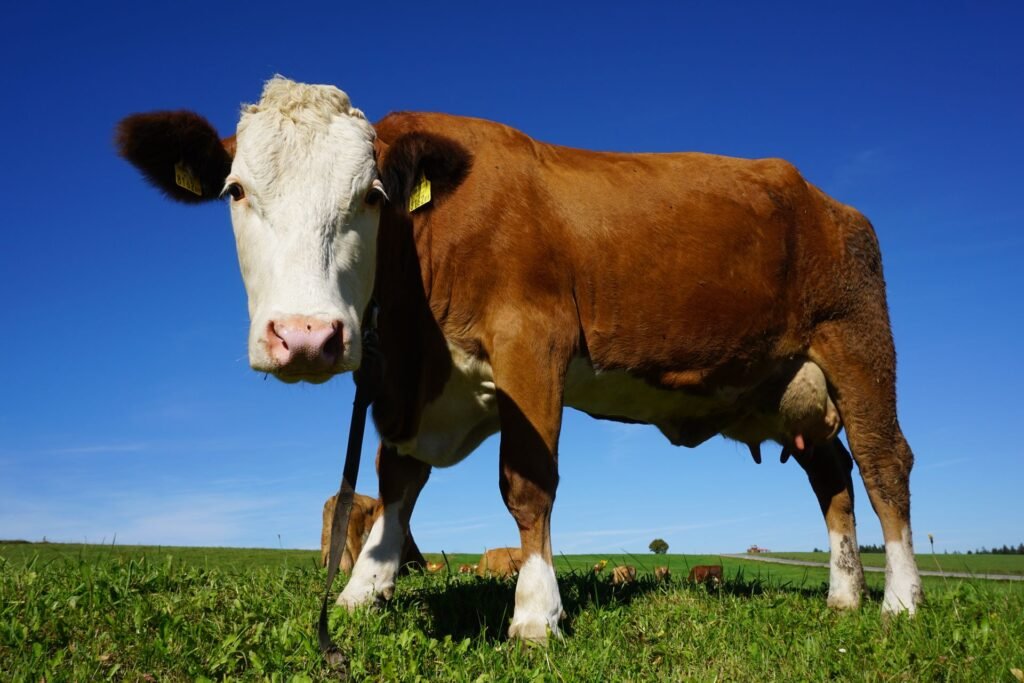
On paper, the cows are a similar weight. The Angus Society gives about 545 kg for a mature Angus cow and about 850 kg for a bull, while the Simmentaler review gives about 543 kg for a Simmentaler cow at calving. The difference shows in the calf.
The Simmentaler’s milk and growth potential produce heavy weaners. The breed review reported an average Simmentaler weaning weight of 240 kg against a national average of 215 kg, and a weaning weight equal to 46.1% of the cow’s weight. Simmentaler heifers were also heavier at 12 months, and the breed ranked first among ten tested breeds for weaning weight and feedlot growth, according to the breed society.
The Angus Society, for its part, says Angus cows can wean calves of around 45% of their own weight, which is very efficient for a medium-framed cow. So both breeds wean a good calf for their size. The Simmentaler tends to wean a heavier calf in kilograms, while the Angus puts less strain on the cow and the veld to do it.
3. Angus vs Simmentaler Milk and Mothering
This is where the Simmentaler’s dual-purpose background pays off. A study quoted in the breed review found that Simmentaler cows produced about 1.4 litres more milk per day than other Bos taurus cows of similar weight. More milk means a heavier calf at weaning, as long as the cow has the feed to support it.
The flip side is that a high-milking cow needs more feed. On poor veld or in a drought, a heavy-milking Simmentaler cow can lose condition quickly and take longer to get back in calf. Simmentaler herds do best where there is good grazing, planted pastures or a sensible supplement programme. Our guide to feeding cattle covers supplement programmes for cattle on veld.
The Angus is also a good mother. Farmer’s Weekly quotes the Angus Society describing it as one of the best dam lines thanks to good milk production, high fertility, low maintenance requirements and functional udders with small teats. It gives enough milk to wean a good calf without demanding as much from the veld as a heavier-milking breed.
4. Angus vs Simmentaler Calving Ease and Fertility
Calving ease is one of the Angus’s strongest points. Farmer’s Weekly reports an average Angus birth weight of about 35.1 kg, and the breed is known for small, vigorous calves and early maturity. Angus heifers reach puberty early, which helps them calve for the first time at a younger age. That is why Angus bulls are often used on heifers of other breeds too.
The Simmentaler has also been selected hard for reproduction. The breed review reported an average age at first calving of 31 months, three months earlier than the national average, an inter-calving period of 420 days, and re-calving rates of about 93% in research herds. Simmentaler calves can be bigger at birth, so choose bulls with good calving-ease breeding values when you mate heifers.
In both breeds, fertility depends as much on nutrition and bull selection as on the breed name. Ask for Breedplan figures when you buy bulls. Both societies use performance recording and breeding values.
5. Heat, Ticks and Where They Farm Best
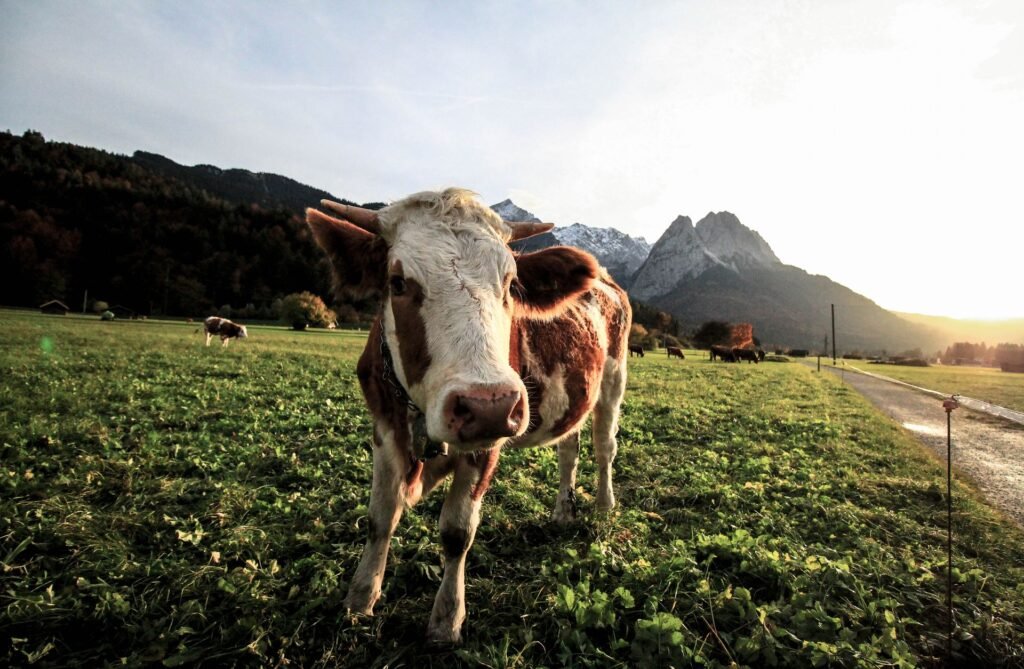
Both breeds are European Bos taurus cattle, so neither has the heat and tick tolerance of Sanga or zebu-derived breeds such as the Nguni, Bonsmara or Brahman. That is why both are concentrated in the cooler, higher-rainfall parts of the country.
Farmer’s Weekly notes that the Angus is found all over South Africa but is especially well represented in the Free State, KwaZulu-Natal and the Western Cape, and that Black Angus thrive in hard winter conditions and use most types of roughage. The Angus Society points out that the breed’s dark skin protects against sunburn and eye cancer. A black coat can soak up heat in strong summer sun, though, so shade and water matter in hot areas.
The Simmentaler is farmed widely across southern Africa. Its big frame and high milk yield mean it performs best where feed is reliable. In hot, dry or heavily tick-infested areas, both breeds are often used in crossbreeding programmes with adapted breeds rather than kept pure.
6. Beef Quality and Crossbreeding
The Angus is famous for its beef. Farmer’s Weekly describes it as fine-textured, tender, juicy and full of flavour, and the breed is known for natural marbling. That reputation has created premium beef brands built on Angus genetics in many countries.
The Simmentaler produces a big, lean, heavily muscled carcass, and its growth makes it popular with feedlots. Its greatest value in commercial herds is often in crossbreeding. The breed society says the Simmentaler is ideal for crossbreeding, giving high-milking cows and heavy weaners, and it is one of the parent breeds of the Simbra, a Simmentaler and Brahman composite.
The Angus is also a strong crossbreeding sire. The Angus Society says about 90% of crossbred calves from Angus bulls are polled, which saves dehorning. Some commercial farmers use an Angus bull on heifers for easy calving and a Simmentaler bull on mature cows for weight, getting the best of both breeds in one herd.
7. Angus vs Simmentaler Prices in 2026
Recent production auctions give a useful picture of Angus vs Simmentaler prices for breeding stock.
Angus. At the 17th Angus Alliance production auction in Kroonstad on 26 August 2026, stud bulls averaged R86,818 and two bulls reached the top price of R170,000. Cows averaged R38,000, pregnant cows R31,500, pregnant heifers R30,250 and open heifers R22,562, according to African Farming.
Simmentaler. At the BTB Simmentaler dispersal auction near Hartbeesfontein on 20 May 2026, 335 animals were sold. Thirty-nine bulls averaged R61,000 with a top price of R200,000, cows averaged R20,462, cows with calves R29,188 and heifers R27,238, as reported by African Farming.
| Category (2026 auctions) | Angus (Alliance, Kroonstad) | Simmentaler (BTB dispersal) |
|---|---|---|
| Bulls, average | R86,818 | R61,000 |
| Top bull | R170,000 | R200,000 |
| Cows, average | R38,000 | R20,462 |
| Heifers, average | R22,562 (open) to R30,250 (pregnant) | R27,238 |
Remember that one sale was a stud production auction and the other a full herd dispersal, which usually includes more commercial and older animals. Prices vary a lot between studs and seasons, so compare like with like and ask for current prices on the exact animals you need.
Angus vs Simmentaler in a Commercial Weaner Herd
Most beef farmers in South Africa sell weaners, so it helps to think about the Angus vs Simmentaler question in rands per hectare rather than kilograms per calf.
A heavier weaner earns more at the sale, but only if the cow that raised it did not eat up the difference. A big, high-milking Simmentaler cow needs more grazing than a moderate Angus cow, so on the same farm you may run fewer Simmentaler cows. Whether that pays depends on your veld, your stocking rate and the price per kilogram you get for each type of calf.
Work it through with your own numbers. Take the number of cows your farm can carry for each breed, multiply by your expected calving rate and weaning weight, and then by the weaner price. Subtract the extra lick, supplement and veterinary costs. On good sweetveld or pastures, the Simmentaler often comes out ahead. On poorer veld, or where you calve many heifers, the Angus usually does.
Some farmers settle the question by using both breeds. A moderate Angus or Angus-cross cow herd mated to a Simmentaler bull can give a good balance of cow cost and weaner weight. Whatever you choose, keep records of calving dates, weaning weights and cow condition, so after a few seasons you know which cows and bulls are paying their way.
Which Breed Suits Your Farm?
The Angus vs Simmentaler decision usually comes down to a few honest questions.
- How good is your veld? On good grazing or pastures, the Simmentaler’s milk and growth can pay off in heavier weaners. On poorer veld, the more moderate Angus cow is easier to keep in calf.
- How important is calving ease? If you calve many heifers or have little supervision, the Angus’s small birth weights are a real advantage.
- Who buys your calves? If you sell weaners on weight to feedlots, Simmentaler or Simmentaler-cross weaners are heavy and grow well. If you sell into a quality beef market, Angus genetics carry a strong name.
- How hot is your farm? Both prefer cooler areas. In hot, tick-heavy regions, think about crossing with an adapted breed.
- Do you want polled cattle? The Angus is naturally polled and passes that on to most crossbred calves. Polled Simmentaler lines are also available.
For more on how these breeds compare with adapted cattle, read our guides to Brahman vs Bonsmara and Bonsmara vs Nguni, or our overview of cattle farming in South Africa.
Buying Angus or Simmentaler Cattle
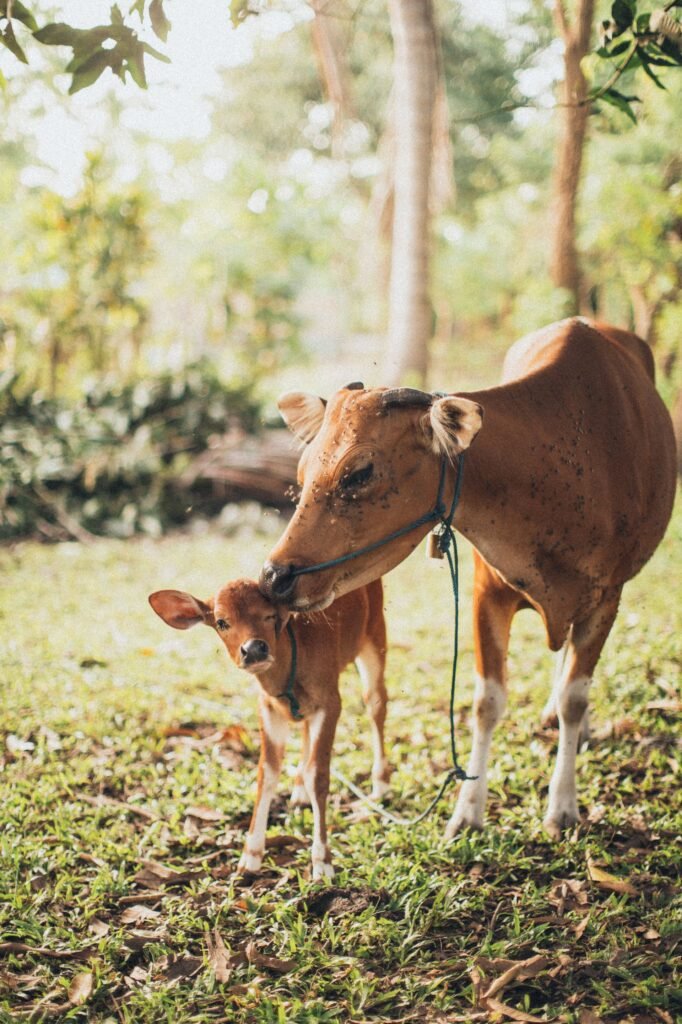
Whichever side of the Angus vs Simmentaler question you land on, buy with care. Check the seller’s registered company details, get a written quote that lists the animals, their age group, breeding status and delivery terms, and pay only against an official invoice. For bulls, ask for Breedplan figures, a fertility test and a veterinary health status. Our guide to buying livestock in South Africa covers every step, and for more on the Angus breed you can visit the Angus Society of South Africa.
DRM Livestock supplies Angus cattle and Simmentaler cattle to farms across South Africa, from weaners and heifers to pregnant cows and breeding bulls.
Frequently Asked Questions
What is the main difference in Angus vs Simmentaler cattle?
The Angus is a medium-framed, polled British beef breed known for calving ease, fertility and marbled beef. The Simmentaler is a large Swiss dual-purpose breed known for high milk yield, heavy weaners and fast growth.
Which breed weans heavier calves?
Usually the Simmentaler. A breed review reported average Simmentaler weaning weights of 240 kg against a national average of 215 kg, thanks largely to the cow’s extra milk. Angus cows wean calves of around 45% of their own weight, which is very efficient for their size.
Which breed is easier calving?
The Angus. Its calves average about 35 kg at birth, and Angus bulls are often used on heifers for easy calving. Choose Simmentaler bulls with good calving-ease figures if you mate heifers.
Are Angus cattle more expensive than Simmentalers?
At the 2026 auctions we looked at, Angus stud bulls averaged R86,818 against R61,000 for bulls at a Simmentaler dispersal, but the top Simmentaler bull sold for R200,000. Prices depend heavily on the stud and the type of sale.
Can Angus and Simmentaler cattle handle heat?
Both are European breeds and do best in cooler areas. In hot, tick-heavy regions they are often crossed with adapted breeds such as the Brahman or Bonsmara.
Can you cross Angus and Simmentaler cattle?
Yes. Some farmers use Angus bulls on heifers for easy calving and Simmentaler bulls on mature cows for heavier weaners. Plan your replacement heifers before you start.
Which breed is better for beginners?
Many beginners find the Angus easier because of its calving ease, moderate size and calm temperament. The Simmentaler is an excellent choice on good grazing if you can feed a high-milking cow properly.
Final Thoughts
The Angus vs Simmentaler choice comes down to your veld and your market. The Angus gives you easy calving, early maturity, a moderate cow and beef with a premium name. The Simmentaler gives you milk, heavy weaners and fast growth, with strong value in crossbreeding. Match the breed to your grazing, your climate and your buyers, and buy from sellers you can verify. If you would like current prices for Angus or Simmentaler cattle delivered to your farm, send us your requirements and we will get back to you with a written quote.
Looking to buy cattle?
Tell us the breed, age group, quantity and delivery area. We reply with availability, pricing and transport costs, usually within one working day.
DRM LIVE STOCK is a registered South African livestock company (Company No. K2023207798, VAT No. 4640323079) based at 135 Rocklands Rd, Uitenhage Farms, Gqeberha. We supply cattle, goats, sheep and pigs, with delivery across South Africa.