Kalahari Red vs Boer goats is a choice most meat goat farmers in South Africa face sooner or later. The Boer goat is the most famous meat goat in the world, big, fast-growing and backed by more than 60 years of stud breeding. The Kalahari Red is the tough red goat from the Northern Cape, bred for farmers who want animals that look after themselves in heat, sun and drought.
Both breeds fall under the same breeders’ association and sell into the same meat and live goat markets, so the choice is not about which one is “better”. It is about which one suits your veld, your climate and the way you farm. This guide covers the seven differences that matter most, with real figures from breed sources and 2025 and 2026 auctions.
Kalahari Red vs Boer Goats at a Glance
| Boer goat | Kalahari Red | |
|---|---|---|
| Origin | Eastern Cape, selected as a meat goat from the early 1900s | Northern Cape, selected from indigenous lob-eared goats from the 1970s |
| Breed society | South African registry established in 1959 | Kalahari Red Club founded in 1999, merged with the SA Boer Goat Breeders’ society in 2004 |
| Colour | White body with a red-brown head | Solid red to dark brown, fully pigmented skin |
| Mature doe weight | About 90 to 100 kg | About 75 kg |
| Mature buck weight | About 110 to 135 kg | Medium to large frame |
| Main strength | Size, growth and carcass, with the biggest market and stud network | Hardiness, sun tolerance and low maintenance |
Boer goat figures come from Oklahoma State University’s breeds database, and Kalahari Red figures from Farmer’s Weekly. Weights vary a lot with veld and management, so treat them as breed guides rather than promises.
1. Where the Boer Goat and Kalahari Red Come From
The Boer goat was developed in the Eastern Cape in the early 1900s, when farmers began selecting indigenous goats for meat rather than milk or hair. It became the benchmark meat goat of South Africa, the registry was established in 1959, and today Boer goats are farmed and exported all over the world.
The Kalahari Red has a different story. Indigenous lob-eared goats came into South Africa and Namibia with migrating tribes, and from the 1970s farmers in the Northern Cape, including Tollie Jordaan, Albie Horn, Louis van Rensburg and Ben Vorster, started selecting the red animals. The goats were shown in Bloemfontein in 1998 under the name “Brown Savannah”, the Kalahari Red Club was founded in Kimberley on 5 July 1999, and in 2004 the club merged with the South African Boer Goat Breeders’ society. Our full guide to Kalahari Red goats covers the breed standard, fertility and management in more detail.
Despite sharing an association, the two are genuinely different breeds. According to Farmer’s Weekly, DNA analysis showed that the difference between the red goats and Boer goats was greater than the difference between Boer goats and Savannas.
2. Colour, Skin and Sun Tolerance
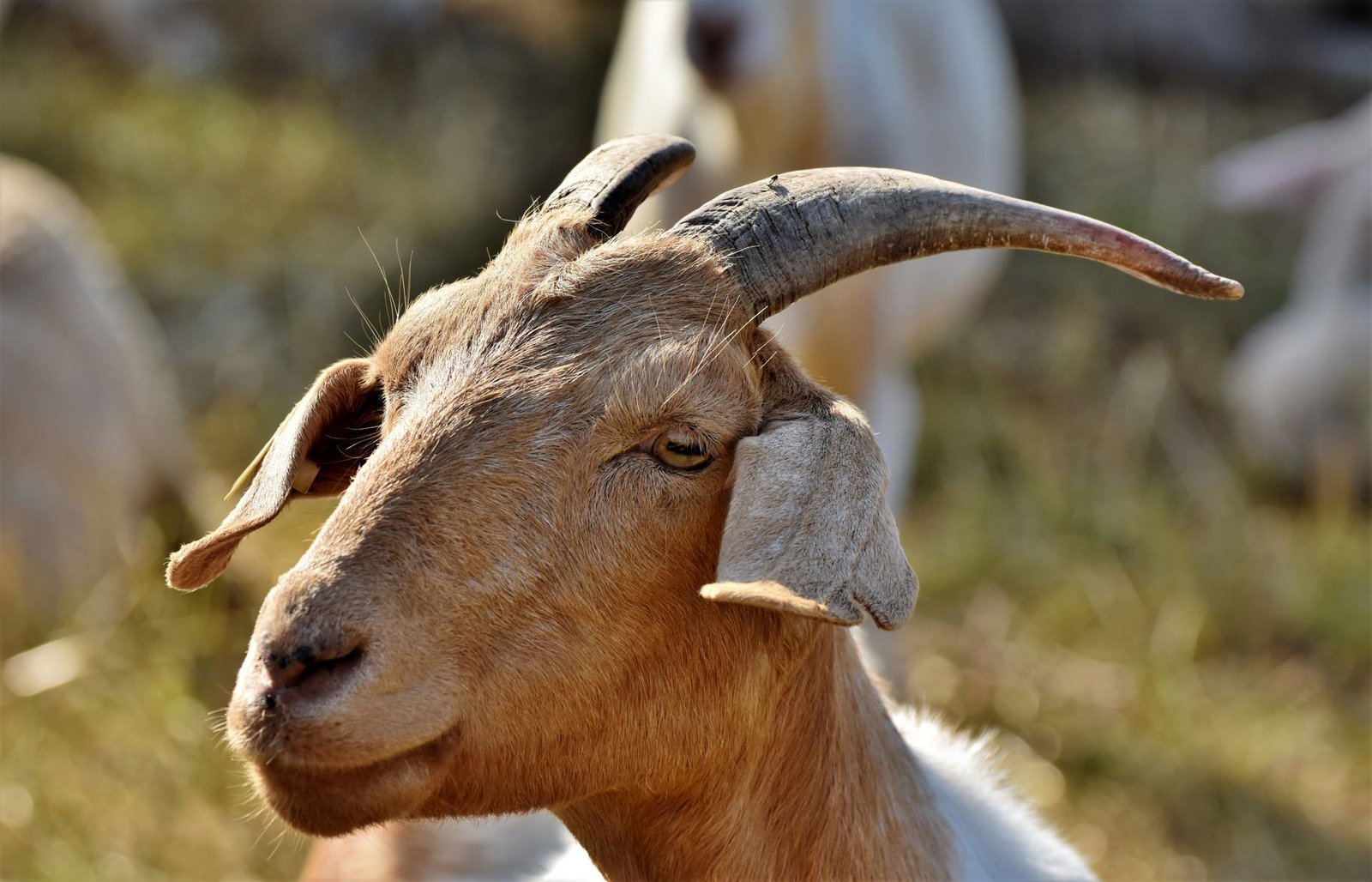
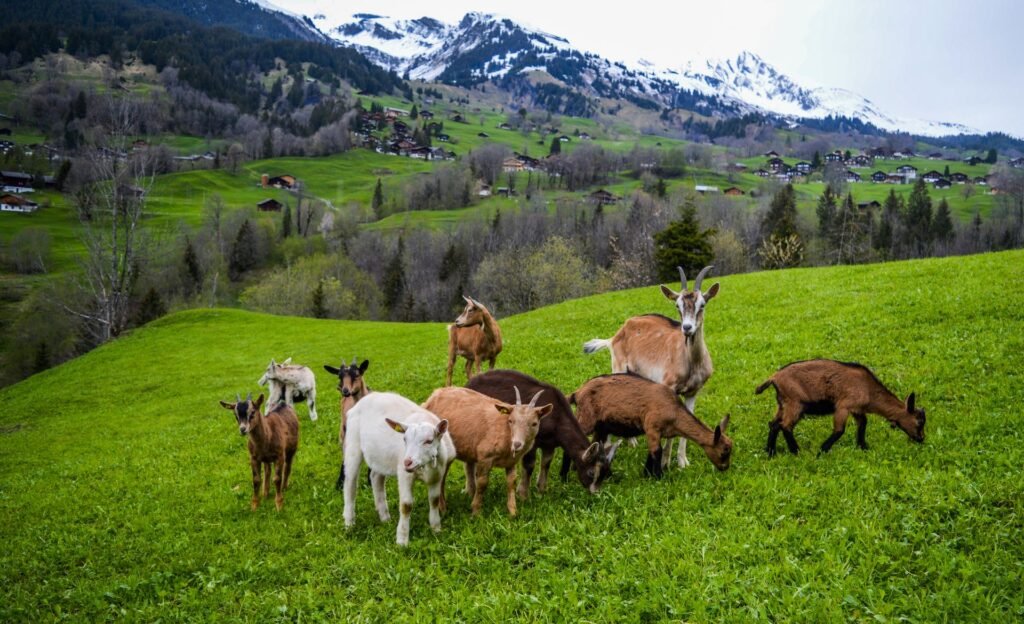
The most obvious difference is also one of the most practical. The Kalahari Red is solid red to dark brown with fully pigmented skin. That pigment protects it from sunburn and skin problems, and it lets the goats graze and browse through the heat of the day in hot, open country. Breed information from Oklahoma State University describes the Kalahari Red as sun, parasite and disease resistant, with fully pigmented skin that allows daytime foraging.
The Boer goat has a white body and a red-brown head. Good Boer goats are well pigmented around the eyes, under the tail and on the skin, and breeders select for this. But on large, open Kalahari or bushveld farms with little shade, many farmers find the red goat copes more comfortably with the sun.
There is a practical bonus to the red colour as well. Red goats blend into the veld, which some farmers believe makes them less conspicuous to predators than white-bodied goats. That is farm experience rather than research, but you will hear it from many Kalahari Red breeders.
3. Kalahari Red vs Boer Goats: Size and Growth
This is where the Boer goat has the clear advantage. Oklahoma State University gives mature Boer bucks at 110 to 135 kg and does at 90 to 100 kg, with good kids gaining 150 to 170 g a day and exceptional animals over 200 g a day. That growth and the Boer goat’s heavy, well-muscled carcass are why it became the world’s leading meat goat.
The Kalahari Red is a medium- to large-framed goat. Farmer’s Weekly quotes mature ewes at about 75 kg, with 100-day weaning weights of about 25 kg for ram kids and 21 kg for ewe kids. Under good management, the breed can do much better: at the Greenstone Kalahari Red stud near Leeudoringstad in North West, with creep feeding and planted pastures, kids were weaned at about 30 kg, as reported by Farmer’s Weekly.
So if you have good veld and can feed well, Boer goats will usually give you heavier kids. On harsh, extensive farms, the gap narrows, because the hardier goat often loses fewer kids and holds condition better.
4. Hardiness, Parasites and Management
The Kalahari Red was selected in the Northern Cape for survival under tough conditions, and its breeders describe it as a low-maintenance goat. Oklahoma State University notes that it needs less intervention than the average goat breed and suits very low labour operations.
That does not mean you can skip vaccinations, dosing or tick control. Heartwater, internal parasites and pneumonia still kill goats of every breed. But on farms where you cannot check your goats every day, or where you run large numbers on extensive veld, many farmers find the Kalahari Red forgives more.
The Boer goat is also hardy by international standards and does well across most of South Africa. It simply rewards good management more, and it tends to show its full growth advantage when it is well fed and well looked after.
5. Fertility and Mothering
Both breeds are fertile and can breed out of season, which lets you plan kidding for the Easter and December markets.
Boer goats commonly reach kidding rates of around 200% with good management, according to Oklahoma State University, with weaning rates above 160%. Does can kid three times in two years in intensive systems.
Kalahari Red does are known as strong, protective mothers with good herding instincts, and they usually kid without help. Oklahoma State University also notes that they can kid about three times every two years. At the Greenstone stud, the herd achieved a kidding percentage of 170%.
In practice, the number of kids you wean depends far more on doe condition at mating, predator control and kid survival in the first weeks than on the breed. Our guide to goat farming in South Africa covers breeding and kidding in more detail.
6. The Meat and Live Goat Market
Both breeds sell into the same markets: slaughter goats sold on weight, and live goats sold for family occasions, ceremonies and religious festivals. In the live market, buyers are usually looking for a mature, well-conditioned goat, and some buyers have a preference for a particular colour or type. Ask your regular buyers what they want before you choose.
The Boer goat has the edge in reputation. Buyers everywhere know it, and good Boer goats sell easily. The Kalahari Red is well known in the Northern Cape, North West and Free State, and its meat is described by Farmer’s Weekly as tender, tasty and low in fat.
7. Kalahari Red vs Boer Goat Prices
The best direct comparison comes from the first auction of the Free State Boktelers Group at Winburg on 20 May 2026, where both breeds were sold on the same day, as reported by African Farming:
| Category | Boer goat | Kalahari Red |
|---|---|---|
| Ewes | R8,056 (open) and R6,778 (pregnant) average | R6,375 average |
| Rams | R14,875 average | R12,000 average |
At the stud end of the market, Boer goats sell for much more because the breed has a far larger stud industry. At the Burger family’s prestige auction in May 2026, 12 Boer goat stud rams averaged R62,000 while two Kalahari Red rams averaged R26,500, according to African Farming. At the 2025 SA Boer Goat World Show auction, 23 Boer goat stud ewes averaged R27,652 and four Kalahari Red stud ewes R22,000.
For a commercial farmer, that means Kalahari Red breeding stock is usually a little cheaper to buy, while top Boer goat genetics cost considerably more. For a full breakdown of Boer goat prices, see our Boer goat price guide.
Crossing Kalahari Red and Boer Goats
Many commercial farmers use both breeds. A common approach is to run hardy Kalahari Red does and use a well-muscled Boer goat buck to add size and carcass to the kids, or the other way round, using a Kalahari Red buck on Boer goat does to bring in colour and hardiness. The crossbred kids often combine growth with toughness and benefit from hybrid vigour.
As with any crossbreeding plan, think about your replacement does before you start. Decide whether you will keep crossbred does or buy in purebred replacements, and keep records so you can see which combination performs best on your veld.
What It Costs to Start a Small Herd of Each Breed
To put the Kalahari Red vs Boer goats price difference in perspective, here is the buying cost of a starter herd of 30 does and one buck, using the Winburg auction averages from May 2026. It covers the animals only, not transport, fencing or veterinary costs.
| Item | Boer goat | Kalahari Red |
|---|---|---|
| 30 does | 30 x R6,778 = R203,340 | 30 x R6,375 = R191,250 |
| 1 buck | R14,875 | R12,000 |
| Total | R218,215 | R203,250 |
On these figures, the Kalahari Red herd costs roughly R15,000 less to buy. That is a real saving, but not a big one over the life of a herd. What decides profit is how many kids you wean and sell each year, and what they weigh. If Boer goats wean heavier kids on your farm, they will soon make up the difference. If the Kalahari Reds lose fewer kids and need less dosing and feeding, they will pull ahead. Use your own local prices and costs to work it out.
Kalahari Red vs Boer Goats in a Dry Year
Drought is where the difference between these two breeds shows most clearly on the farm. When the veld dries out and the browse thins, does lose condition, conception rates drop and more kids are lost.
Boer goats, being bigger, need more feed simply to maintain themselves. With a good lick and supplementary feeding plan they come through dry years well, but on poor veld without extra feed they lose condition faster than smaller, hardier goats.
Kalahari Reds were selected in the Northern Cape for exactly these conditions. Breeders value them because they keep condition and keep kidding when feed is short. That does not mean you can stop feeding in a drought, but it does give you more room for error.
Whichever breed you choose, reduce numbers early in a dry year, keep your best young does, sell older and poorer animals first, and do not let does drop too far in condition before mating.
Kalahari Red vs Boer Goats: Which Should You Choose?
Choose the Boer goat if:
- You want the heaviest kids and the best carcass, and you can feed well.
- Your farm has reasonable veld and shelter, and you check your goats regularly.
- You want the biggest choice of breeding stock and the easiest resale.
- You are interested in stud breeding, where the Boer goat has the largest market.
Choose the Kalahari Red if:
- You farm in a hot, dry or open area with little shade.
- You run goats extensively and cannot check them every day.
- You want a low-maintenance, protective mother that kids easily.
- You want slightly cheaper breeding stock for a commercial herd.
If you are still unsure, look at the Savanna too. It is a hardy white meat goat that sits between the two in many ways. Compare it on our Savanna goats for sale page.
What to Check When Buying Kalahari Red or Boer Goats
- Mouth and teeth: a correct bite and sound teeth for the goat’s age.
- Legs and feet: goats must walk freely, especially on extensive veld.
- Udders and teats: does need a sound udder with two functional teats.
- Testicles: bucks need two firm, even testicles of good size.
- Pigmentation: good pigment around the eyes and under the tail in Boer goats, and even colour in Kalahari Reds.
- Condition and health: bright, alert goats with no scours, coughing or pale eyelids.
- Paperwork: identification documents for every goat, registration papers for stud animals, and a health declaration or permit where required.
Our step-by-step guide to buying livestock in South Africa covers the paperwork, transport and quarantine rules in full.
Buying Kalahari Red and Boer Goats from DRM Livestock
We supply Boer goats and Kalahari Red goats to farmers across South Africa, including kids, young does, pregnant does and breeding bucks, with transport arranged to your farm. Every animal comes with identification documents, and we work with the state vet on any movement permits.
See what we offer on our Boer goats for sale and Kalahari Red goats for sale pages, or request a quote with the number and type of goats you need and your farm location.
Frequently Asked Questions About Kalahari Red vs Boer Goats
Is the Kalahari Red a type of Boer goat?
No. Both breeds fall under the South African Boer Goat Breeders’ association, but they are separate breeds. DNA work reported by Farmer’s Weekly found that Kalahari Reds differ more from Boer goats than Boer goats do from Savannas.
Which is bigger, the Boer goat or the Kalahari Red?
The Boer goat. Mature Boer does weigh about 90 to 100 kg and bucks 110 to 135 kg, while mature Kalahari Red does are around 75 kg.
Which goat is better for hot, dry areas?
Many farmers in hot, dry and open areas prefer the Kalahari Red because its fully pigmented skin and red coat cope well with strong sun, and it is known as a low-maintenance breed.
Are Kalahari Red goats cheaper than Boer goats?
Usually a little. At a mixed auction in the Free State in May 2026, Kalahari Red rams averaged R12,000 against R14,875 for Boer goat rams, and Kalahari Red ewes R6,375 against R6,778 to R8,056 for Boer goat ewes.
Can you cross Kalahari Red and Boer goats?
Yes. Crossing the two is common in commercial herds and can combine the Boer goat’s size with the Kalahari Red’s hardiness. Plan your replacement does before you start.
How often do Kalahari Red and Boer goat does kid?
A doe carries her kids for about five months, and both breeds can breed through most of the year. With good nutrition and management, does of either breed can kid about three times in two years, although many extensive farmers choose one kidding a year to keep does in good condition and time kids for the best market.
Which breed is better for beginners?
Both are good choices. The Kalahari Red is more forgiving on harsh, extensive farms, while the Boer goat gives heavier kids where the veld and management are good. Many beginners choose whichever breed does well on neighbouring farms.
Final Thoughts
The Kalahari Red vs Boer goats choice comes down to your farm. The Boer goat gives you size, growth and the biggest market in the goat industry. The Kalahari Red gives you hardiness, sun tolerance and a low-maintenance mother that keeps producing when conditions are tough. Match the breed to your veld and your management, and buy from sellers you can verify. If you would like current prices for either breed delivered to your farm, send us your requirements and we will get back to you with a written quote.
Looking to buy goats?
Tell us the breed, age group, quantity and delivery area. We reply with availability, pricing and transport costs, usually within one working day.
DRM LIVE STOCK is a registered South African livestock company (Company No. K2023207798, VAT No. 4640323079) based at 135 Rocklands Rd, Uitenhage Farms, Gqeberha. We supply cattle, goats, sheep and pigs, with delivery across South Africa.