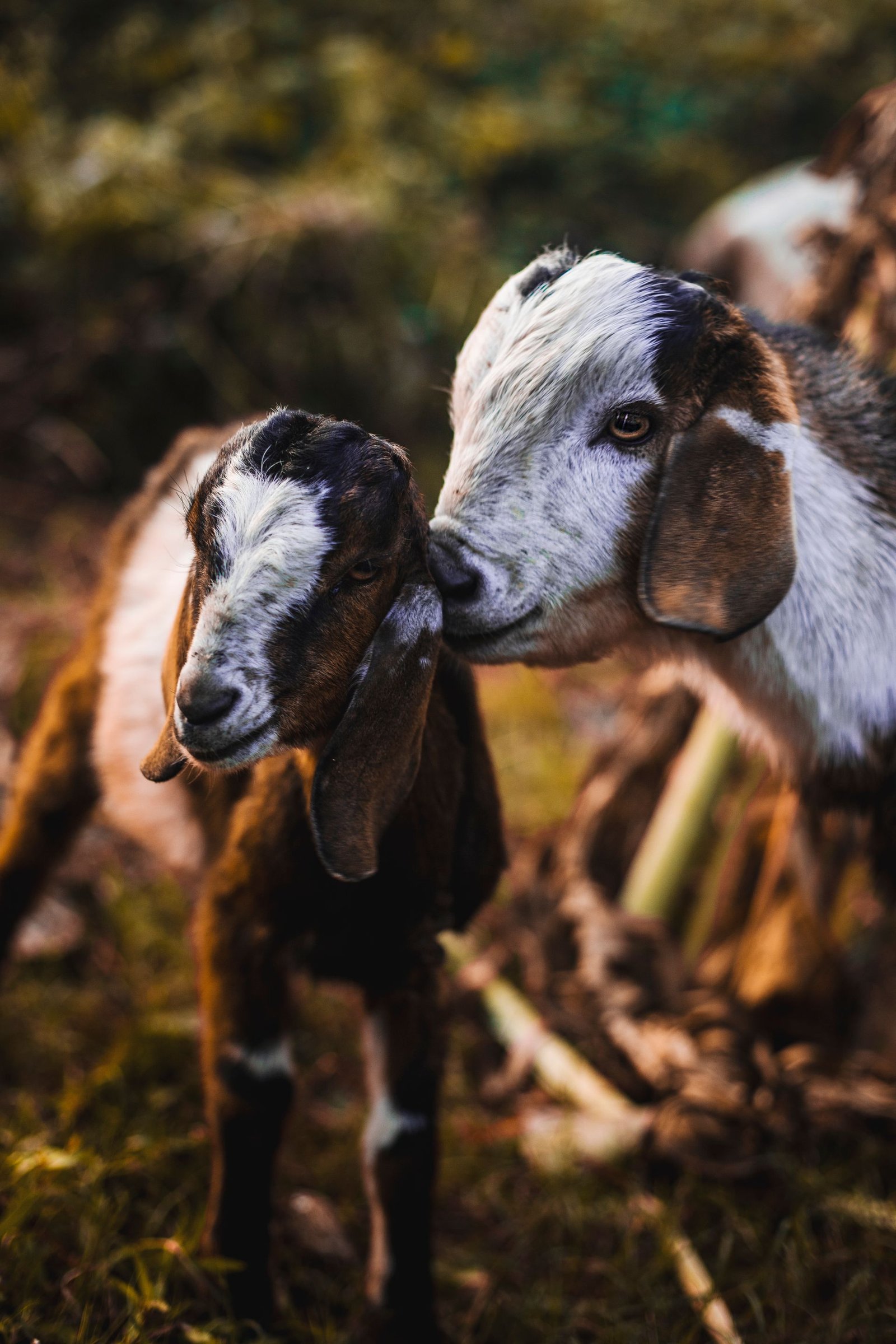
Boer goat prices in South Africa run from under R2,000 for a slaughter goat to more than R1 million for a top stud ram. Both figures are real, and both are “the price of a Boer goat”. That range confuses a lot of new buyers, and it is also where many of them overpay or get disappointed.
The trick is to stop asking what a Boer goat costs and start asking what the type of goat you need is selling for. A commercial doe for a meat herd, a flock buck to put on your does and a registered stud ram are three different purchases, bought in three different markets. This guide gives you real, recent reference points from each of those markets, explains why prices move the way they do, and shows you how to buy without paying for something you do not need. If you are new to the breed, start with our complete guide to Boer goats in South Africa.
Boer Goat Prices at a Glance
Here is a summary of published figures from the past year and a half. They come from auction reports, so they show what buyers actually paid on the day, not asking prices on classified ads.
| Type of goat | Reference price | Where the figure comes from |
|---|---|---|
| Slaughter goats (commercial, 23 kg to 48 kg) | R1,559 to R2,265 per animal, or R47.18/kg to R67.40/kg | Weekly auction figures reported by Farmer’s Weekly |
| Herd (flock) females | R6,807 average | Club auction, Kimberley, March 2026 |
| Open commercial ewes | R10,200 average | Prestige auction, May 2026 |
| Stud females | R11,312 average | Club auction, Kimberley, March 2026 |
| Flock rams (bucks) | R12,785 average | Club auction, Kimberley, March 2026 |
| Commercial rams | R13,000 average | Prestige auction, May 2026 |
| Stud rams at a club auction | R17,000 average | Club auction, Kimberley, March 2026 |
| Pregnant stud ewes at a prestige sale | R23,571 average | Prestige auction, May 2026 |
| Stud rams at a prestige sale | R62,000 average, top R250,000 | Prestige auction, May 2026 |
| Record stud ram | R1.05 million | Reported by Farmer’s Weekly |
A quick note on words. Many South African auction reports call Boer goat males “rams” and females “ewes”, the same as for sheep. On the farm most people say bucks and does. They mean the same animals.
Commercial Boer Goat Prices: What the Meat Market Pays
This is the floor of the market, and it matters even if you never plan to sell a slaughter goat, because it tells you what your surplus kids and cull does are worth.
In a report on the goat market, Farmer’s Weekly looked at one week in which just over 1,000 goats were traded at auctions. The average price ranged from R47.18/kg to R67.40/kg, depending on age and sex, with goats weighing from about 23 kg for small animals to 48 kg for large ones. That put the average price per animal between R1,559 and R2,265.
The same report makes a point every goat farmer should understand. South Africa has around 7.8 million goats, but only about 1.8 million of them are in commercial herds. More than three million goats are estimated to be slaughtered informally each year, for household use and for traditional, religious and ceremonial occasions, while only a tiny share goes through formal abattoirs. In other words, most goats are sold live, often directly to a family or a trader.
That has a real effect on price. A mature, well-conditioned goat sold privately for a ceremony can fetch far more than its weight at an auction would suggest, especially before Easter, in December and during winter when demand peaks. We cover this in more detail in our guide to goat farming in South Africa.
Flock Boer Goat Prices: The Middle of the Market
Most farmers building a meat herd are not buying slaughter goats and they are not buying prestige stud animals. They are buying sound, productive does and a good buck. The best reference for this part of the market is a breeders’ club auction, where commercial and stud breeders sell working animals.
At the Northern Cape and Gordonia Boer Goat Club auction at the Northern Cape Livestock auction centre in Kimberley on 6 March 2026, African Farming reported these Boer goat averages:
| Category | Average price |
|---|---|
| Herd females | R6,807 |
| Stud females | R11,312 |
| Flock rams | R12,785 |
| Stud rams | R17,000 |
| Top price (a stud ram) | R32,000 |
These are the numbers I would pay the most attention to if you are starting out. They show that a good, registered flock buck costs roughly double what a herd doe costs, and that stud females carry a clear premium over herd females. They also show that you do not need prestige-sale money to buy quality animals.
Stud and Prestige Boer Goat Prices
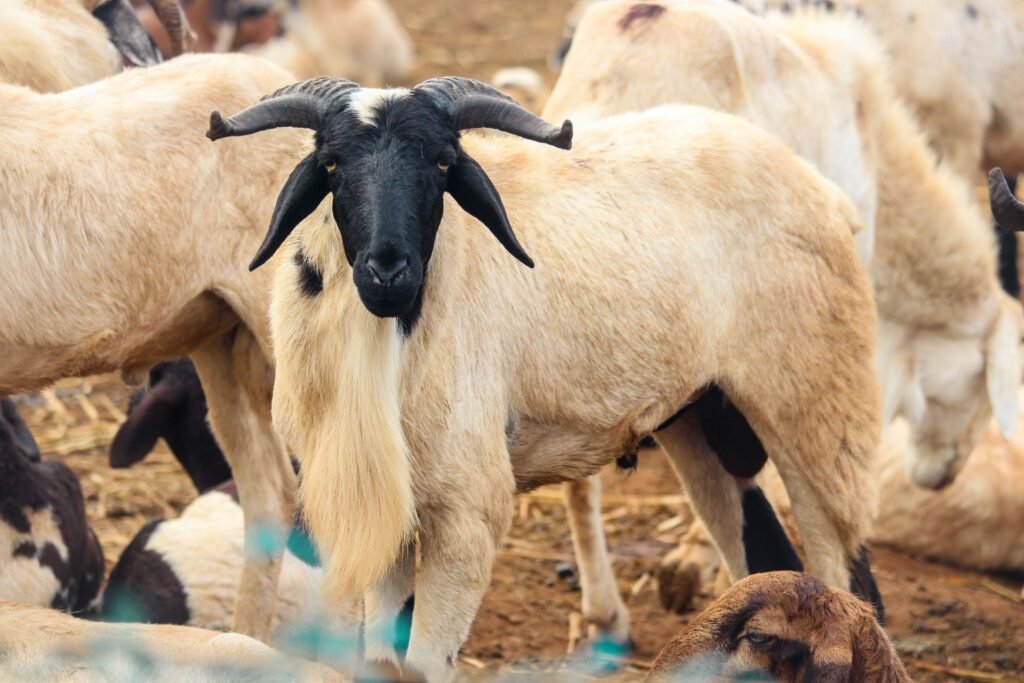
At the top end, Boer goat prices climb fast. Prestige and production sales are where leading studs sell their best genetics, and buyers are usually other stud breeders looking for a sire that will lift a whole herd.
Prestige auction, May 2026
At the Burger family’s prestige auction on 16 May 2026, 12 Boer goat stud rams averaged R62,000 and the top ram sold for R250,000, according to African Farming. The same sale also gives useful female prices:
- Pregnant stud ewes: R23,571 average (14 sold), with the best at R60,000
- Open stud ewes: R18,571 average
- Commercial ewes with kids at foot: R20,000 average
- Pregnant commercial ewes: R14,923 average
- Open commercial ewes: R10,200 average
- Commercial rams: R13,000 average
Notice how much a pregnancy is worth. At this sale a pregnant commercial ewe averaged nearly R5,000 more than an open one, because the buyer is getting two animals, or three if she carries twins, and saves months of waiting.
SA Boer Goat World Show auction, May 2025
After the SA Boer Goat Breeders’ Society’s world championship at Bloem Show, the auction on 2 May 2025 saw 14 Boer goat rams average R67,062 and 23 stud ewes average R27,652. The champion six-tooth ram sold for R300,000 and the most expensive ewe for R75,000, as reported by African Farming.
The record
The Boer goat ram Formula One, bred by the Lukas Burger stud of Griekwastad, sold for R1.05 million, which Farmer’s Weekly described as the highest price ever paid in South Africa for a stud goat.
These sales are exciting to follow, but keep them in perspective. They are a tiny part of the market. If you are building a commercial meat herd, prestige prices are not the benchmark you should be using.
How Boer Goat Prices Compare with Other Meat Breeds
The same auctions sold a few Savanna and Kalahari Red goats, which gives a rough comparison. At the Kimberley club auction in March 2026, Savanna flock rams averaged R13,000 and Savanna herd females R8,000, close to the Boer goat figures. At the May 2026 prestige sale, two Kalahari Red rams averaged R26,500, and at the 2025 World Show auction four Kalahari Red stud ewes averaged R22,000.
These are small numbers of animals, so treat them as a rough guide only. What they do show is that the hardy red and white meat breeds sell in the same broad range as Boer goats. Choose the breed for your veld and climate first, and let price come second.
Why Boer Goat Prices Vary So Much
Two goats that look much the same in a photo can differ in price by thousands of rand. These are the things that make the difference.
What the goat is for
A slaughter goat is priced on weight and condition. A breeding doe is priced on what she will produce. A buck is priced on what his kids will be worth, and since one buck sires a large share of the kids born on the farm, his genetics are multiplied through the whole herd.
Registration and genetics
Registered stud animals with known pedigrees and performance records carry a premium. For a commercial herd you usually do not need registered does, but a registered or well-bred buck is often money well spent. The SA Boer Goat Association sets the breed standard and runs the registration system for stud breeders.
Age and teeth
Young does that have not kidded cost less than proven, pregnant does in their prime. Older does with worn teeth are cheaper again, because their productive years are behind them.
Pregnancy and kids at foot
As the prestige sale figures show, a pregnant doe or a doe with kids at foot costs noticeably more than an open doe. You pay for time saved and for the kids that come with her.
Condition and conformation
Well-grown goats with good depth, strong legs, a sound mouth and a good udder or testicles sell faster and for more. Thin or poorly grown animals are cheap for a reason.
Season and demand
Demand for live goats peaks before Easter, in December and through winter, and prices usually follow. Breeding stock tends to be easier to buy after a good rainy season, when farmers have grazing and browse to support their herds.
Location and transport
The price at an auction in the Northern Cape is not the price on your farm in Limpopo or KwaZulu-Natal. Transport, and the time animals spend on the road, add real cost.
What Should You Pay? Matching the Price to Your Plan
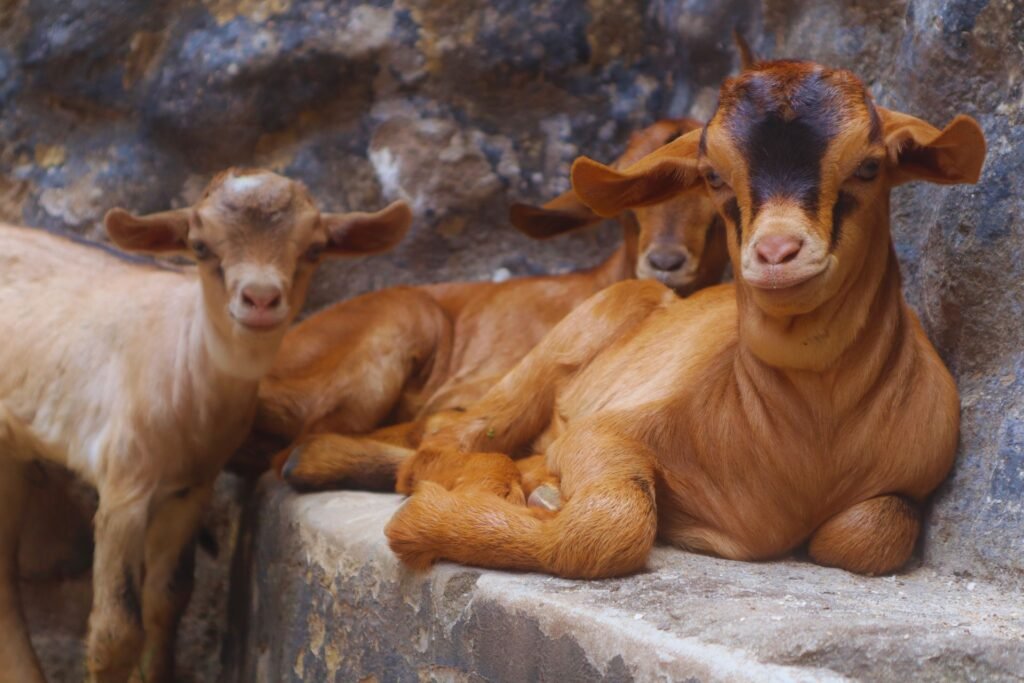
The right price depends on what you are building. Here is how I would think about it.
Starting a commercial meat herd
Buy healthy, well-grown herd does from a reliable source, and spend more on the buck. Club-auction herd female prices, around R6,800 on average in March 2026, are a sensible benchmark for decent commercial does. Paying stud prices for commercial does rarely pays back in a meat herd.
Buying a buck
This is where to spend. A good flock buck at a club auction averaged just under R12,800, and a stud ram about R17,000. A buck that adds even a couple of kilograms to every kid he sires will pay for himself quickly. A cheap buck with poor growth or weak legs will cost you in every kid crop he produces.
Starting a stud
Stud breeding is a long-term business with registration, inspection and record-keeping. Expect to pay stud female prices, from about R11,000 at club level to R20,000 and more at prestige sales, and buy from breeders whose animals and records you can check.
Buying goats to sell for ceremonies
If your plan is to buy young goats and grow them out for the live market, work backwards. Know what your local buyers pay for a mature, well-conditioned goat, subtract feed, dosing, transport and losses, and see what you can afford to pay for the young stock.
The Costs Beyond the Purchase Price
The price per head is only part of what a Boer goat costs you. Budget for these as well:
- Transport: often a significant cost over long distances, and it goes up if the load is small.
- Documents and movement rules: every animal needs proper identification, and disease controls can require veterinary permits for certain areas.
- Quarantine: keep new goats apart from your herd for at least 28 days, as current foot-and-mouth disease guidance requires.
- Vaccination and dosing: vaccinate and dose new arrivals according to your vet’s programme for your area. Heartwater and internal parasites are major risks in many parts of the country.
- Fencing: goats will find every weak spot. If your fences are built for cattle, budget for upgrades before the goats arrive.
- Settling-in losses: goats moved from a dry area to a humid, tick-heavy area are more vulnerable at first. Ask where the animals come from.
How to Avoid Overpaying, or Being Scammed
The goat market is full of honest sellers, but it also attracts fake online adverts, especially on social media and classified sites. Protect yourself:
- Be wary of prices that are too good. If a registered Boer goat ram is advertised for a fraction of the auction averages above, ask why.
- Check who you are dealing with. A real business can give you a company registration number, a physical address and references.
- Get the animals identified in writing. Ask for the ear tag numbers of the specific animals on your quote, and check them, and their mouths, on delivery.
- Check each goat properly. Look at teeth, feet and legs, udder and teats on does, testicles on bucks, and body condition.
- Get the paperwork. Registration certificates for stud animals, identification documents for all animals, and any movement permits required.
- Get everything in writing. A written quote should list the number and type of goats, price per head, transport and delivery date.
Buying Boer Goats from DRM Livestock
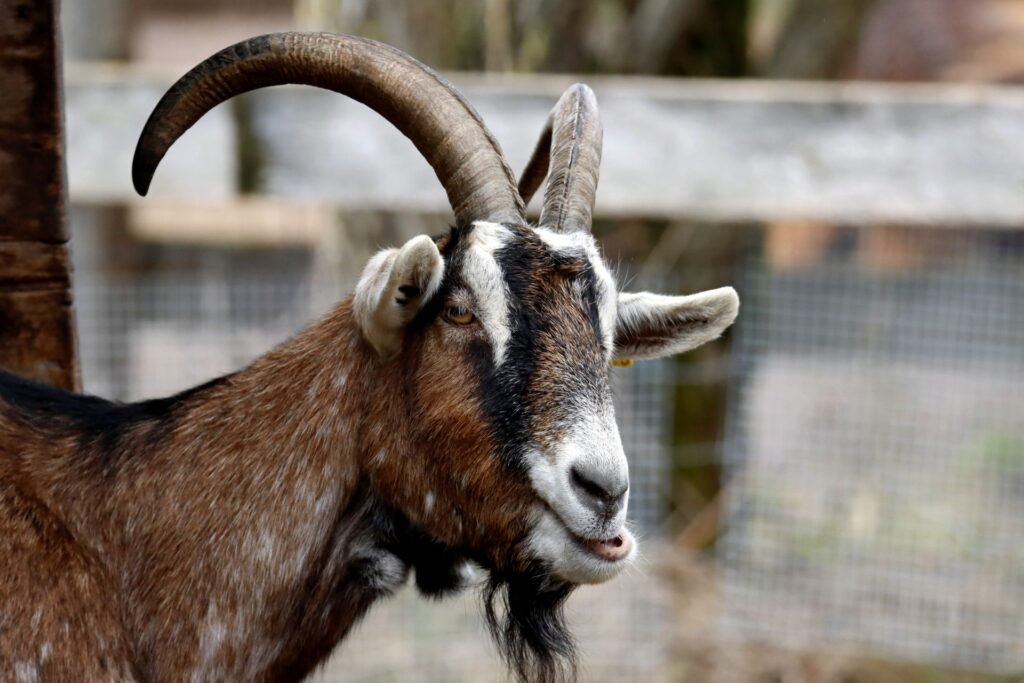
We supply Boer goat kids, young does, pregnant does and breeding bucks to farmers across South Africa, with transport arranged to your farm. Every animal comes with identification documents, and we work with the state vet on any movement permits needed.
Because Boer goat prices move with the market, the season and the type of animal, we do not publish a fixed price list. Tell us what you need and where your farm is, and we will send you a written quote with current prices and delivery costs. You can see what we supply on our Boer goats for sale page, or request a quote directly.
If you are still deciding on a breed, compare the Kalahari Red and Savanna, two hardy meat breeds that suit hot, dry areas. Sheep farmers may also find our Dorper sheep price guide useful.
Frequently Asked Questions About Boer Goat Prices
How much is a Boer goat in South Africa?
It depends on the type of goat. Recent published figures put slaughter goats at roughly R1,500 to R2,300 each, herd does at a club auction at around R6,800, flock bucks at about R12,800 and stud rams from R17,000 at club level to R60,000 and more at prestige sales.
How much is a Boer goat kid?
Kids are usually priced on weight and quality. Weaned commercial kids sell close to slaughter-goat prices, while well-bred stud kids cost considerably more. Ask for a written quote with the age and weight of the kids.
Why are some Boer goats so expensive?
Top stud rams are bought for their genetics. A great sire can improve hundreds of kids across a stud and its buyers’ herds, so breeders are willing to pay very high prices for the best animals.
Is it cheaper to buy Boer goats at an auction?
Sometimes. Auctions give you transparent prices and a wide choice, but you must add commission, transport and your own time, and you have little time to inspect each animal. Buying from a supplier or breeder lets you choose specific animals and arrange delivery.
When is the best time to buy Boer goats?
Prices for live goats usually peak before Easter, in December and in winter, so buying breeding stock outside those periods can save money. Also make sure you have grazing, browse and shelter ready before the goats arrive.
What should I check before paying for Boer goats?
Check the seller’s company details, check teeth, feet, udders and testicles when the animals arrive, and get registration certificates, identification documents and a written quote before paying.
Final Thoughts
Boer goat prices only make sense when you compare like with like. A slaughter goat, a herd doe, a flock buck and a stud ram are priced in different markets, and the published auction figures above give you a solid reference point for each. Decide what your herd actually needs, spend your money where it counts, which is usually on the buck, and always buy from a seller you can verify. If you would like current prices delivered to your farm, send us your requirements and we will get back to you with a written quote.
Looking to buy goats?
Tell us the breed, age group, quantity and delivery area. We reply with availability, pricing and transport costs, usually within one working day.
DRM LIVE STOCK is a registered South African livestock company (Company No. K2023207798, VAT No. 4640323079) based at 135 Rocklands Rd, Uitenhage Farms, Gqeberha. We supply cattle, goats, sheep and pigs, with delivery across South Africa.