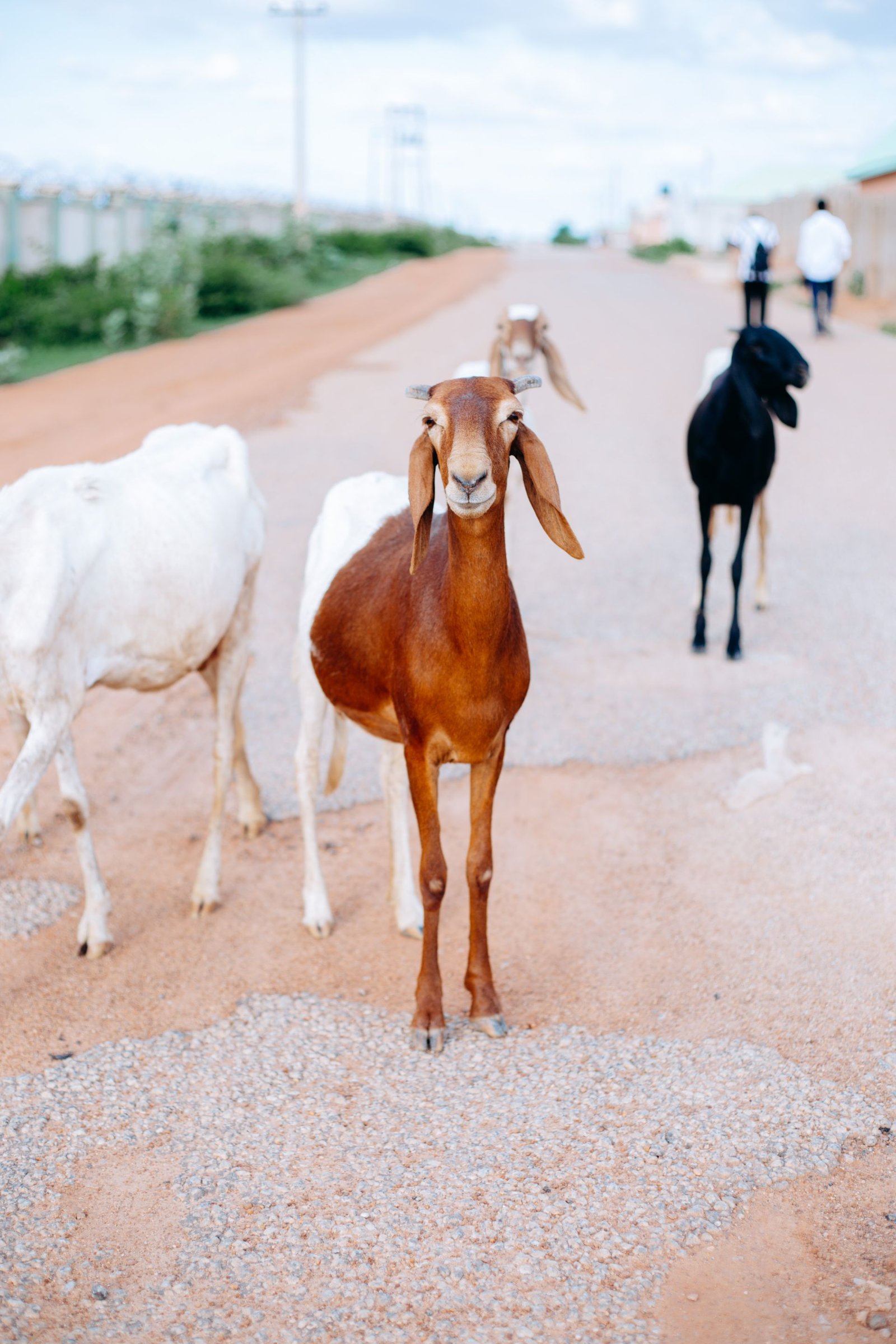
Kalahari Red goats were bred for the kind of country where many other goats struggle. Their deep red coat and dark, pigmented skin protect them from the sun. Their lob-eared, indigenous roots give them hardiness and good mothering. And decades of selection as a meat goat mean they still produce a kid worth selling. For a farmer on dry bushveld or Kalahari veld who wants a low-maintenance meat goat, the Kalahari Red is often the first breed worth considering.
This guide covers everything you need to know about Kalahari Red goats in South Africa: where the breed came from, what the breed standard looks for, size and growth, fertility, how to manage them, what they cost at recent auctions, and what to check before you buy.
Kalahari Red Goats at a Glance
| Trait | Kalahari Red |
|---|---|
| Origin | Northern Cape, selected from indigenous red lob-eared goats from the 1970s |
| Breed society | Kalahari Red Club founded in 1999; part of the SA Boer Goat Breeders’ Association since 2004 |
| Colour | Light to dark brown or red, with at least 75% brown for stud animals |
| Skin | Well pigmented, loose and supple, with folds |
| Mature doe weight | About 75 kg |
| 100-day weaning weight | About 25 kg for ram kids and 21 kg for ewe kids |
| Main strengths | Sun and heat tolerance, hardiness, mothering ability, low inputs |
| Best suited to | Extensive veld, bushveld and hot, dry regions |
Weights and weaning figures come from Farmer’s Weekly‘s breed profile. Expect variation between herds and between veld types.
1. Where Kalahari Red Goats Come From
Long before there was a breed society, red lob-eared goats were kept by communities across South Africa and Namibia. In the Northern Cape, farmers noticed that these red goats coped well with heat, sun and poor grazing, and from the 1970s a group of breeders, including Tollie Jordaan, Albie Horn, Louis van Rensburg and Ben Vorster, began selecting them seriously as meat goats.
The goats were first shown in Bloemfontein in 1998 under the name “Brown Savannah”. DNA testing confirmed that they were genetically distinct from both the Boer goat and the Savanna, and on 5 July 1999 the Kalahari Red Club was founded in Kimberley. In October 2004 the club joined the South African Boer Goat Breeders’ Association.
Today the Kalahari Red is one of three breeds managed by that association, alongside the Boer goat and the Savanna. In a 2025 article on the global popularity of South African goat breeds, Farmer’s Weekly described the Kalahari Red as extremely hardy and able to thrive in harsh, dry conditions with minimal inputs.
2. The Kalahari Red Breed Standard
According to the SA Boer Goat Breeders’ Association, the Kalahari Red breed standard is the same as the Boer goat’s in most respects, with the main differences in colour. The ideal is a brown goat, with shades from light to dark brown, and at least 75% of the body must be brown without looking motley.
The SA Kalahari Reds breeders’ site adds more detail on what judges and inspectors look for:
- Head: strong, with large, soft brown eyes and a strong, slightly curved nose.
- Horns: of moderate length, dark and curving backwards.
- Skin and coat: loose, supple skin with folds, especially in rams, and short, glossy hair.
- Frame: a heavy, well-muscled meat goat with a lively, vigorous look.
- White markings: small white patches are allowed, up to about 5 cm across on the legs and 10 cm on the body.
- Pigmentation: at least 75% pigmentation under the tail for stud animals.
- Rams: a scrotal circumference of at least 25 cm, with any split no more than 5 cm.
Animals that do not meet the stud standard but have no serious defects can still be kept and sold as flock goats.
3. Size and Growth of Kalahari Red Goats
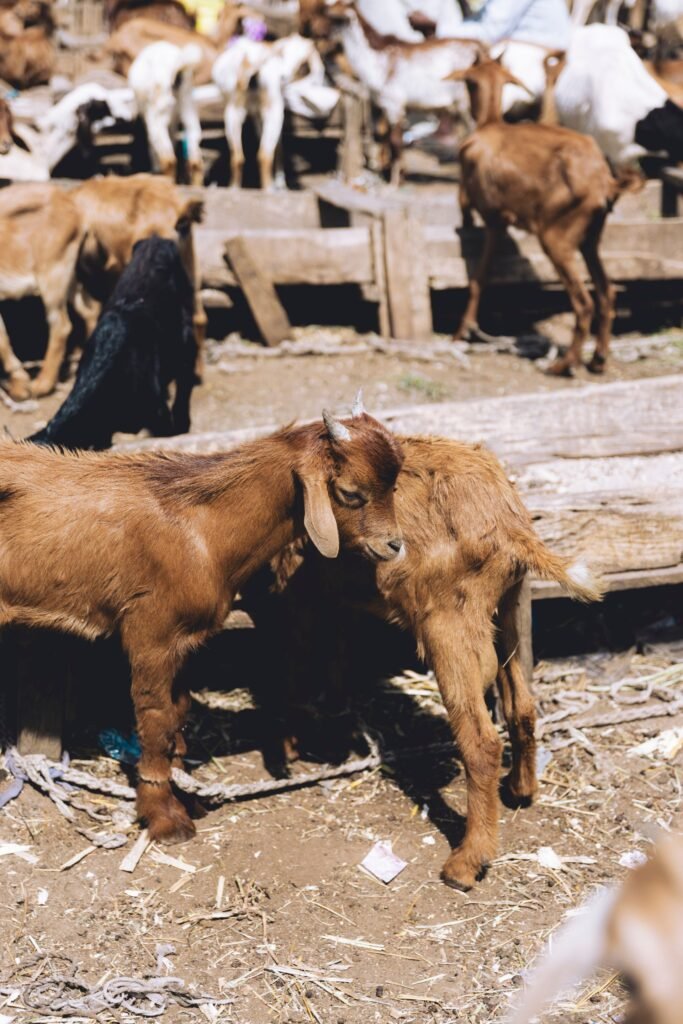
The Kalahari Red is a medium- to large-framed meat goat. Farmer’s Weekly puts mature does at about 75 kg, smaller than a well-grown Boer goat doe. Kids are quoted at about 25 kg for rams and 21 kg for ewes at 100 days. Our guide to goat breeding covers mating, pregnancy and kidding.
Under good management, Kalahari Reds can do a lot better than that. At the Greenstone Kalahari Red stud near Leeudoringstad in North West, kids born at an average of 3.3 kg were weaned at about 30 kg, with creep feed and planted pastures, as reported in a Farmer’s Weekly profile of the farm. For rations and licks, see our guide to feeding goats.
The breed’s real value is not maximum growth on good feed, but steady growth on ordinary veld with little help. The meat is described as tender and lean when the goats are slaughtered young.
4. Fertility and Mothering
Kalahari Red does are known for being fertile, easy kidders and good mothers that bond well with their kids. That matters on extensive farms, where does often kid in the veld and a kid that gets up and drinks quickly has a much better chance of surviving.
The Greenstone stud reported a kidding percentage of 170%, meaning 170 kids born for every 100 does mated. That is a figure from a well-managed stud with good feed, so do not expect it on poor veld without supplementation. But it shows what the breed can do.
Farmer’s Weekly gives six months as the age at first breeding. Many farmers prefer to wait until young does have reached a good body weight before mating them, so that they grow out properly and do not struggle with their first kids.
5. Hardiness: Why Farmers Choose Kalahari Reds
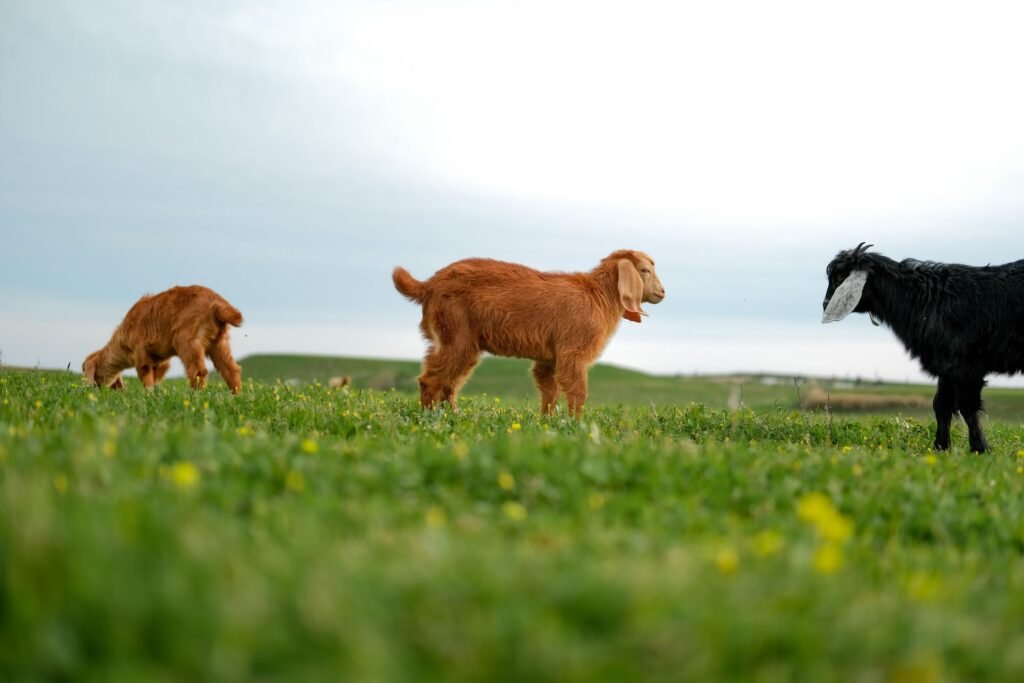
The Kalahari Red’s red coat and dark skin give it good protection against strong sun, which can help reduce sunburn and skin problems in hot, open country. The breed is described as heat and parasite resistant, a good forager and calm to handle, and it is often chosen for bush-encroached veld, where goats can browse on shrubs and trees that cattle and sheep cannot use.
Hardy does not mean maintenance-free. Kalahari Reds still need clean water, shade, a proper vaccination programme and parasite control. But they usually hold their condition and keep kidding when conditions are tough.
6. How to Manage Kalahari Red Goats
The Greenstone stud gives a good picture of how a commercial Kalahari Red herd can be run. With 350 ewes and 7 rams on about 200 ha set aside for goats, the farm:
- Mates twice a year, in March and April and again in October and November, with a 42-day mating period each time.
- Feeds strategically, giving pregnant does short daily access to lucerne for six weeks before and after kidding, and letting kids eat creep feed from birth.
- Vaccinates every year against clostridial diseases, and also uses vaccines for Rift Valley fever, enzootic abortion and pasteurella.
- Doses selectively, using the FAMACHA eyelid colour system to decide which goats need treatment for wireworm instead of dosing the whole herd.
- Protects the herd with jackal-proof fencing and roofed kraals.
Every farm is different, so speak to your local vet about the right vaccination and parasite programme for your area. Our guide to goat farming in South Africa covers housing, feeding and health in more detail. For signs and prevention of the main health problems, see our guide to goat diseases in South Africa.
7. Kalahari Red Goat Prices
Kalahari Reds are sold at breed and mixed goat auctions, as well as directly by breeders. A few published examples:
- Free State Boktelers Group, Winburg, 20 May 2026: Kalahari Red ewes averaged R6,375 and rams R12,000, with an open ewe selling for R5,500 and a pregnant ewe for R10,000, according to African Farming.
- SA Boer Goat World Show auction, Bloemfontein, 2 May 2025: four Kalahari Red stud ewes averaged R22,000 and a ram sold for R25,000, as reported by African Farming.
For commercial farmers, the Winburg figures are the most useful guide: roughly R5,500 to R10,000 for ewes, depending on whether they are pregnant, and around R12,000 for a good ram. Stud animals cost considerably more. Our comparison of Kalahari Red vs Boer goats sets these prices against Boer goat prices and works out what a starter herd of each breed costs.
8. The Market for Kalahari Red Goats
Kalahari Red kids are sold into the same markets as other meat goats: speculators and traders, feedlots, abattoirs, and the strong informal and cultural market for live goats. Their solid red colour is popular with some buyers, but for most commercial sales, what matters is the weight, condition and age of the goats. Our guide to Boer goat prices explains how the live goat market works.
There is also growing interest in Kalahari Red genetics outside South Africa. Farmer’s Weekly reported in 2025 that South African goat genetics, including semen, embryos and live animals, have been exported to countries such as Uganda, Kenya and Ghana.
Pros and Cons of Kalahari Red Goats
| Advantages | Things to consider |
|---|---|
| Excellent sun and heat tolerance | Smaller than top Boer goats, so kids may be lighter at the same age |
| Hardy, with good resistance to parasites | Smaller stud industry than the Boer goat |
| Fertile does and good mothers | Stud colour rules mean some animals only qualify as flock goats |
| Low maintenance on extensive veld | Still needs vaccination, parasite control and predator protection |
| Good browsers on bush-encroached veld | Fewer breed-specific auctions in some regions |
Is the Kalahari Red Right for Your Farm?
Kalahari Red goats are a strong choice if you farm in the Northern Cape, North West, Limpopo, the Free State or other hot, dry areas, if your veld has a lot of bush, or if you want a goat that needs less attention than a Boer goat. They also suit new farmers who want a forgiving, low-input meat goat.
If you farm on good pasture and want the heaviest kids possible, the Boer goat may pay you more. Many farmers cross the two, using Kalahari Red does for hardiness and a Boer goat buck for extra growth. If you are also considering a white goat with pigmented skin, read our guide to Savanna goats.
What to Check Before You Buy Kalahari Red Goats
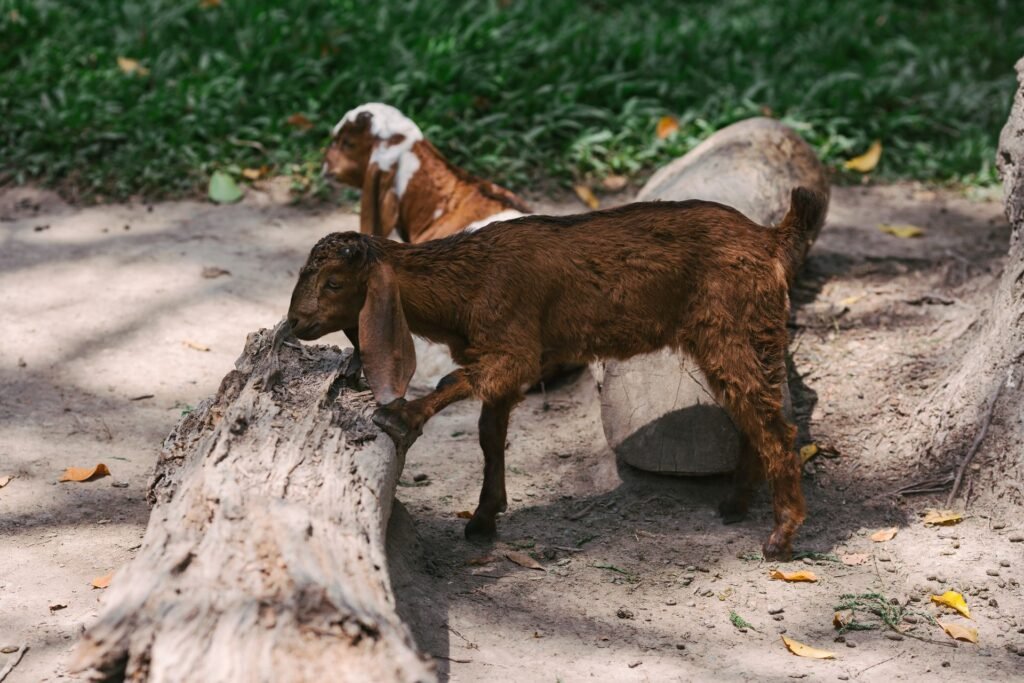
- Colour and pigmentation: for stud animals, check the colour and the pigmentation under the tail against the breed standard.
- Mouth and teeth: make sure the jaw is correct and the teeth match the age you are told.
- Udders and teats: look for two functional teats and no damaged udder halves.
- Rams: check that both testes are well formed and the scrotum meets the minimum size, and buy from a seller who can show health records.
- Feet and legs: strong, straight legs and sound hooves for walking on the veld.
- Health records: ask for the vaccination and dosing history, and registration papers if you are buying stud animals.
- Paperwork: buy from a registered business, get a written quote and pay only against an official invoice.
Our guide to buying livestock in South Africa covers each of these steps in more detail.
Frequently Asked Questions
Where do Kalahari Red goats come from?
Kalahari Red goats were developed in the Northern Cape from indigenous red lob-eared goats, with serious selection starting in the 1970s. The Kalahari Red Club was founded in 1999 and joined the SA Boer Goat Breeders’ Association in 2004.
Is the Kalahari Red a type of Boer goat?
No. It is a separate breed, confirmed by DNA testing, although it shares the Boer goat’s breed society and much of its breed standard, apart from colour.
How big do Kalahari Red goats get?
Mature does weigh about 75 kg. Kids are quoted at about 25 kg for rams and 21 kg for ewes at 100 days, and well-managed herds can wean kids at around 30 kg.
Are Kalahari Red goats good for beginners?
Yes. They are hardy, fertile and good mothers, and they need less care than many other meat goats. You still need a good vaccination and parasite programme, clean water and predator protection.
How much do Kalahari Red goats cost?
At a Free State auction in May 2026, Kalahari Red ewes averaged R6,375 and rams R12,000. Stud ewes averaged R22,000 at the 2025 SA Boer Goat World Show auction.
Why are Kalahari Red goats red?
The red coat and dark, pigmented skin were selected because they protect the goat from strong sun, which helps the breed cope in hot, open country.
Where can I buy Kalahari Red goats in South Africa?
You can buy at breed and goat auctions, from registered breeders or from established suppliers. DRM Livestock supplies Kalahari Red goats across South Africa with delivery arranged.
Final Thoughts
Kalahari Red goats were shaped by the hot, dry country of the Northern Cape, and that is exactly where they shine. They will not always produce the heaviest kid, but they keep kidding, mothering and growing when the veld is poor and the sun is fierce. If you want a hardy, low-input meat goat, have a look at our Kalahari Red goats for sale, or send us your requirements and we will get back to you with a written quote, including delivery to your farm.
Looking to buy goats?
Tell us the breed, age group, quantity and delivery area. We reply with availability, pricing and transport costs, usually within one working day.
DRM LIVE STOCK is a registered South African livestock company (Company No. K2023207798, VAT No. 4640323079) based at 135 Rocklands Rd, Uitenhage Farms, Gqeberha. We supply cattle, goats, sheep and pigs, with delivery across South Africa.