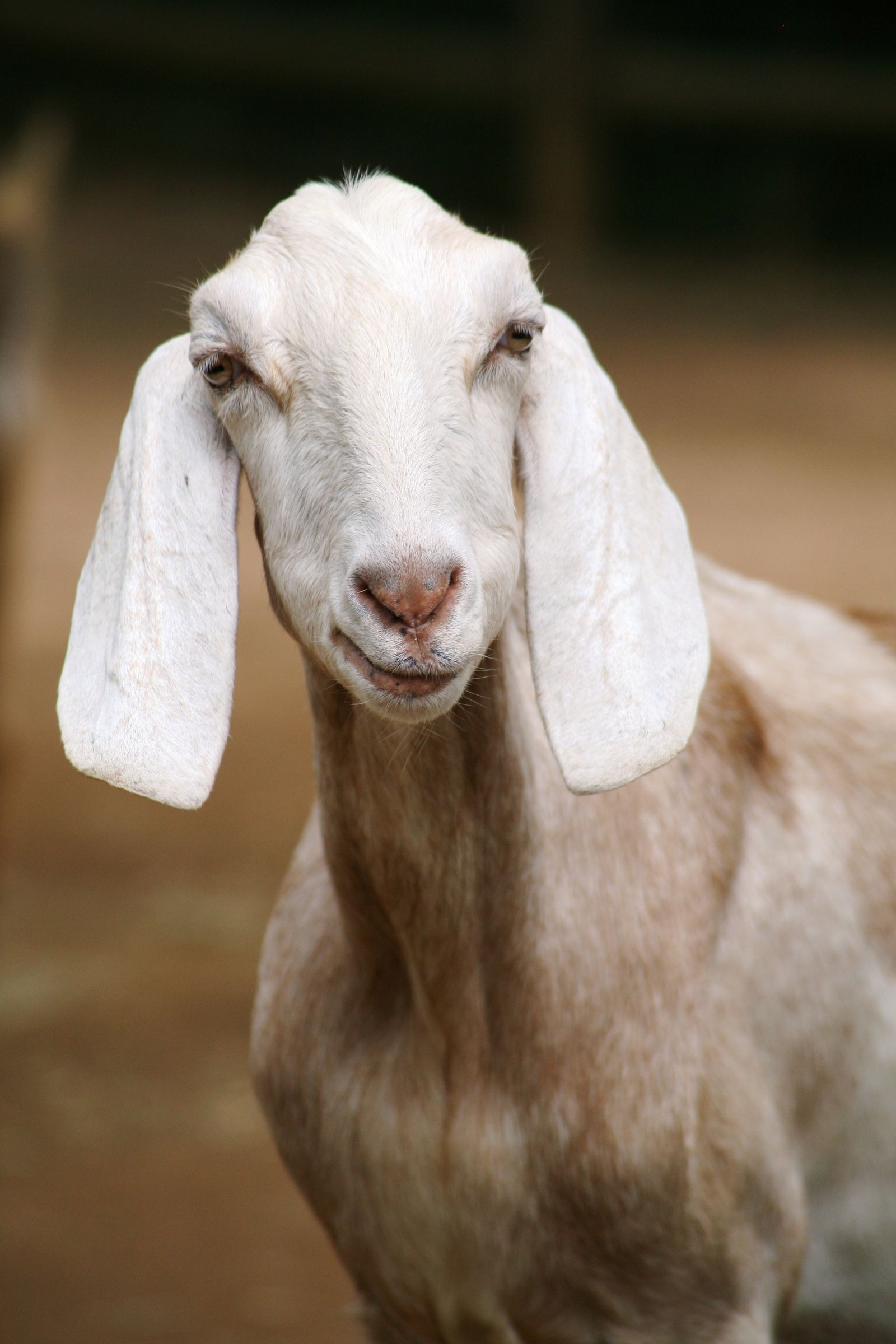
Savanna goats are the white meat goats of the Northern Cape, and they have earned a reputation as one of the toughest commercial goat breeds in South Africa. They were bred on harsh veld along the Vaal River, selected for decades to survive heat, drought and poor grazing while still raising strong kids. Today they are farmed across the country and exported to other parts of Africa and beyond, and in 2026 a Savanna buck set a world record price for a goat at auction.
If you are thinking about Savanna goats, this guide covers the nine things you need to know: where the breed comes from, what makes it different, its size and growth, fertility, hardiness, how it compares with the Boer goat and Kalahari Red, how to manage it, what Savanna goats cost in 2026, and what to look for when you buy.
Savanna Goats at a Glance
| Trait | Savanna goat |
|---|---|
| Origin | Douglas area, Northern Cape, developed by the Cilliers family from 1957 |
| Type | Meat goat |
| Colour | White hair over black, pigmented skin |
| Buck weight (breed standard) | About 70 kg at 12 months, 105 kg at 36 months |
| Doe weight (breed standard) | About 45 kg at 12 months, 65 kg at 36 months |
| Kidding percentage | About 160% to 190% under extensive conditions |
| Main strengths | Hardiness, heat and drought tolerance, fertility, mothering |
Weights come from the Savanna breed standard as published in a history of the breed’s origin and development. Kidding figures come from the SA Boer Goat Breeders’ Association newsletter and a 2026 Farmer’s Weekly stud profile. Treat them as guides, because results vary a lot with veld and management.
1. Where Savanna Goats Come From
The Savanna breed began in 1957, when the Cilliers family, farming as DSU Cilliers and Son along the Vaal River near Douglas in the Northern Cape, started a flock from mixed indigenous does and a white buck. Temperatures and rainfall in that area vary enormously, and the family selected hard for goats that could cope with whatever the veld threw at them.
Over the following decades, the Cilliers brothers developed the Olierivier Savanna goats from that flock. Breeders met at Olierivier on 21 November 1993 to set up a breeders’ society and agree on a breed standard, and the first national championship show was held in Bloemfontein in March 1998, with 160 goats on show.
Most Savanna breeders are still found in the Northern Cape, with others in the Eastern Cape and Namibia, and the breed has drawn interest from other African countries and further afield.
2. What Makes Savanna Goats Different
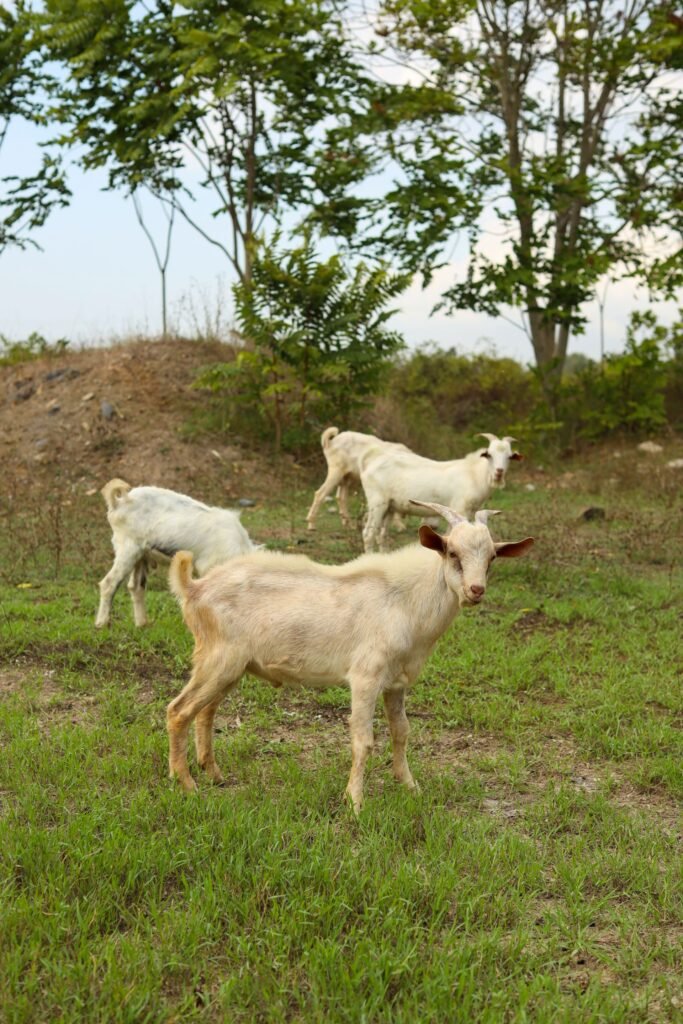
The first thing most people notice is the colour. Savanna goats have a short, pure white coat over black, pigmented skin. That combination is not just for looks. The dark skin protects the goats against strong sun and ultraviolet light, which matters on open Northern Cape veld where there is little shade.
The SA Boer Goat Breeders’ Association newsletter describes the Savanna as a medium-framed, muscular goat with strong legs and hooves, and a fairly long, slightly curved head. It also notes loose skin, which helps with heat and is linked to better tick resistance, and a habit of both browsing and grazing, so the goats make use of whatever plants are available.
Breed standards are strict on pigmentation, teats and conformation. A registered Savanna should have well-pigmented skin, correct teats and a sound, well-muscled body.
3. Size and Growth of Savanna Goats
Savanna goats are big meat goats, though usually a little lighter than top Boer goats. The breed standard gives these target weights:
| Age | Bucks | Does |
|---|---|---|
| 100 days | 35 kg | 30 kg |
| 12 months | 70 kg | 45 kg |
| 24 months | 85 kg | 50 kg |
| 36 months | 105 kg | 65 kg |
Kids are born small, at about 2.5 to 4 kg according to the breeders’ association, which helps with easy kidding. Weaning weights of about 25 to 35 kg at four months are reported under good conditions. On hard veld with little supplementation, weights are lower. The Safi Savanna stud near Griekwastad, for example, weans kids at about 22 kg at 90 days on natural veld, according to Farmer’s Weekly in September 2026. Our guide to goat breeding covers the mating season and kidding.
4. Fertility and Mothering
Fertility is one of the Savanna’s biggest selling points. The breeders’ association newsletter reports kidding percentages of about 180% to 190% under extensive conditions, with twins and triplets common.
The Safi Savanna stud gives a good real-world picture. Farming about 200 recorded does on hard veld in the Griekwastad district, Le Roux Buckle reports a conception rate of 90%, a kidding percentage of 160% and a weaning rate of 95% of kids born. His target is five kids per doe over two years.
Savanna does are known for strong mothering and good milk. A doe that stays close to her kids, protects them from predators and feeds twins well on veld is worth a great deal on an extensive farm, where nobody can watch every kidding. Our guide to feeding goats covers supplements for every stage.
5. Hardiness: Heat, Drought and Hard Veld
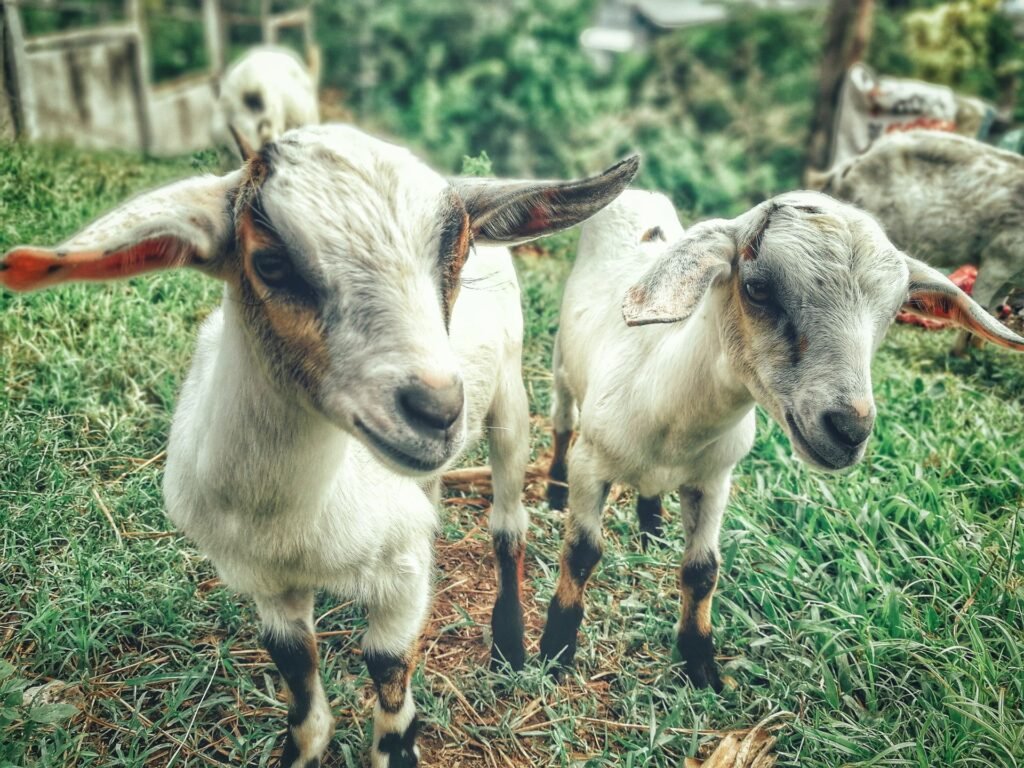
The Savanna was selected under some of the toughest conditions in South Africa, and it shows. The breeders’ association describes the breed as heat and drought resistant, able to thrive on harsh terrain and to browse and graze indiscriminately.
At Safi Savanna, the goats run in camps of more than 100 hectares on hard, bushy veld on the Ghaapse Berg, with fynbos, olienhout, karee and swarthaak. They produce mainly on natural veld and get supplementary feed only before kidding and when they are being prepared for shows, Farmer’s Weekly reports.
That kind of hardiness keeps costs down. Fewer supplements, less handling and fewer losses can matter more to your profit than a few extra kilograms at weaning.
6. Savanna Goats vs Boer Goats and Kalahari Reds
Savanna goats are often compared with the other two big South African meat goat breeds.
- Boer goat: the biggest and best-known meat goat, with a white body and red-brown head. It usually grows bigger and heavier, but some farmers find the Savanna hardier on harsh, open veld.
- Kalahari Red: a solid red goat, also bred in the Northern Cape for hardiness and sun tolerance. Like the Savanna, it relies on pigmented skin and an easy-care nature.
All three breeds sell into the same meat and live goat markets. The best choice depends on your veld and management. For a detailed comparison of the other two, read our guide to Kalahari Red vs Boer goats, and for market prices see Boer goat prices in South Africa.
7. Managing Savanna Goats
Savanna goats are easy-care animals, but they still need sound management to perform.
- Veld and stocking rate: do not overstock. Even a hardy goat needs enough browse and grass to stay in condition through winter.
- Supplements at the right time: extra feed before kidding and during dry spells pays off in heavier kids and better conception.
- Parasites: check for internal parasites regularly and dose based on need, especially after rain.
- Vaccination: vaccinate against the common clostridial diseases and follow your vet’s advice for your area.
- Predators: on extensive farms, jackal and caracal losses can be heavy. Kraaling at night, guard animals or good fencing all help.
- Selection: cull does that do not kid or wean well, and keep replacements from your most productive does.
For more on feeding, housing and health, see our guide to goat farming in South Africa. For signs and prevention of the main health problems, see our guide to goat diseases in South Africa.
8. Savanna Goat Prices in 2026
Savanna goat prices range from a few thousand rand for commercial does to record-breaking sums for elite stud animals.
At the national Top White Genetics Savanna and Van Rooy auction in Kimberley on 19 March 2026, Savanna bucks averaged R32,000 with a top price of R85,000, according to African Farming. Savanna does averaged R7,889, does with kids R8,750 and pregnant does R11,722.
At the very top of the market, a Savanna buck from the Maize Valley stud sold for R2.05 million at the Black Tie Blue Blood auction at Rawsonville in the Western Cape on 17 April 2026. African Farming reported it as a new world record price for a goat and a South African small stock record. At that sale, four Savanna bucks averaged R545,000 and six Savanna does averaged R56,166.
| Category (2026) | Average price | Source auction |
|---|---|---|
| Bucks, national auction | R32,000 (top R85,000) | Top White Genetics, Kimberley |
| Does | R7,889 | Top White Genetics, Kimberley |
| Does with kids | R8,750 | Top White Genetics, Kimberley |
| Pregnant does | R11,722 | Top White Genetics, Kimberley |
| Elite stud bucks | R545,000 (top R2.05 million) | Black Tie Blue Blood, Rawsonville |
The Rawsonville prices are for elite stud genetics and are not what a commercial farmer needs to pay. For most farmers building a flock, the Kimberley figures are a more useful guide. Commercial does and kids usually cost less than registered stud animals.
9. Buying Savanna Goats
When you buy Savanna goats, check the basics carefully:
- Pigmentation: dark skin, especially around the eyes, ears, tail and udder.
- Teats: the correct number and shape, with no extra or split teats.
- Mouth and feet: a correct bite, sound teeth and strong hooves.
- Bucks: two well-formed, equal testes and good muscling.
- Records: kidding and weaning records for the flock the animals come from.
Buy from healthy flocks, keep new goats apart from your flock for a few weeks after they arrive, and get a written quote and official invoice. Our guide to buying livestock in South Africa covers every step.
DRM Livestock supplies Savanna goats to farms across South Africa, as well as Boer goats and Kalahari Red goats.
Starting a Savanna Goat Flock
If you are new to Savanna goats, start with a manageable group of good does and one proven buck rather than a big flock of unknown quality. Twenty to fifty does let you learn how the breed performs on your veld before you expand.
Work out your carrying capacity first. Ask an extension officer, agricultural adviser or experienced neighbour how many small stock units your veld can carry in an average year, and stock below that so you have a buffer for drought. Plan where your winter and pre-kidding feed will come from.
Decide how you will sell. Savanna farmers may sell weaned kids to speculators or feedlots, slaughter goats to local buyers, or breeding stock to other farmers. Talk to buyers in your area about the weights and types they want, and keep records from the first season so you can prove your flock’s performance when you sell.
Frequently Asked Questions
Where do Savanna goats come from?
Savanna goats were developed by the Cilliers family near Douglas in the Northern Cape, starting in 1957 with mixed indigenous does and a white buck, and selected for decades for hardiness on harsh veld.
Why do Savanna goats have black skin?
Their white coat grows over black, pigmented skin, which protects them against strong sun and ultraviolet light. Breed standards place a lot of weight on good pigmentation.
How big do Savanna goats get?
The breed standard gives target weights of about 70 kg for bucks and 45 kg for does at 12 months, rising to about 105 kg and 65 kg at 36 months.
What is the kidding percentage of Savanna goats?
About 160% to 190% under extensive conditions. One Griekwastad stud reported 160% kidding with a 95% weaning rate on natural veld in 2026.
How much do Savanna goats cost?
At the 2026 national auction in Kimberley, bucks averaged R32,000, does R7,889 and pregnant does R11,722. Elite stud bucks sell for far more, with a record of R2.05 million in April 2026.
Are Savanna goats better than Boer goats?
Neither is better in every situation. Boer goats usually grow bigger, while some farmers find Savanna goats hardier on harsh, open veld. Choose the breed that suits your veld and management.
Are Savanna goats good for beginners?
Yes. They are hardy, fertile, good mothers and easy to manage on veld, which makes them a forgiving breed for new goat farmers.
Final Thoughts
Savanna goats were bred for the hard veld of the Northern Cape, and their pigmented skin, hardiness, fertility and strong mothering make them one of the most practical meat goats in South Africa. They will not always grow as big as a top Boer goat, but on tough veld they can wean more kids for less cost. If you would like current prices for Savanna goats delivered to your farm, send us your requirements and we will get back to you with a written quote.
Looking to buy goats?
Tell us the breed, age group, quantity and delivery area. We reply with availability, pricing and transport costs, usually within one working day.
DRM LIVE STOCK is a registered South African livestock company (Company No. K2023207798, VAT No. 4640323079) based at 135 Rocklands Rd, Uitenhage Farms, Gqeberha. We supply cattle, goats, sheep and pigs, with delivery across South Africa.