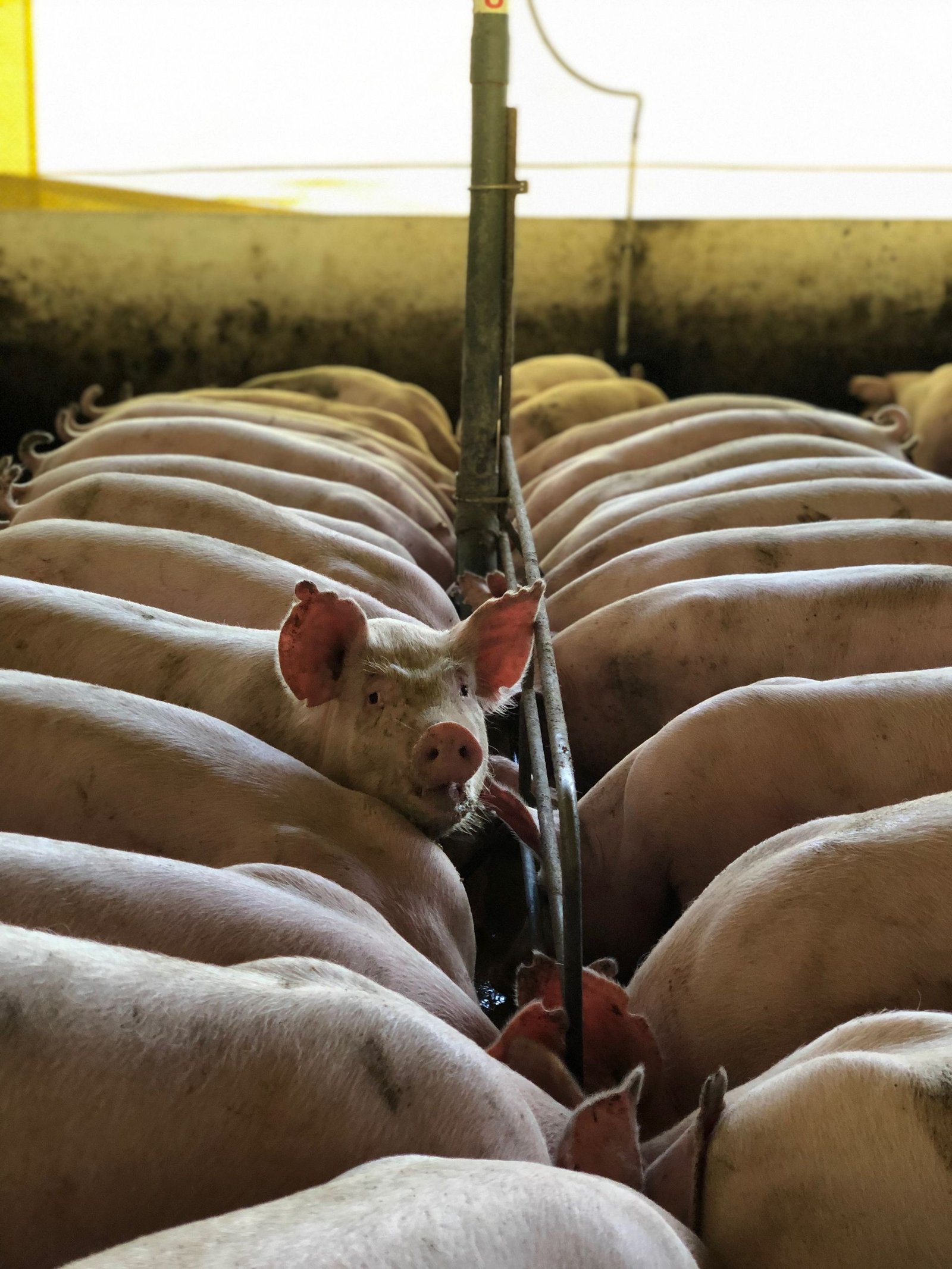
Feeding pigs is where a piggery makes or loses its money. Feed is usually well over half the cost of producing a pig, and the difference between a well-fed and a badly fed herd shows up in every litter weaned and every pig sent to the abattoir. Get the ration, the amount and the timing right at each stage, and your pigs grow faster on less feed. Get it wrong, and you pay for it twice: once in wasted feed and again in slower, lighter pigs.
This guide explains feeding pigs stage by stage, from creep feed for suckling piglets through weaner, grower and finisher rations, to feeding pregnant sows, lactating sows and boars. The amounts quoted come from the published feeding programmes of South African feed companies, so you can compare them with the ration you use.
Feeding Pigs at a Glance
| Stage | Typical age or weight | Ration | How much |
|---|---|---|---|
| Suckling piglets | From about 7 to 10 days old until about a week after weaning | Creep feed | Ad lib; small amounts, about 2 kg per pig up to 5 weeks |
| Weaners | About 5 to 10 or 12 weeks | Weaner or starter ration | Ad lib; about 1 kg a day on average, rising to 1.4 to 1.8 kg |
| Growers | About 10 to 16 weeks | Grower ration | Ad lib; about 1.4 to 2.3 kg a day |
| Finishers | About 16 weeks to slaughter | Finisher, porker or baconer ration | Ad lib; about 2.3 to 2.8 kg a day |
| Pregnant sows and gilts | Gestation | Sow (dry) ration | Restricted; about 2 to 2.75 kg a day |
| Lactating sows | Farrowing to weaning | Lactation ration | Build up to about 6 to 9 kg a day |
| Boars | Working boars | Sow and boar ration | Restricted; about 2 to 2.5 kg a day |
These figures are drawn from the feeding programmes of Meadow Feeds, Epol and Nova Feeds. Each company’s ages and amounts differ slightly, so always follow the instructions for the specific feed you buy, and adjust for the condition of your pigs.
1. Why Feeding Pigs Correctly Matters So Much
According to Farmer’s Weekly, feed makes up about 60% of the total cost of producing a pig, and a pig can eat up to about 270 kg of feed to reach 90 kg live weight. Maize can make up as much as 60% of a pig ration, which is why pig farmers watch the maize price so closely.
Two numbers tell you how well you are feeding pigs:
- Feed conversion ratio (FCR): the kilograms of feed needed for each kilogram of weight gain. At 270 kg of feed for 90 kg of pig, the FCR is about 3:1. The lower your FCR, the cheaper each kilogram of pork.
- Days to slaughter: the faster pigs reach market weight, the less feed they use for maintenance and the more pigs you can put through your pens each year.
Pigs are fed in phases because their needs change as they grow. Young pigs need a concentrated, highly digestible ration rich in protein. Older pigs need less protein per kilogram of feed but eat much more. Feeding the right ration at each stage avoids paying for expensive protein that an older pig does not need, or starving a young pig of what it does.
2. Feeding Piglets: Creep Feed
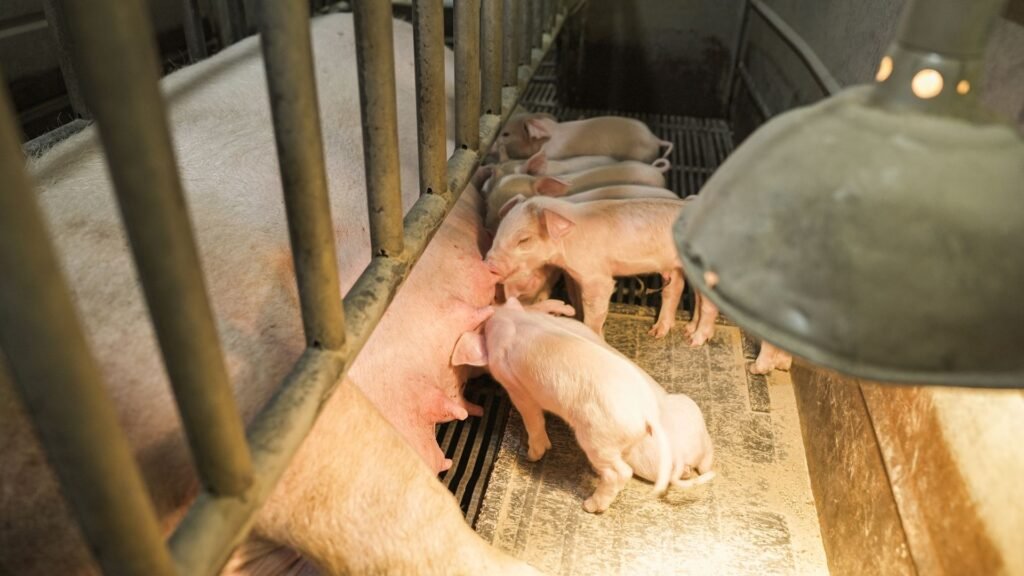
For the first week or so, piglets live on their mother’s milk. Creep feed is a small, highly digestible ration offered from about 7 to 10 days of age, in a feeder the sow cannot reach. Its purpose is not to replace milk but to get piglets used to eating solid feed before weaning, so that weaning is less of a shock.
- When: from about 7 to 10 days old until about a week after weaning.
- How much: very little at first. Meadow Feeds puts total intake at about 2 kg per pig up to 5 weeks of age, and Nova Feeds at about 0.1 kg per pig per day on average between 7 and 35 days.
- Tips: offer small amounts of fresh feed often, throw out stale or wet feed, and keep the creep area warm and dry.
3. Feeding Pigs After Weaning
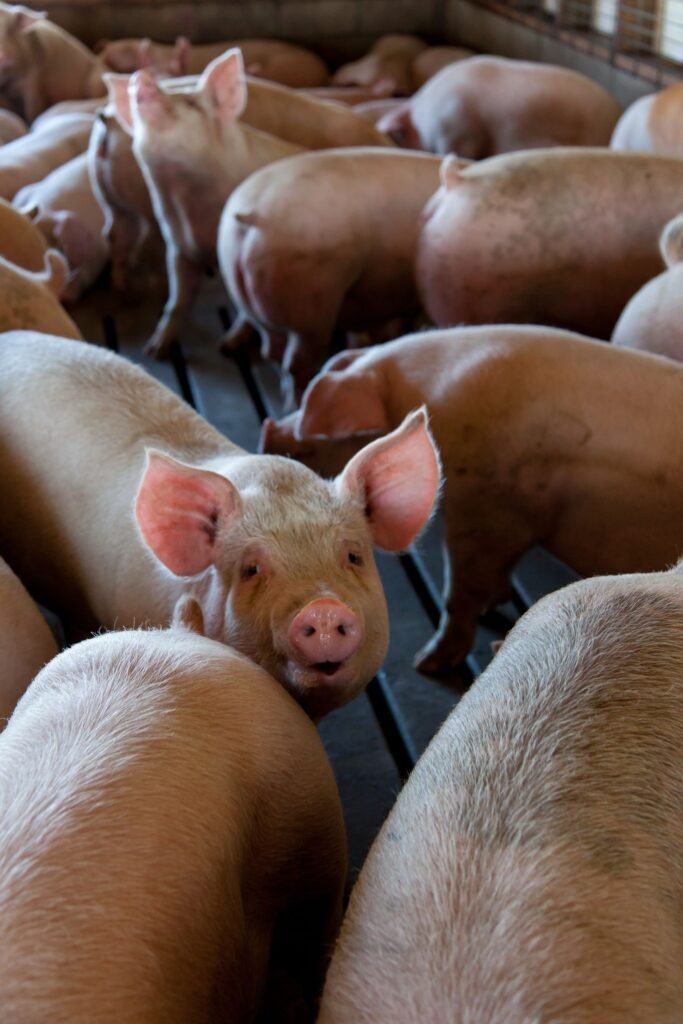
Weaning is the most stressful time in a pig’s life. Piglets lose their mother, their milk and often their pen mates in one day, and many eat very little for the first day or two. A good weaner ration and careful management help them through it.
- When: from about a week after weaning until about 10 to 12 weeks of age.
- How much: feed ad lib, so the pigs always have fresh feed. Nova Feeds gives an average of about 1 kg per pig per day from 35 to 70 days, and Epol expects intake to reach about 1.4 to 1.8 kg a day by 70 days. Meadow Feeds puts total intake from 5 to 12 weeks at about 54 kg per pig.
- Tips: Meadow Feeds recommends mixing some feed with water for the first three days after weaning to encourage eating and drinking. Change rations gradually, never overnight, and keep newly weaned pigs warm and free of draughts.
4. Feeding Pigs in the Grower Phase
In the grower phase, pigs put on weight fast and their appetite climbs every week. This is where most of the feed in a piggery goes, so feeder management and waste control matter most here.
- When: from about 10 to 12 weeks of age.
- How much: feed ad lib. Nova Feeds averages about 1.4 kg a day from 70 to 100 days and 2.3 kg a day from 100 to 130 days. Meadow Feeds puts intake at about 49 kg per pig from 12 to 16 weeks in its two-phase system.
- Single or two-phase: some farmers feed one ration from 12 weeks to slaughter, which is simpler. Others switch from a grower to a finisher ration at about 16 weeks, which can lower feed costs because the finisher ration contains less protein.
5. Feeding Finishers: Porkers and Baconers
In the last weeks before slaughter, pigs eat the most feed per day but also convert it less efficiently, and they start to lay down more fat. Feeding pigs in this phase is about reaching the weight and grade your abattoir pays best for, without overfeeding.
- When: from about 16 or 17 weeks to slaughter.
- How much: about 2.3 to 2.8 kg a day. Nova Feeds averages about 2.8 kg a day from 130 days to slaughter, and Meadow Feeds puts intake from 17 to 22 weeks at about 105 kg per pig. Epol’s porker ration is fed at about 1.8 to 2.6 kg a day from 70 days, and its baconer ration from 90 kg live weight to slaughter.
- Tips: know the weight classes your abattoir pays for and plan your feeding to hit them. Pigs held too long eat expensive feed and may be graded down for fat. Our guide to pig prices in South Africa explains how carcasses are classed and paid.
6. Feeding Pregnant Sows and Gilts
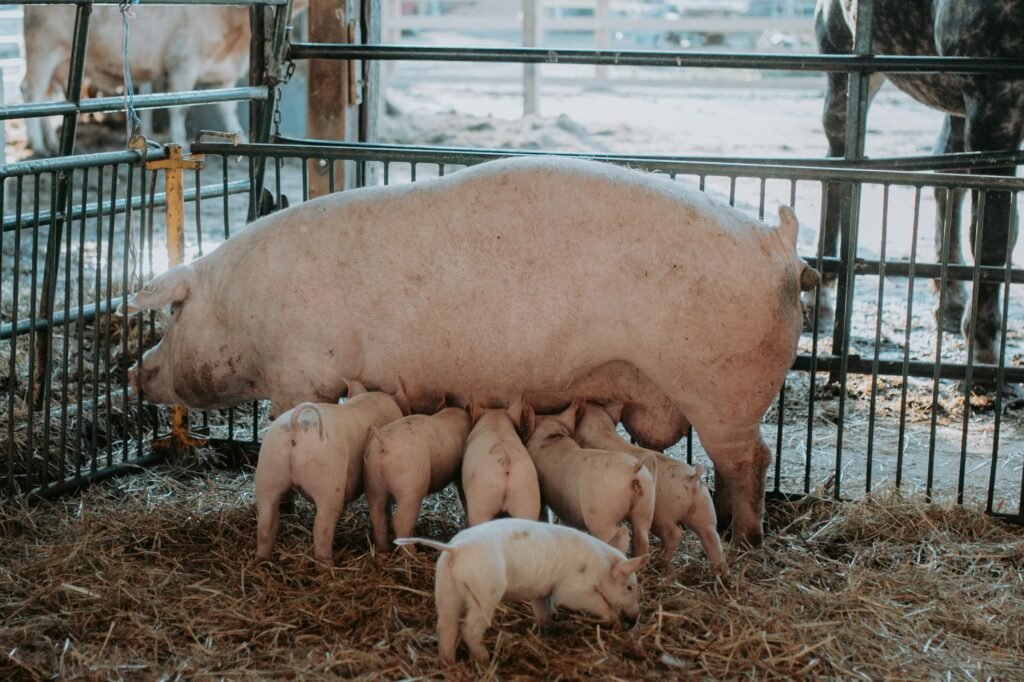
Pregnant sows are fed a restricted amount, not ad lib. A sow that gets too fat during pregnancy may farrow with difficulty, eat less in lactation and produce less milk. A sow that is too thin will struggle to raise her litter and to come back on heat after weaning. Our pig breeding guide covers sow care from mating to weaning.
- How much: Epol recommends about 2 kg a day in summer and 2.5 kg in winter for pregnant sows, and about 2.75 kg a day for gilts. Meadow Feeds recommends about 2.2 kg a day after service, rising to 2.5 kg a day for the last four weeks before farrowing.
- Adjust for condition: every sow is different. Score body condition regularly and give thin sows a little more and fat sows a little less.
- Cold weather: sows need more feed in winter to keep warm, which is why most programmes give a higher winter amount.
7. Feeding Lactating Sows
A lactating sow is the hardest-working animal on a pig farm. She may be feeding ten or more piglets, and her milk production depends on how much she eats. The aim is to build her feed intake up steadily after farrowing and keep it as high as possible until weaning.
- Start gently: Meadow Feeds recommends about 2.5 kg on the day of farrowing, split into three feeds, then an increase of about 0.5 kg a day until she reaches her maximum intake. Epol suggests 2 kg a day until two days after farrowing.
- Feed to litter size: Epol’s rule of thumb is about 2.5 kg plus 0.5 kg per piglet per day by day seven.
- Peak intake: lactating sows typically eat about 6 to 9 kg a day. Meadow Feeds notes that peak lactation is usually around day 21, with average maximum intake of about 9 kg a day.
- After weaning: Meadow Feeds recommends feeding the sow ad lib from weaning until she is served again, to help her come back on heat quickly.
Feed lactating sows at least twice a day, keep their feed fresh, and make sure they always have plenty of water. A sow that is too hot will eat less and produce less milk. Our guide to pig housing covers drinkers and pen layout.
Feeding Boars
Boars are fed a restricted ration, usually the same sow and boar feed as pregnant sows. Epol recommends about 2 kg a day in summer and 2.5 kg in winter, and Meadow Feeds about 2.2 kg a day. Overweight boars become lazy and less fertile and are more likely to injure sows, so adjust the amount for body condition and workload.
Water: The Forgotten Part of Feeding Pigs
Pigs that do not drink enough will not eat enough. Water needs vary with age, weight and temperature. According to the Ontario Ministry of Agriculture’s pig feeding guide, young nursery pigs drink about 1 to 2.5 litres a day, growing pigs of about 50 kg drink 5 to 7 litres a day, and lactating sows can drink more than 20 litres a day. Intake can rise by 15% to 50% when pigs are hotter than their comfort zone, which is common in South African summers.
- Check every drinker every day, especially in hot weather.
- Make sure drinkers are at the right height for the size of pig.
- Keep water clean and cool, and check the flow from nipple drinkers regularly.
How to Cut Waste When Feeding Pigs
Wasted feed is money lost, and it often goes unnoticed because it ends up in the manure. A few simple steps make a big difference:
- Set feeders correctly. Adjust feeders so that only a small amount of feed is visible in the pan. The Ontario guide suggests covering about 65% to 70% of the pan for nursery pigs and only 40% to 50% for grow-finish pigs.
- Provide enough feeder space. Too few feeder spaces lead to fighting and uneven growth.
- Keep feed fresh and dry. Store feed off the floor, away from rain and rodents, and use it in order of delivery.
- Use the right ration for each stage. Feeding an expensive weaner ration to finishers wastes money, while feeding a cheap grower ration to weaners slows growth.
- Weigh and record. Track how much feed each group eats and how much weight it gains, so you can work out your FCR and spot problems early.
Buying Feed vs Mixing Your Own
When it comes to feeding pigs, most small and medium piggeries buy complete feeds from a reputable feed mill, which takes the guesswork out of balancing protein, energy, vitamins and minerals. Larger units sometimes mix their own feed with a concentrate and their own or bought-in maize, which can lower costs but needs proper equipment, storage and a nutritionist to formulate the ration.
Home-mixed feed that is short of protein, amino acids or minerals quietly costs you growth, even if it looks cheaper per bag. If you mix your own, have your rations formulated and checked by a qualified animal nutritionist.
Never Feed Swill
Feeding kitchen waste or swill containing pork is one of the main ways African swine fever spreads. As a Food For Mzansi biosecurity guide points out, feeding untreated food waste containing pork is prohibited under the Animal Diseases Act. After the outbreaks of 2026, no small saving on feed is worth that risk. Our guide on how to start a small piggery covers biosecurity and feed budgeting in more detail.
Frequently Asked Questions
How much feed does a pig eat per day?
It depends on its size. Weaners eat about 1 kg a day on average, growers about 1.4 to 2.3 kg, finishers about 2.3 to 2.8 kg, pregnant sows about 2 to 2.75 kg, and lactating sows 6 to 9 kg a day at peak.
How much feed does a pig need to reach slaughter weight?
Farmer’s Weekly puts it at up to about 270 kg of feed to grow a pig to 90 kg live weight, a feed conversion ratio of about 3:1.
When should piglets start creep feed?
The South African feed programmes reviewed here start creep feed at about 7 to 10 days of age and continue until about a week after weaning.
How much should a lactating sow eat?
Build her up gradually from about 2 to 2.5 kg on the day of farrowing to a peak of about 6 to 9 kg a day. A rule of thumb is about 2.5 kg plus 0.5 kg for each piglet she is feeding.
Should pregnant sows be fed ad lib?
No. Pregnant sows are fed a restricted ration of about 2 to 2.75 kg a day, adjusted for body condition and the weather, so that they do not get too fat.
How much water does a pig drink?
Young nursery pigs drink about 1 to 2.5 litres a day, growing pigs of about 50 kg about 5 to 7 litres, and lactating sows more than 20 litres a day. Pigs drink more in hot weather.
Can I feed pigs kitchen scraps?
No. Feeding untreated food waste containing pork is prohibited under the Animal Diseases Act because it can spread African swine fever. Use balanced commercial rations.
Final Thoughts
Feeding pigs well is not about feeding them more. It is about feeding the right ration, in the right amount, at the right stage, with clean water and as little waste as possible. Do that, measure your feed conversion, and you will see the results in faster growth, heavier litters and a better margin on every pig. If you are stocking or expanding your piggery, have a look at our Large White pigs, Landrace pigs and Duroc pigs, read our guide to pig farming in South Africa, or send us your requirements for a written quote.
Looking to buy pigs?
Tell us the breed, age group, quantity and delivery area. We reply with availability, pricing and transport costs, usually within one working day.
DRM LIVE STOCK is a registered South African livestock company (Company No. K2023207798, VAT No. 4640323079) based at 135 Rocklands Rd, Uitenhage Farms, Gqeberha. We supply cattle, goats, sheep and pigs, with delivery across South Africa.