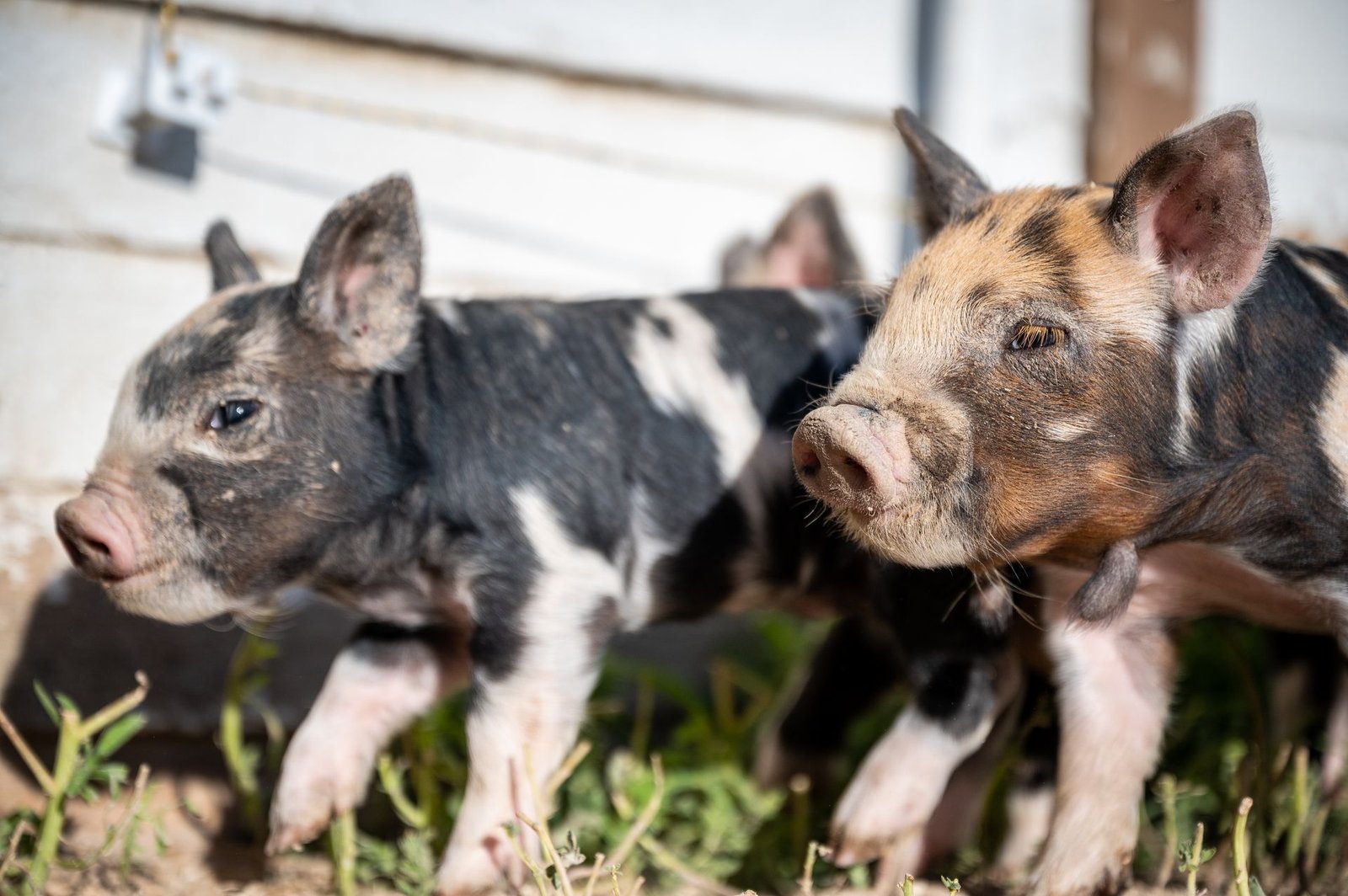
Pig prices in South Africa have been on a rollercoaster in 2026. In January, after outbreaks of African swine fever and foot-and-mouth disease, producers were getting more than R40 a kilogram for baconers and porkers, about a quarter more than a year earlier. By July, imports and a sudden flood of pigs coming off restricted farms had pushed the price down to around R30/kg. In September, the market was starting to find its feet again.
If you farm pigs, or you are thinking of starting, you need to understand how those prices are set and what moves them. This guide explains how pigs are priced in South Africa, what happened to prices in 2026, what a slaughter pig is worth, how weaner and breeding stock prices work, and what you can do to get a better price for your pigs.
Pig Prices in South Africa at a Glance (2026)
| Period | Porker | Baconer | Source |
|---|---|---|---|
| May 2025 (before outbreaks) | R32.47/kg | R32.10/kg | SAPPO, via African Farming |
| January 2026 (peak) | R40.99/kg | R40.38/kg | SAPPO, via African Farming |
| July 2026 (oversupply) | About R30/kg, down from about R40/kg | Business Report | |
| Mid-September 2026 | About R28.50 to R33/kg | About R28.60 to R34.50/kg | Farming Portal market summary |
| 2026 forecast (Absa) | – | About R34.40/kg average for the year | Farming Portal market summary |
These are carcass prices paid to producers per kilogram, not live-weight or retail prices. They move every week, so always check the latest figures before you buy or sell.
1. How Pig Prices in South Africa Are Set
Most commercial pigs in South Africa are sold to abattoirs and paid for on carcass weight. After slaughter, each carcass is weighed and classified, and the producer is paid a price per kilogram that depends on the weight class and the grade.
The weekly carcass price statistics published by the South African Pork Producers’ Organisation (SAPPO) and the Red Meat Abattoir Association group pigs into porkers, cutters, baconers and heavy baconers by carcass weight, with sows reported separately. Carcasses are also graded P, O, R, C, U or S according to how lean they are, and leaner carcasses earn more per kilogram.
In simple terms, the price you get for a pig depends on four things: the weight class it falls into, how lean it is, the market price that week, and the deal you have with your abattoir or buyer.
2. Why Pig Prices in South Africa Jumped Early in 2026
The first half of 2026 was one of the hardest periods the South African pig industry has faced. According to African Farming, 11 commercial piggeries were confirmed or suspected to have foot-and-mouth disease or African swine fever by February, and about 30,000 pigs had been culled because of ASF. Some infected herds lost up to 20% of their pigs, mostly suckling piglets and young weaners. Our guide to pig diseases explains how to protect your herd.
With fewer pigs reaching abattoirs, prices shot up. SAPPO figures quoted by African Farming show baconer prices rising 25.79% between May 2025 and January 2026, from R32.10/kg to R40.38/kg. Porker prices rose 26.24%, from R32.47/kg to R40.99/kg, and sausage pig prices rose from R24.93/kg to R31.30/kg.
Farmer’s Weekly described the outbreaks as unprecedented and reported that, while lower feed prices and higher pork prices helped, many producers still faced quarantine costs, slaughter delays and cash-flow problems.
3. Why Pig Prices in South Africa Fell in Mid-2026
By the middle of the year, the shortage had turned into a surplus. Business Report reported in July 2026 that producer prices had dropped from around R40/kg to about R30/kg.
Three things came together. Processors had ordered imported pork as a precaution when the outbreaks started, and those orders arrived eight to ten weeks later. By then, local farms had recovered and were producing normally again. And when the government cut the holding period for pigs on FMD-restricted farms from 90 to 42 days on 8 July, a large number of market-ready pigs were released at the same time.
Retail prices followed. Business Report quoted pork chops falling from about R120/kg to R80/kg, and Eskort’s chief executive said the market had swung from expected shortages to oversupply. Industry voices expected producer prices to settle around R32/kg, close to the historical average.
4. Where Pig Prices in South Africa Stand Now
In mid-September 2026, a market summary published by Farming Portal put porker prices at about R28.50 to R33/kg and baconer prices at about R28.60 to R34.50/kg at producer level, with disease disruptions still giving some support to prices. The same summary noted Absa’s forecast of an average baconer price of about R34.40/kg for 2026 as a whole.
Agricultural market analysts at AMT noted in their September weekly overviews that pork prices appeared to be approaching a turning point and were beginning to recover. Many producers hope for stronger demand towards the end of the year, but nothing is guaranteed, so watch the weekly figures closely if you plan to sell before December.
5. What Is a Slaughter Pig Worth?
Because pigs are paid on carcass weight, the easiest way to estimate what a pig is worth is to multiply the expected carcass weight by the current price per kilogram.
For example, a pig with a carcass of 70 kg would earn:
- about R2,100 at R30/kg, the mid-2026 low;
- about R2,240 at R32/kg, close to the long-term average;
- about R2,830 at R40.38/kg, the January 2026 baconer peak.
That gap of more than R700 per pig between a weak and a strong market shows why timing and cost control matter so much in a piggery. Your actual price will also depend on the grade, any deductions, transport to the abattoir, and the terms of your agreement with the buyer.
6. Weaner, Gilt and Boar Prices
Unlike slaughter pigs, there is no single published national price for weaners, gilts, sows and boars. They are sold per head, and the price depends on:
- Age and weight: a heavier weaner or an older gilt ready for mating costs more.
- Genetics: purebred Large White, Landrace and Duroc breeding stock from recorded herds, or F1 gilts from breeding companies, cost more than commercial pigs of unknown background.
- Health status: pigs from herds with a clean health record and proper vaccination are worth more, and after the 2026 outbreaks, buyers pay close attention to this.
- The slaughter pig price: when baconer prices are high, weaners and breeding stock usually become more expensive too, because every pig is worth more at the end.
- Distance and transport: moving pigs is costly and requires the right permits.
Because of this, the only reliable way to know what breeding stock costs is to get a written quote for the exact animals you need. Our comparison of Large White vs Landrace vs Duroc explains which breeds to buy for each role in a piggery. For more on the most common mother breed, see our guide to Large White pigs.
7. Feed Costs and Your Margin
The price you get for a pig only tells half the story. Feed is by far the biggest cost in pig farming, usually well over half the cost of producing a pig, as our guide to pig farming in South Africa explains. Farmer’s Weekly noted that feed prices had come down in 2026, which helped producers through the disease crisis.
What matters is the gap between what you earn per kilogram and what it costs you to produce that kilogram. A farmer with a good feed conversion ratio, low piglet losses and fast growth can still make money when prices are around R30/kg. A farmer with high feed waste and slow growth may lose money even at R40/kg.
How to Get Better Pig Prices in South Africa
- Hit the right weight. Learn the weight classes your abattoir pays best for and plan your growing programme to hit them. Pigs that are too light or too heavy often earn less per kilogram.
- Produce lean pigs. Good genetics, balanced feed and the right slaughter weight give leaner carcasses and better grades.
- Build a relationship with a buyer. A steady supply of even, healthy pigs makes you a valued supplier, and some abattoirs offer contracts or better terms to regular suppliers.
- Watch the market. Follow the weekly SAPPO price statistics and market reports so you know where prices are heading.
- Guard your biosecurity. The 2026 outbreaks showed how quickly disease can stop sales completely. Quarantine new pigs for at least 28 days, never feed swill containing meat, and control visitors and vehicles.
- Keep records. Know your cost per kilogram of pork produced, not just your selling price.
Pig Prices in South Africa: What to Watch for the Rest of 2026
Nobody can predict pig prices in South Africa with certainty, but a few factors will shape the market for the rest of the year and into 2027.
- Disease. African swine fever and foot-and-mouth disease are still being managed in parts of the country. New outbreaks could cut supply again and push prices up, while further easing of restrictions could release more pigs.
- Imports. Once the imported pork ordered earlier in the year has worked through the system, local producers should face less competition from imports.
- Feed prices. Maize and soya prices drive most of a piggery’s costs. Lower feed prices help margins even when pork prices are soft, and a jump in feed costs can squeeze farmers quickly.
- Consumer demand. Household budgets are under pressure, and pork competes with chicken as an affordable protein. Lower retail prices after the mid-year surplus may help bring buyers back to pork.
- Herd rebuilding. As farmers who lost pigs in the outbreaks restock, demand for gilts and weaners should get some support, even while slaughter prices are lower.
The practical lesson is to plan for prices around the long-term average rather than the peaks. If your piggery only makes money at R40/kg, it is too exposed. If it can cover its costs at about R30/kg, you are in a strong position when prices recover.
Producer Prices vs Retail Prices
Many new pig farmers are surprised by the gap between what they are paid and what pork costs in the shops. The Farming Portal summary put average retail pork prices at about R122/kg in August 2026, while producers were earning around R30/kg on carcass weight.
That gap covers slaughter, cutting, processing, packaging, transport, cold storage and retail margins, as well as the fact that not every kilogram of carcass ends up as a premium cut. Some smaller producers capture part of that margin by selling pork directly to butcheries, restaurants or customers, but that only works if you meet the health and meat safety rules for slaughter and selling meat.
Buying Pigs for Your Farm
Whether you are starting a piggery or adding to your herd, buy from healthy, well-managed herds and get everything in writing. Check the seller’s registered company details, ask about the herd’s health status and vaccination programme, and pay only against an official invoice. Our guide to buying livestock in South Africa covers every step.
DRM Livestock supplies Large White pigs, Landrace pigs and Duroc pigs to farms across South Africa, from weaners and growers to gilts, sows and boars. For industry news and weekly price statistics, the South African Pork Producers’ Organisation is the best place to start.
Frequently Asked Questions
What is the price of pigs in South Africa per kg?
In mid-September 2026, producers were earning about R28.50 to R33/kg for porkers and about R28.60 to R34.50/kg for baconers on carcass weight. Prices had been above R40/kg in January 2026 before falling to about R30/kg in July.
Why did pig prices in South Africa rise in early 2026?
Pig prices in South Africa rose because outbreaks of African swine fever and foot-and-mouth disease cut the supply of pigs reaching abattoirs. About 30,000 pigs were culled because of ASF, and baconer prices rose by about 26% between May 2025 and January 2026.
Why did pig prices fall in mid-2026?
Imported pork ordered during the outbreaks arrived just as local farms recovered, and the holding period for pigs on FMD-restricted farms was cut from 90 to 42 days, releasing many market-ready pigs at once. The result was an oversupply that pushed prices down to about R30/kg.
What is the difference between a porker and a baconer?
They are weight classes. Porkers are lighter pigs slaughtered younger, while baconers are heavier pigs. Abattoirs pay per kilogram of carcass, and the price per kilogram can differ between classes.
How much is a weaner pig in South Africa?
There is no single national weaner price. Weaners are sold per head, and the price depends on weight, genetics, health status, the slaughter pig market and transport. Ask for a written quote for the pigs you need.
How can I get a better price for my pigs?
Aim for the weight classes your abattoir pays best for, produce lean pigs, supply consistently, follow the weekly price statistics and keep your feed costs and piglet losses low.
Is pig farming still profitable after the 2026 price drop?
It can be, if your costs are under control. Farmers with good feed conversion, low losses and strong biosecurity can make money at around R30/kg, while poorly run units struggle even when prices are high.
Final Thoughts
Pig prices in South Africa can swing by R10/kg in a matter of months, as 2026 has shown. You cannot control the market, but you can control your costs, your pig quality, your timing and your biosecurity. Farmers who get those right make money through the ups and downs. If you are starting or expanding a piggery and would like current prices for Large White, Landrace or Duroc pigs delivered to your farm, send us your requirements and we will get back to you with a written quote.
Looking to buy pigs?
Tell us the breed, age group, quantity and delivery area. We reply with availability, pricing and transport costs, usually within one working day.
DRM LIVE STOCK is a registered South African livestock company (Company No. K2023207798, VAT No. 4640323079) based at 135 Rocklands Rd, Uitenhage Farms, Gqeberha. We supply cattle, goats, sheep and pigs, with delivery across South Africa.