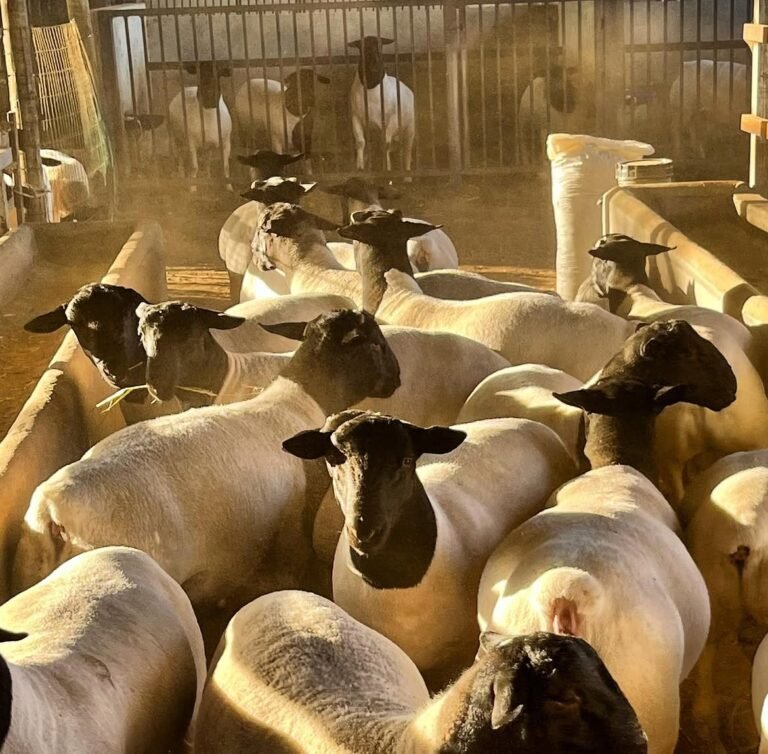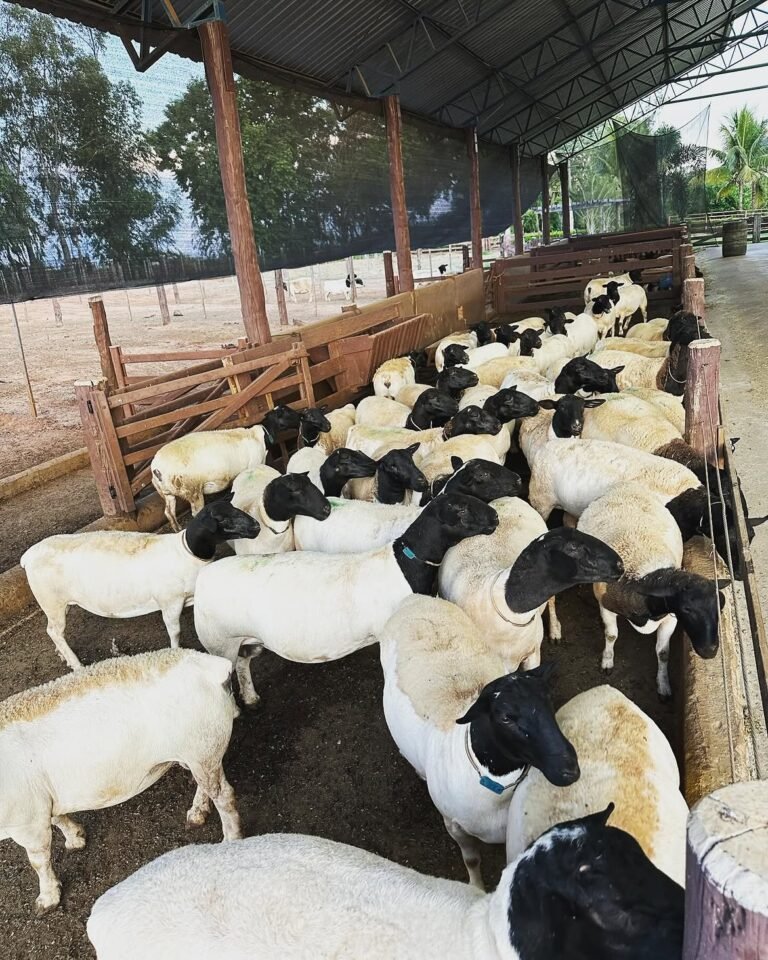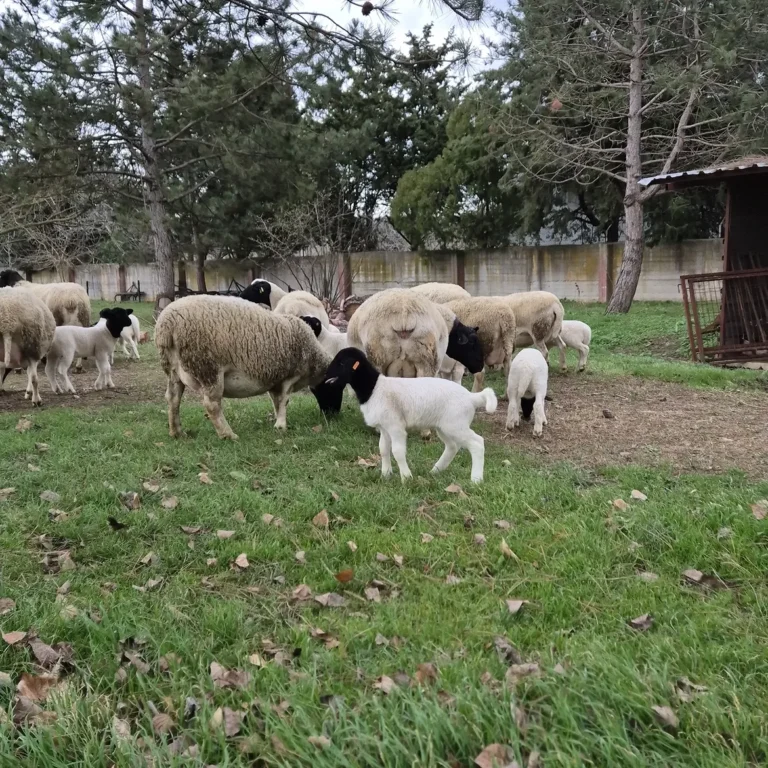
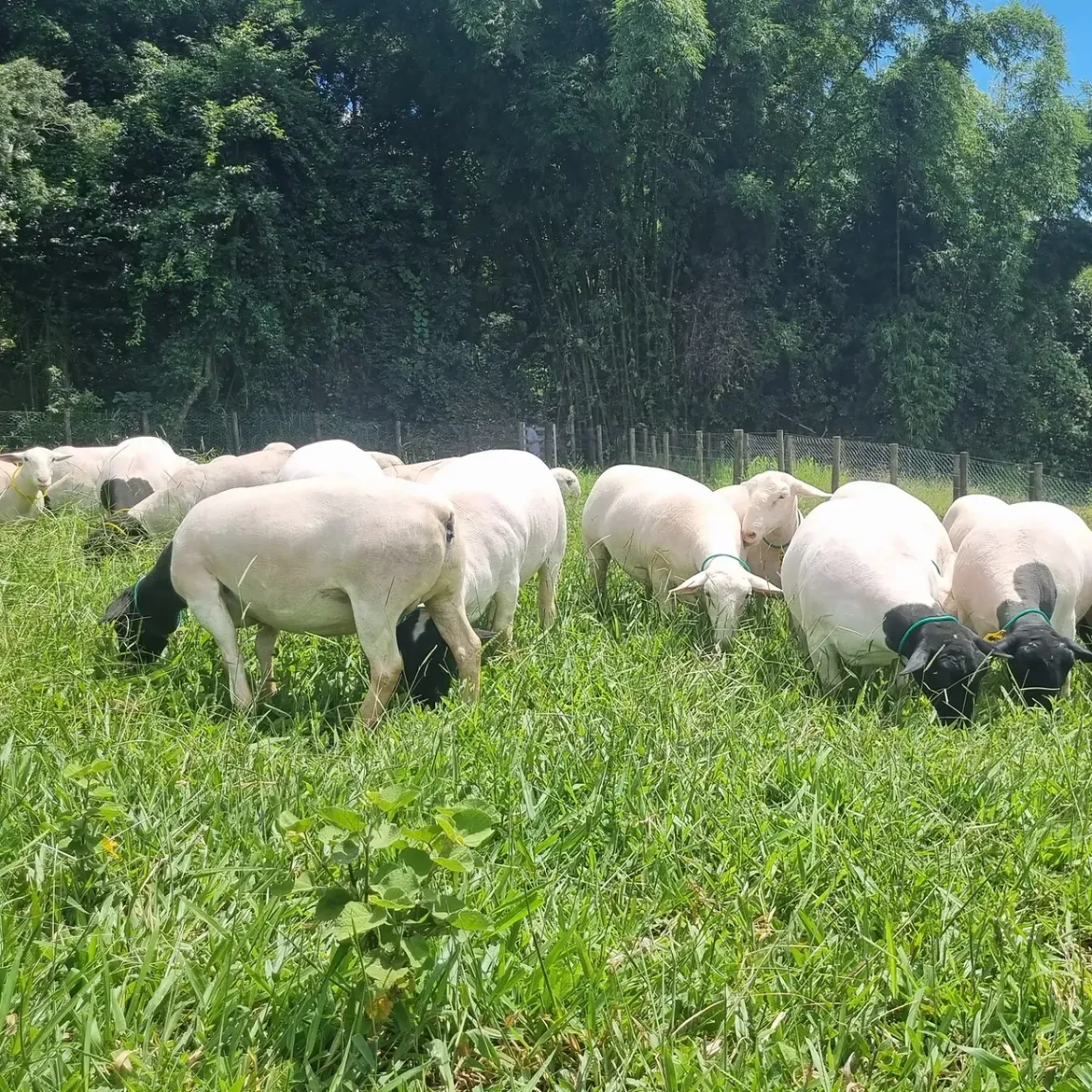
The Dorper was bred for one purpose: to put a good slaughter lamb on the market from South African veld. That is why so many commercial farmers keep Dorper sheep for meat production. The lambs grow quickly, they finish at a young age, and the carcass is well muscled with good conformation.
But a lamb is only worth what the buyer pays for it on the day. The farmers who do well with Dorpers are not the ones with the heaviest lambs. They are the ones who get lambs to the right weight and fat cover, at the right age, for the least feed, and sell them before they start losing value.
This guide covers the practical side: growth from birth to weaning, feeding and finishing, how lambs are graded at the abattoir, when to sell, and how to keep the numbers working.
Why Farmers Choose Dorper Sheep for Meat Production
The Dorper was developed in South Africa from the 1940s, by crossing the Dorset Horn with the Blackhead Persian, to produce a hardy mutton sheep that could raise slaughter lambs on veld. You can read the history of the breed on the Dorper Sheep Breeders’ Society website.
What that means on the farm:
- Early maturity. Dorper lambs lay down muscle and fat at a young age and lighter weight than many other breeds, so they can be marketed young.
- Hardiness. They handle heat and dry veld well, and graze and browse a wide range of plants.
- Fertility. Ewes can breed through much of the year and twins are common with good feeding.
- No shearing. Their hair-and-wool coat sheds, so there is no wool to manage.
That early maturity is the breed’s big strength, but it also brings the biggest trap in Dorper meat production: a Dorper lamb that is fed too long gets too fat. More on that below.
Growth From Birth to Weaning
A good slaughter lamb is made before it is born. Ewes that are well fed in the last six weeks of pregnancy give heavier, stronger lambs and more milk. A thin ewe gives a small lamb that starts life behind and seldom catches up.
In the first hours after birth, the lamb must drink colostrum. After that, the ewe’s milk drives growth until the lamb starts grazing properly. That is why mothering ability and milk production are meat traits too: a ewe that rears twins well is producing more meat than one that looks good but weans one small lamb.
Weigh, don’t guess
At weaning, weigh the lambs. It is the easiest way to see which ewes are doing their job and which lambs will finish quickly. Record the lamb’s weight, age, sex and dam. A scale is one of the best investments a meat producer can make, because the eye is easily fooled by a woolly lamb or a big frame.
Keep in mind that the heaviest lamb at weaning may simply have had the best mother or been a single. Compare lambs of similar age and birth type before you decide which ewes to keep and which ram to use again.
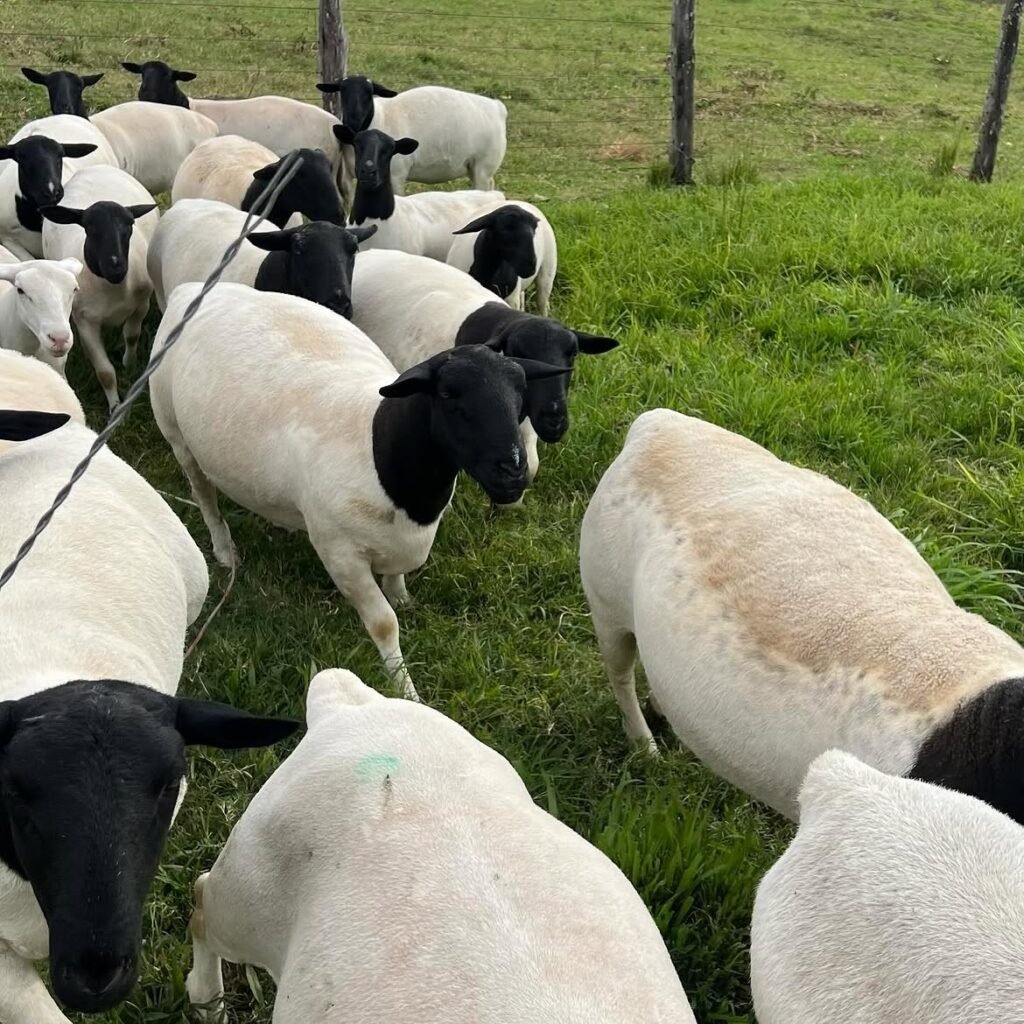
Feeding Dorper Lambs for Meat
Feed is usually the biggest cost you can control, so the feeding system has to suit your farm and your market, not the neighbour’s.
Finishing on veld and pasture
On good summer veld or planted pasture, Dorper lambs can reach market condition without much bought feed. That is the cheapest way to produce lamb. The weakness is variation: when the rain stops or the veld goes dry, growth slows, and lambs can stand still for weeks. Watch condition closely, and plan for a protein or energy supplement, or a switch to a pen, before lambs start losing weight.
Creep feeding
Creep feed is a supplement lambs can reach but ewes cannot, usually through a gap in a small pen. It can help lambs grow faster and more evenly, especially where the veld is poor, the ewes are short of milk, or you are aiming at a specific sale date. But it is not free growth. Work out what the extra kilograms cost against what the buyer will pay for them.
Feedlot finishing
Finishing lambs in a pen on a balanced ration gives you the most control over growth and sale dates. South African feedlot trials have found that Dorper lambs reach market readiness at lighter live weights and convert feed efficiently compared with several other sheep types. The catch is cost: feed is expensive, and a pen of lambs that converts poorly or is kept too long will eat the margin quickly.
If you finish in a pen, get a ration from a qualified nutritionist or reputable feed company, change feed gradually over about 10 to 14 days to avoid digestive upsets such as acidosis, and vaccinate against pulpy kidney before lambs go onto high-energy feed. Always keep the number that matters in front of you: feed cost per kilogram of gain.
Water
Lambs that do not drink do not eat. Clean troughs, enough trough space for the whole group, and good water quality are as important as the ration. In summer, check water daily.
Minerals
Use minerals according to what your area is known to be short of, with advice from your vet or feed supplier. More is not better, and some minerals, such as copper, are toxic to sheep in excess.
The Over-Fat Trap
This is where many Dorper meat producers lose money without realising it. Because Dorpers mature early, a lamb that has reached ideal condition will keep putting on weight, but more and more of that weight is fat. At the abattoir, an over-fat carcass is downgraded and paid less per kilogram, so the last few weeks of feeding can actually reduce what you earn.
Many commercial Dorper lambs are marketed at roughly 35 to 45 kg live weight, depending on the buyer, the sex of the lamb and the feeding system. Ram lambs can usually be taken heavier than ewe lambs before they get too fat. But there is no single correct weight. Ask your buyer or abattoir what they want, and sell to that specification, not to the heaviest weight the lamb can reach.
How Lambs Are Graded at the Abattoir
South Africa uses a carcass classification system that describes each carcass by age and fat cover.
- Age class is based on the number of permanent incisor teeth. A is a lamb with no permanent incisors, followed by AB, B and C for older sheep. Lamb (class A) usually earns the best price.
- Fat class runs from 0 (no fat) to 6 (excessively fat). Buyers generally pay best for lean-to-medium carcasses in the middle of the range, and penalise both very lean and over-fat carcasses.
So the target for most Dorper slaughter lambs is an A-class carcass with the fat cover your buyer asks for. Speak to your abattoir before you start finishing, not after, so your feeding plan aims at the right carcass.
Judging lambs on the hoof
With practice, you can judge finish by hand. Feel over the loin and the ribs: in a finished lamb you should feel the backbone and ribs under a smooth, even cover, without sharp edges and without a thick layer of fat. Look for a full, well-rounded hindquarter and a broad loin. Combine that with the scale, and you will sell far more lambs in the right class.
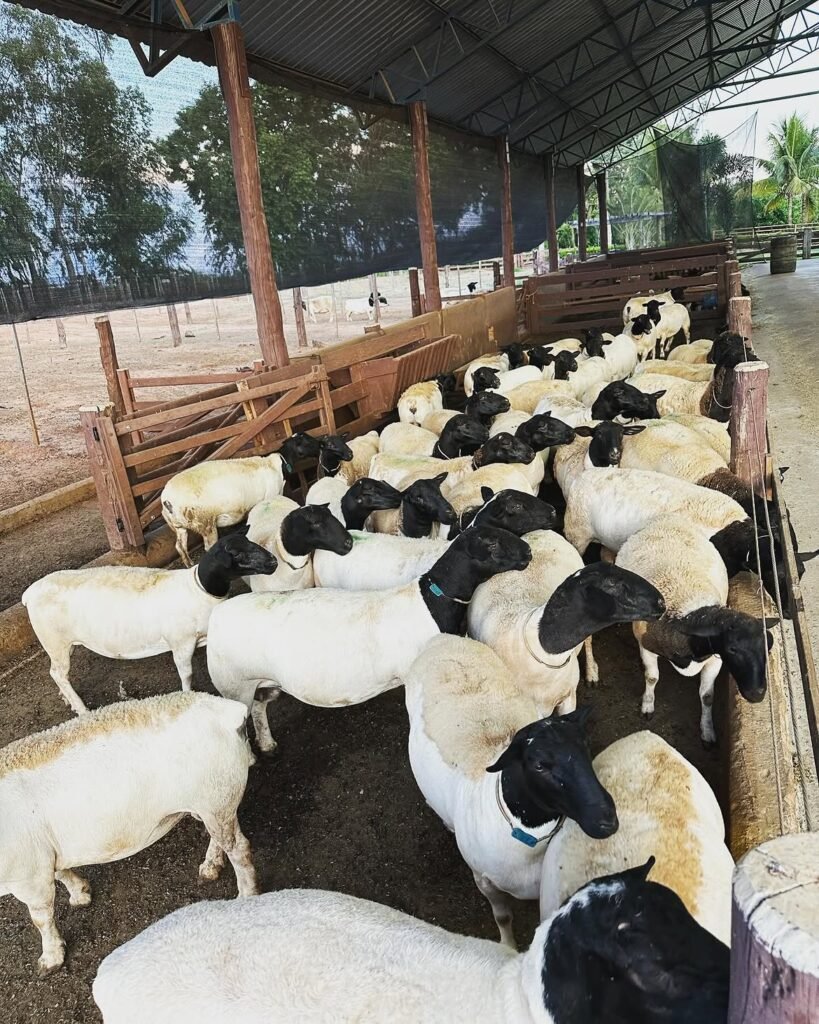
Selecting Breeding Stock for Meat Production
A commercial meat flock should be selected on what it produces, not on how it looks in a sale pen.
- Rams: growth, muscling through the loin and hindquarter, a sound frame, strong feet and legs, good testicles, and a family that performs. The ram contributes to every lamb, so this is where genetics pay.
- Ewes: fertility, mothering and milk. A ewe that weans heavy twins year after year is your best meat producer, whatever she looks like.
Our guide to choosing Dorper ewes and rams goes into selection in detail.
Health: Where Growth Is Won or Lost
A lamb fighting worms or disease is not turning feed into meat. The main threats to growth in a Dorper meat flock are:
- Wireworm and other internal parasites, especially in summer rainfall areas. Check eyelids for paleness and dose the lambs that need it. Blanket dosing speeds up drug resistance.
- Pulpy kidney, which strikes the best-fed lambs, particularly when feed changes suddenly. Vaccination is cheap insurance.
- Pneumonia in crowded or dusty pens and after stressful transport.
- Foot problems in wet conditions.
Work with your vet on a programme for your area, and always observe the withdrawal period on any remedy before lambs go to slaughter.
The Last Weeks Before Slaughter
Handle lambs calmly in the days before dispatch. Stress and rough handling cost weight and can affect meat quality. Keep water available, avoid sudden feed changes, and follow the abattoir’s instructions on holding and transport. Check that every lamb is past its withdrawal periods, and that you have the documents of identification and any movement permit that applies, especially in foot-and-mouth control areas.
Veld or Feedlot: Which Finishing System?
| Veld and pasture | Feedlot | |
|---|---|---|
| Feed cost | Low | High |
| Growth | Varies with rain and season | Predictable |
| Control over sale date | Limited | Good |
| Infrastructure | Fencing and water | Pens, troughs, feed storage |
| Main risk | Lambs standing still in dry spells | Poor feed conversion and over-fat lambs |
Many farmers combine the two: lambs grow on veld while it is good, and the slower ones are finished in a pen for a short period before sale.
The Economics of Dorper Meat Production
High lamb prices do not automatically mean high profits, because feed and other costs rise too. The two numbers that tell you most about a meat flock are:
- Kilograms of lamb weaned per ewe mated. This combines fertility, twinning, survival and growth in one figure.
- Feed cost per kilogram of gain for any lambs you finish on bought feed.
For reference, feeder lambs averaged about R56 per kilogram live weight on 30 September 2026 (AMT national average), up from about R48 in December 2025 according to African Farming. If it costs you more than the current live price to put on the last kilograms, you are losing money on them. Our guide to Dorper sheep farming in South Africa works through a full example for 100 ewes.
Common Mistakes in Dorper Meat Production
- Chasing weight instead of value. An over-fat lamb is heavier and worth less per kilogram.
- Ignoring the ewes. Meat production starts with ewes that conceive, lamb and milk well.
- Buying rams on looks alone. A spectacular ram with no growth or family record may not improve your lambs.
- Treating all lambs the same. Sort by weight and condition, and sell the finished ones first.
- Sudden feed changes. The fastest way to lose good lambs to pulpy kidney or acidosis.
- Not talking to the buyer. Know the specification before you finish, not after.
Frequently Asked Questions
Are Dorper sheep good for meat production?
Yes. The Dorper was bred in South Africa specifically as a meat sheep. Lambs grow quickly, mature early and produce a well-muscled carcass, and the breed is hardy on veld.
At what weight should Dorper lambs be slaughtered?
Many commercial Dorper lambs are marketed at roughly 35 to 45 kg live weight, but the right weight depends on the buyer’s specification, the lamb’s sex and the feeding system. Sell on finish and fat cover, not maximum weight.
Why do Dorper lambs get too fat?
Dorpers mature early, so once a lamb reaches ideal condition, extra feeding adds mainly fat. Over-fat carcasses are downgraded at the abattoir, so timing the sale matters.
What is an A2 or A3 lamb?
In South Africa’s carcass classification, “A” means a young lamb with no permanent incisors, and the number is the fat class from 0 (no fat) to 6 (excessively fat). Buyers generally prefer lean-to-medium lamb carcasses in the middle of that range.
Should I creep feed Dorper lambs?
Creep feed can speed up growth and give more even lambs, especially on poor veld or when ewes are short of milk. Use it when the value of the extra weight is more than the cost of the feed.
Can Dorper lambs be finished in a feedlot?
Yes. Dorper lambs finish well in feedlots and convert feed efficiently. Introduce feed gradually, vaccinate against pulpy kidney, and sell before they get over-fat.
Where can I buy Dorper sheep for meat production?
From auctions, breeders and suppliers such as DRM Livestock. Tell the supplier whether you want breeding stock or lambs for finishing, as these are very different purchases.
Final Thoughts
Dorper sheep for meat production work best when the whole system is built backwards from the carcass the buyer wants. Feed the ewes well in late pregnancy, get lambs off to a strong start, weigh them, keep them healthy, finish them on the cheapest feed that does the job, and sell them when they are ready rather than when they are heaviest. Measure kilograms weaned per ewe and feed cost per kilogram of gain, and you will know exactly where your profit comes from.
If you are building or expanding a meat flock, see our Dorper sheep for sale or request a quote for breeding ewes, rams or lambs.
Looking to buy sheep?
Tell us the breed, age group, quantity and delivery area. We reply with availability, pricing and transport costs, usually within one working day.
DRM LIVE STOCK is a registered South African livestock company (Company No. K2023207798, VAT No. 4640323079) based at 135 Rocklands Rd, Uitenhage Farms, Gqeberha. We supply cattle, goats, sheep and pigs, with delivery across South Africa.