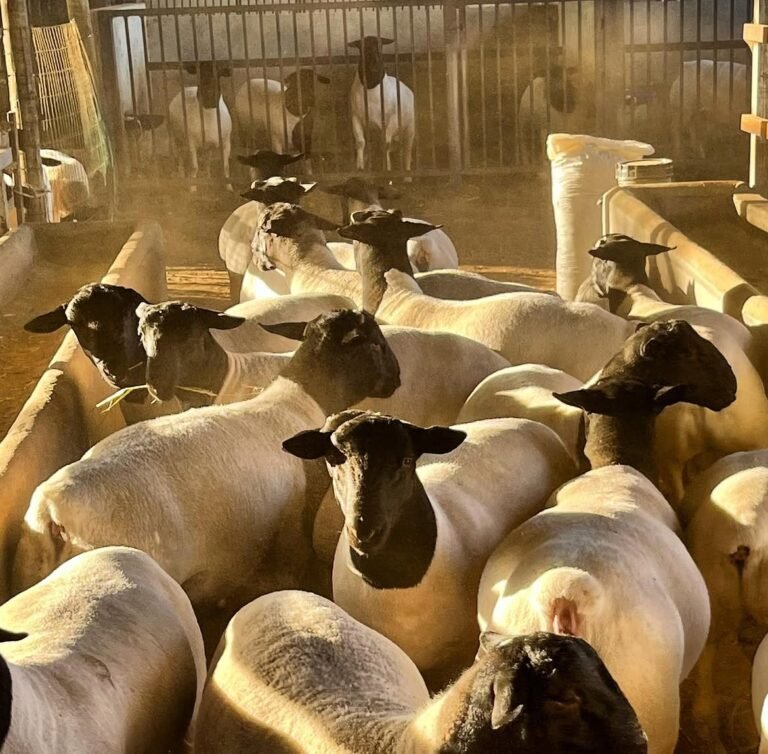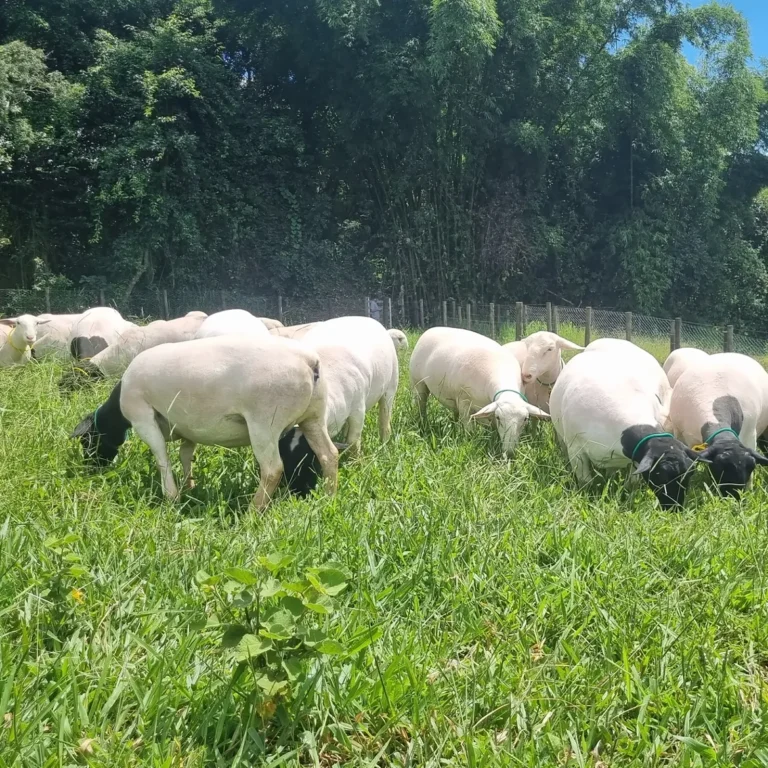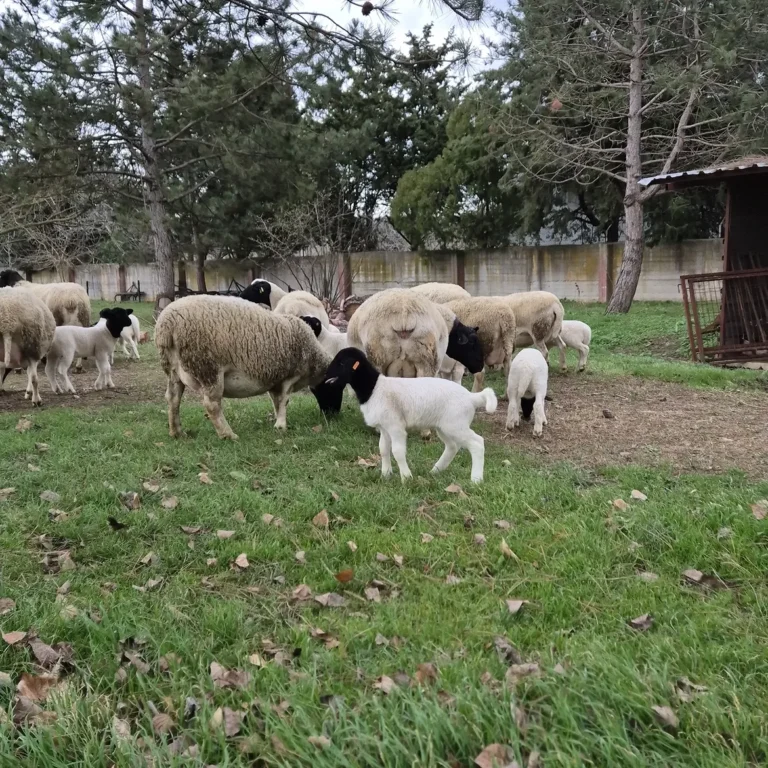
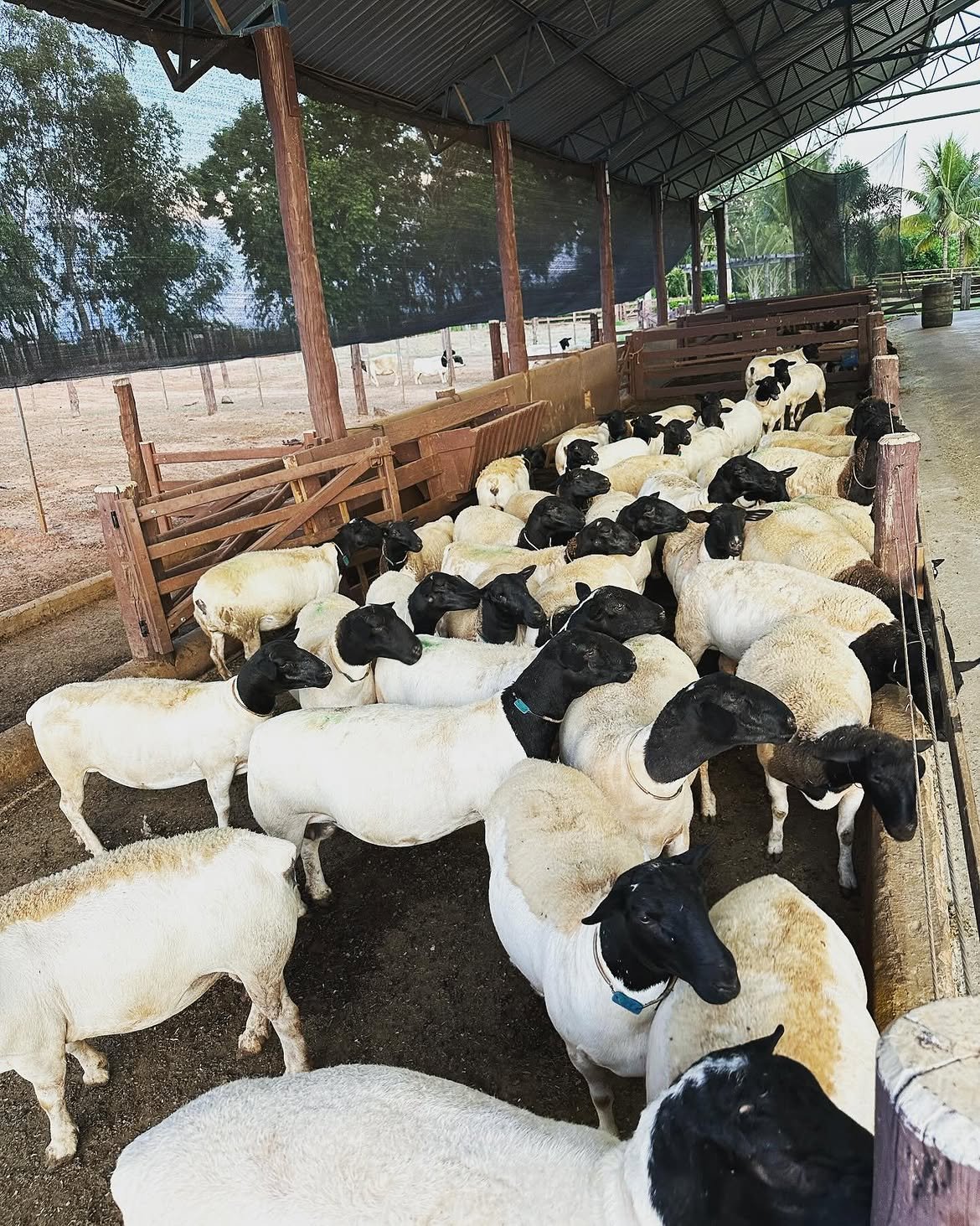
Dorper sheep farming in South Africa has a lot going for it. The breed was developed here, for our veld and our heat, to do one job well: turn grazing into lamb. It sheds instead of needing shearing, the ewes can breed through much of the year, and there is always a market for a well-finished Dorper lamb.
But the breed is only one part of it. Two farmers can buy Dorpers from the same seller on the same day and end up with completely different results three years later. The difference is almost never the sheep. It is the stocking rate, the water, the ewe selection, the lambing management and the bookkeeping.
This guide looks at Dorper sheep farming as a business: what you need before you start, what it costs, how to feed and breed the flock, where the money actually comes from, and the mistakes that eat the margin.
Start With the Farm, Not the Sheep
The most expensive way to start is to buy a truckload of ewes and then work out what the farm can carry. Do it the other way round. Before you buy a single sheep, you should know:
- how many hectares of usable grazing you have, and what condition the veld is in
- the long-term grazing capacity for your area, which your local extension officer can give you
- where the water comes from, and what happens when the pump breaks
- whether your fences will hold sheep and keep jackals and caracals out
- where you will work the sheep: a kraal, a race and a crush pen
- who will buy your lambs, and how far they are
If you cannot answer those, you are not ready to buy a big flock yet. That is not pessimism. It is the cheapest lesson in sheep farming.
How Much Land Do Dorper Sheep Need?
Everybody wants a figure like “six sheep per hectare”. There is no honest figure like that for the whole country. A hectare of good planted pasture in the Eastern Cape and a hectare of Karoo veld are not the same thing. What the land can carry depends on rainfall, veld type, soil, season and how it has been grazed in the past.
The Department of Agriculture publishes long-term grazing capacity norms in hectares per large stock unit (LSU). Roughly six sheep make up one LSU, so if your area is rated at, say, 6 hectares per LSU, one sheep needs about a hectare over the long run. In the drier Karoo it can be several times that.
Stock below the norm while you are learning, watch the veld and the sheep, and only add numbers once both are holding up through a dry season. Overstocking is the fastest way to turn a good sheep farm into a feed bill.
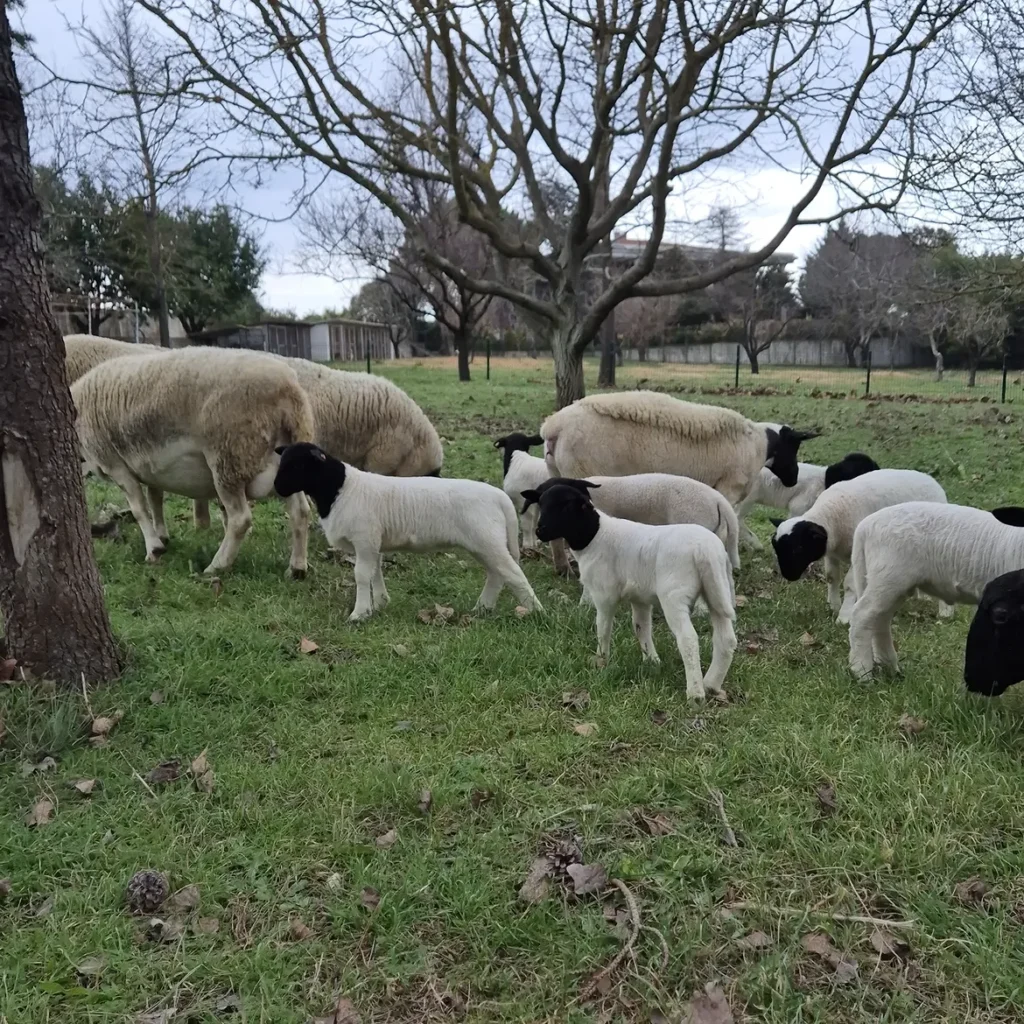
What It Costs to Start a Dorper Sheep Farm
There is no standard start-up figure, because a farmer who already has fences, water and a kraal starts in a very different place from someone on bare land. Budget for these:
Breeding stock
Usually the biggest early cost. For a commercial flock you need fertile, sound ewes and a good ram, not stud animals throughout. For current market reference points, see our guide to Dorper sheep prices in South Africa.
Fencing
Sheep find every gap. Good jackal-proof or electrified fencing costs money, but predators and strays cost more. Check whether existing fences can be repaired before you replace them.
Water
A Dorper ewe drinks several litres a day, more in summer heat and when she is suckling. Troughs in every camp, storage for at least a few days, and a backup for your borehole or pump are not extras.
Handling facilities
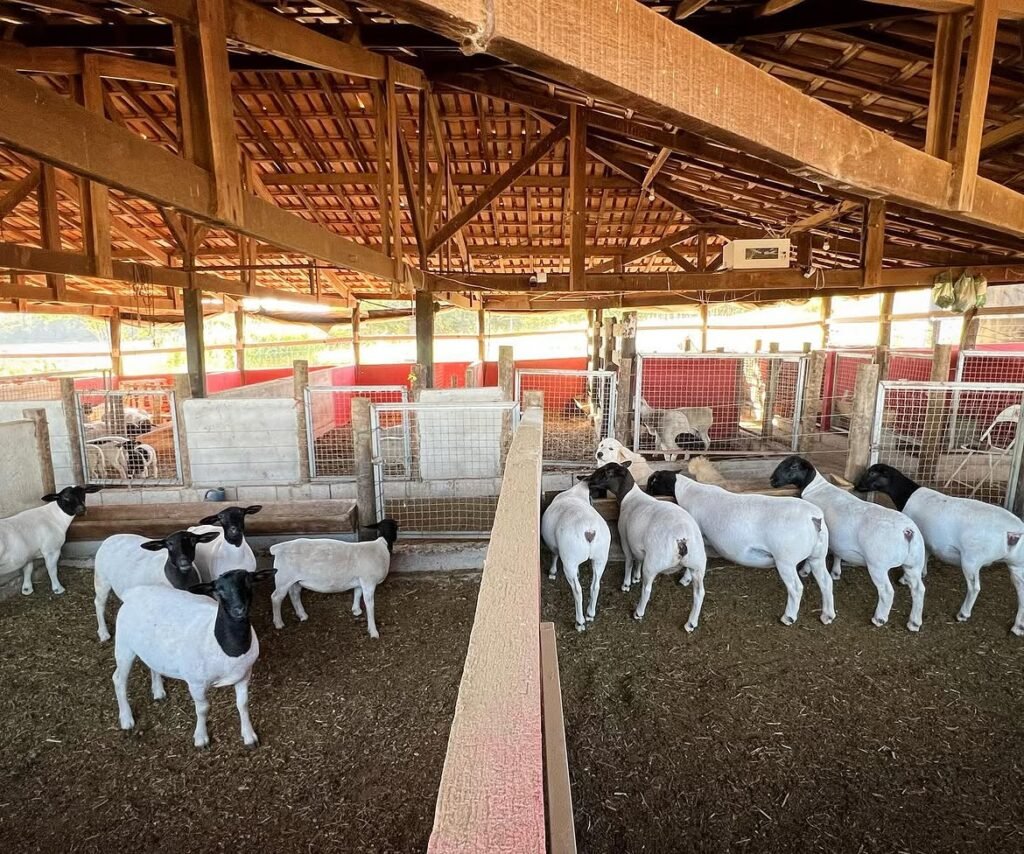
You will dose, vaccinate, mark, weigh, sort and load sheep many times a year. A simple kraal with a race and a crush pen saves labour, stress and injuries, and makes it more likely those jobs actually get done on time.
Feed and lick
Even on good veld, you will need lick in winter and feed for dry spells. Budget for it before the drought, not during it, and keep a dry, rat-proof store.
Working capital
Your first lambs will only be sold months after you buy the ewes. Keep enough cash to carry the flock until then, plus a reserve for a bad year.
Choosing Your Starting Flock
Start smaller than you can afford. A foundation flock of a size you can manage well will teach you how your veld holds up, how much lick you really use, what your lamb losses look like and how much labour sheep take. Then grow.
The ewes
The ewes are the engine of the business. Look for sound feet and legs, a correct mouth, a soft, functional udder with two good teats, good body capacity and decent condition. Young ewes on two or four teeth give you the most working years. If records are available, pay more for ewes with a history of lambing every season.
The ram
One ram sires most of a season’s lambs, so a cheap, poorly built or infertile ram can cost you a whole lamb crop. Check his feet, legs, body and testicles, and ask a vet to do a breeding soundness test before mating. Our guide to choosing Dorper ewes and rams goes into this in detail.
Feeding Dorper Sheep Through the Year
Dorpers are good foragers and will do well on natural veld, but veld quality changes through the year. Summer grazing is green and full of protein. Winter grazing is dry and poor, and in most areas sheep need a protein lick to use it properly.
The trick is to feed the flock according to what it is doing, not by the same routine all year:
- Dry, empty ewes can maintain themselves on veld and lick in most years.
- Before mating, many farmers flush ewes with better grazing or a supplement for a few weeks to improve conception and twinning.
- The last six weeks of pregnancy is when the lamb grows fastest. Thin ewes at this stage give weak lambs and little milk.
- Lactating ewes have the highest needs of all, especially with twins.
- Growing lambs need good grazing or creep feed if you want them to reach market weight quickly.
Before you blame poor growth on feed, rule out the other usual suspects: wireworm, overstocking, low milk from the ewe, mineral shortages or a poor ram. Throwing more feed at a management problem is an expensive habit.
Breeding and Lambing Management
Dorpers can breed through much of the year, but leaving the ram with the ewes permanently makes the flock hard to manage. A controlled mating season of about six weeks gives each ewe two chances to conceive, puts lambing into a predictable window, and lets you plan feed, labour and vaccination around it.
Time lambing for when your veld is at its best. Scan ewes if you can, so you can feed twin-bearing ewes better and pick out empty ones.
At lambing, the numbers that matter are not how many lambs are born but how many are weaned. Watch for difficult births, ewes that reject lambs, and weak lambs that do not drink. A newborn lamb needs colostrum in its first hours of life. Most lamb losses happen in the first few days, which is where good supervision pays for itself.
Keep records from day one
Write down which ewes lambed, how many lambs each had, how many she reared, and what the lambs weighed at weaning. After two or three seasons you will know which ewes pay their way, and the decision to cull the others becomes easy.
Health Management for a Dorper Flock
Dorpers are hardy, not indestructible. Every flock needs a health programme drawn up with a local vet, because disease risk depends on your area. Most programmes cover:
- Clostridial diseases such as pulpy kidney, which kills well-fed lambs quickly.
- Bluetongue and Rift Valley fever, in the areas and seasons where they occur.
- Wireworm and other internal parasites, especially in summer rainfall areas. Check eyelid colour and dose the sheep that need it, rather than dosing everyone by the calendar, so the worms do not build resistance.
- Ticks, lice and blowflies, depending on your area.
- Feet, particularly in wet seasons.
Keep new sheep apart for at least 28 days before they join the flock, and make sure every animal you buy has the seller’s mark, a document of identification and, where foot-and-mouth controls apply, an official veterinary movement permit.
Labour
Sheep that graze on veld still need daily attention. Someone has to check water and fences, count sheep, watch for sick animals, supervise lambing, move camps and bring sheep in for dosing and vaccination. Sheep do not care that you are busy with another business. If you will not be on the farm every day, plan for a reliable, trained worker from the start.
Is Dorper Sheep Farming in South Africa Profitable?
It can be, but not automatically. Profit is what is left after every lamb sale is set against every rand spent on the flock. The farmers who make money are usually the ones who wean a high percentage of lambs, keep feed costs under control, and sell at the right weight and time.
A simple example
Here is a rough illustration for 100 commercial ewes. The assumptions are yours to change; the point is the method.
| Item | Assumption | Result |
|---|---|---|
| Ewes mated | 100 | 100 |
| Lambs born | 130% (some twins, some empty ewes) | 130 lambs |
| Lambs weaned | 10% losses | 117 lambs |
| Kept as replacements | 20 ewe lambs | 97 lambs to sell |
| Sale value | 35 kg at about R56/kg live | about R1,970 per lamb |
| Lamb income | about R191,000 |
The lamb price used here is the AMT national feeder lamb average of about R56 per kilogram live weight on 30 September 2026, up from about R48 reported by African Farming for December 2025. Prices move every week. Add income from cull ewes and any breeding stock you sell, then subtract feed, lick, vet costs, labour, transport, repairs and finance. What is left is your margin.
Look at how sensitive the result is. If lamb losses go from 10% to 25%, you sell about 19 fewer lambs, which is roughly R37,000 less income for the same costs. That is why lamb survival and weaning percentage matter more than almost anything else in the business.
Numbers to Track Every Year
- Lambing percentage (lambs born per ewe mated)
- Weaning percentage (lambs weaned per ewe mated)
- Average weaning weight
- Ewe deaths and culls
- Feed and lick cost per ewe
- Vet and remedy cost per ewe
- Average price per lamb sold
- Gross margin per ewe
If the flock is growing but your bank balance is not, these numbers will show you where the problem is.
Commercial or Stud Dorpers?
A commercial farmer is paid for lambs. What matters is fertility, lamb survival, growth, soundness and adaptation. You do not need stud ewes; you need good commercial ewes and the best ram you can justify.
A stud breeder is paid for genetics. That adds registration, inspection, performance recording, breed standards and marketing, all of which cost time and money. The Dorper Sheep Breeders’ Society sets the breed standard for registered breeders. Do not confuse the prestige of a stud with the profitability of a commercial flock. They are different businesses.
Common Mistakes in Dorper Sheep Farming
- Buying sheep before planning the farm. Grazing, water, fences and handling come first.
- Starting too big. More sheep means more feed, more labour and bigger mistakes.
- Buying the cheapest animals. Poor fertility and weak structure cost far more than you saved.
- A cheap ram. One bad ram can cost you a lamb crop.
- Underfeeding pregnant ewes. You pay for it with weak lambs and poor milk.
- Treating Dorpers as maintenance-free. Hardy does not mean you can skip dosing, vaccination and daily checks.
- No records. Without them you cannot tell which ewes are making you money.
Buying Dorper Sheep for Your Farm
Once your farm is ready, the next step is sourcing the right animals. When you ask for a quote, tell the supplier how many sheep you need, the ages, the ewe-to-ram ratio, whether they are for breeding or meat production, where you farm and when you want delivery. The more specific you are, the easier it is to match the animals to the job.
DRM Livestock supplies Dorper lambs, yearling ewes, pregnant ewes and rams. Prices are on request, because they depend on the type and number of animals and on delivery. See our Dorper sheep for sale or request a quote.
Frequently Asked Questions About Dorper Sheep Farming in South Africa
Is Dorper sheep farming profitable in South Africa?
It can be. Profit depends mainly on how many lambs you wean per ewe, what you spend on feed and health, and what you get per lamb. The breed alone does not guarantee a profit.
How many Dorper sheep should I start with?
Start with a number your land, water, facilities, labour and cash can carry comfortably, and grow from there. Starting too big is one of the most common mistakes.
How much land do Dorper sheep need?
It depends on your area’s grazing capacity. Roughly six sheep equal one large stock unit, so multiply your area’s hectares-per-LSU norm accordingly, and stock below it while you learn.
What do Dorper sheep eat?
Mainly natural veld or pasture, with a protein lick in winter and extra feed in dry spells, late pregnancy and lactation. Lambs grow faster with good grazing or creep feed.
How often do Dorper ewes lamb?
Dorpers can breed through much of the year. Most commercial farmers run one controlled mating season a year, while some with very good feed run three lambings in two years.
What are the biggest costs in Dorper sheep farming?
Breeding stock, feed and lick, vet costs, labour, water, fencing, transport and predator control. Feed in dry years is the cost that most often catches new farmers out.
Are Dorpers suitable for small farms?
Yes, as long as the flock size matches the farm’s grazing capacity and there is water, fencing, a kraal and someone to check the sheep daily.
Final Thoughts
Successful Dorper sheep farming in South Africa is built on a few simple things done well: stock within what your veld can carry, keep water reliable, buy sound, fertile ewes and a good ram, control mating, look after the lambs in their first days, keep the flock healthy and write everything down. Measure what the flock produces, not how many sheep are in the kraal. A smaller flock that weans a lot of lambs cheaply will beat a big flock that doesn’t, every time.
For more on the breed itself, read our complete guide to Dorper sheep in South Africa.
Looking to buy sheep?
Tell us the breed, age group, quantity and delivery area. We reply with availability, pricing and transport costs, usually within one working day.
DRM LIVE STOCK is a registered South African livestock company (Company No. K2023207798, VAT No. 4640323079) based at 135 Rocklands Rd, Uitenhage Farms, Gqeberha. We supply cattle, goats, sheep and pigs, with delivery across South Africa.