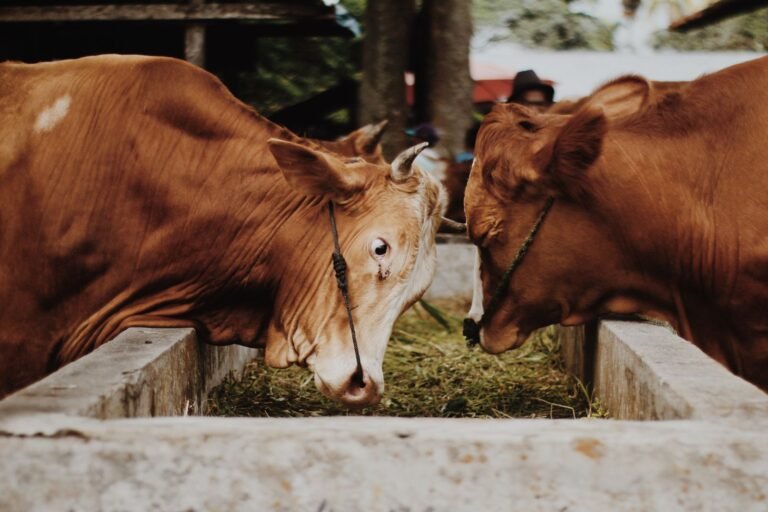
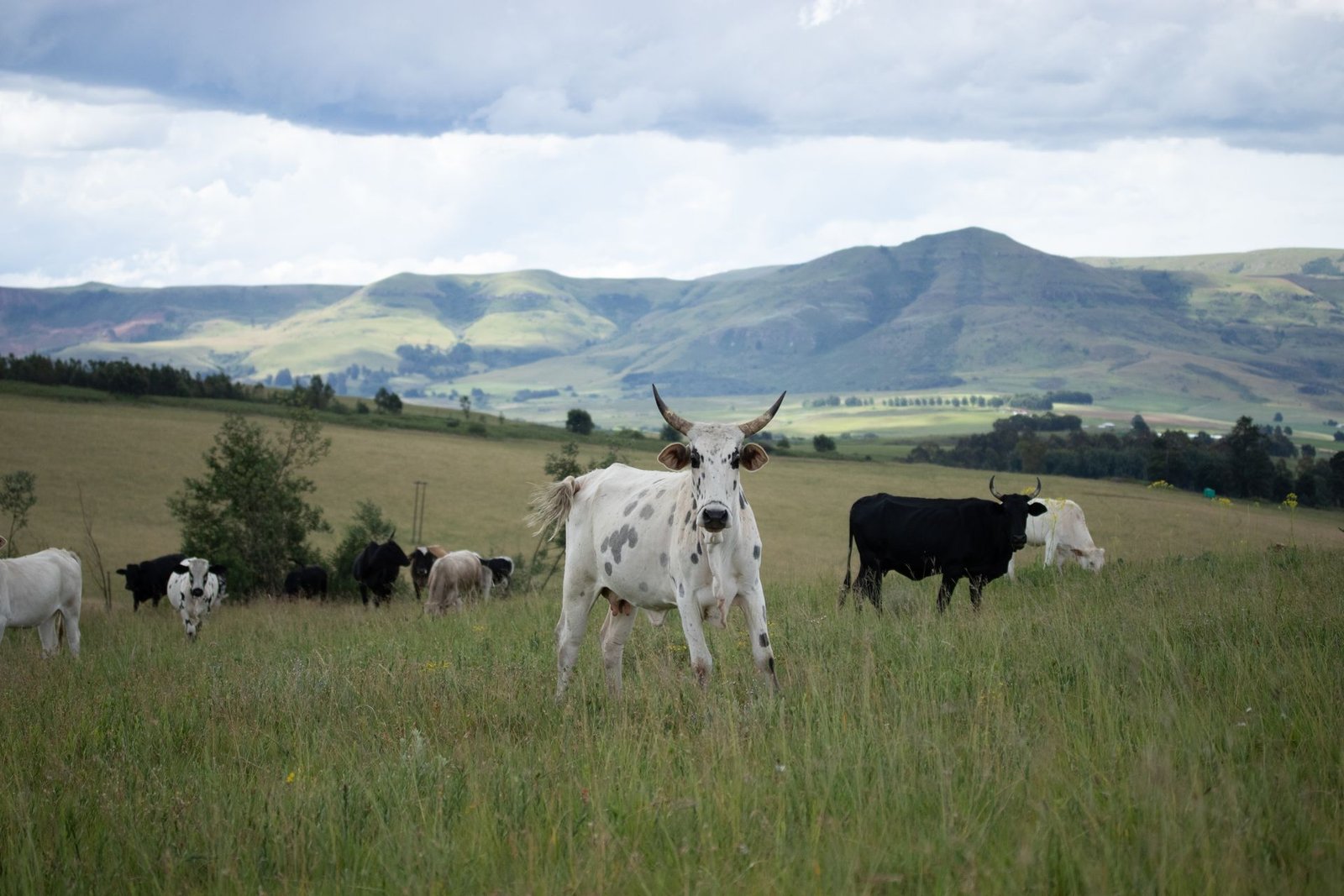
Cattle farming in South Africa is slow money. A heifer you buy today may only wean her first calf two years from now, and after that she gives you one calf a year if everything goes right. But a well-run cow herd on good veld is also one of the steadiest businesses in farming. Cattle hold their value, they turn grass that nothing else can use into beef, and there is always a buyer for a good weaner.
The farmers who do well with cattle are seldom the ones with the fanciest bulls. They are the ones who stock to what their veld can carry, get their cows pregnant every year, keep calves alive, and sell at the right weight and time. This guide covers how to do that: choosing a system and breed, land and water, feeding through the year, breeding, calf care, health, the foot-and-mouth situation, selling, and the numbers behind a cow-calf herd.
How Cattle Farming in South Africa Works
Most beef in this country comes from a simple chain. Farmers on veld run cows and bulls and sell the calves at weaning, usually at six to eight months. Feedlots buy those weaners and finish them on a ration for a few months before slaughter. Most farmers never finish their own cattle; they sell weaners, cull cows and the odd bull.
There are four main ways to farm cattle:
- Cow-calf (weaner production): the most common system. You keep a breeding herd and sell weaners. It suits most veld farms.
- Backgrounding: buying weaners and growing them on grass for a few months before selling to a feedlot. It needs good grazing and good timing.
- Feedlotting: finishing cattle on a ration. It needs capital, feed supply and a close eye on margins.
- Stud breeding: breeding registered bulls and heifers for other farmers. It needs records, inspections and years of selection.
For a new farmer, a cow-calf herd is usually the right place to start. The rest of this guide focuses mainly on that system.
Choosing the Right Cattle Breed for Your Area
The right breed is the one that stays fertile on your veld, in your heat and with your ticks. A cow that does not calve every year costs you as much to keep as one that does. Here are the main beef breeds farmed here:
| Breed | Strengths | Best suited to |
|---|---|---|
| Bonsmara | Fertile, adapted, good growth; bred here for our conditions | Most areas, especially bushveld and mixed veld |
| Nguni | Very fertile, tick-resistant, hardy, easy calving | Low-input systems, hot and tick-heavy areas |
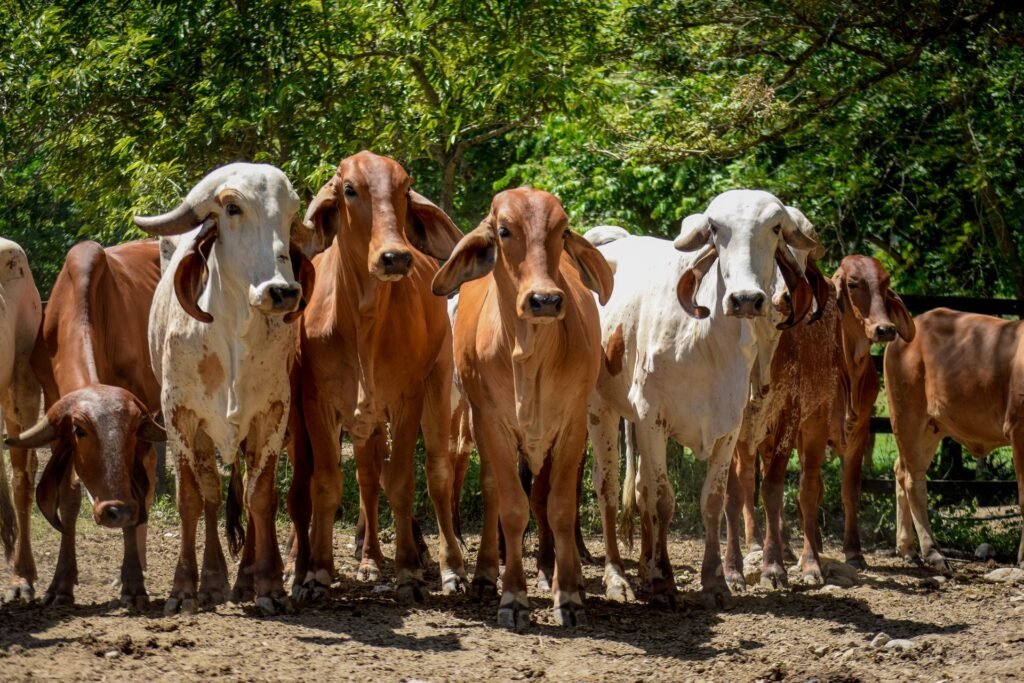
| Brahman | Heat and tick tolerance, long working life, crossbreeding | Hot, humid and bushveld areas |
| Angus | Early maturing, polled, good carcass and marbling | Cooler areas with good grazing or pasture |
| Simmentaler | Big frame, fast growth, good milk | Areas with good grazing or supplementary feed |
Bonsmara
The Bonsmara was developed in South Africa by Professor Jan Bonsma at the Mara Research Station in Limpopo, mainly from Afrikaner cattle crossed with Hereford and Shorthorn. It was selected for fertility, growth and adaptation to local conditions, and it is one of the most widely farmed beef breeds in the country. See our guide to Bonsmara cattle prices for current auction averages.
Nguni
The Nguni is an indigenous Sanga breed that has lived with African ticks and diseases for centuries. It is smaller than the commercial breeds, but it is very fertile, calves easily and holds condition on poor veld. Many farmers use Nguni cows crossed with a bigger bull to produce heavier weaners. For a detailed comparison, see our guide to Bonsmara vs Nguni.
Brahman
The Brahman is a Bos indicus breed built for heat. It sweats easily, has a loose, thin skin that ticks struggle with, and keeps working in hot, humid areas. It is widely used in crossbreeding, where it adds hardiness and hybrid vigour. For a side-by-side comparison, read our guide to Brahman vs Bonsmara cattle.
Angus and Simmentaler
The Angus is a British breed known for early maturity and carcass quality, and it is naturally polled. The Simmentaler is a large-framed breed with fast growth and good milk. Both do best where the grazing is good. On dry, hot veld with heavy tick pressure, they usually need more help than the adapted breeds. For a closer look at these two European breeds, read our comparison of Angus vs Simmentaler.
If you are unsure, look at what your neighbours farm and how their cows look at the end of winter. That tells you more than any breed brochure. See all the cattle breeds we supply.
How Much Land and Water Do Cattle Need?
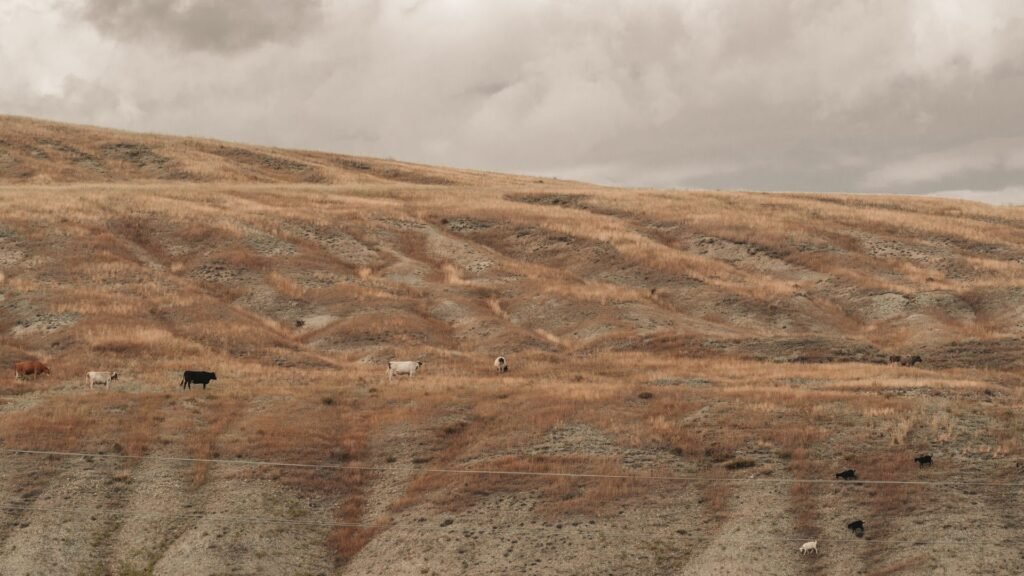
Every farm has a grazing capacity, the number of animals it can carry over the long run without the veld going backwards. It is measured in hectares per large stock unit (LSU), and one LSU is roughly one mature cow. In high-rainfall grassland a cow may need a few hectares; in dry bushveld or the Karoo it can be many times that. Your local extension officer can give you the official norm for your farm.
Remember that a cow with a calf at foot, and the young stock you keep, all count. Stock below the norm while you learn, and keep a reserve camp for winter. The single biggest mistake in cattle farming is too many cattle on too little grass.
Water is just as important. A cow can drink 40 to 60 litres a day or more in summer heat, and a lactating cow needs more. Multiply that by your herd, add a few days of pump breakdown, and you know how much storage you need. Every camp needs a reliable water point.
Feeding Cattle Through the South African Year
On most veld farms, cattle live on grazing and the farmer’s job is to fill the gaps with the right lick at the right time.
- Summer: green grass is rich in protein and energy, but most South African veld is low in phosphorus. A phosphorus lick in summer helps cows conceive and grow, and it helps prevent botulism, which cattle can pick up by chewing old bones when they crave phosphorus.
- Winter: dry grass is low in protein, and without help cows lose condition and calve thin. A protein or production lick lets them use the dry grass better. Leaving good standing grass in a rested camp is the cheapest winter feed of all.
- Before calving and during mating: this is when condition matters most. A cow that calves thin takes much longer to come back on heat.
Learn to condition-score your cows on a 1 to 5 scale. Most farmers aim for about 3 at calving: ribs not visible, backbone felt but not sharp. Cows that drop below that fall behind in fertility, and it costs you a calf.
Your feed supplier or extension officer can recommend licks for your area. Just remember that if you are buying large amounts of feed every winter, your stocking rate is probably too high. Our guide to feeding cattle covers each season’s licks, urea limits and drought feeding in more detail.
Breeding Management: The Heart of a Cow Herd
In a cow-calf business, you are paid for one thing: live calves at weaning. Everything in breeding management is aimed at getting every cow pregnant, every year, early in the season.
Use a breeding season
Leaving bulls with the cows all year gives you calves all year, which makes it hard to manage feed, vaccination, weaning and marketing, and hard to spot cows that are not calving. A breeding season of about three months, timed so calves are born when the veld is at its best, groups your calving and your weaning. After the season, have the cows pregnancy-tested and deal with the empty ones.
Choose and check your bulls
A bull sires a large share of your calf crop every year, so he is the fastest way to improve, or damage, a herd. Buy bulls from breeders who keep records, and look for good feet and legs, a well-developed scrotum and a family that performs. A mature bull is commonly run with about 25 to 40 cows in a breeding season, fewer for young bulls or large, bushy camps. Have every bull checked by a vet for breeding soundness before the season. A bull that fails quietly can cost you a whole year’s calves.
Grow heifers out properly
Heifers should only be mated once they have reached enough size, usually around two-thirds of their expected mature weight. Heifers mated too young and too small have more calving problems and often fail to conceive again the next year.
Measure what matters
Two numbers tell you most about a cow herd: the weaning percentage (calves weaned per cow mated) and the weaning weight of those calves. A cow that weans a calf close to half her own body weight every year is doing her job. Keep records of every cow’s calving dates and her calves’ weaning weights, and within a few years you will know exactly which cows to keep.
Calving and Calf Care
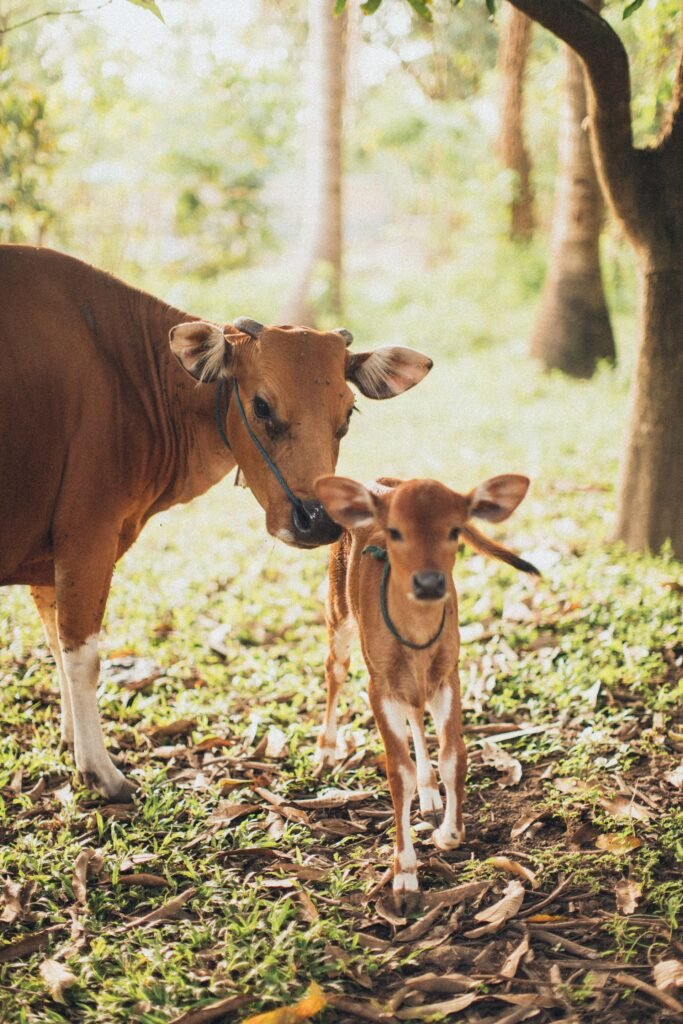
Check cows daily during calving. Most calve on their own, but heifers especially may need help. A newborn calf must drink colostrum within the first few hours. If a calf is weak, or the cow has no milk, you may need to feed colostrum or milk by bottle for a while.
In the first months, calves are usually marked, vaccinated, dehorned where needed and, if they will not be kept as bulls, castrated. Do these jobs young, when they are least stressful, and ask your vet about pain relief.
Weaning usually happens at six to eight months. Weigh your calves at weaning. It is the easiest way to see which cows are doing well and what your weaners are worth.
Cattle Health: Vaccination, Ticks and Biosecurity
Agree a health programme with your local vet, because the risks change from area to area. Common elements include:
- Brucellosis: vaccinating heifer calves is compulsory by law, with a registered vaccine (S19 for heifers of 4 to 8 months, or RB51).
- Anthrax, botulism and blackquarter: routine vaccinations in many areas.
- Lumpy skin disease: vaccinate before the summer insect season.
- Tick-borne diseases: redwater, heartwater and gallsickness are the big ones. Adapted breeds and a sensible tick control programme help. Your vet can advise on how much to dip, because over-dipping can leave cattle with no natural immunity.
- Internal parasites: mostly a concern in young stock, and in wetter areas.
Keep new cattle apart for at least 28 days before they join the herd, buy only from traceable sources, and make sure every animal carries a registered brand and comes with the right papers.
Foot-and-Mouth Disease: What Cattle Farmers Need to Know in 2026
South Africa is dealing with the most serious foot-and-mouth disease (FMD) outbreak in its history. In early 2026 the government started a national vaccination campaign aimed at around 12 million cattle, with KwaZulu-Natal among the worst-hit areas, according to Forbes Africa. Several countries have restricted South African beef imports because of it.
For a cattle farmer this means:
- Cattle from affected or disease management areas may only move with an official veterinary movement permit.
- Animals moved under permit must usually be quarantined on arrival.
- Buy only from sellers who can show where the cattle come from and provide the right documents.
- Report any blisters in the mouth or on the feet, drooling or sudden lameness to your state vet immediately.
The rules change as the situation develops, so always phone your local state vet before you buy, sell or move cattle. The RPO also posts regular updates for livestock farmers.
Selling Cattle: Weaners, Auctions and Feedlots
Most farmers sell weaners at auction or directly to a feedlot, and cull cows to an abattoir or at auction. Weaners are sold per kilogram live weight, so the price per head depends on weight as well as the market.
For reference, weaner calves averaged about R49.90 per kilogram live weight in early September 2026, and class A beef carcasses about R67.21 per kilogram, according to Absa’s Agri Trends livestock report. At that price, a 220 kg weaner is worth roughly R11,000 before commission and transport. Prices move with the season: they often ease in spring when many farmers sell, and rise when buyers are restocking after good rains.
Heavier, even groups of weaners of a similar age and type usually fetch a better price, which is another reason a short calving season pays.
What It Costs to Start a Cattle Farm
There is no single figure, because a farm with good fences and water starts in a very different place from bare land. Budget for:
- Breeding cattle: cows or in-calf heifers and at least one good bull.
- Fencing: sound boundary fences and enough camps to rotate and rest veld.
- Water: boreholes, pumps, pipes, storage and troughs.
- Handling facilities: a kraal, a race, a crush and a loading ramp. You cannot vaccinate, brand or pregnancy-test cattle safely without them.
- Health and licks: vaccines, remedies, tick control, and summer and winter licks.
- Branding and paperwork: a registered brand and the documents to buy and sell legally.
- Labour, transport and a cash reserve: your first weaners are only sold a year or more after you start.
A Simple Example of Cow-Calf Economics
Here is a rough illustration for a herd of 50 cows. Change the assumptions to match your farm; the method is what matters.
| Item | Assumption | Result |
|---|---|---|
| Cows mated | 50 | 50 |
| Calves weaned | 80% weaning percentage | 40 calves |
| Heifers kept as replacements | 8 | 32 weaners to sell |
| Weaner value | 220 kg at about R49.90/kg | about R10,980 each |
| Weaner income | about R351,000 |
Add cull cow sales, then subtract licks, vaccines, vet costs, labour, transport, commission, repairs, bull replacement and finance. What is left is your margin.
Now see what happens if the weaning percentage drops from 80% to 65%. You wean about 7 or 8 fewer calves, which is roughly R80,000 less income for the same costs. That is why fertility, not the price of the bull, is the number that makes or breaks a cattle farm.
Common Mistakes in Cattle Farming
- Overstocking. Too many cattle for the veld means thin cows, poor conception and big feed bills.
- No breeding season. Calves all year make every other job harder and hide the cows that are not working.
- An untested bull. One infertile bull can cost you a year’s calves.
- Keeping empty cows. A cow that does not wean a calf is eating grass a productive cow could use.
- Skipping the summer phosphorus lick. It costs you fertility and raises the risk of botulism.
- Buying cattle without papers. In the current FMD situation especially, untraceable cattle are a serious risk.
- No records. Without calving and weaning records you cannot tell which cows make money.
More Cattle Farming Guides
- Bonsmara Cattle Prices in South Africa (2026): What Buyers Really Pay
- Nguni Cattle Prices in South Africa: What Buyers Pay in 2026
- Weaner Prices in South Africa (2026): What Calves Are Worth Now
- Brahman Cattle in South Africa: A Complete Farmer’s Guide
- Bonsmara Cattle in South Africa: A Complete Breed Guide
- Angus Cattle in South Africa: A Complete Breed Guide
- Common Cattle Diseases in South Africa: Signs, Prevention and Control
- Feeding Cattle in South Africa: A Practical Guide for Every Season
- Brahman vs Bonsmara: Which Beef Breed Suits Your Farm?
- Bonsmara vs Nguni: Which Cattle Breed Suits Your Farm?
- Angus vs Simmentaler: Which Beef Breed Suits Your Farm?
- Buying Livestock in South Africa: A Beginner’s Guide in 8 Steps (2026)
Frequently Asked Questions About Cattle Farming in South Africa
Is cattle farming profitable in South Africa?
It can be, especially as a cow-calf operation on good veld. Profit depends mainly on your weaning percentage, weaning weights, lick and health costs, and the weaner price when you sell.
Which cattle breed is best for beginners?
Adapted breeds such as Bonsmara, Nguni and Brahman are forgiving for new farmers because they cope with heat, ticks and poor seasons. The best choice still depends on your area, so look at what does well on neighbouring farms.
How many cattle can I keep per hectare?
It depends on your farm’s grazing capacity, which ranges from a few hectares per cow in high-rainfall grassland to many times that in dry areas. Ask your extension officer for the norm for your farm and stock below it.
When should calves be weaned?
Most beef calves in South Africa are weaned at six to eight months. Weigh them at weaning to measure your cows’ performance and to know what the weaners are worth.
How many cows can one bull cover?
A mature, fertile bull is commonly run with about 25 to 40 cows in a breeding season. Young bulls and large or bushy camps need a lower ratio. Have bulls tested for breeding soundness before every season.
What vaccinations do cattle need?
Brucellosis vaccination of heifer calves is compulsory. Most programmes also cover anthrax, botulism, blackquarter and lumpy skin disease. Your vet will add others depending on your area.
Can I move cattle during the foot-and-mouth outbreak?
In many areas you need an official veterinary movement permit, and cattle may need quarantine on arrival. Check with your local state vet before buying, selling or moving any cattle.
Final Thoughts
Successful cattle farming in South Africa rests on a few basics done well year after year: stock to what your veld can carry, pick a breed that suits your area, feed the right lick at the right time, run a breeding season with tested bulls, look after calves in their first days, keep the herd healthy and traceable, and write everything down. Get those right and the cows will do the rest.
If you are ready to start or grow a herd, see the cattle breeds we supply or request a quote with the breed, number and type of animals you need. For more on the basics of running a livestock farm, read our guide to livestock farming in South Africa.
Looking to buy cattle?
Tell us the breed, age group, quantity and delivery area. We reply with availability, pricing and transport costs, usually within one working day.
DRM LIVE STOCK is a registered South African livestock company (Company No. K2023207798, VAT No. 4640323079) based at 135 Rocklands Rd, Uitenhage Farms, Gqeberha. We supply cattle, goats, sheep and pigs, with delivery across South Africa.