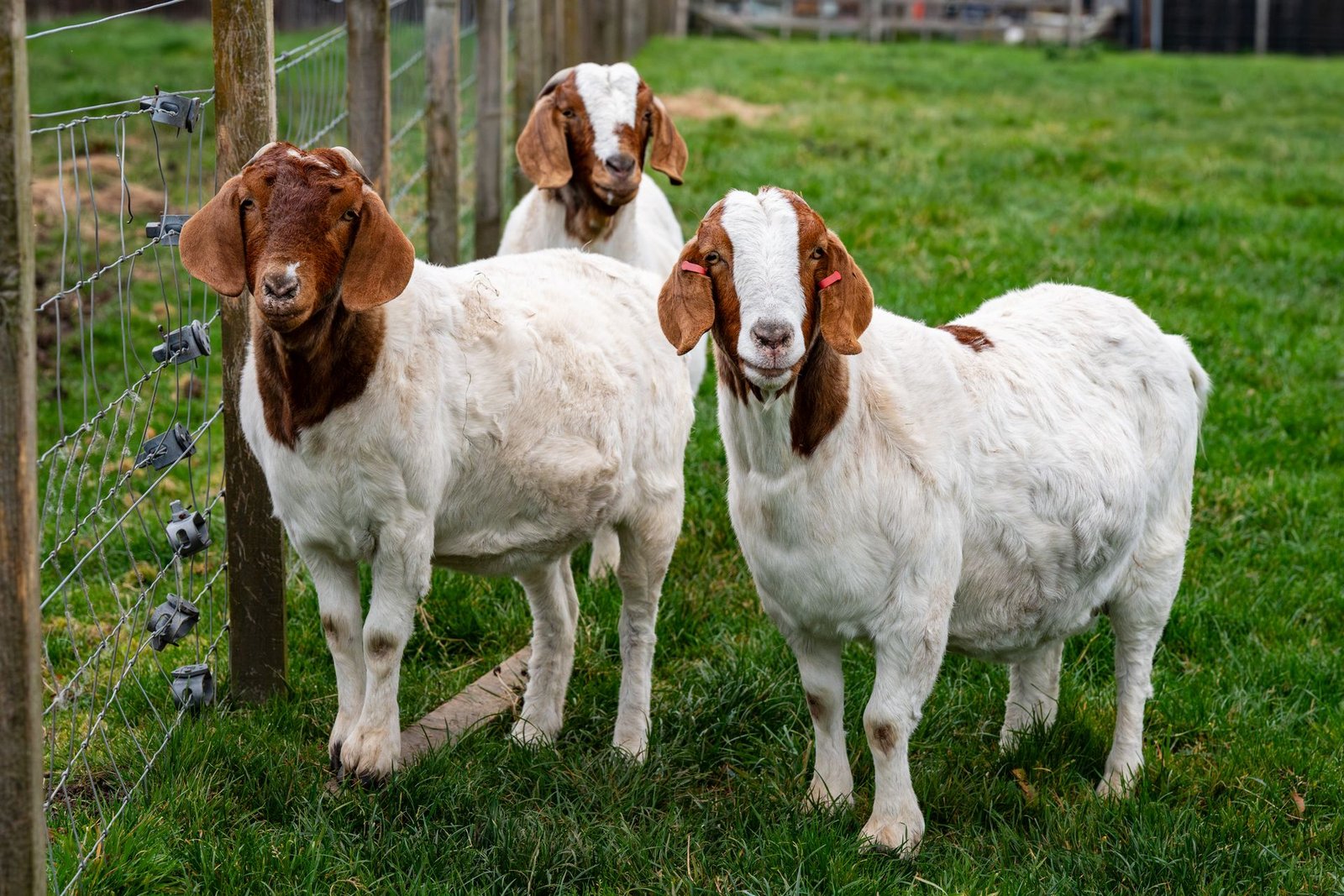
Boer goats are South Africa’s best-known livestock export to the world, and for good reason. Bred in the Eastern Cape for meat, they combine size, fast growth, a well-muscled carcass and high fertility in one hardy animal. Today they are farmed on every continent, but the breed’s home, its breed society and its biggest stud industry are still here in South Africa.
This guide covers everything you need to know about Boer goats in South Africa: where the breed came from, what the breed standard looks for, how big they grow, how fertile they are, the difference between stud, flock and commercial Boer goats, what they cost at auction in 2025 and 2026, and what to check before you buy.
Boer Goats at a Glance
| Trait | Boer goat |
|---|---|
| Origin | Eastern Cape, selected as a meat goat from the early 1900s |
| Breed society | Founded in 1959 in Somerset East |
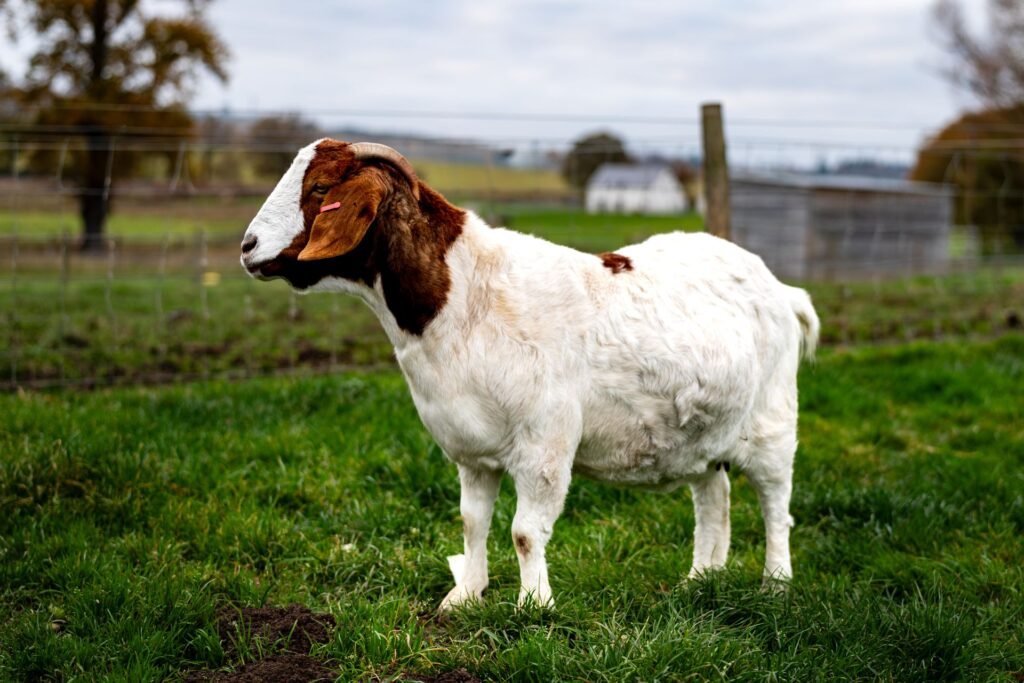
| Colour | White body with a red head and ears, a white blaze and pigmented skin |
| Mature buck weight | About 110 to 135 kg |
| Mature doe weight | About 90 to 100 kg |
| Kidding rate | About 189 kids born per 100 does mated in long-term records |
| Main strengths | Size, growth, carcass quality, fertility and a large stud and commercial market |
Weights and fertility figures come from a review of South African goat breeding by Visser and Van Marle-Köster, published by IntechOpen. Expect variation between herds and between veld types. Our guide to goat breeding covers mating, pregnancy and kidding in detail.
1. Where Boer Goats Come From
The Boer goat was developed in the Eastern Cape from the indigenous goats kept by Khoikhoi and other local communities, possibly with some influence from imported breeds. From the early 1900s, farmers began selecting these goats for meat and for their ability to thrive on the thorny bushveld of the region, rather than for milk or hair.
The South African Boer Goat Breeders’ Association was founded in Somerset East in 1959. By the late 1960s and early 1970s, breeders had identified several types of Boer goat, including ordinary, long-haired and polled types, and settled on the “improved” Boer goat as the type to standardise. The association remains the custodian of the breed standard today.
Boer goat genetics have since been exported widely, and the breed is now reported by more than 70 countries, according to global breed records, but the deepest pool of stud genetics is still in South Africa.
2. The Boer Goat Breed Standard
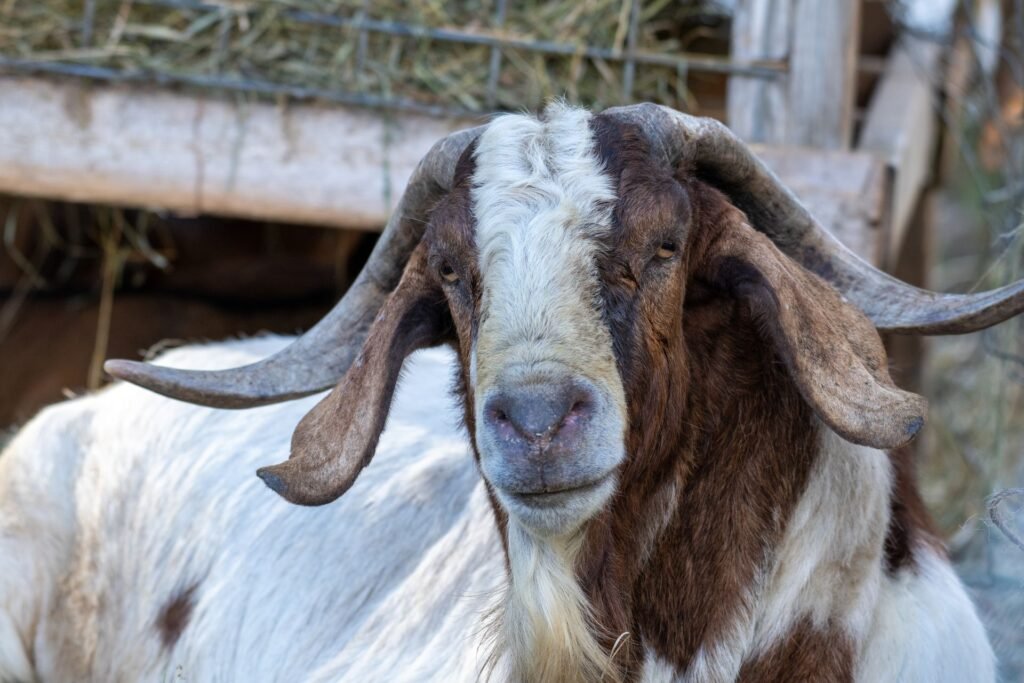
The SA Boer Goat Breeders’ Association sets a detailed breed standard. The ideal Boer goat is a symmetrical, vigorous meat goat with a fine head, round horns bent backwards and a loose, supple skin with folds, especially in rams. Ewes should look feminine, and rams heavier in the head, neck and forequarters.
- Head: strong, with large soft brown eyes, a strong, slightly curved nose, wide nostrils and a well-formed mouth with correct jaws.
- Horns: strong, of moderate length, round, dark and curving gradually backwards. Straight or flat horns are faults.
- Ears: broad, smooth, of medium length and hanging downwards. Short, folded or stiff ears are faults.
- Body: a long, deep and broad barrel, well-sprung ribs, a broad, fairly straight back and a broad, long rump with well-fleshed buttocks and thighs.
- Legs: strong, well placed, with strong pasterns and dark hooves.
- Skin and hair: loose, supple skin with folds on the chest and neck, short glossy hair, and pigmented eyelids and hairless areas.
- Colour: a white goat with a red head and ears and a white blaze. For stud animals, the red on the head must form a patch of at least 10 cm across on both sides, and the skin under the tail must be at least 75% pigmented.
- Rams: two large, well-formed, equal testes, with a scrotal circumference of at least 25 cm and any split no more than 5 cm.
- Ewes: a firmly attached udder with functional teats.
Serious faults include a concave forehead, overshot or undershot jaws, blue eyes, a slab-sided body, a sloping rump, weak pasterns, and horns that press against the neck.
3. Size and Growth of Boer Goats
The Boer goat is the largest of South Africa’s meat goat breeds. Mature bucks weigh about 110 to 135 kg and does about 90 to 100 kg, according to the IntechOpen review. That size is a big part of the breed’s appeal: a well-grown Boer goat kid carries more meat than a kid of most other breeds at the same age.
Growth is fast. Boer goat kids typically gain around 175 g per day under extensive conditions and more than 200 g per day under intensive feeding. Long-term South African records cited in the IntechOpen review show average 100-day weights of about 25 to 27 kg for male kids and 22 to 23 kg for female kids, and a weaning weight of about 29 kg at 120 days.
4. Fertility and Mothering
Boer goat does are fertile, can breed at almost any time of year and often have twins. Over a 20-year period, South African records summarised in the IntechOpen review showed a kidding rate of 189% (kids born per doe mated), a fecundity of 210% and a weaning rate of 149%.
Pregnancy lasts about five months, and with good management a doe can kid three times in two years. Twins are the most common, and triplets are not unusual. Does are generally good mothers with enough milk to raise twins, although triplets often need extra care.
High fertility is only an advantage if the kids survive. Good doe nutrition in late pregnancy, shelter at kidding, and protection from jackals and caracals make the difference between a high kidding rate on paper and a high weaning rate in practice. Our goat housing guide covers kidding pens and predator-proof kraals.
5. Stud, Flock and Commercial Boer Goats
Boer goats are sold in three broad categories, and knowing the difference helps you buy the right animals at the right price:
- Stud Boer goats are registered with the breed association, inspected against the breed standard and recorded. They are bought by breeders who want to improve their herds and sell breeding stock.
- Flock Boer goats are good-quality, purebred animals that are not registered or do not meet every stud requirement. They are the backbone of many commercial herds and are a sensible choice for most meat producers.
- Commercial Boer goats include crossbred and unregistered goats kept mainly for meat production. They are the cheapest to buy but vary a lot in quality.
For most new farmers, a herd of good flock does with a quality buck is the best value. Spend the extra money on the buck, because he passes his genes to every kid in the herd.
6. Managing Boer Goats
Boer goats are hardy, but they are bigger and faster-growing than most indigenous goats, and they need good management to perform. Like all goats, they are browsers that prefer leaves, shrubs and pods to grass, so they do best on bushveld or mixed veld.
- Feeding: supplement in winter and during late pregnancy and lactation, when veld quality drops.
- Health: follow a vaccination programme recommended by your vet, which usually includes clostridial diseases and, in many areas, pasteurella. Heartwater and wireworm are major risks in many regions.
- Parasite control: monitor worm loads and treat selectively, for example with the FAMACHA eyelid colour system, rather than dosing the whole herd on a fixed schedule.
- Housing and fencing: provide dry, draught-free shelter, especially for young kids, and goat-proof, jackal-proof fencing.
Our guide to goat farming in South Africa covers feeding, housing, kidding and health in more detail. For signs and prevention of the main health problems, see our guide to goat diseases in South Africa.
7. Boer Goat Prices in 2025 and 2026
Boer goat prices range from a few thousand rand for commercial goats to hundreds of thousands for top stud bucks. A few published examples:
- Free State Boktelers Group, Winburg, 20 May 2026: open Boer goat ewes averaged R8,056, pregnant ewes R6,778 and rams R14,875, according to African Farming.
- Morakeng Boer goat auction, near Vryburg, 26 July 2026: rams averaged R11,500 and ewes R8,433, with a top ram at R26,000, as reported by African Farming.
- SA Boer Goat World Show auction, Bloemfontein, May 2025: 23 stud ewes averaged R27,652, and 14 rams averaged about R67,062.
- Prestige sales in 2026: at a prestige auction near Griekwastad, a Boer goat ram sold for R250,000.
For a commercial or flock herd, the useful range is roughly R6,500 to R8,500 for good does and R11,000 to R15,000 for a good buck. Our guide to Boer goat prices in South Africa breaks down every category in detail.
8. The Market for Boer Goats
Boer goat kids and slaughter goats are sold to speculators, feedlots and abattoirs, and into the large informal and cultural market for live goats. Demand rises around religious and cultural festivals: at a Frankfort auction in May 2026, African Farming linked strong Boer goat demand to the approach of Eid al-Adha, when interest from Muslim buyers rises every year.
Heavy, well-fleshed Boer goats are often preferred by buyers who pay per head, which gives the breed an edge in the live goat trade. Breeding stock is also in strong demand, both locally and from neighbouring countries such as Botswana and Namibia.
Pros and Cons of Boer Goats
| Advantages | Things to consider |
|---|---|
| Largest and fastest-growing South African meat goat | Needs better feed and management than indigenous breeds to reach its potential |
| High fertility, with twins common | Light-skinned areas can be prone to sun damage if pigmentation is poor |
| Excellent carcass and strong demand for live goats | Top stud animals are expensive |
| Biggest stud industry and widest choice of genetics | Less hardy than Kalahari Reds or Savannas in very harsh conditions |
| Easy to sell, with established auctions across the country | Quality varies widely among unregistered commercial goats |
Is the Boer Goat Right for Your Farm?
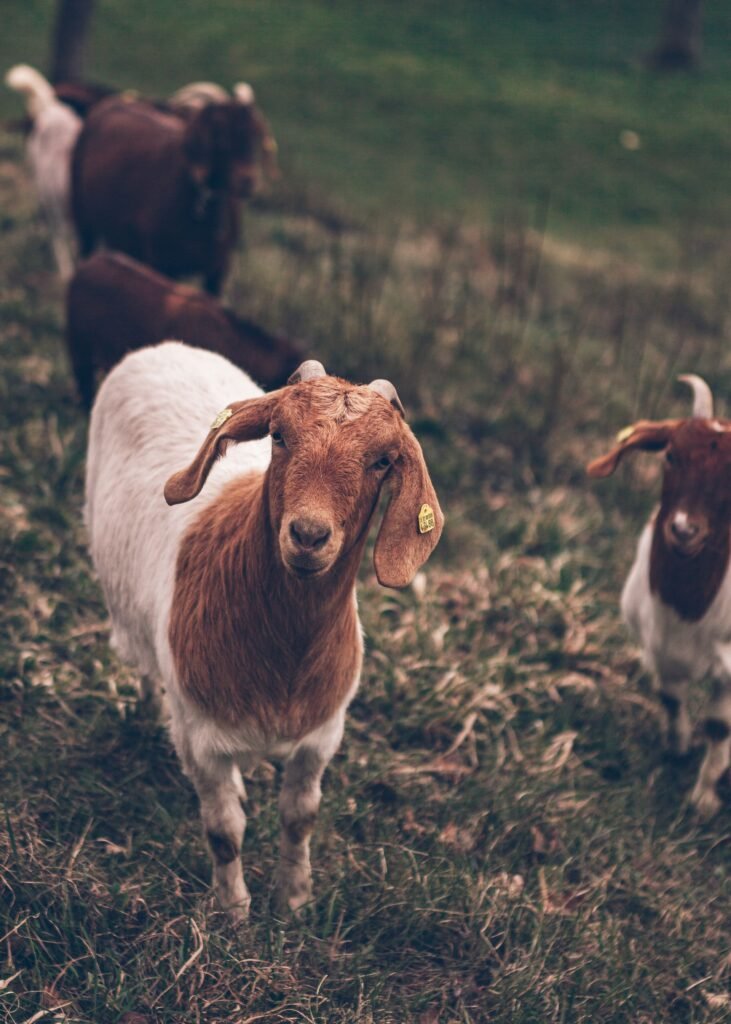
Boer goats are the right choice if you want maximum growth and carcass weight, you have reasonable browse or can supplement when needed, and you want access to the widest market for both slaughter goats and breeding stock. They suit most of the country, from the Eastern Cape and Free State to North West and Limpopo.
If you farm in very hot, dry areas with little supplementation, a hardier breed such as the Kalahari Red or Savanna may suit you better, or you can cross them with a Boer goat buck for extra growth. Compare the breeds in our guides to Kalahari Red vs Boer goats and Savanna goats.
What to Check Before You Buy Boer Goats
- Mouth and jaws: correct bite, and teeth that match the age you are told.
- Udders and teats: a firmly attached udder with two functional teats.
- Testes: two equal, well-formed testes and a scrotum of at least 25 cm in circumference for breeding bucks.
- Feet and legs: strong, straight legs and sound hooves.
- Pigmentation: pigmented eyelids and skin under the tail, which help protect against sun damage.
- Health records: vaccination and dosing history, and registration papers for stud animals.
- Paperwork: buy from a registered business, get a written quote and pay only against an official invoice.
Our guide to buying livestock in South Africa covers each step in more detail.
Frequently Asked Questions
Where do Boer goats come from?
Boer goats were developed in the Eastern Cape of South Africa from indigenous goats selected for meat from the early 1900s. The breed society was founded in Somerset East in 1959.
How big do Boer goats get?
Mature Boer goat bucks weigh about 110 to 135 kg and does about 90 to 100 kg, making the Boer goat the largest of South Africa’s meat goat breeds.
How many kids does a Boer goat have?
Twins are most common, and triplets are not unusual. Long-term South African records show a kidding rate of about 189 kids born per 100 does mated.
How long are Boer goats pregnant?
About five months. With good management, a Boer goat doe can kid three times in two years.
How much do Boer goats cost in South Africa?
At 2026 auctions, flock and commercial Boer goat ewes averaged about R6,800 to R8,400 and rams about R11,500 to R14,900. Stud animals cost much more, with a top ram selling for R250,000 in 2026.
Are Boer goats good for beginners?
Yes, if you can provide reasonable feed, a sound health programme and good fencing. They are productive and easy to sell, but they need more care than hardier indigenous breeds.
Where can I buy Boer goats in South Africa?
You can buy at Boer goat auctions, from registered breeders or from established suppliers. DRM Livestock supplies Boer goats across South Africa with delivery arranged.
Final Thoughts
Boer goats earned their place as the world’s best-known meat goat in the bushveld of the Eastern Cape, and they remain one of the most popular livestock choices for South African farmers. Buy sound, fertile does and the best buck you can afford, feed and protect them well, and they will repay you with fast-growing kids and a steady market. If you are ready to start or grow your herd, have a look at our Boer goats for sale, or send us your requirements and we will get back to you with a written quote, including delivery to your farm.
Looking to buy goats?
Tell us the breed, age group, quantity and delivery area. We reply with availability, pricing and transport costs, usually within one working day.
DRM LIVE STOCK is a registered South African livestock company (Company No. K2023207798, VAT No. 4640323079) based at 135 Rocklands Rd, Uitenhage Farms, Gqeberha. We supply cattle, goats, sheep and pigs, with delivery across South Africa.