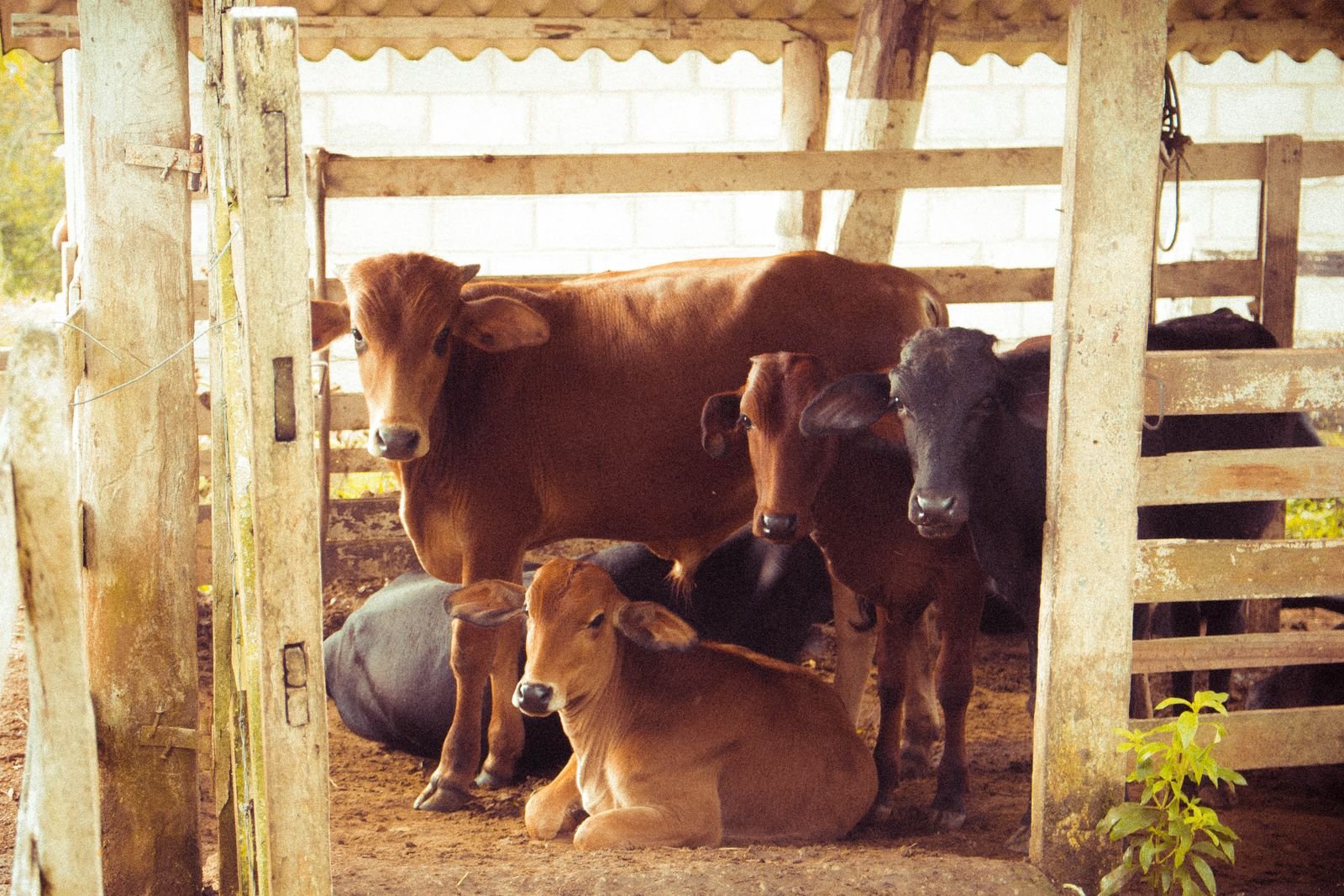
Bonsmara cattle are South Africa’s own beef breed, bred here, for our veld, our heat and our ticks. Drive through cattle country from the Northern Cape to Limpopo and you will see red, hornless Bonsmara cows on farm after farm, and Bonsmara-type weaners make up a large share of the calves that feed the country’s feedlots. It is also one of the breeds we work with most at DRM Livestock, and one of the first that new cattle farmers ask us about.
This guide covers what you need to know about Bonsmara cattle: how the breed was developed, what makes it different, size and growth, fertility and mothering, how it copes with heat and ticks, its place in crossbreeding, what it costs, and what to look for before you buy.
Bonsmara Cattle at a Glance
| Trait | Bonsmara |
|---|---|
| Origin | Mara and Messina research stations, Limpopo, South Africa |
| Developed | Breeding programme from 1937 to 1963 under Prof Jan Bonsma |
| Make-up | 5/8 Afrikaner, 3/16 Hereford, 3/16 Shorthorn |
| Colour | Red, dehorned to meet the breed standard |
| Mature cow weight | About 500 to 550 kg |
| Mature bull weight | About 900 kg |
| Main strengths | Fertility, adaptability, growth, calm temperament, carcass quality |
Weights vary a lot with veld quality and management, so treat them as a guide rather than a target.
1. How the Bonsmara Breed Was Developed
Before the Second World War, South African cattle farmers in the hot north had a problem. British beef breeds grew well and produced good carcasses but struggled in the heat and with ticks. The local Afrikaner was hardy and well adapted but slower growing. The Department of Agriculture set out to combine the two.
The work was led by Professor Jan Bonsma at the Mara and Messina research stations in what is now Limpopo. According to Bonsmara Namibia’s history of the breed, the breeding programme ran from 1937 to 1963, using crossbreeding trials on research stations and in commercial herds. Farmer’s Weekly records that the first calves of the new type were born in 1943. The name itself comes from Bonsma, the scientist, and Mara, the farm, as Oklahoma State University’s breed profile explains.
The final recipe was five-eighths Afrikaner, for adaptation, with three-sixteenths Hereford for meat and three-sixteenths Shorthorn for milk, according to ProAgri’s guide to cattle breeds. Oklahoma State notes that the early crossbred calves weaned about 20% heavier than the parent breeds and had better calving percentages, which is why the breed caught on so quickly.
The breed grew quickly from a handful of breeders. Oklahoma State’s profile records that there were only 37 active breeders in 1970, and that Bonsmara calves later made up about 45% of all beef and dual-purpose breed birth notifications in South Africa, making it the numerically strongest beef breed in the country.
2. Bred on Performance, Not Looks
What sets the Bonsmara apart from many other breeds is how it is selected. From the start, Bonsma and the breeders who followed him selected on figures that make money: fertility, growth and efficiency.
That approach is written into the breed’s rules. As Farmer’s Weekly reported, animals can only be registered with the Bonsmara breeders’ society if performance-test results are available, and no competitive showing is allowed. Registered animals are also inspected against the breed standard before approval.
For you as a buyer, this means you can ask for real figures on almost any registered Bonsmara bull: his own growth, his breeding values and how his relatives performed. Use them. A good-looking bull with poor fertility figures will cost you calves for years.
3. What Bonsmara Cattle Look Like
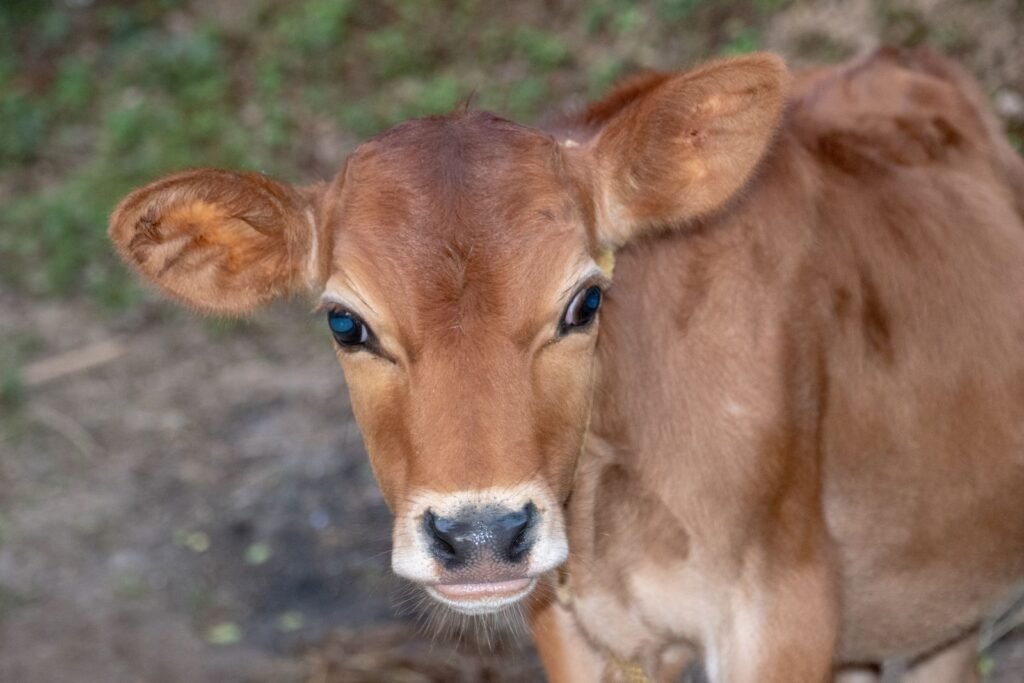
Bonsmara cattle are medium-framed, red and naturally horned, but the breed standard requires them to be dehorned, so almost all the Bonsmaras you see are hornless. ProAgri puts mature cows at about 500 to 550 kg and bulls at about 900 kg.
That medium frame is deliberate. A moderate cow needs less feed to stay in condition on the veld than a very big one, which helps her get back in calf every year. When you look at Bonsmara cows, look for:
- A smooth, short, shiny red coat in summer, which helps shed heat and ticks.
- Good depth and length of body, with a well-sprung rib.
- A neat, well-attached udder with even teats.
- Sound feet and legs and a free, easy walk.
- Good body condition for the time of year. A cow that stays in condition on your veld is worth more than one that only looks good on supplements.
4. Fertility and Mothering
A beef herd makes money on one thing above all: weaned calves per cow per year. This is where Bonsmara cows have built their reputation. ProAgri describes them as having excellent mothering ability and enough milk to wean a strong calf.
Fertility in the breed can also be improved through selection. A 2023 genomic study of 7,128 South African Bonsmara cattle, by Reding and co-authors in BMC Genomics, estimated heritabilities of about 0.18 for age at first calving, 0.21 for inter-calving period and 0.21 for scrotal circumference in bulls. Those are moderate figures, which means choosing bulls from fertile families with good fertility figures really does pay off in your herd over time.
On the farm, fertility still comes down mostly to management:
- Keep a short, fixed breeding season, so cows calve together and you can spot the ones that miss.
- Get heifers to the right weight before you put them to the bull.
- Have every bull checked for breeding soundness by a vet before the season starts.
- Cull cows that miss a calf, unless there is a clear reason such as drought.
Our guide to cattle farming in South Africa covers breeding seasons, licks and calf care in more detail.
5. Bonsmara Cattle in Heat and Tick Country
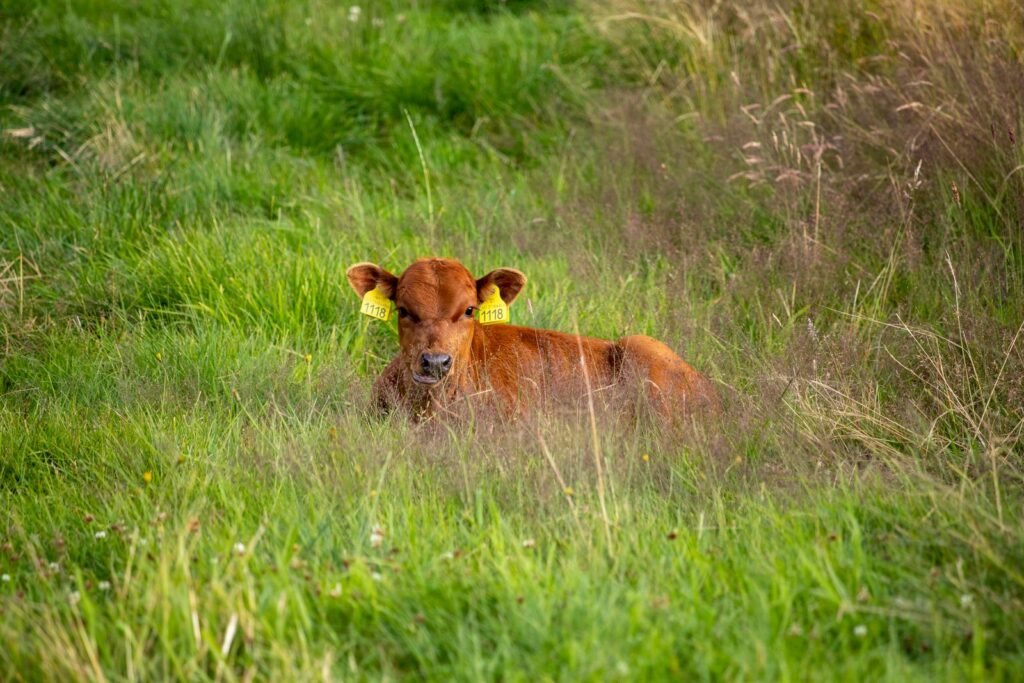
Adaptation was the whole point of the breed, and the Afrikaner blood shows. ProAgri reports that Bonsmara cows are resistant to many of the tick-borne diseases that trouble the European breeds, and that the breed does well across a huge range of conditions, from areas with about 150 mm of rain a year to about 2,400 mm, and in thornveld, mixed bushveld, tall grassveld and sourveld. Our guide to cattle diseases in South Africa covers redwater, gallsickness and other risks in detail.
That does not mean Bonsmaras look after themselves. They still need:
- A tick and parasite programme suited to your area. Talk to your vet about heartwater, redwater and gallsickness risks on your farm.
- Licks that match your veld and the season, especially through winter on sourveld.
- Clean water and shade in the hottest months.
- A vaccination programme planned with your vet.
Compared with the more heat-tolerant Brahman, the Bonsmara generally grows faster and matures earlier, while the Brahman copes better with the most extreme heat and ticks. Our comparison of Brahman vs Bonsmara goes into the details, and for a look at South Africa’s other famous adapted breed, see Bonsmara vs Nguni.
6. Growth, Weaners and Carcass Quality
Most Bonsmara calves in South Africa are sold as weaners to feedlots, and feedlots like them. They grow well, finish at sensible weights and handle the feedlot without fuss. ProAgri describes Bonsmara cattle as easy to handle on the farm and in feedlots, and Bonsmara beef as well marbled, juicy and tender with a high-quality carcass. Farmer’s Weekly describes it as tender and tasty with an even cover of fat.
Because weaners are sold on weight, weaning weight and evenness decide your income. A uniform group of heavy weaners sells better than a mixed bunch. For current market figures, see our guide to weaner prices in South Africa.
7. Bonsmara Cattle in Crossbreeding
Bonsmara cows make excellent crossbreeding mothers. ProAgri notes that the breed is often crossed with Brahman, Charolais or Limousin bulls to produce top-quality weaners, combining the Bonsmara cow’s fertility and adaptation with the growth or carcass of the sire breed.
A few common approaches:
- Pure Bonsmara herd: simple to run, easy to keep replacement heifers, and well suited to most of the country.
- Bonsmara cows with a terminal sire: a Charolais or Limousin bull for heavier weaners, with all calves sold. You then buy in replacement heifers.
- Bonsmara and Brahman: more hybrid vigour and extra heat and tick tolerance for very hot, bushy areas. Our guide to Brahman cattle explains what the Brahman adds.
Whatever system you choose, keep it simple enough to manage well and stick to it long enough to judge the results on your weaning records. Angus bulls are another popular choice on Bonsmara cows, as our guide to Angus cattle explains.
8. What Bonsmara Cattle Cost in 2026
Bonsmara prices cover a wide range, because weaners, commercial females and stud bulls are three different markets. At production auctions between April and September 2026, commercial pregnant heifers averaged roughly R17,250 to R30,000, cows with calves roughly R22,400 to R46,100, and bulls roughly R40,400 to R135,700, with top stud bulls fetching far more. Our guide to Bonsmara cattle prices lists the auctions behind these figures and explains what pushes prices up or down.
For most farmers building a commercial herd, good commercial females and a performance-tested bull are the best value. You do not need stud prices for cows that will raise weaners.
Buying Bonsmara Cattle: What to Check
- Records. Ask for performance figures on bulls and the calving history of cows and heifers.
- Fertility. Buy pregnancy-tested heifers and cows, and bulls with a recent breeding soundness test.
- Adaptation. Cattle raised in conditions like yours settle faster. Animals moving from tick-free to tick areas need extra care and a plan with your vet.
- Health and paperwork. Check vaccination history and the movement requirements for your area, including foot-and-mouth rules.
- Payment. Pay only against a proper invoice from a business you have checked.
Our guide to buying livestock in South Africa covers each step in more detail.
Frequently Asked Questions
Where do Bonsmara cattle come from?
The Bonsmara was developed in South Africa at the Mara and Messina research stations in Limpopo, under Professor Jan Bonsma, in a breeding programme that ran from 1937 to 1963.
What breeds make up the Bonsmara?
The Bonsmara is five-eighths Afrikaner, three-sixteenths Hereford and three-sixteenths Shorthorn.
How big do Bonsmara cattle get?
Mature cows weigh about 500 to 550 kg and bulls about 900 kg, depending on the veld and management.
Are Bonsmara cattle good in hot areas?
Yes. The Afrikaner blood gives them good heat tolerance and resistance to many tick-borne diseases, and the breed does well in a wide range of rainfall zones and veld types. They still need a proper tick and vaccination programme.
Why are Bonsmara cattle dehorned?
Bonsmara calves are born with horns, but the breed standard requires them to be removed. Hornless cattle are also easier and safer to handle and transport.
Are Bonsmara cattle good for beginners?
Yes. They are calm, fertile, adaptable and widely available, and there is plenty of performance data to help you choose good animals.
How much does a Bonsmara cow cost?
At 2026 production auctions, commercial pregnant heifers averaged roughly R17,250 to R30,000 and cows with calves roughly R22,400 to R46,100, depending on the sale and the quality of the animals.
Final Thoughts
Bonsmara cattle were bred in South Africa to solve a South African problem, and more than eighty years after the work began at Mara, they are still doing it. A good Bonsmara cow calves every year, raises a heavy weaner and holds her condition on the veld, and the breed’s long focus on performance figures makes it easier to buy well. If you are starting or growing a beef herd, have a look at our Bonsmara cattle for sale, or send us your requirements and we will get back to you with a written quote, including delivery to your farm.
Looking to buy cattle?
Tell us the breed, age group, quantity and delivery area. We reply with availability, pricing and transport costs, usually within one working day.
DRM LIVE STOCK is a registered South African livestock company (Company No. K2023207798, VAT No. 4640323079) based at 135 Rocklands Rd, Uitenhage Farms, Gqeberha. We supply cattle, goats, sheep and pigs, with delivery across South Africa.