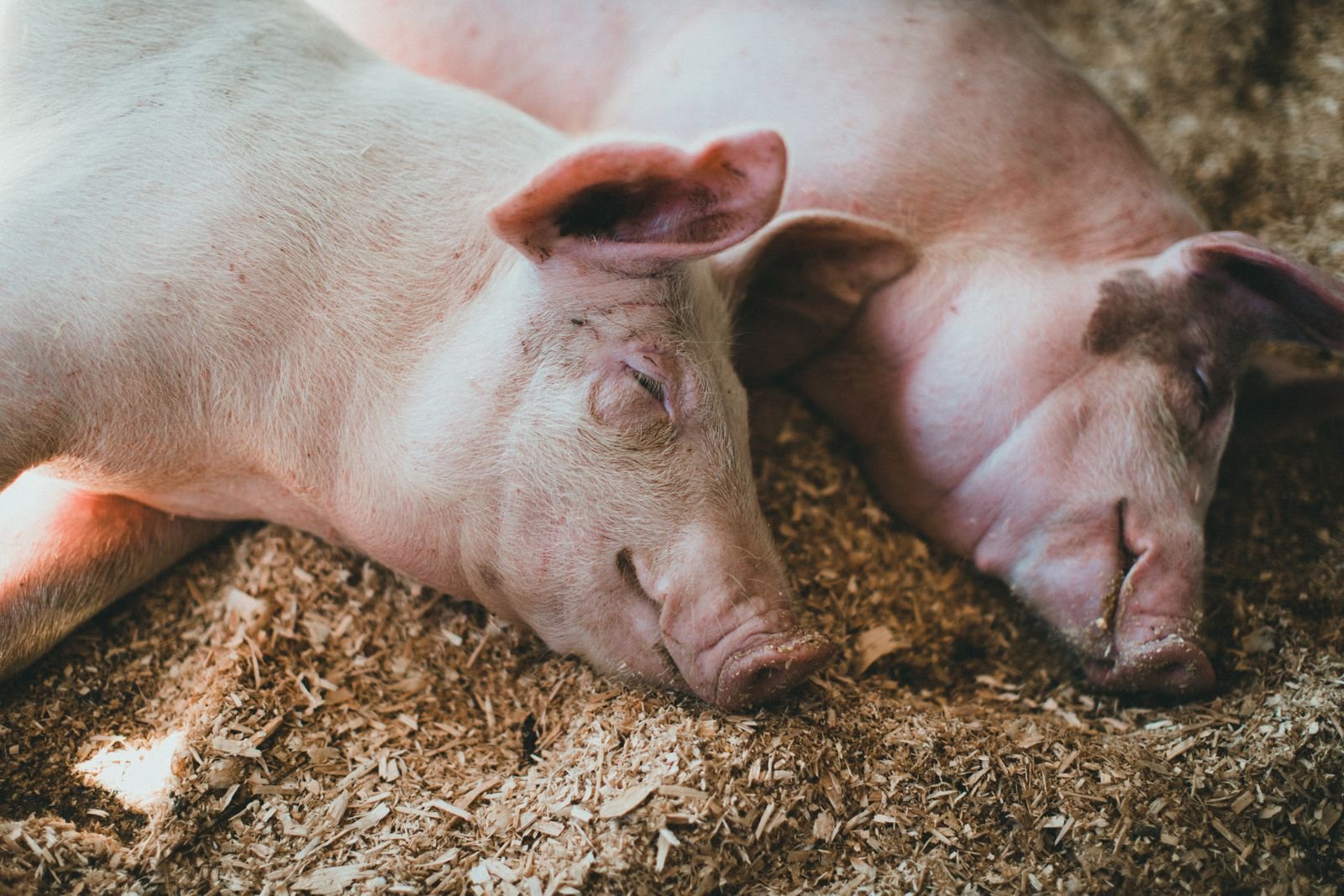
Large White pigs are the backbone of commercial pork in South Africa. Walk through almost any sow house in the country, from a small family unit to a big integrated operation, and you will find Large White blood in most of the breeding females. The breed has been here for well over a century, and it has stayed popular for a simple reason: a good Large White sow farrows big litters, milks well, rears her piglets and comes back into pig without fuss.
This guide covers what you need to know before you buy or breed Large White pigs: where the breed comes from, how to recognise a good one, what to expect from the sows, growth and carcass, how the breed fits into crossbreeding, how to manage white pigs in our heat, and what to check before you pay for gilts or a boar.
Large White Pigs at a Glance
| Trait | Large White |
|---|---|
| Origin | Yorkshire, England |
| In South Africa since | Around the 1890s |
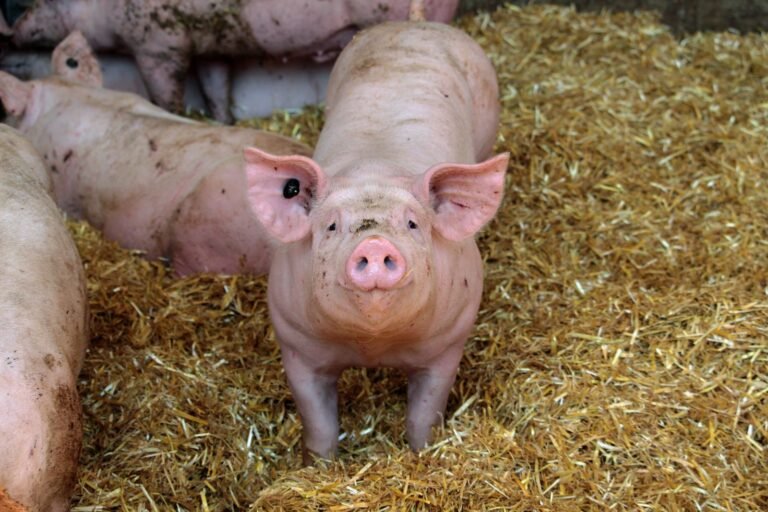
| Look | White hair, pink skin, erect ears, slightly dished face, long deep sides |
| Main role | Mother line, and the foundation of most commercial sow herds |
| Key strengths | Large litters, heavy milk, good mothering, sound feet and legs, lean growth |
| Gestation | About 114 days |
| Best known cross | Large White x Landrace F1 gilt, mated to a Duroc boar |
Modern commercial lines have changed a great deal from the pigs that first arrived here, so treat breed descriptions as a guide and judge the actual animals you buy on their records.
1. Where the Large White Comes From
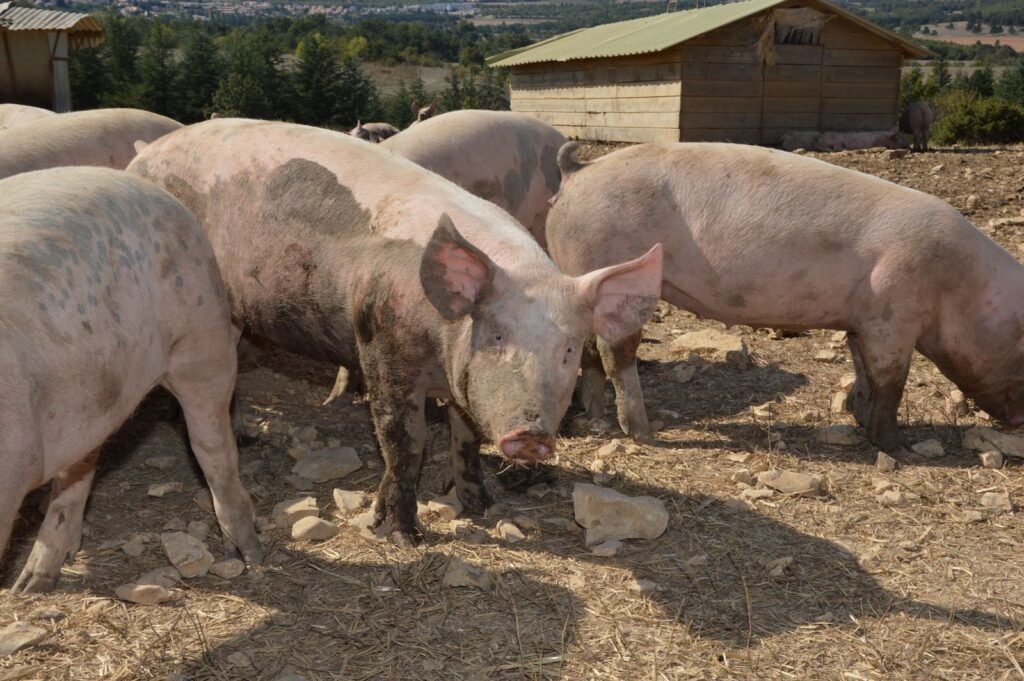
The Large White was developed in Yorkshire in the north of England, which is why the American and Canadian strains are still called Yorkshires. Large, white local pigs were crossed with other types, including the Cumberland, Leicestershire and the Middle and Small White. According to Oklahoma State University’s breed profile, the new breed first drew attention at the Windsor Royal Show in 1831, and pigs have been registered with the National Pig Breeders’ Association in England since 1884.
The breed reached South Africa around the 1890s, according to ProAgri’s guide to southern African pig breeds. Organised stud breeding followed, and the Pig Breeders’ Society of South Africa, founded in 1919, marked a century of pig stud breeding with a commemorative book, as Farmer’s Weekly reported. Today the Large White is one of the most widely farmed pig breeds in the world, and it is the breed most South African sow herds are built on.
2. How to Recognise a Good Large White
A Large White is a big, white pig with pink skin, upright ears and a slightly dished face. It should be long and deep in the side, with plenty of length from shoulder to ham and a level topline. Compare that with the Landrace, the other white mother breed, which has ears that flop forward over the eyes and a longer, lighter-fronted body. Our guide to Landrace pigs explains how to recognise that breed.
When you look at breeding stock, look past the colour and check the things that make a sow last:
- Feet and legs. The breed is known for being sound on its feet. Look for straight legs, even toes and a free, easy walk. A gilt that is stiff, short in the stride or walks on the edges of her claws will not last in a concrete-floored house.
- Underline. UK pig specialists at AHDB, quoted by Farmers Weekly, recommend a minimum of 14 functional, evenly spaced teats in a replacement gilt. Blind, inverted or very small teats mean fewer piglets reared.
- Length and depth. A long, deep body gives room for a big litter and a big appetite in lactation.
- Vulva. It should be a normal size and point down, not small and tilted up, which can point to late or poor breeding.
- Temperament. A calm gilt is easier to handle in the farrowing house and less likely to crush piglets.
3. Large White Sows as Mothers
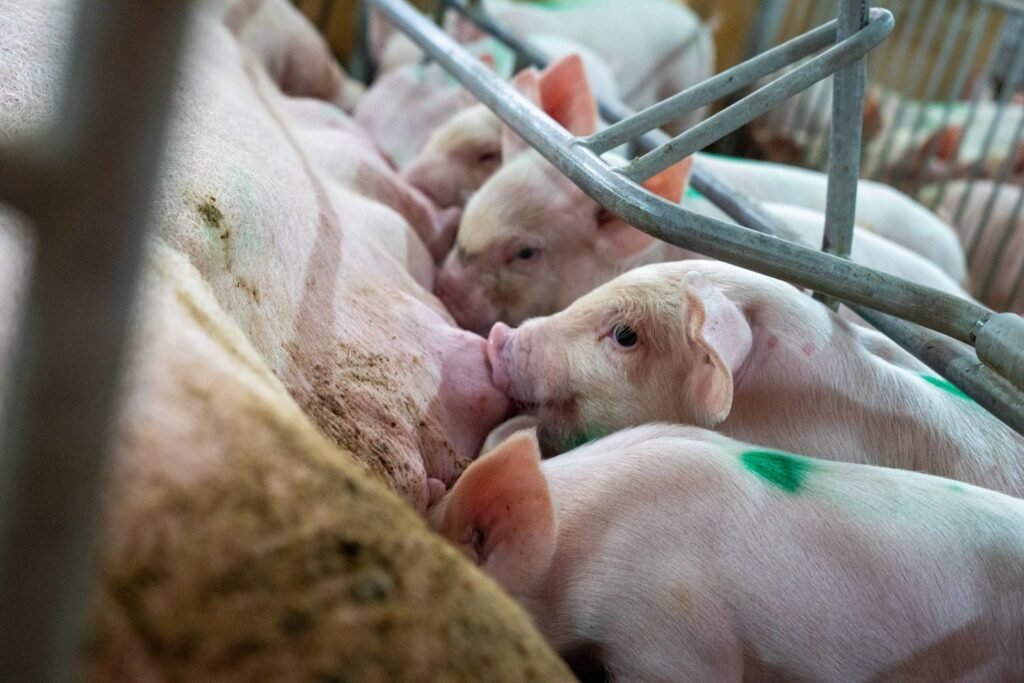
This is the job the breed is famous for. Oklahoma State describes Large White sows as known for large litters, heavy milk production and excellent maternal instincts, and ProAgri calls them excellent, protective mothers with big, healthy litters. In practice that means more piglets weaned per sow per year, which is the number that decides whether a piggery pays.
Litter size varies widely between herds, lines and management, so be careful with any single figure. As one South African reference point, records from 1,768 litters in the Large White x Landrace herd at the Agricultural Research Council farm at Irene averaged about 10.2 piglets born alive, with an average birth weight of about 1.55 kg, according to a 2014 study in the South African Journal of Animal Science. Modern hybrid lines from the big breeding companies are bred to do better than that, while a poorly fed or poorly housed sow of any genetics will do worse.
Here is something many new pig farmers do not realise. A large South African study of 29,719 litter records from 7,983 Large White sows in 29 herds found that the heritability of the number of piglets born alive was only about 0.07, according to Dube and co-authors, writing in the South African Journal of Animal Science. In plain terms, most of the difference in litter size between your sows comes from feeding, health, housing and management, not from the genes alone. Good genetics give you the potential. Your management decides how much of it you get.
4. Breeding Large White Gilts and Sows
A Large White gilt is a big investment, so do not rush her into the boar. AHDB’s guideline, as reported by Farmers Weekly, is to serve gilts at about 220 to 270 days old and 135 to 170 kg live weight, in good condition but not fat. ProAgri notes that some Large White lines mature late, at seven or eight months, which fits that window. A gilt served too young and too light tends to have a smaller first litter and often struggles to get back in pig after weaning. Our guide to pig breeding covers heat detection, mating and farrowing in more detail.
A few practical points from the sow house:
- Gestation is about 114 days, or three months, three weeks and three days. Mark the expected farrowing date the day she is served and move her into a clean, disinfected farrowing pen about a week before.
- Feed for the stage. Keep dry sows in moderate condition and push feed up in lactation, when a sow with a big litter has a huge appetite. Our guide to feeding pigs covers rations for every stage.
- Watch the boar. ProAgri describes Large White boars as generally reliable workers, but check his feet, his libido and the results on paper. A boar that leaves sows empty costs you weeks of production.
- Keep records. Note piglets born alive, born dead, weaned and the weaning weight for every litter. After two or three litters you will know which sows to keep and which to cull.
5. Growth and Carcass
The Large White is not only a mother breed. Its pigs grow quickly and use feed efficiently for their size, according to ProAgri, and the breed’s tendency to grow without laying down excess fat has made it a favourite whether pigs are marketed light as porkers or heavier as baconers. Oklahoma State notes that the breed has been valued for bacon and pork since it was first developed, with long, deep sides and a lean carcass.
Feed is by far the biggest cost in any piggery, so feed conversion matters more than almost anything else once the piglets are weaned. A lean, fast-growing Large White or Large White cross will only show its potential on a balanced ration, with clean water on demand and enough space in the pen. Cut corners on feed and the genetics cannot make up the difference.
6. Large White Pigs in Crossbreeding
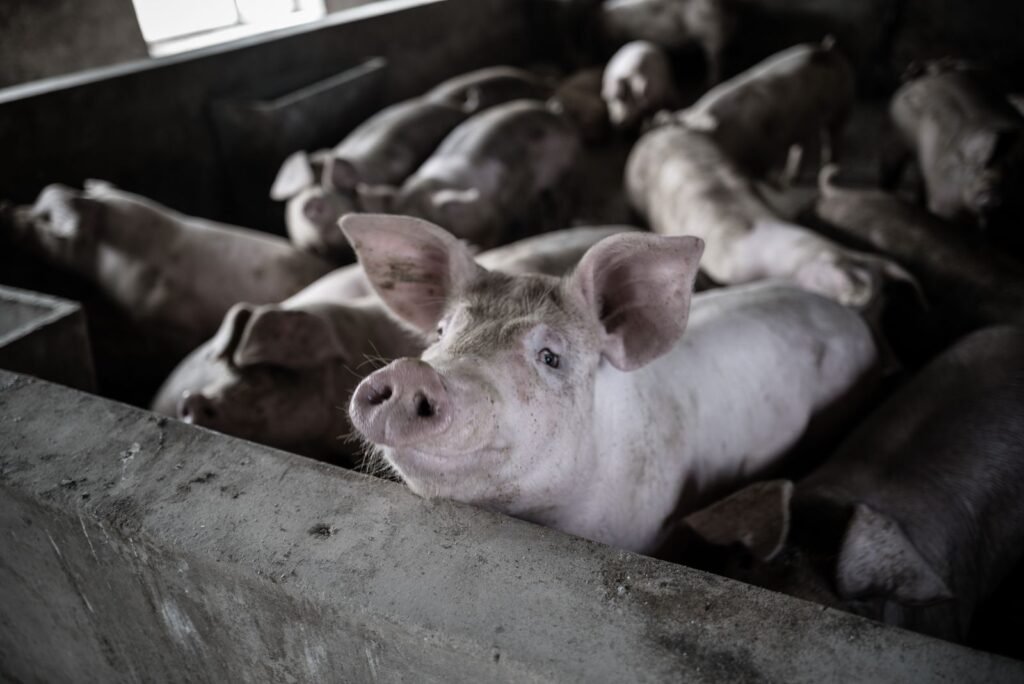
Most commercial pork in South Africa comes from a simple three-breed system, and the Large White sits at the bottom of it:
- Mate a Large White with a Landrace to breed an F1 gilt. She gains hybrid vigour, which shows up as better fertility, litter size and piglet survival.
- Mate that F1 sow to a Duroc boar.
- Send all of the offspring to slaughter. They grow fast, convert feed well and carry the Duroc’s meat quality.
ProAgri calls the Large White a universal foundation mother breed and notes that Large White and Landrace crosses give fertile F1 females. It also points out that bacon-type pigs can be expected from crossing the Large White with almost any other purebred.
Many bigger producers buy their F1 gilts ready-made from breeding companies. Smaller farmers often keep a few purebred Large White sows instead, put a Landrace boar on some of them to breed their own F1 replacement gilts, and use a Duroc boar on the rest for slaughter pigs. For a side-by-side look at all three breeds, see our guide to Large White vs Landrace vs Duroc.
7. Managing Large White Pigs in South African Conditions
The Large White is described as rugged and hardy, and it adapts to many climates. It was originally an outdoor breed, but it does very well in confinement. Two things need special attention in our climate.
Heat. Pigs cannot sweat, and big sows in late pregnancy and lactation suffer most. Heat stress cuts feed intake, milk production and fertility, and it is one of the main reasons for poor summer litters. Give them shade, good airflow, cool drinking water and, in hot areas, drippers or sprinklers over the sow pens. Our guides to pig farming in South Africa and pig housing cover housing, cooling and farrowing pens in more detail.
Sunburn. White pigs with pink skin burn easily if they are kept outside without shade. If you run Large Whites on veld or in outdoor camps, every camp needs proper shelter and a wallow or shade area.
Biosecurity matters as much as breed. African swine fever and foot-and-mouth disease have both hit the South African pig industry in recent years, as African Farming has reported. Never feed swill containing meat, control who and what comes onto the farm, and quarantine new pigs well away from your herd for at least 28 days. The South African Pork Producers’ Organisation is the best place to keep up with disease news and rules.
8. Buying Large White Pigs: What to Check
Whether you are starting a small piggery or adding new blood to an existing herd, the animals you bring in decide your results for years. Before you buy Large White pigs, ask for and check the following:
- Health status. Ask about the source herd’s disease history and vaccination programme, and buy only from herds that can show it.
- Records. For gilts, ask for the litter records of the dam: piglets born alive and weaned. For boars, ask for growth and any performance-testing data.
- Age and weight. Make sure the gilts are the right age and size for when you plan to serve them.
- Physical checks. Teats, feet and legs, vulva and body length, as covered above.
- Movement rules. Check the current animal health and movement requirements for your area before the pigs are loaded.
- Payment. Pay only against a proper invoice from a business you have verified.
Our guide to buying livestock in South Africa covers the paperwork and payment checks step by step. If you are still planning your unit, start with our guide on how to start a small piggery, and for current slaughter and weaner market figures see our guide to pig prices in South Africa.
Common Mistakes With Large White Pigs
- Keeping slaughter pigs as sows. A gilt out of a Duroc boar and an F1 sow was bred for the abattoir. She was not selected for mothering, and her litters are less predictable.
- Breeding gilts too young. A small, young gilt may get in pig, but her first litter is usually smaller and her second is often worse.
- Using your own boar on your own sows for years. Inbreeding shows up as smaller litters and weaker piglets. Bring in a boar from an unrelated, healthy herd.
- Ignoring the heat. A sow panting in a hot farrowing house will not eat enough to milk well, however good her genetics.
- Buying cheap pigs with no history. A disease brought in with one bargain gilt can cost you the whole herd.
DRM Livestock supplies Large White pigs to farms across South Africa, along with Landrace pigs and Duroc pigs for crossbreeding.
Frequently Asked Questions
What are Large White pigs used for?
Mainly as a mother line. Large White sows are kept for their large litters, heavy milk and good mothering, and they are crossed with Landrace to breed F1 gilts. Large White pigs also grow lean and fast, so purebred and crossbred offspring are sold for pork and bacon.
How can you tell a Large White from a Landrace?
Look at the ears. A Large White has upright ears and a slightly dished face, while a Landrace has large ears that flop forward over its eyes and a longer, lighter-fronted body.
How many piglets does a Large White sow have?
It depends heavily on the line, feeding and management. In one South African herd of Large White x Landrace sows, litters averaged about 10.2 piglets born alive. Modern commercial lines are bred for bigger litters, but only good management will get them.
At what age should a Large White gilt be bred?
A common guideline is about 220 to 270 days old at a live weight of about 135 to 170 kg, in good body condition. Breeding gilts younger and lighter usually means smaller litters.
How long is a pig’s gestation?
About 114 days, often remembered as three months, three weeks and three days.
Are Large White pigs good for beginners?
Yes. They are hardy, calm, easy to find and forgiving mothers, which is why many new farmers start with Large White or Large White x Landrace sows and a Duroc boar.
Can Large White pigs be kept outdoors?
Yes, but they need shade, shelter and clean water at all times. Their pink skin burns easily, and like all pigs they cannot sweat, so heat is the main risk outdoors in South Africa.
When did Large White pigs come to South Africa?
Around the 1890s. The breed has been farmed here for well over a century and is now the foundation of most commercial sow herds in the country.
Final Thoughts
Large White pigs have earned their place at the heart of South African pork production. A well-chosen Large White sow gives you big litters, plenty of milk and piglets that grow lean and fast, and she is the starting point for the crossbreds that fill the market. Buy healthy stock with records, give the sows the feed, shade and care they need, and they will repay you litter after litter. If you are ready to stock or grow your sow herd, have a look at our Large White pigs for sale, or send us your requirements and we will get back to you with a written quote, including delivery to your farm.
Looking to buy pigs?
Tell us the breed, age group, quantity and delivery area. We reply with availability, pricing and transport costs, usually within one working day.
DRM LIVE STOCK is a registered South African livestock company (Company No. K2023207798, VAT No. 4640323079) based at 135 Rocklands Rd, Uitenhage Farms, Gqeberha. We supply cattle, goats, sheep and pigs, with delivery across South Africa.