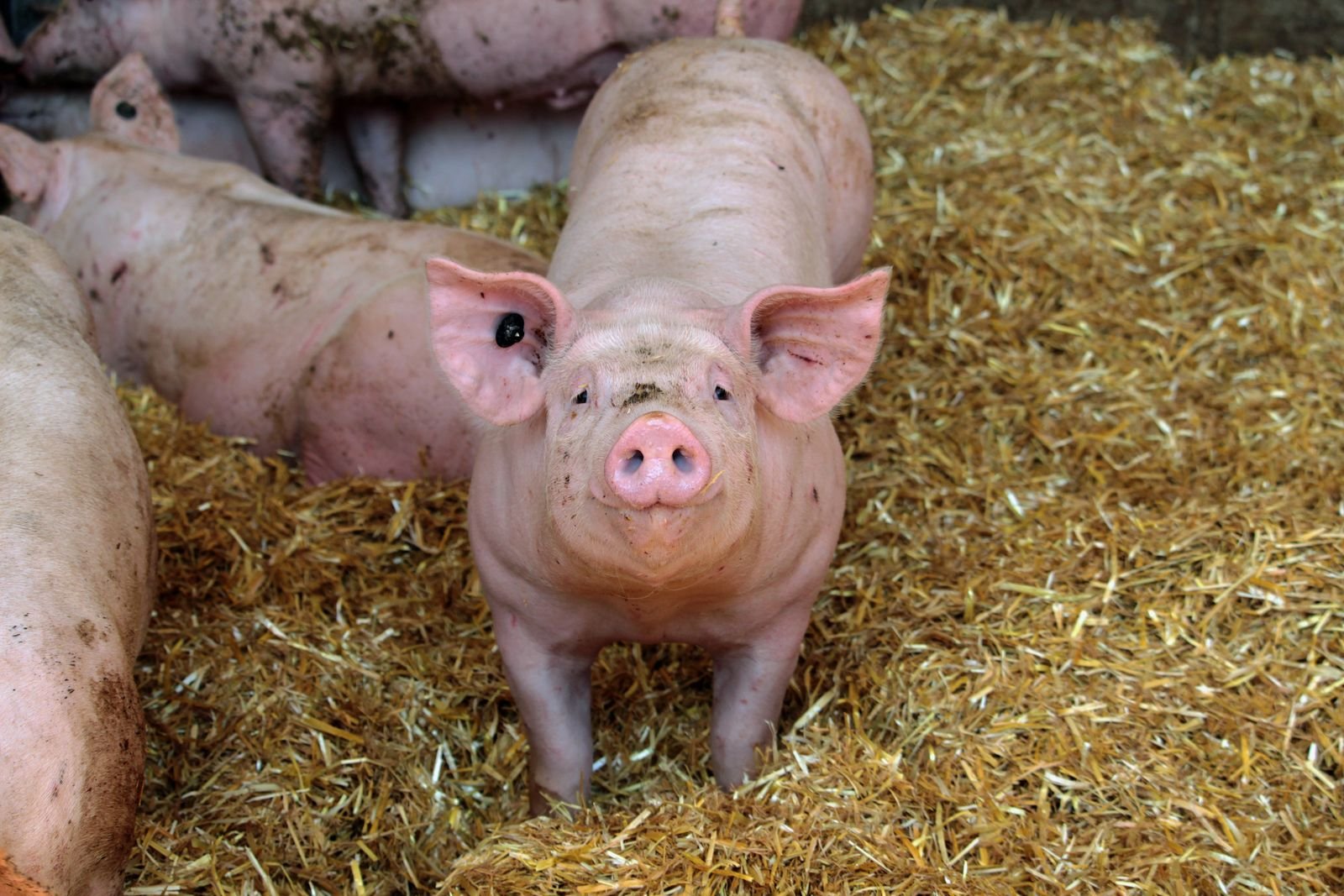
Landrace pigs are one of the two great mother lines of the South African pork industry. Long, white and lop-eared, the Landrace was bred in Denmark for bacon and is valued all over the world for big litters, good mothering and a lean carcass. In South Africa it sits alongside the Large White at the base of most commercial sow herds, usually as half of the crossbred F1 sow that produces the country’s slaughter pigs.
This guide covers what you need to know about Landrace pigs in South Africa: where the breed comes from, how to recognise one, what to expect from Landrace sows, growth and carcass, its role in crossbreeding, management needs, buying tips and how it compares with other breeds.
Landrace Pigs at a Glance
| Trait | Landrace |
|---|---|
| Origin | Denmark, from local pigs crossed with Large Whites |
| First registered herd | 1896 (Denmark) |
| In South Africa since | 1952, imported from the Netherlands |
| Colour | White |
| Ears | Long, heavy and drooping (lop ears) |
| Main role | Maternal line: large litters, mothering, lean bacon carcass |
| Typical use | Crossed with Large White to breed F1 sows |
1. Where Landrace Pigs Come From
The Landrace was developed in Denmark by crossing local Danish pigs with Large Whites. According to Oklahoma State University’s breed profile, the first registered Landrace herd was established in 1896, the first progeny and sibling tests were run in 1907, and the Danish national committee for pig breeding was set up in 1931. That early focus on testing and recording turned the Landrace into one of the most productive pig breeds in the world.
The breed was first brought into South Africa from the Netherlands in 1952, according to ProAgri, and South African breeders have developed it ever since. Today Landrace genetics come both from local stud breeders and from international breeding companies.

2. How to Recognise Landrace Pigs
Landrace pigs are easy to tell apart from the Large White once you know what to look for:
- Ears. The Landrace has long, heavy ears that droop forward over the face. The Large White has upright, pricked ears.
- Body. The Landrace is noticeably long, with deep, smooth sides and a well-defined back. ProAgri describes light forequarters and large hams.
- Colour. Like the Large White, it is white with a fine coat.
- Snout. The snout is long and straight.
Crossbred Large White and Landrace pigs often have ears that are half-way between upright and lop, which is a quick sign of an F1 cross.
3. Landrace Sows: Fertility and Mothering
The Landrace earns its place in the farrowing house. Oklahoma State University describes the breed as known for very high fertility and excellent motherhood, and ProAgri says the improved Landrace is praised for consistently delivering large litters over long productive lives. Landrace sows are also known for being docile and easy to handle, which matters when you work with sows and piglets every day.
Litter size varies a great deal with genetics, feeding and management, so be careful with any single figure. The best way to judge Landrace sows is by the records of the herd they come from: piglets born alive, piglets weaned and how many litters sows stay productive for. Our guide to pig breeding covers heat detection, mating, farrowing and piglet care.
4. Growth and Carcass
The Landrace was bred for the Danish bacon trade, and its long body and big hams still show it. It produces a long, lean carcass, and Danish testing records quoted by Oklahoma State University show steady gains in daily growth, feed conversion and lean meat over the decades.
South African data tell a similar story. A 2017 study of on-farm progeny records from seven South African farms, published in the South African Journal of Animal Science, found that the best-performing group of Landrace-sired pigs grew at about 890 g a day, with a feed conversion of about 2.05 kg of feed per kg of gain and about 10.5 mm of backfat. Figures on your farm will depend on genetics, feed and housing, but the Landrace is clearly an efficient, lean breed in its own right.
5. Landrace Pigs in Crossbreeding
Most commercial pig farming in South Africa uses a simple three-breed system, and the Landrace is a key part of it:
- Mate a Landrace with a Large White to breed a crossbred F1 gilt. She combines the strengths of both mother lines and gains hybrid vigour, which shows up as better fertility, litter size and piglet survival.
- Mate the F1 sow to a terminal boar, usually a Duroc.
- Send all the offspring of that mating to slaughter.
Oklahoma State University notes that in Denmark a common commercial practice is to mate Landrace and Large White cross sows back to Landrace boars. Our comparison of Large White vs Landrace vs Duroc explains how the three breeds fit together, and our Large White pigs guide covers the other mother line.
The same 2017 study found that international breeding companies supplied about 73% of South Africa’s commercial pig breeding stock, with nine independent local stud breeders supplying the rest. Many bigger farms buy F1 gilts ready-made, while smaller farmers often keep a few purebred Landrace and Large White sows to breed their own replacement gilts.
6. Management Needs
Landrace pigs are productive but not indestructible. Keep these points in mind:
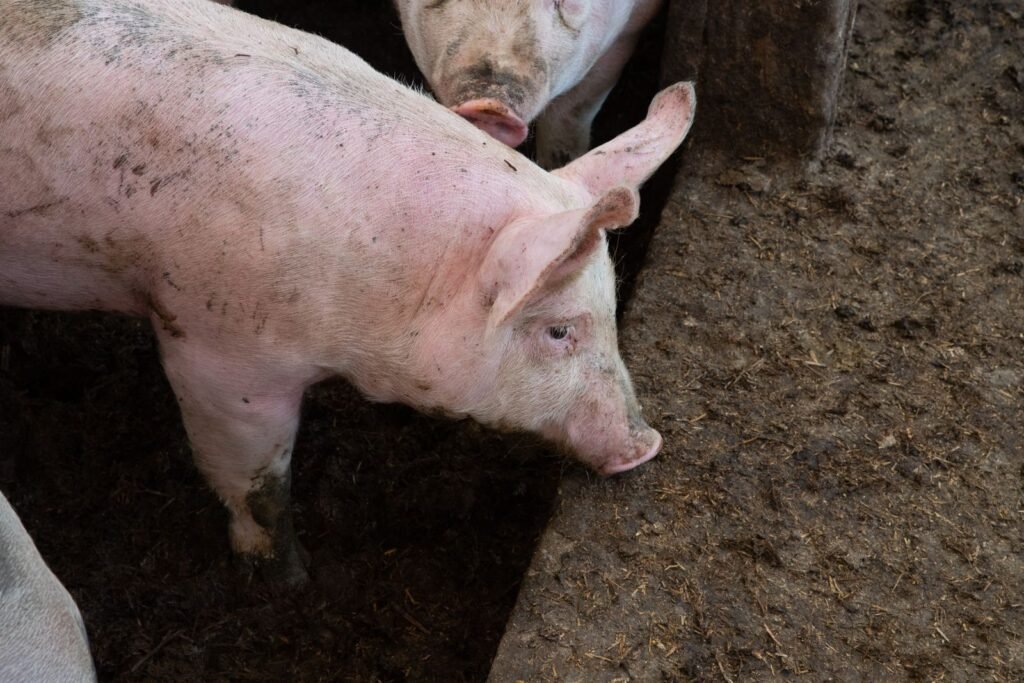
- Feet and legs. The long body puts extra strain on the back, feet and legs. Oklahoma State University notes that some lines outside Denmark have shown weak backs, an awkward gait and long feet and pasterns. Choose pigs with sound legs and give them good, non-slip floors.
- Heat and sun. As a white breed, the Landrace can get sunburnt and suffers in South African summer heat. Provide shade, ventilation, cooling and plenty of clean water. Our pig housing guide covers how to keep pigs cool.
- Feeding. Landrace sows produce a lot of milk, so they need to be fed well during lactation. Our guide to feeding pigs covers rations for every stage.
- Biosecurity. African swine fever and other diseases are a real threat. Isolate new pigs before mixing them with your herd, and see our guide to pig diseases in South Africa.
7. Buying Landrace Pigs: What to Check
- Health status. Buy only from herds with a clear, verifiable health record, and check the current movement rules.
- Records. Ask for litter records for the sow line and growth figures for boars.
- Teats. Gilts should have at least seven evenly spaced pairs of functional teats.
- Legs and back. Watch the pig walk. Look for a strong back and sound, well-set feet and legs.
- Type. Look for a long, smooth body, good hams and the breed’s typical lop ears.
For current market prices, see our guide to pig prices in South Africa, and our guide to buying livestock in South Africa covers the rest of the process.
8. Landrace Pigs vs Other Breeds
- Landrace vs Large White. Both are white mother lines with big litters and good milk. The Large White is usually described as hardier and sounder on its legs, while the Landrace is longer and leaner with lop ears. Most farmers use both, crossed.
- Landrace vs Duroc. The Duroc is a red terminal sire, used for growth, hardiness and meat quality, not as a sow line. A Duroc boar on Landrace-cross sows gives fast-growing slaughter pigs.
9. Landrace Pigs on a Small Farm
You do not need a big commercial unit to benefit from Landrace genetics. A practical small-farm plan looks like this:
- Start small. Begin with a few good gilts, either Large White and Landrace cross gilts or a mix of purebred Large White and Landrace gilts, and one boar. Our guide to starting a small piggery covers planning and costs.
- Choose your boar for your market. If you sell weaners or slaughter pigs, a Duroc boar on your white sows gives fast-growing, meaty offspring. If you want to breed your own replacement gilts, keep a purebred Landrace or Large White boar for part of the herd.
- Keep the best daughters. Select replacement gilts from your most productive sows: those that wean big, even litters and come back on heat quickly after weaning.
- Record everything. Write down service dates, farrowing dates, piglets born alive and piglets weaned for every sow. These records tell you which Landrace sows to keep and which to cull.
- Look after the floors. Because Landrace pigs are long-bodied, rough or slippery floors quickly lead to leg problems. Fix them before you stock the pens.
Handled this way, a small herd built on Landrace pigs can produce a steady supply of weaners or slaughter pigs, and the sows will stay productive for several litters.
Frequently Asked Questions
What are Landrace pigs used for?
Mainly as a maternal line. Landrace sows, especially when crossed with Large Whites, produce large litters and raise them well. Pure Landrace pigs also produce a long, lean bacon carcass.
How do you tell a Landrace from a Large White?
Look at the ears. The Landrace has long, drooping ears and a longer body, while the Large White has upright ears.
When did the Landrace come to South Africa?
It was first imported from the Netherlands in 1952.
Are Landrace pigs good mothers?
Yes. The breed is known for high fertility, large litters, good milk and a calm temperament.
Are Landrace pigs good for beginners?
They can be, especially as part of a Large White and Landrace cross sow herd, but they need good floors, shade and careful management of feet and legs.
What is an F1 Landrace cross?
A first-generation cross between a Landrace and a Large White. F1 gilts gain hybrid vigour and make excellent commercial sows.
Do Landrace pigs get sunburnt?
They can, because they are white. Give them shade and shelter, especially if they are kept outdoors.
Final Thoughts
Landrace pigs bring big litters, strong mothering, a calm temperament and a long, lean carcass to a herd. On their own they are productive, but they shine as half of a Large White and Landrace F1 sow, with a Duroc boar on top to breed slaughter pigs. Buy healthy, well-recorded stock, give them sound floors and shade, and they will repay you in piglets weaned. If you are building or improving a herd, have a look at our Landrace pigs for sale, or send us your requirements and we will get back to you with a written quote, including delivery to your farm.
Looking to buy pigs?
Tell us the breed, age group, quantity and delivery area. We reply with availability, pricing and transport costs, usually within one working day.
DRM LIVE STOCK is a registered South African livestock company (Company No. K2023207798, VAT No. 4640323079) based at 135 Rocklands Rd, Uitenhage Farms, Gqeberha. We supply cattle, goats, sheep and pigs, with delivery across South Africa.