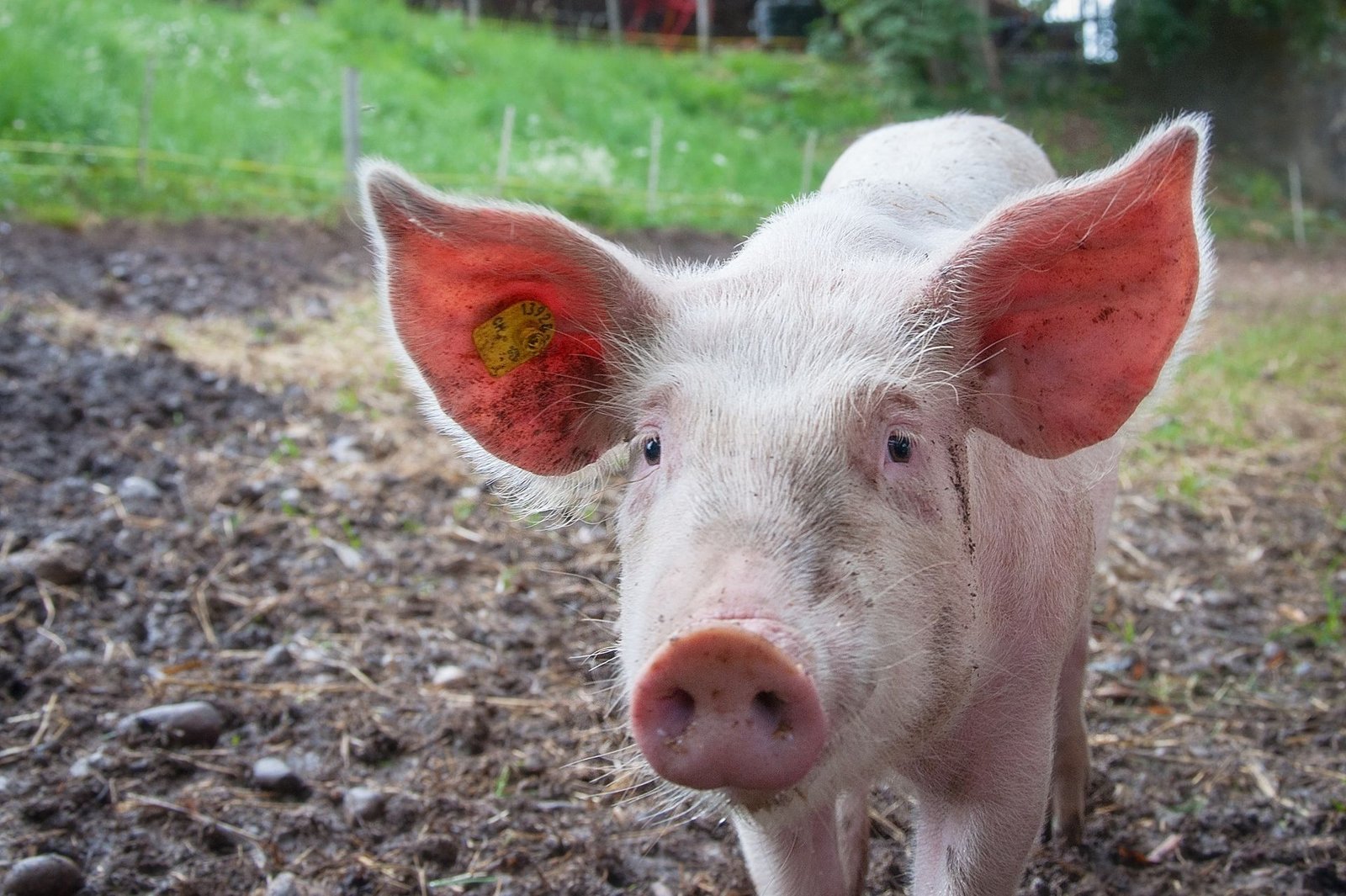
Large White vs Landrace vs Duroc is the first breed decision most commercial pig farmers in South Africa have to make, and the honest answer is that you will probably use all three. These are the breeds that carry almost the whole commercial pork industry. The Large White and the Landrace are the great mother lines, known for big litters and good milk. The Duroc is the red terminal sire, used on those sows to breed fast-growing, meaty slaughter pigs.
So the real question is not which one is best, but what job each breed does in your herd, and which ones you need for the kind of piggery you are running. This guide covers the seven differences that matter most, with figures from breed sources and South African research, so you can plan your sows and boars with confidence.
Large White vs Landrace vs Duroc at a Glance
| Large White | Landrace | Duroc | |
|---|---|---|---|
| Origin | Yorkshire, England | Denmark | United States |
| In South Africa since | Around the 1890s | 1952, imported from the Netherlands | 1980, imported from Canada |
| Colour and look | White with pink skin, erect ears | White, long body, lop ears | Rusty red to mahogany |
| Main role | Mother line | Mother line | Terminal sire |
| Key strengths | Large litters, heavy milk, hardy, sound legs | Large litters, docile, long body, good hams | Fast growth, feed efficiency, meat quality |
Dates of introduction come from ProAgri’s guide to southern African pig breeds. Modern commercial lines of all three breeds have changed a lot since they arrived, so always judge the actual breeding stock you are buying on its records.
1. Where the Three Breeds Come From
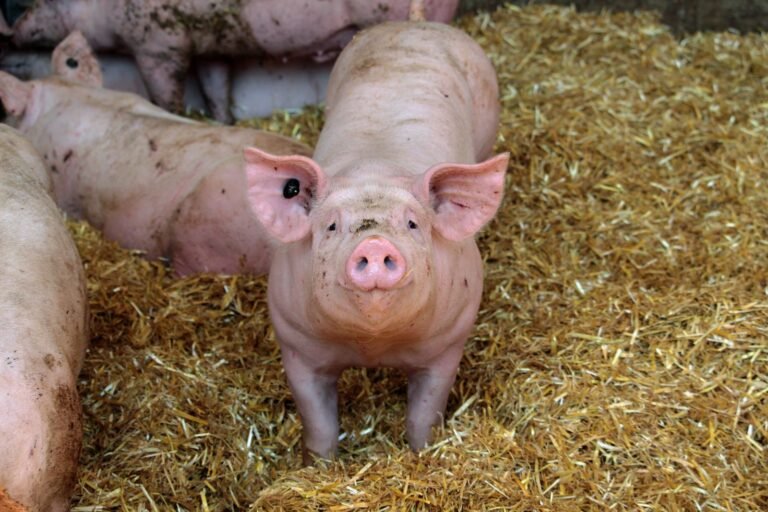
The Large White comes from Yorkshire in England, where large, white local pigs were crossed with other types, including the Cumberland, Leicestershire and the Middle and Small White. The breed first attracted attention at the Windsor Royal Show in 1831, and registration started in 1884, according to Oklahoma State University. The American and Canadian Yorkshire are direct descendants, and almost every pig-producing country in the world has imported Large Whites. South Africa has farmed them since around the 1890s. For everything on the breed itself, read our full guide to Large White pigs.
The Landrace was developed in Denmark by crossing Danish farm pigs with Large Whites, with the aim of producing lean bacon pigs for export. It came to South Africa from the Netherlands in 1952, and South African breeders have continued to develop it ever since. Our full guide to Landrace pigs covers the breed in more detail.
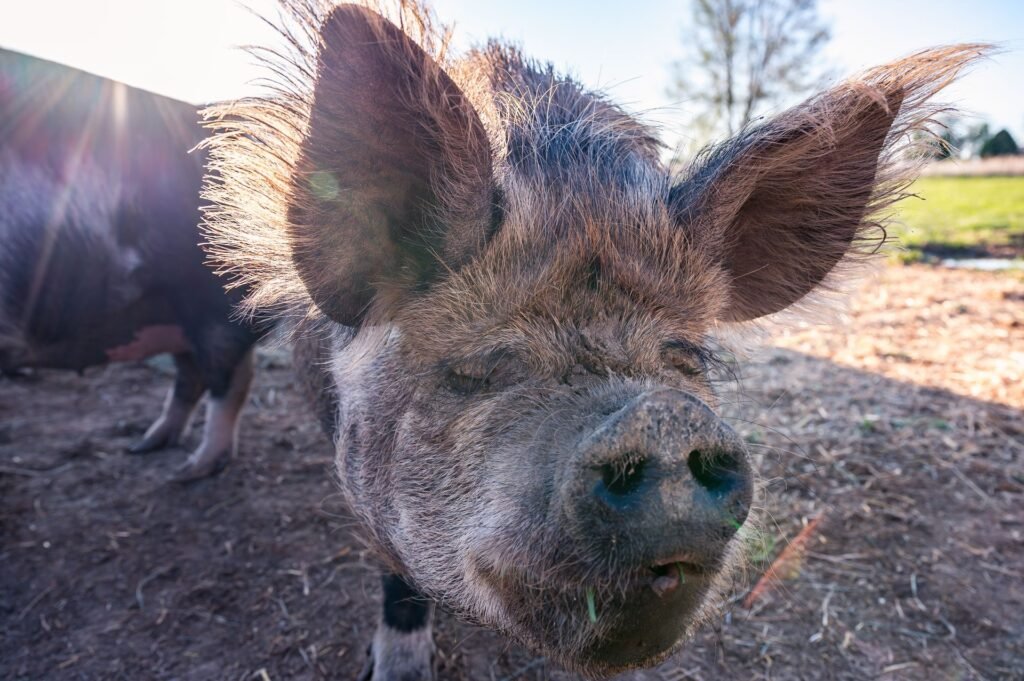
The Duroc is American, developed from red pig strains in the eastern United States in the 1800s. It is the newest of the three in South Africa, first imported from Canada in 1980, and it is now widely used as a terminal sire on commercial farms.
2. Large White vs Landrace vs Duroc as Mothers
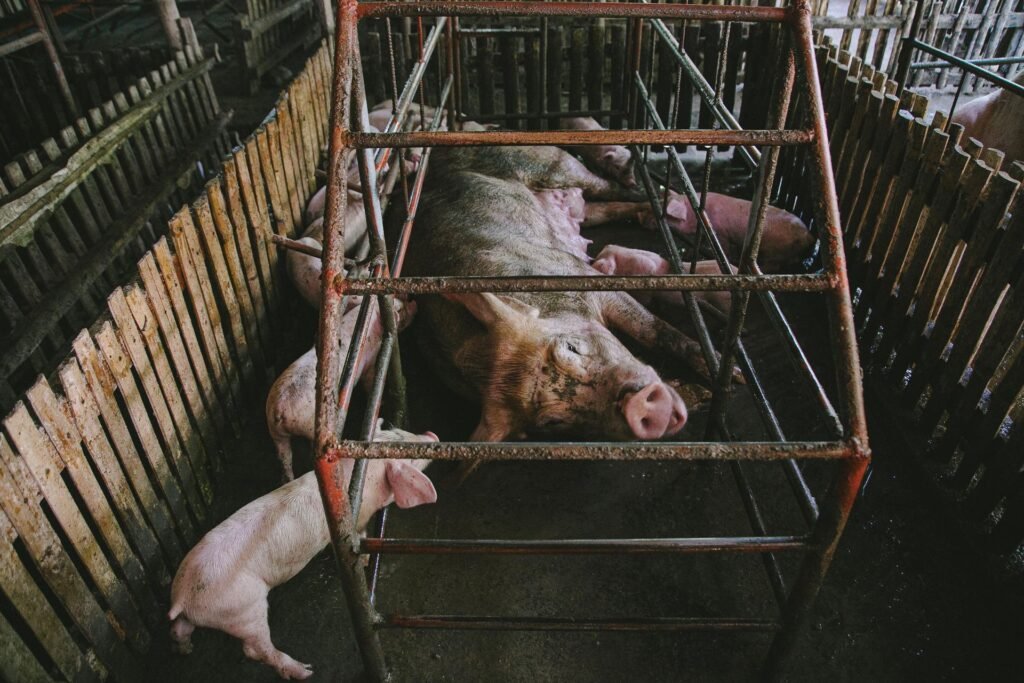
This is where the two white breeds earn their keep. Oklahoma State University describes the Large White as known for large litters, heavy milk production and excellent maternal instincts. ProAgri calls Large White sows excellent, protective mothers with big, healthy litters. The Landrace is just as valued in the farrowing house. It produces large litters over a long productive life and is docile and easy to manage, which matters when you are working with sows every day.
The Duroc sow can also be a good mother, and ProAgri notes that Durocs mother well despite their large litters. But in commercial herds the Duroc is almost never used as the sow line. Its value lies in the growth and meat it passes on to slaughter pigs, not in the number of piglets it weans.
In practice, most commercial sow herds are built on Large White and Landrace genetics, very often crossed.
3. Large White vs Landrace vs Duroc Growth and Feed Efficiency
Feed is by far the biggest cost in a piggery, so how quickly a pig grows and how much feed it needs per kilogram of gain decide your profit. All three breeds grow fast when they are well fed and well housed.
A South African study of on-farm progeny performance, published in the South African Journal of Animal Science in 2017, compared pigs sired by local and imported boars of all three breeds. The pigs from the best-performing sire groups grew at about 890 to 940 g a day, with feed conversion ratios of about 2.05 to 2.13 kg of feed per kg of gain. In that data set, the fastest average daily gain came from Duroc-sired pigs, at about 940 g a day.
That matches what farmers see. The Duroc brings growth, hardiness and feed efficiency to its crossbred offspring, and ProAgri notes that Duroc crosses with the white breeds give superior growth and feed conversion. The Large White and Landrace are no slouches either. Both are efficient, fast-growing breeds in their own right, which is why pure white pigs are also sent to slaughter on many farms.
4. Large White vs Landrace vs Duroc Carcass and Meat Quality
The Landrace was bred in Denmark for bacon, and its long body, light forequarters and large hams show it. It produces a lean, long carcass that suits the bacon trade.
The Large White also has long, deep sides and a lean carcass, and it has been a bacon and pork breed for well over a century.
The Duroc is known for meat quality. ProAgri describes its meat as exceptionally marbled, and the breed is not stress-susceptible, which helps meat quality at slaughter. Marbling gives pork more flavour and juiciness, which is one reason Duroc-sired pigs are popular with processors and butchers who sell on quality.
In the 2017 South African study, backfat thickness in the tested groups was close across all three breeds, at roughly 9.4 to 10.5 mm, so none of them is a fat pig by modern standards.
5. Hardiness, Temperament and Housing
All three are commercial breeds, bred for well-run pig houses rather than free-range scavenging. Pigs cannot sweat, so shade, ventilation and cooling matter in South Africa’s heat whatever breed you keep.
The Large White is described as rugged, hardy and sound in its feet and legs, and adaptable to many climates. The Landrace is docile and easy to handle, but its long body and light forequarters mean it needs good floors and careful management of feet and legs. The Duroc is known as a hardy, robust pig, and its red colour gives some protection against sunburn, which the white breeds can suffer from if they are kept outdoors without shade.
For small and emerging farmers who keep pigs in simpler housing, hardiness and easy temperament matter as much as growth. A calm, sound Large White or Large White cross sow is often a good place to start.
6. Crossbreeding: How the Three Breeds Work Together
This is the heart of the Large White vs Landrace vs Duroc question. Commercial pig farming in South Africa, and in most of the world, is built on a simple three-breed system:
- Step one: mate a Large White with a Landrace to breed a crossbred F1 gilt. She combines the strengths of both mother lines and gains hybrid vigour, which shows up as better fertility, litter size and survival.
- Step two: mate that F1 sow to a Duroc boar.
- Step three: send all the offspring of that mating to slaughter. They grow fast, convert feed well and carry the Duroc’s meat quality.
ProAgri describes the Large White as the universal foundation mother breed and notes that Large White and Landrace crosses give fertile F1 females. The Duroc is the classic terminal sire on top of that sow.
Many South African producers now buy their F1 gilts ready-made from breeding companies rather than breeding them on the farm. The 2017 study found that international breeding companies supplied about 73% of South Africa’s commercial breeding stock, with nine independent local stud breeders supplying the other 27%. Smaller farmers often keep a few purebred Large White and Landrace sows to breed their own replacement gilts instead.
7. Which Breed Should You Buy?
The right Large White vs Landrace vs Duroc mix depends on what you are building.
- Starting a small sow herd: Large White sows, or Large White and Landrace cross gilts, give you good litters, good milk and a hardy, forgiving sow.
- Breeding your own replacement gilts: keep both Large White and Landrace purebreds so you can produce F1 gilts.
- Producing slaughter pigs: put a Duroc boar on your white sows for faster growth, better feed conversion and meat quality.
- Selling weaners: buyers who grow out pigs often like Duroc-cross weaners, because they finish quickly and efficiently.
- Selling breeding stock: pure Large White and Landrace gilts and boars are in steady demand from farmers building sow herds.
For a full picture of housing, feeding, farrowing and biosecurity, read our guide to pig farming in South Africa, and for the latest market figures see our guide to pig prices in South Africa.
Large White vs Landrace vs Duroc for Small-Scale Farmers
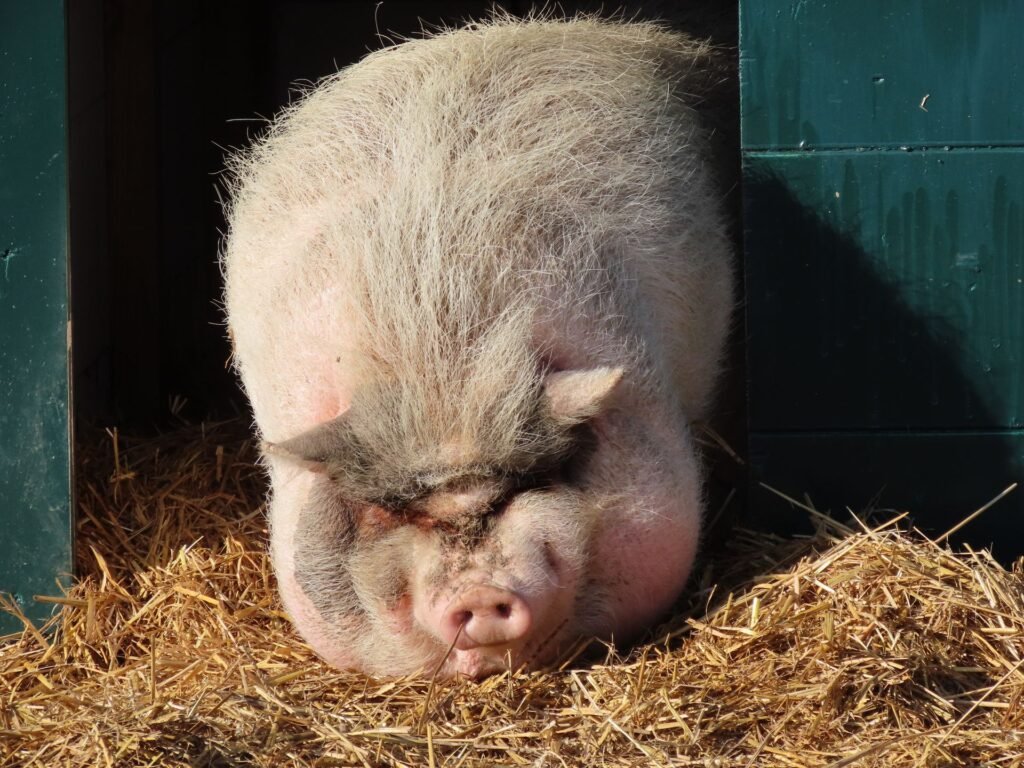
If you are starting with a handful of sows rather than a commercial unit, the Large White vs Landrace vs Duroc decision is simpler than it looks. You do not need a full three-breed programme on day one.
A practical starting point is three to five good Large White or Large White and Landrace cross gilts and one Duroc boar. The gilts give you reliable litters and plenty of milk, and the Duroc boar gives you fast-growing piglets that you can sell as weaners or grow out yourself. If you later want to breed your own replacement gilts, add a purebred Large White or Landrace boar and keep his daughters from your best sows.
Many small farmers also share boars or use artificial insemination rather than keeping a boar for every breed, which saves feed and space. If you do use AI, buy semen from a reputable supplier and ask your vet or feed company for help with heat detection and timing. Our pig breeding guide explains how to spot heat and when to serve a sow.
Whatever size you start at, plan for the feed bill first. A sow and her litter eat a lot of bought feed, and the breed you choose will only pay if you can feed the pigs properly from farrowing to slaughter. Work out your costs per pig before you buy, and start small enough that one bad month does not sink the business.
Common Mistakes When Choosing Pig Breeds
Most breed problems in small piggeries come from a few avoidable mistakes.
- Keeping crossbred slaughter pigs as sows. A gilt from a Duroc boar and an F1 sow is bred for the abattoir. Kept as a sow, she was not selected for mothering, and her litters are less predictable.
- Using a boar from your own herd. Keeping a boar from your own litters leads to inbreeding, smaller litters and weaker piglets. Buy boars from a separate, healthy herd with records.
- Buying cheap stock with no history. A cheap gilt from an unknown source can bring in disease that costs far more than she saved. Ask where the animals come from, how they were fed and what they were vaccinated against.
- Expecting genetics to fix poor management. The best Large White or Duroc genetics will not perform in hot, crowded pens on an unbalanced ration. Get housing, water and feed right first.
- Changing breeds too often. Settle on a system, such as white sows and a Duroc boar, and stick to it long enough to judge the results on your records.
Good records make every one of these decisions easier. Note the number of piglets born alive and weaned for every sow, the weights at weaning and slaughter, and the feed used. After a year you will know which sows, boars and breeds earn their place in your herd.
Biosecurity When Buying Pigs
Whichever side of the Large White vs Landrace vs Duroc question you land on, the health of the animals you buy matters more than the breed. African swine fever and foot-and-mouth disease have both hit the South African pig industry in recent years, as African Farming and Farmer’s Weekly have reported, and a single sick pig can bring disease into your whole unit.
- Buy only from healthy, well-managed herds and ask about their health status and vaccination programme.
- Keep new pigs in quarantine, well away from your herd, for at least 28 days, and watch them closely.
- Never feed swill or kitchen waste that contains meat.
- Control visitors, vehicles and equipment coming onto the farm.
For industry news and disease updates, the South African Pork Producers’ Organisation is the best place to start. Our guide to buying livestock in South Africa covers the paperwork and payment checks.
DRM Livestock supplies Large White pigs, Landrace pigs and Duroc pigs to farms across South Africa, from weaners and growers to gilts, sows and boars.
Frequently Asked Questions
What is the main difference in Large White vs Landrace vs Duroc pigs?
The Large White and Landrace are white mother lines, valued for large litters, milk and mothering. The Duroc is a red terminal sire, used on white sows to breed fast-growing, meaty slaughter pigs.
Which pig breed has the biggest litters?
The Large White and the Landrace are both known for large litters and are the main sow breeds. A crossbred Large White and Landrace sow usually does best of all, thanks to hybrid vigour.
Which pig breed grows the fastest?
In the Large White vs Landrace vs Duroc comparison, all three grow fast in good conditions. In a 2017 South African study of on-farm progeny data, Duroc-sired pigs had the highest average daily gain in the data set, at about 940 g a day.
Why are Duroc boars used on white sows?
Because the crossbred pigs combine the white sow’s litter size and mothering with the Duroc’s growth, feed efficiency, hardiness and meat quality. All the offspring go to slaughter, so you get the best of both.
What is an F1 gilt?
An F1 gilt is a young female from a first cross between two breeds, usually Large White and Landrace. She gains hybrid vigour and makes an excellent commercial sow.
Which pig breed is best for beginners?
Many beginners start with Large White or Large White and Landrace cross sows, because they are hardy, good mothers and easy to find. A Duroc boar can then be added to breed slaughter pigs.
Can Duroc pigs be kept outdoors?
Yes, with shade, shelter, water and good fencing. The Duroc is hardy and its red colour gives some protection from the sun. White breeds kept outdoors need good shade to avoid sunburn and heat stress.
Final Thoughts
The Large White vs Landrace vs Duroc choice is less a contest than a partnership. The Large White and Landrace give you the sows, with big litters and strong mothering, especially when they are crossed. The Duroc gives you the slaughter pigs, with fast growth, efficient feed conversion and quality meat. Decide which part of that system you are building, buy healthy stock from herds you can verify, and keep your biosecurity tight. If you would like current prices for Large White, Landrace or Duroc pigs delivered to your farm, send us your requirements and we will get back to you with a written quote.
Looking to buy pigs?
Tell us the breed, age group, quantity and delivery area. We reply with availability, pricing and transport costs, usually within one working day.
DRM LIVE STOCK is a registered South African livestock company (Company No. K2023207798, VAT No. 4640323079) based at 135 Rocklands Rd, Uitenhage Farms, Gqeberha. We supply cattle, goats, sheep and pigs, with delivery across South Africa.