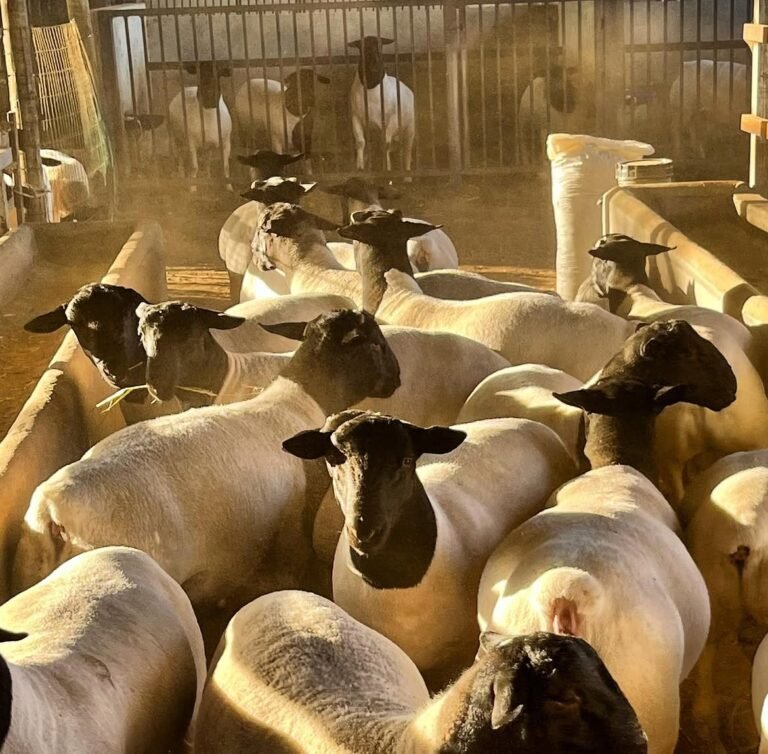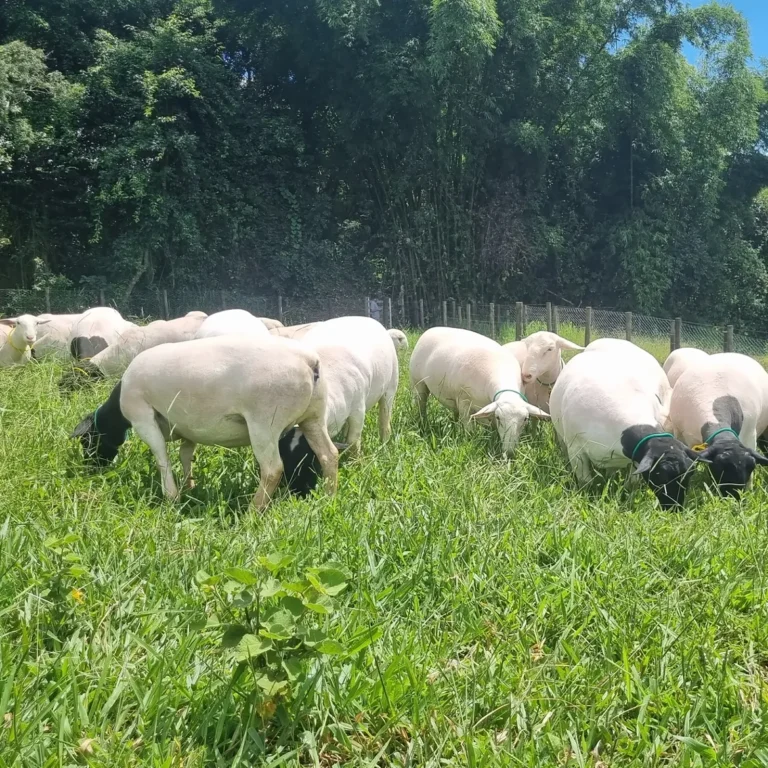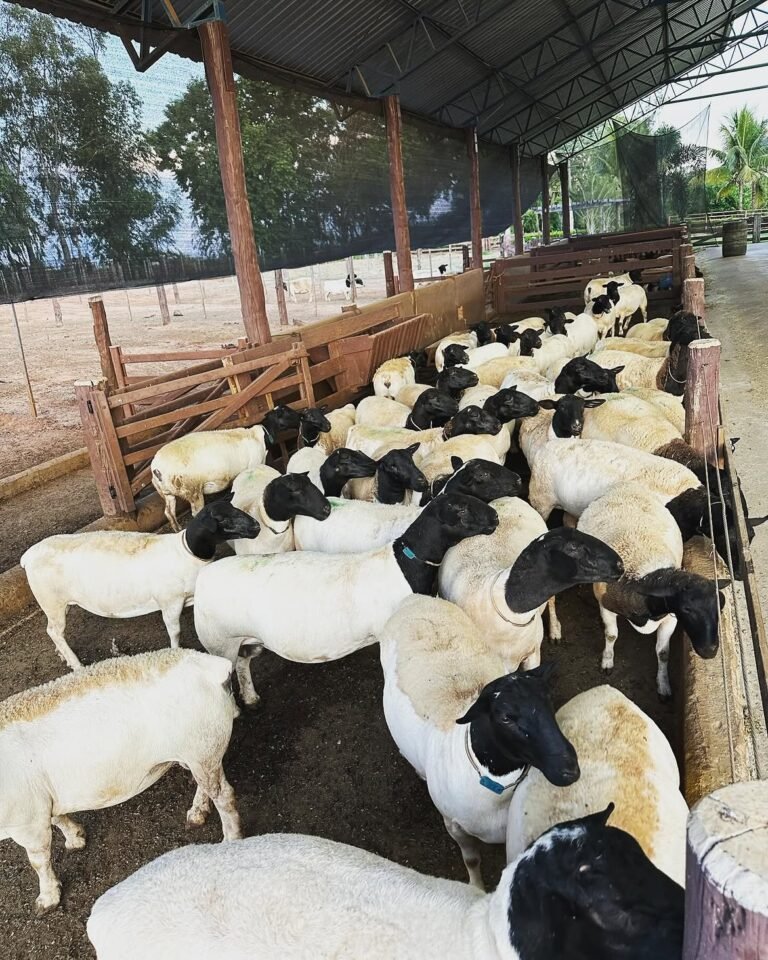
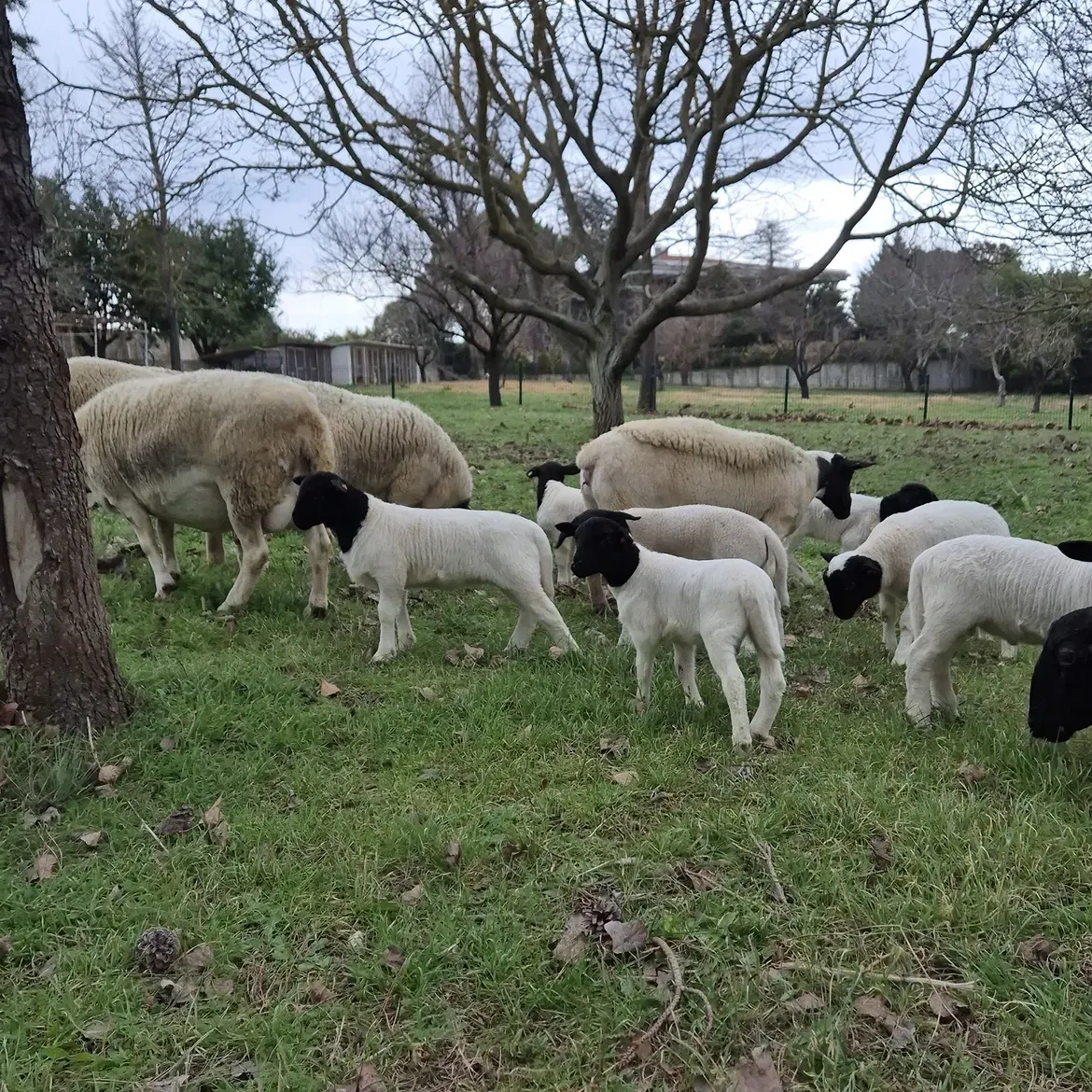
Stand at any sheep auction in the Karoo, the Northern Cape or the Eastern Cape and you will see pens full of black-headed, white-bodied sheep. Dorper sheep in South Africa are a local success story: a breed developed here, by South African farmers and scientists, for South African veld, and now farmed in many countries around the world.
The reason is simple. Dorpers turn tough grazing into good lamb, they breed well, and they do not need shearing. But a good breed does not farm itself. This guide covers where the Dorper came from, what makes it different, how it is farmed and bred, what it produces, and how to buy good animals. Each section links to a more detailed guide if you want to go deeper.
Where the Dorper Came From
In the 1930s and 1940s, South African sheep farmers in the drier parts of the country needed a meat sheep that could produce a good slaughter lamb on veld. The British meat breeds grew well but struggled with the heat and the grazing. The local fat-tailed breeds were hardy but did not produce the carcass the market wanted.
The answer was a cross between the Dorset Horn, for meat, growth and fertility, and the Blackhead Persian, a hardy fat-rumped breed well suited to arid conditions. Much of the early development work was done at the Grootfontein Agricultural Development Institute near Middelburg in the Eastern Cape. The name comes from the two parent breeds: Dorset and Persian. The Dorper Sheep Breeders’ Society of South Africa was founded in 1950 and still sets the breed standard today.
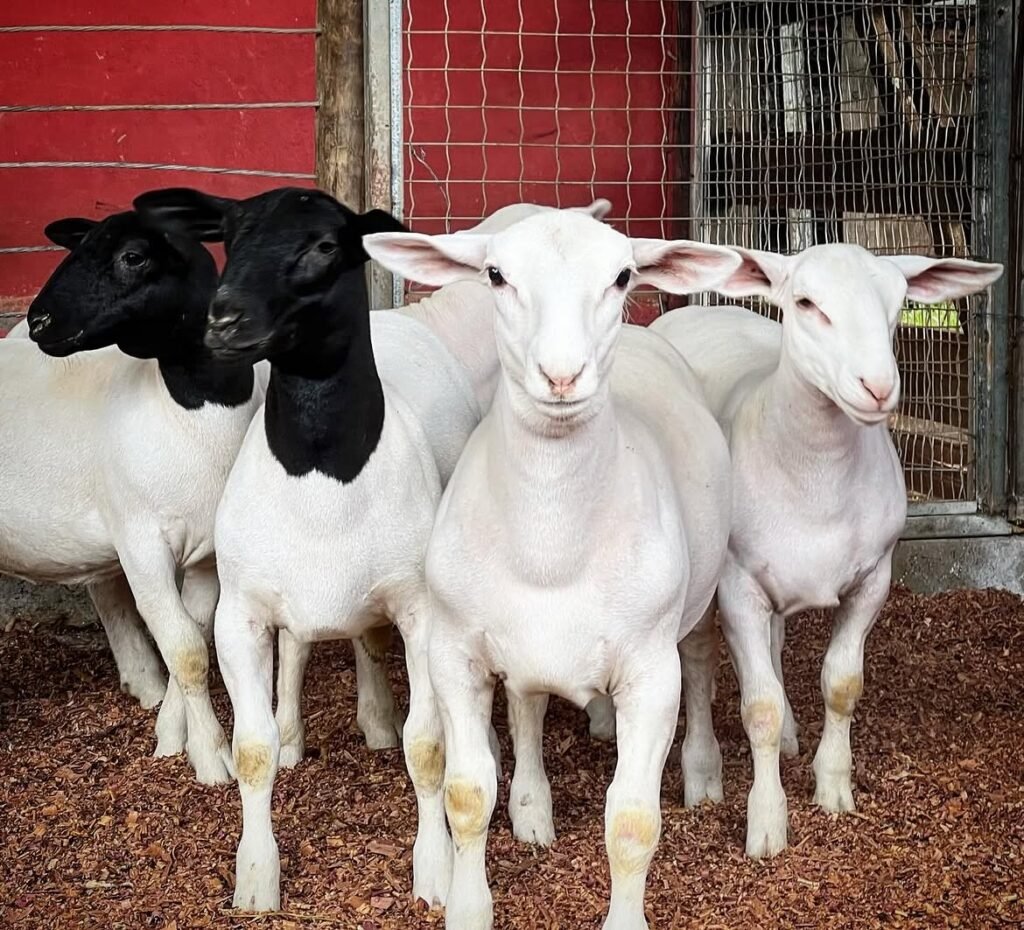
The same society also manages the White Dorper, which has an all-white head and body. Apart from colour, it is farmed in much the same way.
What Makes the Dorper Different
- A meat breed first. Dorpers are built for carcass: a long, deep body, a broad loin and a full hindquarter.
- Early maturity. Lambs put on muscle and fat young and can be marketed at a light weight and early age.
- A shedding coat. The coat is a mix of hair and wool that sheds naturally, so there is no shearing and less trouble with fly strike.
- Hardiness. Dorpers handle heat well and are not fussy eaters. They graze grass and also browse shrubs and bushes that other breeds leave.
- Fertility. Ewes can breed through much of the year, twins are common with good feeding, and ewes are generally good mothers.
None of these traits is guaranteed in every animal. They are what the breed was selected for. Individual animals vary, and poor selection can lose them within a few generations, which is why the breeding section below matters.
Dorper sheep at a glance
| Trait | What to expect |
|---|---|
| Origin | South Africa, 1940s (Dorset Horn x Blackhead Persian) |
| Main product | Slaughter lambs and breeding stock |
| Coat | Hair and wool mix that sheds; no shearing |
| Colour | Black head, white body (White Dorper: all white) |
| Breeding | Can breed through much of the year; twins common with good feeding |
| Grazing | Grazes and browses; does well on veld |
| Best suited to | Commercial lamb production in dry and semi-arid areas, and crossbreeding |
Dorper Sheep Farming in South Africa
Dorpers are farmed in every province, from extensive Karoo farms carrying a few hundred ewes on thousands of hectares to small intensive units on planted pasture. The basics are the same everywhere:
- stock within your farm’s grazing capacity, and keep it lower while you are learning
- reliable water in every camp
- jackal-proof fencing or night kraals where predators and theft are a problem
- a kraal, race and crush pen for dosing, vaccinating and sorting
- a health programme agreed with your local vet
- records of every ewe’s lambing and every lamb’s weaning weight
The most common mistake is buying sheep before knowing what the land can carry. Hardy as they are, Dorpers on overstocked veld lose condition, conceive poorly and wean light lambs. Read our full guide to Dorper sheep farming in South Africa for start-up costs, feeding through the year, and a worked example of what 100 ewes can earn.
Feeding Dorpers
Dorpers do well on natural veld, but veld quality changes with the season. In summer, green grazing carries them well. In winter, dry grazing is low in protein and most flocks need a protein lick. Ewes need extra in late pregnancy and while suckling, and lambs grow faster with good grazing or creep feed. Our guide to feeding sheep covers licks and rations for every stage.
Feed the flock according to what it is doing rather than the same way all year, and budget for dry years before they arrive. Feed bought in a drought is the cost that sinks most new sheep farmers.
Breeding Dorper Sheep
The long-term quality of your flock depends on two decisions made every year: which ewe lambs you keep, and which ram you use.
Good ewes have a correct mouth, a soft udder with two working teats, sound feet and legs, and a record of lambing every season. Good rams are sound on their legs, have firm, even testicles, are well muscled and come from productive families. A vet’s breeding soundness examination before mating is worth every cent.
Most commercial farmers run a controlled mating season of about six weeks, so lambing falls into a predictable window when the veld is at its best. Our guide to choosing Dorper ewes and rams covers selection, records and mating management in detail. For the wider picture from mating to lambing, see our sheep breeding guide.
Dorper Lamb and Meat Production
The Dorper’s main product is the slaughter lamb. Because the breed matures early, lambs can reach market condition young, on veld or in a feedlot. The same early maturity is a trap: a Dorper lamb fed past its ideal condition gets over-fat, and over-fat carcasses are downgraded at the abattoir.
The best approach is to ask your buyer for their specification, weigh your lambs, and sell them when they are finished rather than when they are heaviest. Read more in our guide to Dorper sheep for meat production.
A Year With a Dorper Flock
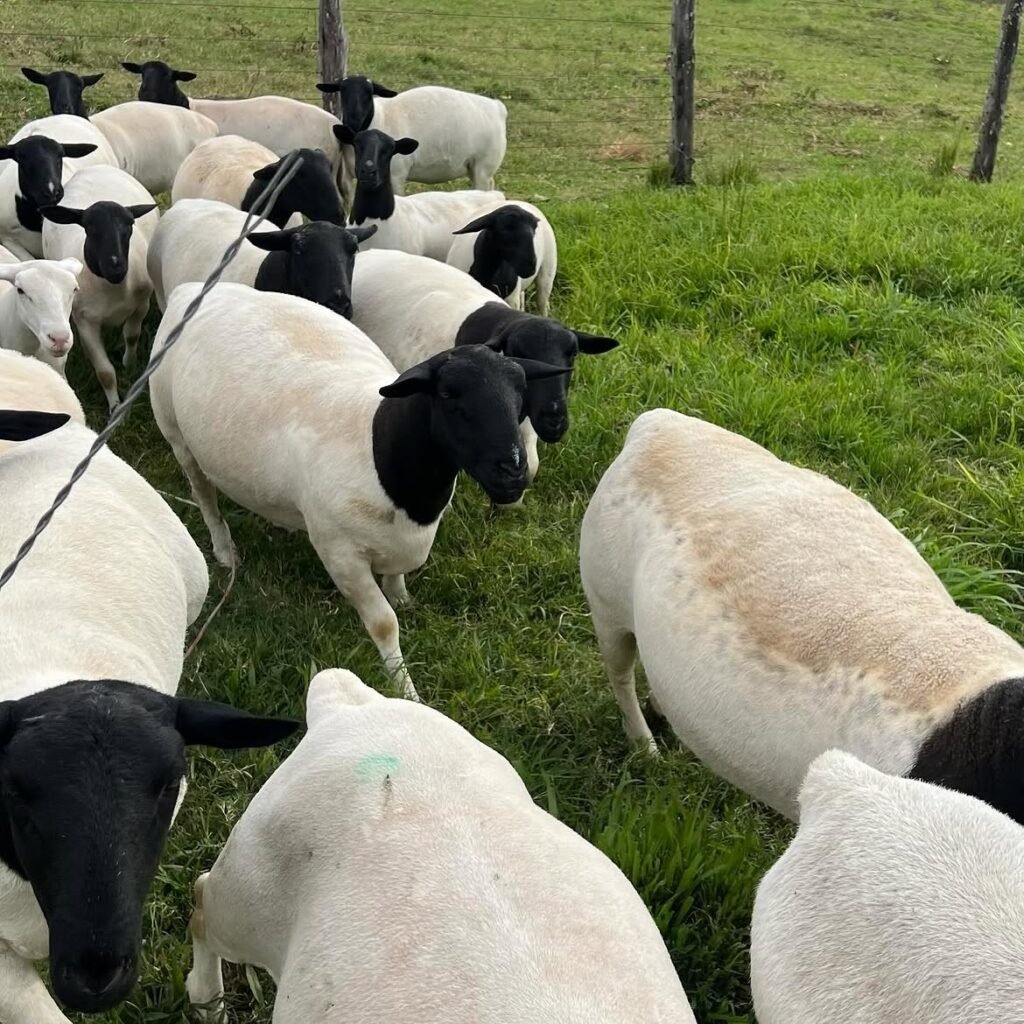
Every farm is different, but most commercial Dorper flocks follow a similar rhythm once mating is controlled:
- Before mating: check ewes’ condition, mouths and udders, and cull the ones that will not make another season. Get rams checked by a vet and in fit condition about two months ahead. Flush ewes on better grazing for a few weeks.
- Mating (about six weeks): rams in with the ewes, with enough rams for the size and terrain of the camp.
- Pregnancy: scan ewes about six to eight weeks after the rams come out if you can, so twin-bearing ewes can be fed better and empty ewes identified. Vaccinate ewes before lambing as your vet advises, so the lambs get protection through the colostrum.
- Lambing: daily checks, help for difficult births, and making sure every lamb drinks. This is where most lambs are saved or lost.
- Growing lambs: mark and vaccinate lambs, watch for worms, and give creep feed if the veld is poor.
- Weaning, at around three to four months: weigh the lambs, pick replacement ewe lambs, and start selling or finishing the rest.
- Through the year: keep an eye on water, fences, predators and body condition, and write everything down.
Predators and Stock Theft
Small stock losses to jackals, caracals and thieves can wipe out the profit of a Dorper flock quietly, a few lambs at a time. Good jackal-proof fencing, night kraals in high-risk areas, guard dogs or donkeys, and regular counting all help. So does marking every sheep with your registered mark, so stolen animals can be traced. Count your flock often, because losses you do not notice are losses you cannot stop.
Keeping a Dorper Flock Healthy
Dorpers are hardy, but they are not immune to disease. A typical health programme, agreed with your vet, covers:
- vaccination against pulpy kidney and other clostridial diseases
- bluetongue and Rift Valley fever vaccination where these occur
- wireworm and other internal parasites, dosing the sheep that need it rather than the whole flock by the calendar
- ticks, lice and blowflies, depending on your area
- foot care, especially in wet seasons
Keep new sheep separate for at least 28 days before they join the flock.
Dorper or Another Breed?
The Dorper is not the right sheep for every farm. If you want wool as well as meat, the Merino or Dohne Merino will earn you a wool cheque. The Meatmaster is another South African hair sheep bred for meat on veld, and some farmers prefer it in very harsh conditions. We compare the two in detail in Dorper vs Meatmaster. Many commercial farmers also use Dorper rams on other ewes to improve the growth and carcass of their slaughter lambs.
Choose the breed that fits your veld, your market and the way you want to farm.
What Do Dorper Sheep Cost in South Africa?
Prices depend on whether you are buying commercial, flock or stud animals, and on age, sex, pregnancy status and condition. As a reference, at a Dorper auction in Upington in March 2026, flock ewes averaged about R3,000 and flock rams about R7,785, with stud rams averaging about R10,500. Slaughter lambs are priced by weight and follow the mutton market. Our guide to Dorper sheep prices in South Africa explains what moves the price and what to check before you pay.
Buying Dorper Sheep in South Africa
Know what you are buying for before you look: commercial lamb production, breeding replacements, a ram to improve your flock, or lambs to finish. Then check every animal:
- open the mouth and check the teeth meet the pad
- watch them walk, and check feet and legs
- feel the udder on ewes and the testicles on rams
- feel condition over the back and ribs rather than trusting the coat
- ask about vaccination, dosing and lambing history
- make sure the sheep carry the seller’s mark and come with identification documents, and a veterinary movement permit where foot-and-mouth controls apply
Pay only into a business account on an official invoice, and be wary of prices far below the market.
More Sheep Farming Guides
- Dorper Sheep Farming in South Africa | Costs, Returns and Management
- Dorper Sheep Breeding | How to Choose Ewes, Rams and Replacement Stock
- Dorper Sheep for Meat Production | Growth, Feeding and Slaughter Management
- Dorper Sheep Prices in South Africa | What Buyers Should Expect to Pay
- Sheep Prices in South Africa (2026): Lamb, Mutton and Breeding Stock
- Common Sheep Diseases in South Africa: Signs, Prevention and Control
- Feeding Sheep in South Africa: A Practical Guide for Every Stage
- Meatmaster Sheep in South Africa: A Complete Farmer’s Guide
- Dorper vs Meatmaster: Which Sheep Breed Suits Your Farm?
- Ile de France Sheep in South Africa: A Complete Farmer’s Guide
- Merino Sheep in South Africa: A Complete Breed Guide
- Merino vs Dohne Merino: Which Wool Sheep Suits Your Farm?
Frequently Asked Questions About Dorper Sheep in South Africa
Where do Dorper sheep come from?
The Dorper was developed in South Africa in the 1940s by crossing Dorset Horn rams with Blackhead Persian ewes. The breed society was founded in 1950.
Do Dorper sheep need shearing?
No. Dorpers have a mix of hair and wool that sheds naturally, so they do not need regular shearing. Some farmers still crutch or trim animals where the coat does not shed cleanly.
What is the difference between a Dorper and a White Dorper?
The Dorper has a black head and white body, while the White Dorper is white all over. Both are managed by the same breed society and farmed the same way.
Are Dorper sheep good for beginners?
Yes, they are one of the easier sheep breeds for new farmers because they are hardy, fertile and need no shearing. They still need good grazing management, a health programme and daily checks.
How long do Dorper ewes stay productive?
A well-managed ewe can stay in the flock for six or more seasons. Her working life usually ends when her teeth wear or break and she can no longer hold condition on veld.
Can Dorpers live on veld alone?
In good seasons they do well on veld, but most flocks need a protein lick in winter and extra feed in droughts, late pregnancy and lactation.
Where can I buy Dorper sheep in South Africa?
At breed and production auctions, from stud and flock breeders, through livestock agents, and from suppliers such as DRM Livestock. See our Dorper sheep for sale.
Final Thoughts
Dorper sheep in South Africa have earned their reputation honestly. They were bred to produce lamb from difficult veld, and they still do that better than most. But the breed only gives you potential. Your stocking rate, your ewe selection, your ram, your health programme and your records decide how much of that potential ends up in the bank.
If you are ready to start or grow a Dorper flock, request a quote with the number and type of animals you need, and we will send current availability, prices and delivery costs in writing.
Looking to buy sheep?
Tell us the breed, age group, quantity and delivery area. We reply with availability, pricing and transport costs, usually within one working day.
DRM LIVE STOCK is a registered South African livestock company (Company No. K2023207798, VAT No. 4640323079) based at 135 Rocklands Rd, Uitenhage Farms, Gqeberha. We supply cattle, goats, sheep and pigs, with delivery across South Africa.