Goat housing does not need to be fancy, but it does need to work. Goats handle heat, drought and poor veld far better than most livestock, yet they hate rain, wind and wet ground, and they are easy prey for jackals, caracals and stray dogs. A simple, dry, well-ventilated shelter and a secure night kraal prevent many of the pneumonia cases, worm problems and stock losses that eat into a goat farmer’s profit.
This guide covers goat housing in South Africa: when goats need a shelter, how much space to give them, floors, roofs and ventilation, kidding pens, feeding and water, kraals and fencing, and the most common mistakes. It applies to meat goats such as Boer goats and Kalahari Reds as well as dairy goats.
Goat Housing at a Glance
| Item | Guideline |
|---|---|
| Floor space, adult doe (about 50 kg) | About 1.1 m² on a solid floor, 0.9 m² on slats |
| Floor space, buck | About 2.5 to 3 m² |
| Floor space, kid | About 0.3 to 0.5 m² |
| Open yard per doe | About 2 to 3 m² |
| Trough space per adult doe | About 35 to 45 cm |
| Slatted floor gaps | About 10 to 25 mm |
| Raised floor height | About 1 to 1.5 m above the ground |
The space and trough figures are for intensive housing and come mainly from the FAO’s farm structures guide. Goats that range on the veld by day and only sleep in the shelter can manage with less, but crowding always raises the risk of disease and fighting.
1. Do Goats Need a Shelter?
Most South African meat goats are farmed extensively, browsing on the veld during the day and coming into a kraal or shelter at night. A Farmer’s Weekly guide based on Department of Agriculture and ARC material describes two systems: goats that range freely by day and sleep in a kraal at night, and goats kept permanently in a shed or small yard with shelter, which it notes takes a lot more work.
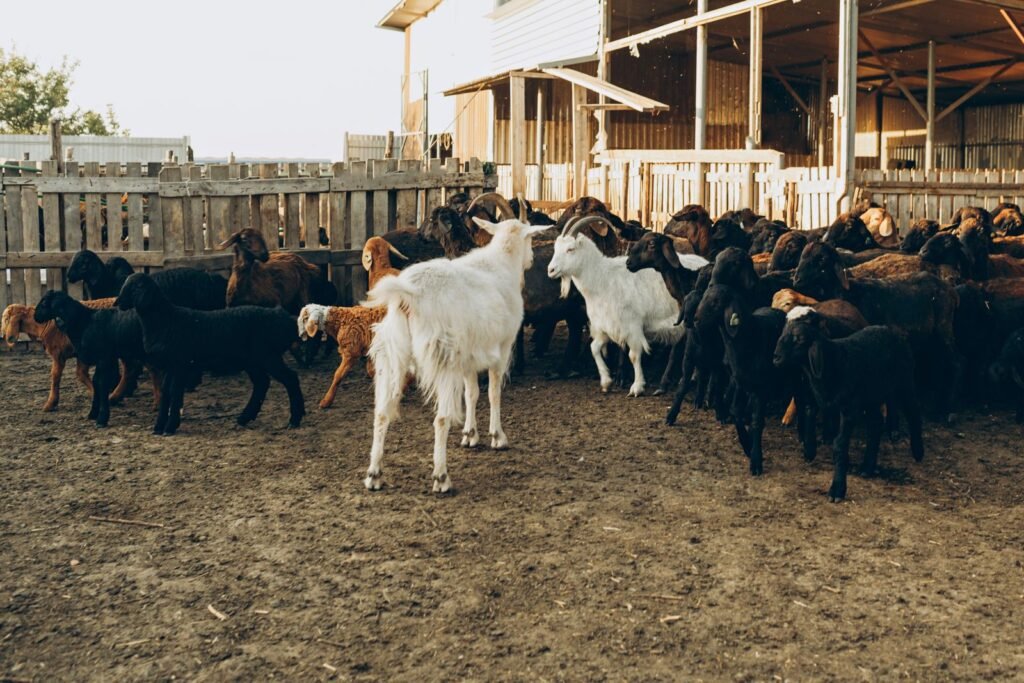
Even on extensive farms, goats need a goat shelter to go to in bad weather. Their coats are not as weatherproof as a sheep’s fleece, and cold rain and wind, especially at night, are a common trigger for pneumonia. Good goat housing protects them from:
- Rain and cold wind, the biggest threats to kids and thin animals.
- Summer heat. Shade matters as much as shelter. The ARC’s small ruminant guide says shade can cut more than 30% of the heat load on animals.
- Predators, which do most of their damage at night.
- Theft, which is easier when goats are scattered in the veld overnight.
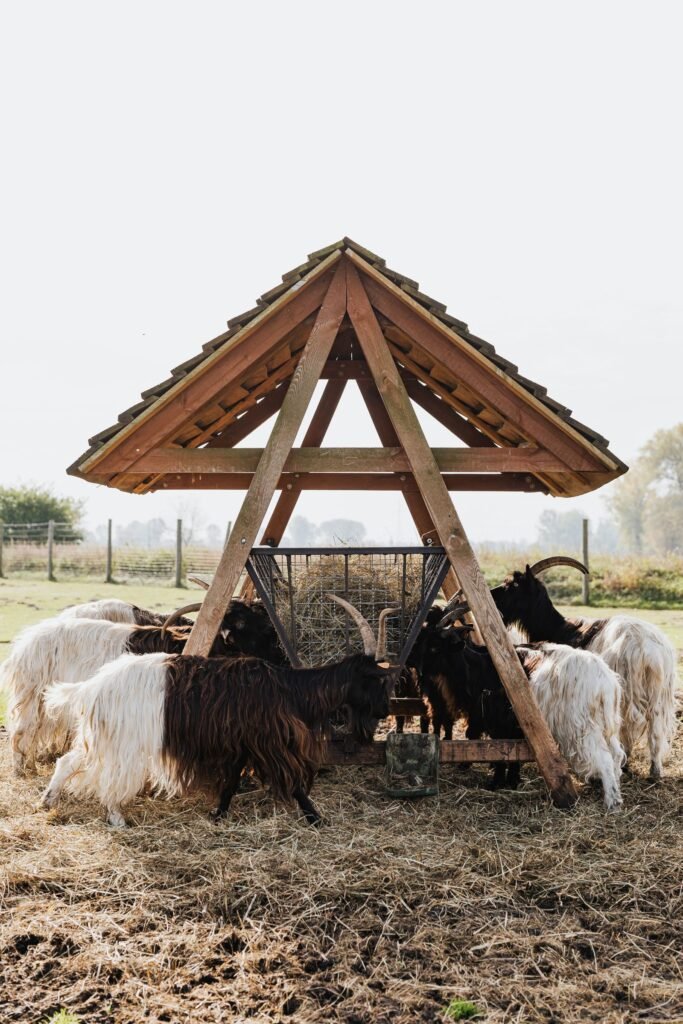
2. Choose the Right Site
Where you put your goat housing matters as much as what you build. Choose a site that is:
- High and well drained. Goats should never stand in mud or water. Wet ground leads to foot problems and worms.
- Sheltered from the prevailing wind, with the open side facing away from cold winds and driving rain. In most of South Africa that means the open side faces roughly north, for winter sun.
- Close to the house for security and easy checking, but not right next to it, because of smell and flies.
- Easy to reach with feed and water, and with a loading area for vehicles.
The ARC’s guide to small ruminant production notes that an east-west orientation of the building reduces the sun it receives, and recommends naturally ventilated housing with a gable roof that is painted white or insulated.
3. How Much Space Do Goats Need?
Overcrowding is one of the most common mistakes in goat housing. Goats have a strict pecking order, and in a cramped shed the bigger goats bully the smaller ones away from feed and the best sleeping spots. Crowding also spreads disease: the ARC guide warns that goats housed in tight quarters face a higher risk of coccidiosis.
As a guide, the FAO suggests these floor areas for intensive housing:
- does of about 35 kg: 0.8 m² on a solid floor, 0.7 m² on slats
- does of about 50 kg: 1.1 m² solid, 0.9 m² slatted
- does of about 70 kg: 1.4 m² solid, 1.1 m² slatted
- bucks: 2.5 to 3 m²
- kids: 0.3 to 0.5 m²
A dairy goat housing guide from KALRO in Kenya gives slightly more generous figures: 1.5 m² for a doe, 1.9 m² for a pregnant doe and 2.8 m² for a buck. Large Boer goat does and bucks need the top end of these ranges. If goats are confined all day, add an open exercise yard of about 2 to 3 m² per doe.
4. Floors, Walls and Roof
Floors
Goats must be able to lie down dry. There are two main options:
- Raised slatted floors. Popular for goat housing in wetter areas, because droppings and urine fall through and the goats stay clean and dry. KALRO suggests a floor raised 1 to 1.5 m off the ground, with slats 70 to 100 mm wide and gaps of 10 to 25 mm. Keep gaps narrow enough that kids’ legs do not slip through, and use strong, smooth timber.
- Solid floors. Compacted earth or concrete with a slope for drainage, covered with dry bedding such as straw. The FAO suggests a gentle slope of about 1:50 towards the open front. Bedding must be topped up and cleaned out regularly so it stays dry.
Walls and ventilation
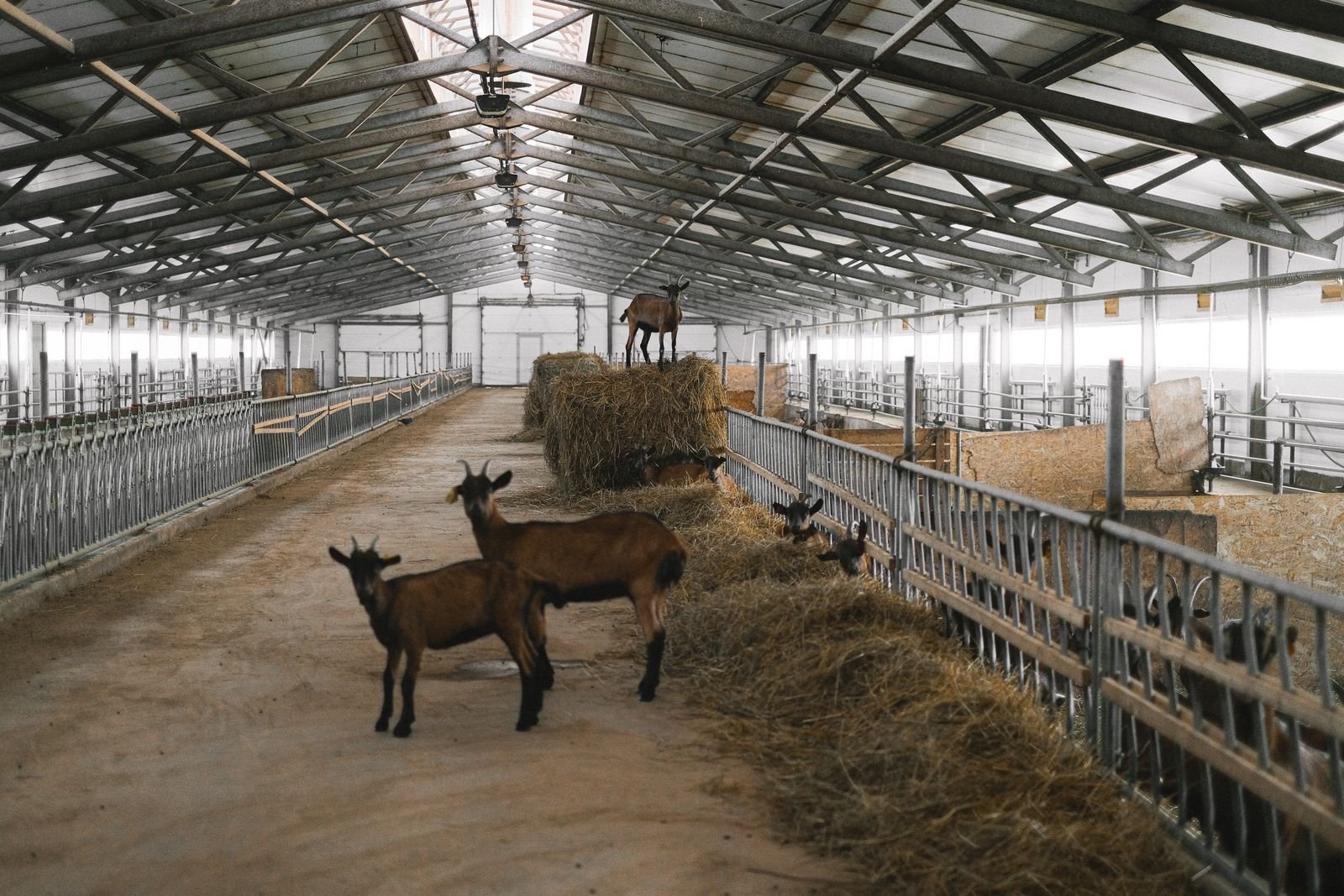
Ventilation is just as important as protection from the weather. A closed, stuffy shed full of ammonia from urine is a perfect place for pneumonia. Most goat housing in South Africa is open-fronted or has walls on three sides, so air moves freely while the goats stay out of the wind. Solid walls up to about goat height, with open or mesh sections above, work well.
Roof
Corrugated iron is the most common roof for goat housing. Insulate it, or paint it white, to reduce heat in summer, as the ARC suggests, and make sure gutters and the overhang keep rain off the bedding.
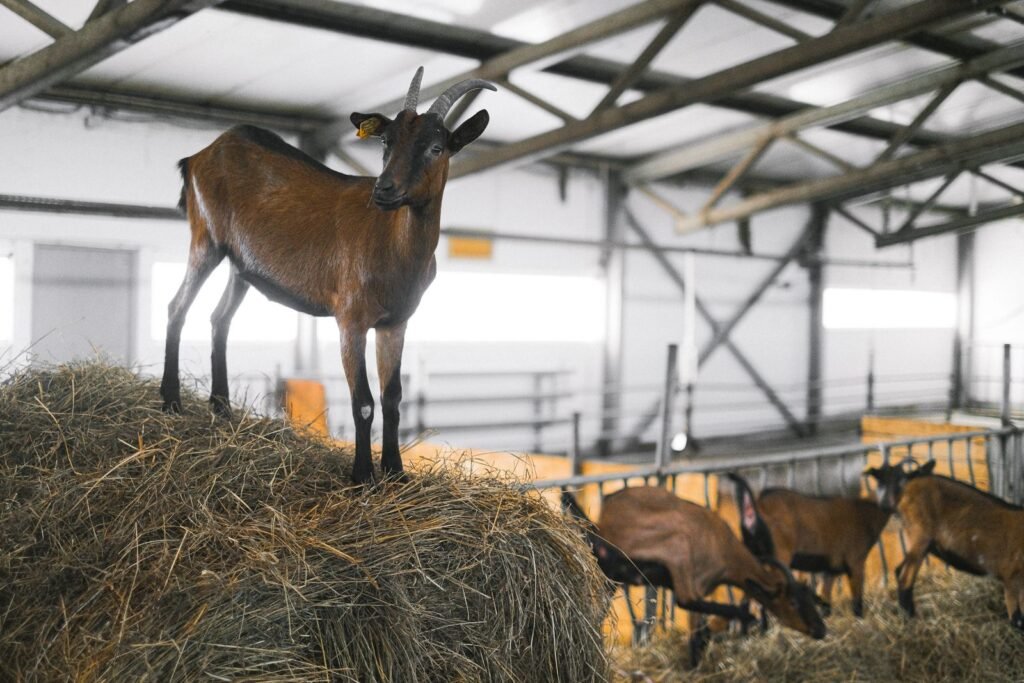
5. Kidding Pens
Does should kid in a clean, dry, draught-free place. Small individual kidding pens, a little bigger than the FAO’s suggestion of about 1.5 m² for a ewe and her lambs, let a doe bond with her kids for the first few days without being disturbed by the herd. Give each pen dry bedding, a small water bucket and a hay rack.
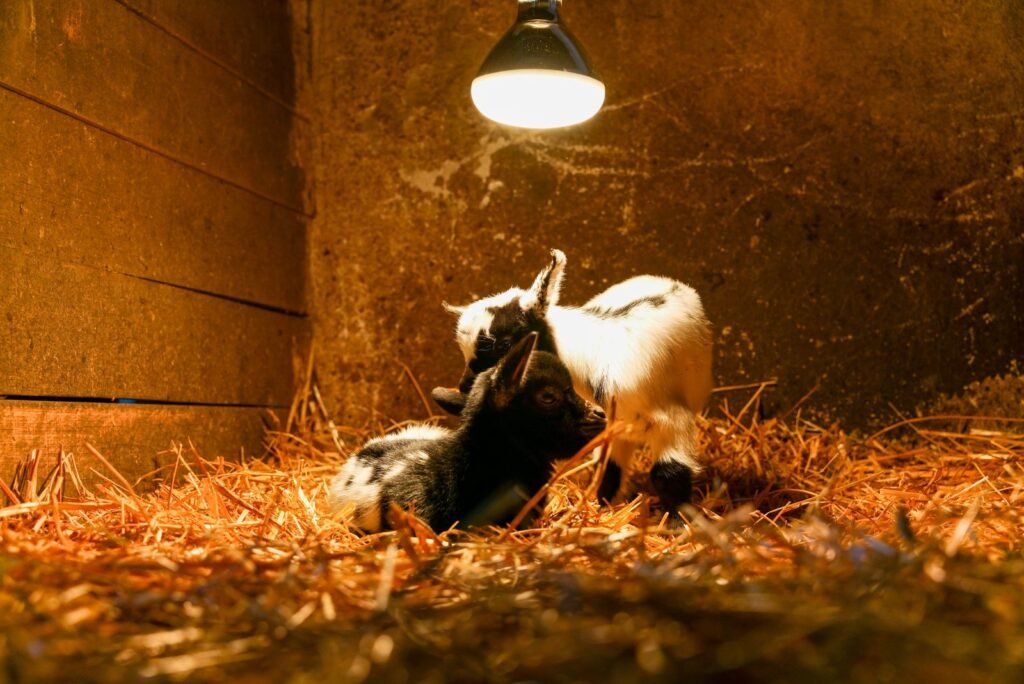
Kids chill easily in cold, wet weather, so in winter a draught-free corner or a carefully installed heat lamp can save lives. Hang heat lamps securely, well away from bedding, because they are a fire risk. Our guide to goat breeding covers kidding and kid care in detail.
6. Feeding and Water
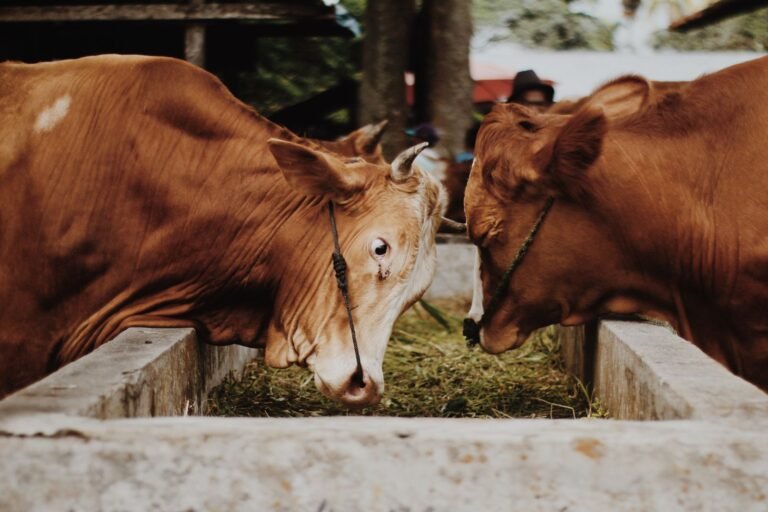
Goats are fussy eaters and waste feed that falls on the floor and gets dirty. Raised feed racks and troughs keep feed clean and reduce worm infection.
- Trough space. The FAO suggests about 35 to 45 cm of trough per adult doe, 25 to 30 cm per kid and 50 cm per buck, so that all the goats can eat at the same time.
- Height. Set racks and troughs at about shoulder height for the goats, and design them so goats cannot climb into or stand in them.
- Hay racks. Use racks with bars or mesh so goats pull out hay a little at a time instead of dragging it onto the floor.
- Water. Clean water must always be available. Raise water troughs or buckets so they do not get fouled with droppings, and clean them often.
Our guide to feeding goats covers rations, licks and supplementary feed.
7. Kraals and Fencing
Goats are famous escape artists. They climb, jump, crawl under and push through fences that would hold cattle or sheep. Good goat fencing is tall enough to stop jumping, tight enough to stop pushing and close enough to the ground to stop crawling.
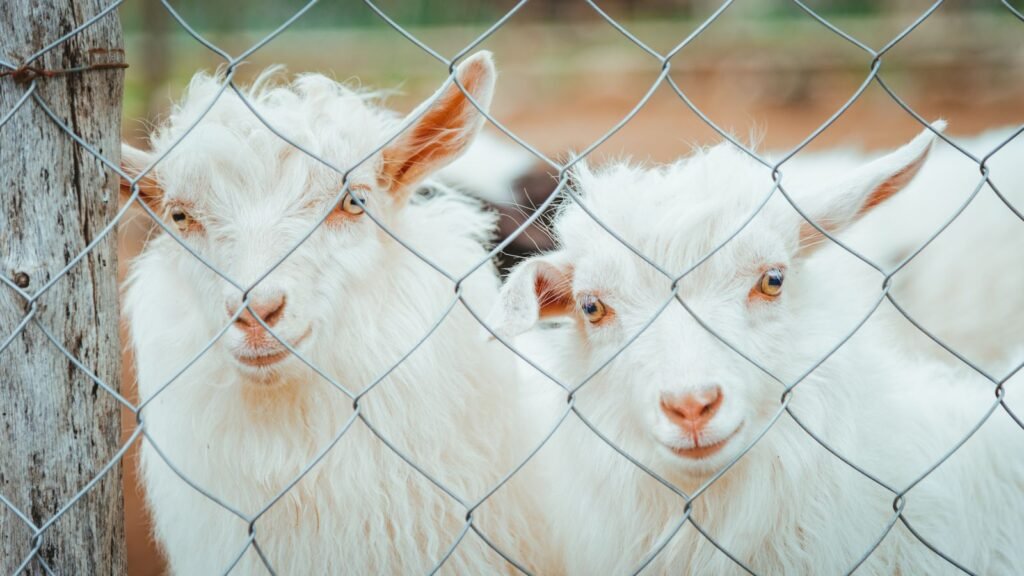
- Mesh. A Farmer’s Weekly fencing article recommends woven wire with small mesh holes so goats cannot get their heads stuck, with strong corner posts of 15 to 20 cm in diameter set at least 1 m deep.
- Electric strands. Many farmers add electric strands to existing fences, especially at nose height and near the ground, to keep goats in and predators out.
- Night kraals. A secure goat kraal near the house, built with predator-proof mesh or solid walls, is the simplest way to cut night losses to jackals and caracals. Some farmers also use livestock guardian dogs.
- Handling facilities. A small crush, race and holding pen make dosing, vaccinating, foot trimming and loading quicker and safer.
8. Hygiene and Biosecurity
Clean, dry goat housing is your first line of defence against disease. Clean out wet bedding and manure regularly, keep feed and water clean, and do not let goats graze or sleep in muddy, contaminated areas, which spread worms and coccidiosis.
Keep new goats apart from your herd before mixing them in. The ARC guide recommends quarantining new animals for at least 14 days, and many farmers keep them separate for longer. Our guide to goat diseases in South Africa covers pneumonia, coccidiosis, worms and the other problems that poor housing makes worse.
Common Goat Housing Mistakes
- Building in a low, wet spot where water collects.
- Closing the shed up so tightly that air cannot move.
- Crowding too many goats into too small a space.
- Feeding hay and concentrates on the floor.
- Fences that goats can jump, climb or crawl through.
- Leaving goats out in the veld at night in predator areas.
- No separate pens for kidding, sick goats or new arrivals.
Starting out? Our guide to goat farming in South Africa covers planning, breeds and costs.
Frequently Asked Questions
How much space does a goat need in a shelter?
As a guide, about 1 to 1.5 m² for an adult doe, more for large Boer goats and pregnant does, about 2.5 to 3 m² for a buck and 0.3 to 0.5 m² for a kid.
Do goats need a goat shelter at night?
In most areas, yes. A dry shelter or secure kraal protects goats from rain, cold and predators, which do most of their damage at night.
What is the best floor for goat housing?
A raised slatted floor keeps goats clean and dry, especially in wetter areas. A well-drained solid floor with dry bedding also works if it is cleaned regularly.
How high should a goat fence be?
High enough that your goats cannot jump or climb it, with no gaps at the bottom. Woven mesh with small holes, often with electric strands added, works best.
Why do goats get pneumonia in shelters?
Usually because of damp bedding, draughts, poor ventilation, ammonia from urine, or crowding. Dry, airy and uncrowded goat housing prevents most cases.
Do goats need a separate kidding pen?
It helps a lot. A small, clean pen lets a doe bond with her kids and keeps them safe from the rest of the herd for the first few days.
How do I protect goats from jackals?
Kraal goats at night close to the house, use predator-proof fencing or electric strands, and consider livestock guardian dogs.
Final Thoughts
Good goat housing keeps goats dry, airy, uncrowded and safe. It does not have to be expensive: a well-sited, open-fronted shelter with a dry floor, raised feeders, clean water, kidding pens and a predator-proof kraal does most of the work. Get the housing right and you will see fewer sick goats, more kids raised and less money lost. If you are building or growing a herd, have a look at our Boer goats for sale, or send us your requirements and we will get back to you with a written quote, including delivery to your farm.
Looking to buy goats?
Tell us the breed, age group, quantity and delivery area. We reply with availability, pricing and transport costs, usually within one working day.
DRM LIVE STOCK is a registered South African livestock company (Company No. K2023207798, VAT No. 4640323079) based at 135 Rocklands Rd, Uitenhage Farms, Gqeberha. We supply cattle, goats, sheep and pigs, with delivery across South Africa.