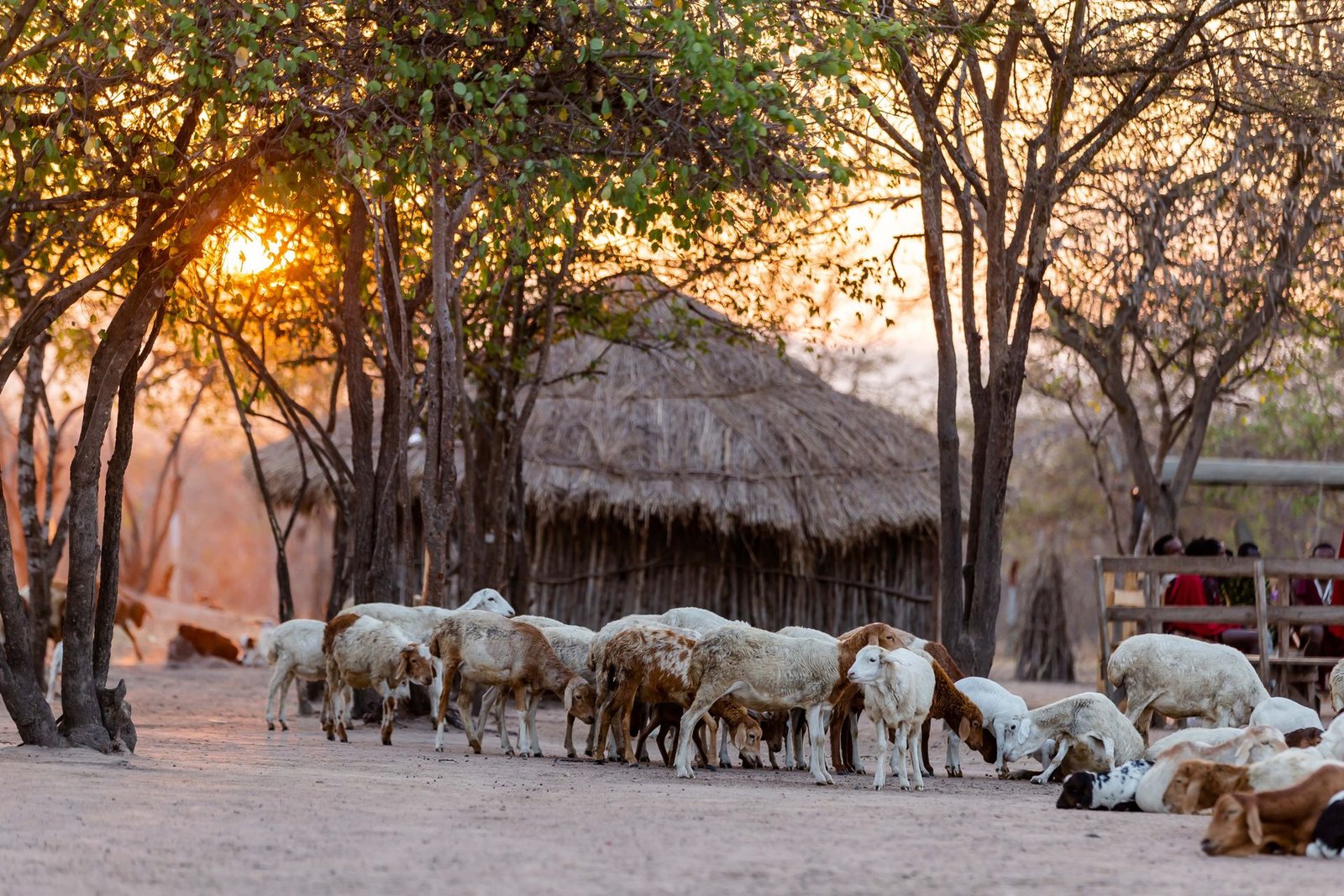
Meatmaster sheep were bred by South African farmers for South African conditions. They are hair sheep, so there is no shearing. They come from a Damara base, so they handle heat, drought and long walks to water. And they were selected hard for muscling and fertility, so they still produce a lamb that grades well at the abattoir. For a farmer on extensive veld who wants a low-input meat sheep, that is a hard combination to beat.
This guide covers everything you need to know about Meatmaster sheep in South Africa: where the breed came from, what the breed standard looks for, how big they get and how fast the lambs grow, how they perform on the veld, what they cost at recent auctions, and what to check before you buy your first flock.
Meatmaster Sheep at a Glance
| Trait | Meatmaster |
|---|---|
| Origin | South Africa, developed by farmers from the late 1980s and 1990s |
| Main parent breeds | Damara base, crossed mainly with Dorper; some breeders also used Ile de France and other meat breeds |
| Recognition | Breed society formed in 2005, government recognition in 2007 |
| Coat | Short, shiny hair over a fine woolly undercoat that sheds naturally; never shorn |
| Colour | Any colour or combination, with good skin pigmentation |
| Tail | Not a fat-tailed breed; tail neat, with only moderate fat |
| Mature weight | Ewes about 60 to 70 kg, rams about 85 to 105 kg (ProAgri) |
| Lamb growth | About 27 kg at 100 days, about 38 kg at five months |
| Best suited to | Extensive veld, hot and dry regions, low-input meat production |
1. Where Meatmaster Sheep Come From
The Meatmaster was not developed at a research station. It grew out of the work of several farmers in different parts of the country who, in the late 1980s and 1990s, independently started crossing the indigenous Damara with meat breeds. Farmer’s Weekly traces the early work to farms near Meyerton, Venterstad, Hopetown and Bloemfontein.
The aim was simple: keep the Damara’s toughness, fertility and walking ability, but add the muscling and carcass quality that abattoirs pay for, and get rid of the big fat tail. Many breeders used the Dorper, and some used the Ile de France and other meat breeds. One of the pioneers described the Damara and Dorper cross as a match made in heaven.
According to the Meatmaster Sheep Breeders’ Society of South Africa, the first society was formed at Brandfort in the Free State on 4 February 2005. It received government recognition in 2007, and the Meatmaster was later classified as a locally adapted South African breed. Today there are Meatmaster breeders in all nine provinces, and the breed has gone to Namibia and further afield to countries such as Australia and Canada.
2. What Meatmaster Sheep Look Like
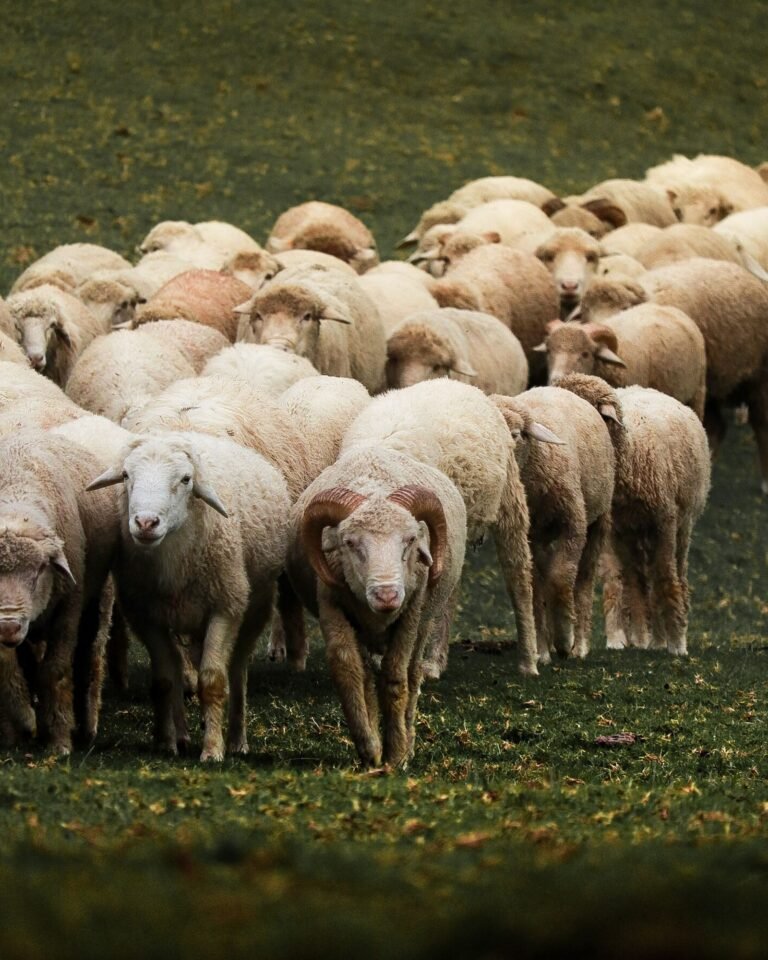
Walk through a Meatmaster flock and the first thing you notice is the colour. Unlike the Dorper, there is no set colour pattern. The breed standard, as summarised by Farmer’s Weekly, allows any colour or combination of colours, as long as the skin is well pigmented. You will see white, brown, red, black and spotted sheep in the same camp.
The other key points of the standard are:
- Coat: short, shiny hair with a fine, fluffy woolly undercoat. Meatmasters must never be shorn, so a coat that sheds naturally is essential.
- Tail: well attached, preferably not longer than the hock, and neat, wedge-shaped or thin, with only a moderate covering of fat. The Meatmaster is not a fat-tailed sheep.
- Body: medium-sized and functional, with good muscling, strong legs and feet, and clear male or female character.
- Horns: polled animals are preferred.
3. Size and Growth of Meatmaster Sheep
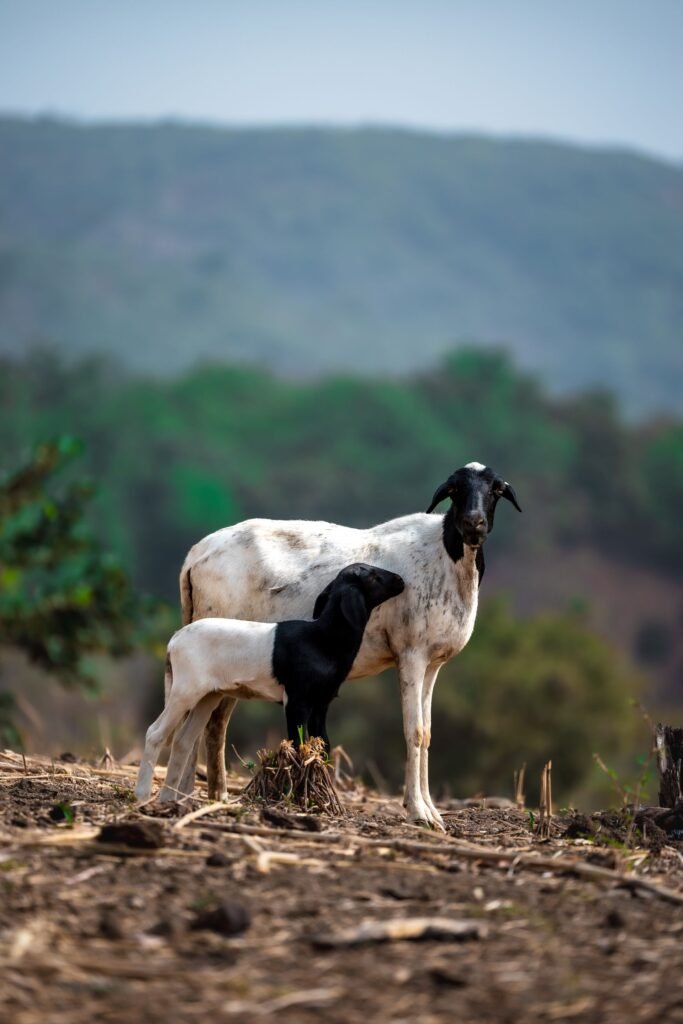
Meatmaster sheep are medium-sized. Breed profiles published by ProAgri put mature rams at about 85 to 105 kg and ewes at about 60 to 70 kg. Production figures quoted by Farmer’s Weekly give lower average weights, so expect a fair amount of variation between flocks and between veld types.
The growth figures quoted for the breed are practical rather than spectacular:
- average birth weight of about 3.4 kg;
- about 27 kg at 100 days (weaning);
- about 38 kg live weight at five months, giving a carcass of about 17.5 kg;
- about 47 kg at 270 days.
That means a Meatmaster lamb can reach market weight off the ewe and the veld without an expensive finishing phase. A Dorper or Ile de France cross may grow faster on good feed, but the Meatmaster is designed to keep growing when conditions are less forgiving.
4. Fertility and Mothering
Fertility is one of the main reasons farmers choose Meatmaster sheep, and it comes straight from the Damara side. The production standards quoted by Farmer’s Weekly include:
- first lambing at about 14 months;
- about 115 lambs born per 100 ewes;
- about 110 lambs weaned per 100 ewes.
The difference between lambs born and lambs weaned is small, and that is the point. Meatmaster lambs are known for being strong and active at birth, and the ewes are good mothers. On extensive farms, where lambs are born in the veld with little help, a high survival rate matters more than a high lambing percentage on paper.
Many commercial breeders keep the rams with the ewes all year and let them lamb throughout the year. Others prefer set mating seasons so they can plan lambing, supplementation and marketing. Both systems work, as long as you keep records of which ewes produce and which ones do not. Our guide to sheep breeding explains how to plan a mating season, scan ewes and prepare for lambing.
5. Hardiness on the Veld
This is where Meatmaster sheep really earn their place. The Damara is a hardy, walking sheep from Namibia, and the Meatmaster has kept much of that ability. The breed society lists resistance to internal and external parasites, hardiness in drought, disease resistance and a strong flocking instinct, which helps protect the flock against predators.
One Northern Cape breeder told Farmer’s Weekly that his Meatmasters only drink every two or three days in extensive conditions, and that just 20 mm of rain is enough to get the shrubs growing again. At a 2026 club auction at Sutherland, reported by African Farming, the sheep on offer came from drought-stricken areas around Sutherland, Calvinia, Fraserburg and Laingsburg.
Hardy does not mean maintenance-free. Meatmasters still need clean water, a sound vaccination programme, parasite monitoring and supplementation in a bad winter or drought. But they will usually hold their condition and keep breeding when other breeds start to struggle. Our guide to common sheep diseases in South Africa covers the main threats and how to prevent them.
6. Carcass Quality and Market
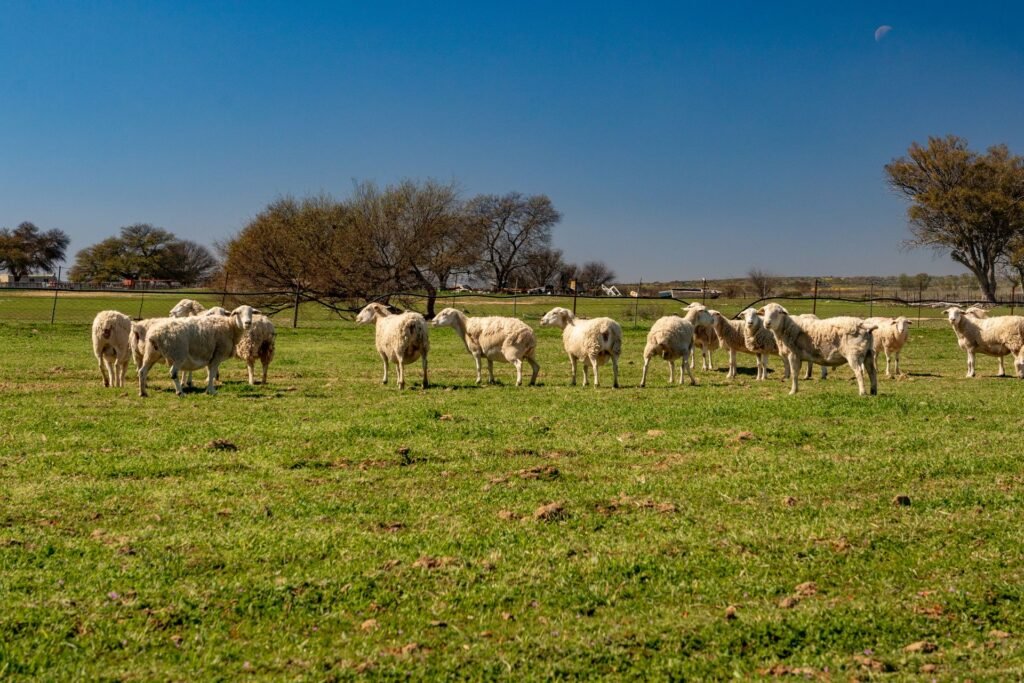
The Meatmaster was selected for good muscling and even fat distribution, so that lambs carry their fat on the body and not in the tail. That helps them grade well at the abattoir. A breeder interviewed by Farmer’s Weekly said that 70% to 85% of his lambs produced carcasses in the ideal fat classes that earn the best prices.
Meatmaster lambs are sold through the normal South African lamb market, so you are paid on carcass weight and grade like any other lamb. There is no premium for the breed name at the abattoir. Your profit comes from lower costs: no shearing, fewer losses, less dosing and supplementation, and more lambs weaned per ewe.
7. Meatmaster Sheep Prices at Recent Auctions
Meatmaster breeding stock has sold well over the past two seasons. A few published examples:
- Kalahari Karoo Meatmaster Group, Koster, February 2025: 25 rams averaged R12,600; three-in-one ewes R9,800, ewes with lambs R8,873, pregnant ewes R4,648 and open ewes R3,809. The top ram sold for R32,000, according to African Farming.
- Elandsnek Meatmaster auction, Hopetown, June 2025: 69 rams averaged about R20,413, with a top price of R95,000, as reported by African Farming. Herd rams averaged R7,050 and pregnant ewes about R7,647.
- Transveld Meatmaster Club, Pretoria, February 2026: rams averaged R11,833, registered rams R14,300, ewes R4,662 and pregnant ewes R5,101.
- Sutherland Karoo Meatmaster Club, March 2026: 42 rams averaged R13,107 (top R30,000), 88 pregnant ewes R4,070 and 124 open ewes R3,579.
For commercial farmers, the useful range is roughly R3,500 to R5,500 for ewes and R11,000 to R15,000 for a good ram, with top stud animals costing much more. Our comparison of Dorper vs Meatmaster sets these prices against Dorper prices and works out what a starter flock costs.
Pros and Cons of Meatmaster Sheep
| Advantages | Things to consider |
|---|---|
| No shearing, low labour | Lambs may grow slower than Dorper or Ile de France crosses on good feed |
| High fertility and good lamb survival | Wide variation in type between flocks, as the breed is still young |
| Hardy in heat, drought and on long walks to water | No wool income |
| Good resistance to parasites and tick-borne disease | Breeding stock, especially rams, can cost more than Dorper stock |
| Lambs grade well without a fat tail | Mixed colours may not suit buyers who want a uniform flock |
Is the Meatmaster Right for Your Farm?
Meatmaster sheep are a strong choice if you farm extensively in the Karoo, Kalahari, Northern Cape, Free State or bushveld, if labour is limited, or if you have struggled with losses in harder breeds. They also suit new farmers who want a forgiving sheep that does not need shearing or intensive care.
If you farm on irrigated pasture or plan to finish lambs in a feedlot, a faster-growing breed or a terminal cross may pay better. Many farmers use both: Meatmaster ewes as a hardy mother line, and a Dorper or Ile de France ram for terminal lambs. Our guide to Ile de France sheep explains how that cross works.
What to Check Before You Buy Meatmaster Sheep
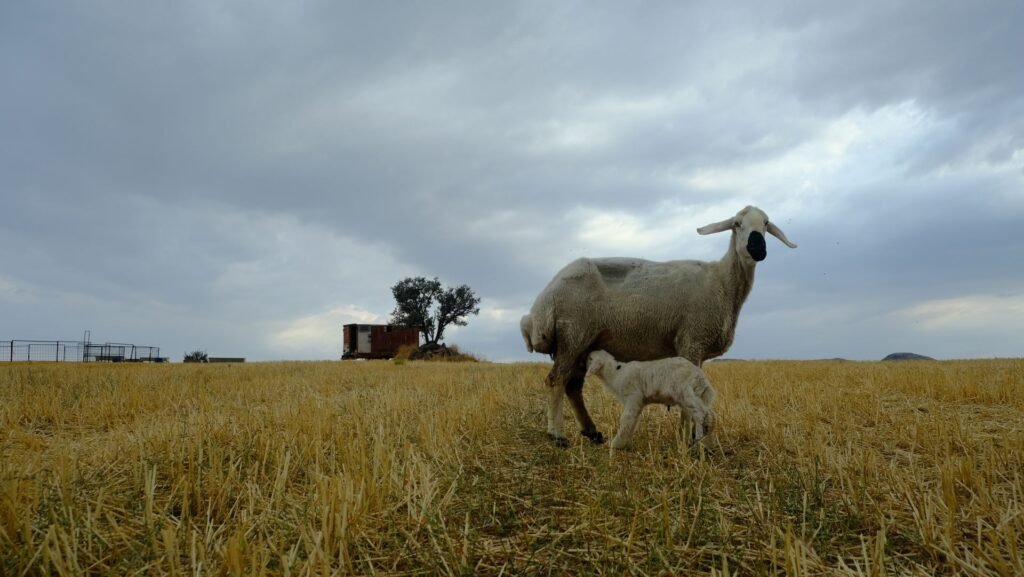
- Brucella ovis tests for rams. Reputable sales have rams tested and certified negative. Never buy an untested ram.
- Pregnancy status. Pregnant ewes should be scanned or confirmed, and the quote should say so.
- Feet, teeth and udders. Check every ewe, and avoid broken mouths or damaged udders.
- Coat shedding. A good Meatmaster sheds its winter coat cleanly. Heavy wool that does not shed is a fault.
- Tail. A long, fat tail points to too much fat-tailed influence and does not meet the breed standard.
- Records. Ask for the vaccination and dosing history, and registration papers if you are buying stud animals.
- Paperwork. Buy from a registered business, get a written quote and pay only against an official invoice.
Our guide to buying livestock in South Africa covers each step, and our sheep farming guide explains housing, feeding and health in more detail.
Frequently Asked Questions
What breeds make up the Meatmaster?
The Meatmaster was developed on a Damara base, crossed mainly with the Dorper. Some breeders also used the Ile de France and other meat breeds. The goal was a hardy, fertile hair sheep with good muscling and no fat tail.
Do Meatmaster sheep need shearing?
No. Meatmasters are hair sheep with a short woolly undercoat that sheds naturally. The breed standard says they must never be shorn.
How big do Meatmaster sheep get?
ProAgri puts mature rams at about 85 to 105 kg and ewes at about 60 to 70 kg. Lambs reach about 27 kg at 100 days and about 38 kg at five months.
Are Meatmaster sheep fat-tailed?
No. Although the Damara is a fat-tailed breed, the Meatmaster was selected for a neat tail with only moderate fat, so that lambs carry their fat on the carcass.
How much do Meatmaster sheep cost?
At 2026 club auctions, commercial ewes averaged about R3,500 to R5,100 and rams about R11,800 to R13,100. Top stud rams sold for between R30,000 and R95,000 at auctions in 2025 and 2026.
Are Meatmaster sheep good for beginners?
Yes. They are hardy, fertile, easy lambing and need no shearing, which makes them forgiving for new farmers. You still need good basic management, including vaccination, parasite control and clean water.
Where can I buy Meatmaster sheep in South Africa?
You can buy at club and stud auctions, through the breed society’s breeder list, or from established suppliers. DRM Livestock supplies Meatmaster sheep across South Africa with delivery arranged.
Final Thoughts
Meatmaster sheep were built for exactly the conditions most South African sheep farmers face: hot summers, dry winters, long distances and rising costs. They will not always produce the heaviest lamb, but they wean a lot of lambs with little help and keep going when the veld is poor. If you are building a low-input meat flock and want to see what is available, have a look at our Meatmaster sheep for sale, or send us your requirements and we will get back to you with a written quote, including delivery to your farm.
Looking to buy sheep?
Tell us the breed, age group, quantity and delivery area. We reply with availability, pricing and transport costs, usually within one working day.
DRM LIVE STOCK is a registered South African livestock company (Company No. K2023207798, VAT No. 4640323079) based at 135 Rocklands Rd, Uitenhage Farms, Gqeberha. We supply cattle, goats, sheep and pigs, with delivery across South Africa.