Description
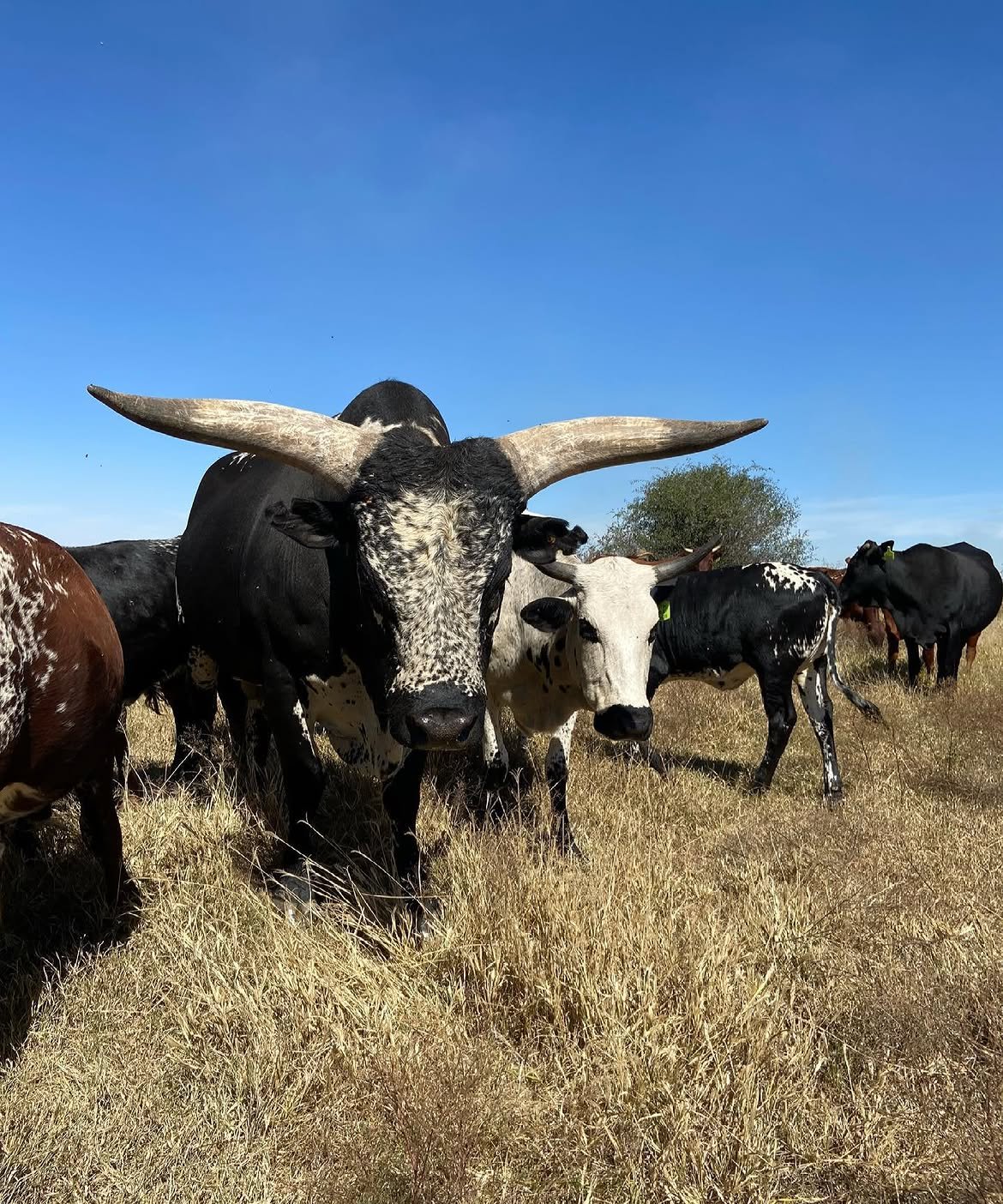
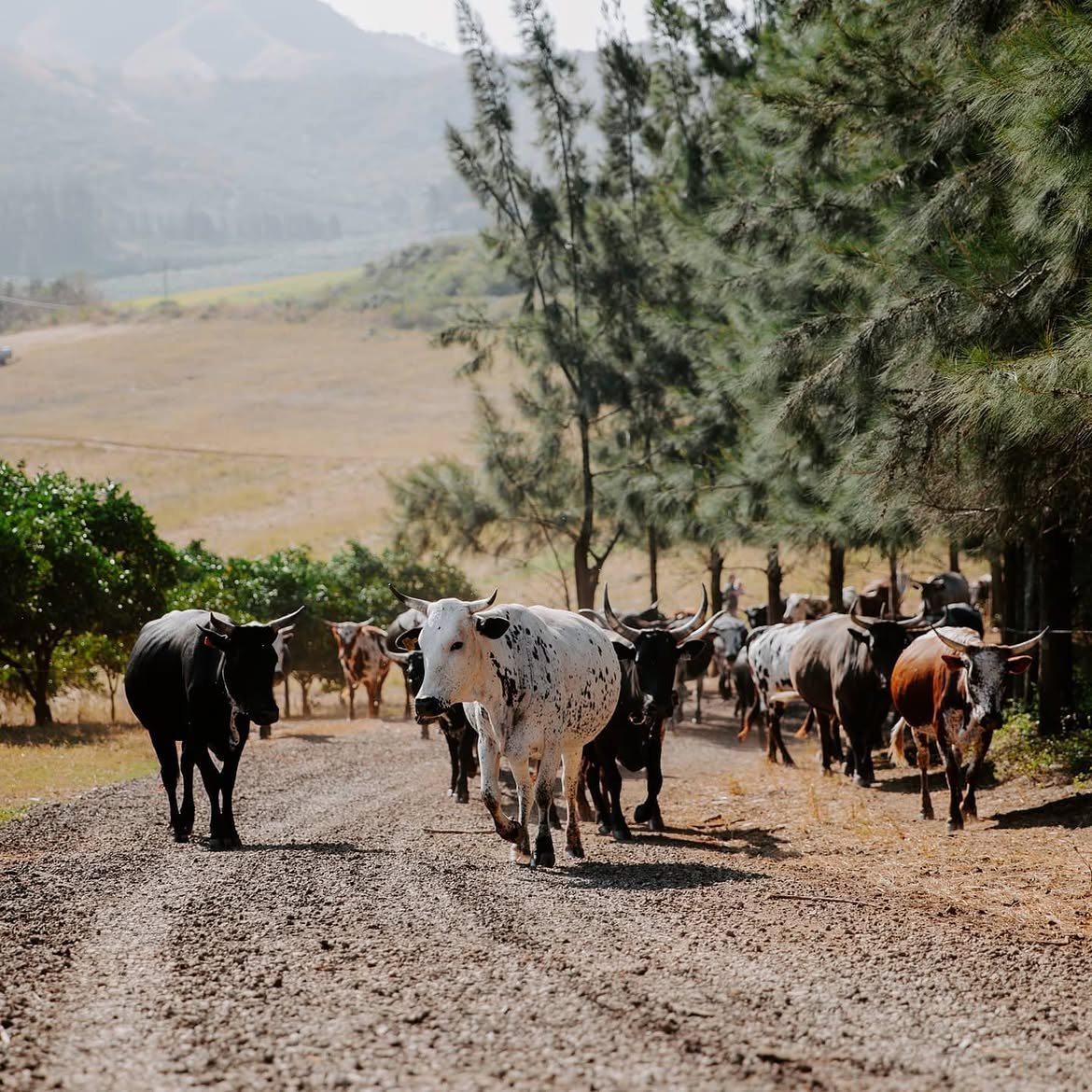
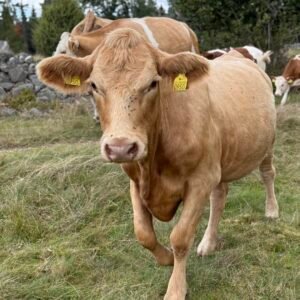
Nguni cattle for sale in South Africa are a different kind of investment. The Nguni is not the biggest cow in the sale pen, but she is often the one still calving every year when the veld is dry, the ticks are bad and the other cows are battling. For many farmers, that is exactly the cow they need.
DRM Livestock supplies Nguni calves, young cattle, yearling heifers, pregnant cows and breeding bulls, with delivery arranged to your farm anywhere in South Africa. Tell us what you need and we will send you a written quote with current prices and transport.
Nguni Cattle for Sale: What We Supply
We supply Nguni cattle in 5 categories, so you can buy exactly what your herd needs rather than whatever happens to be in the pen.
| Category | Age or stage | Best for |
|---|---|---|
| Nguni calves | 1 to 6 months | Low-cost entry into the breed, or growing out on veld |
| Young Nguni cattle | 7 to 18 months | Growing out, or selecting future breeding cows |
| Yearling Nguni heifers | 12 to 18 months | Building or growing a breeding herd |
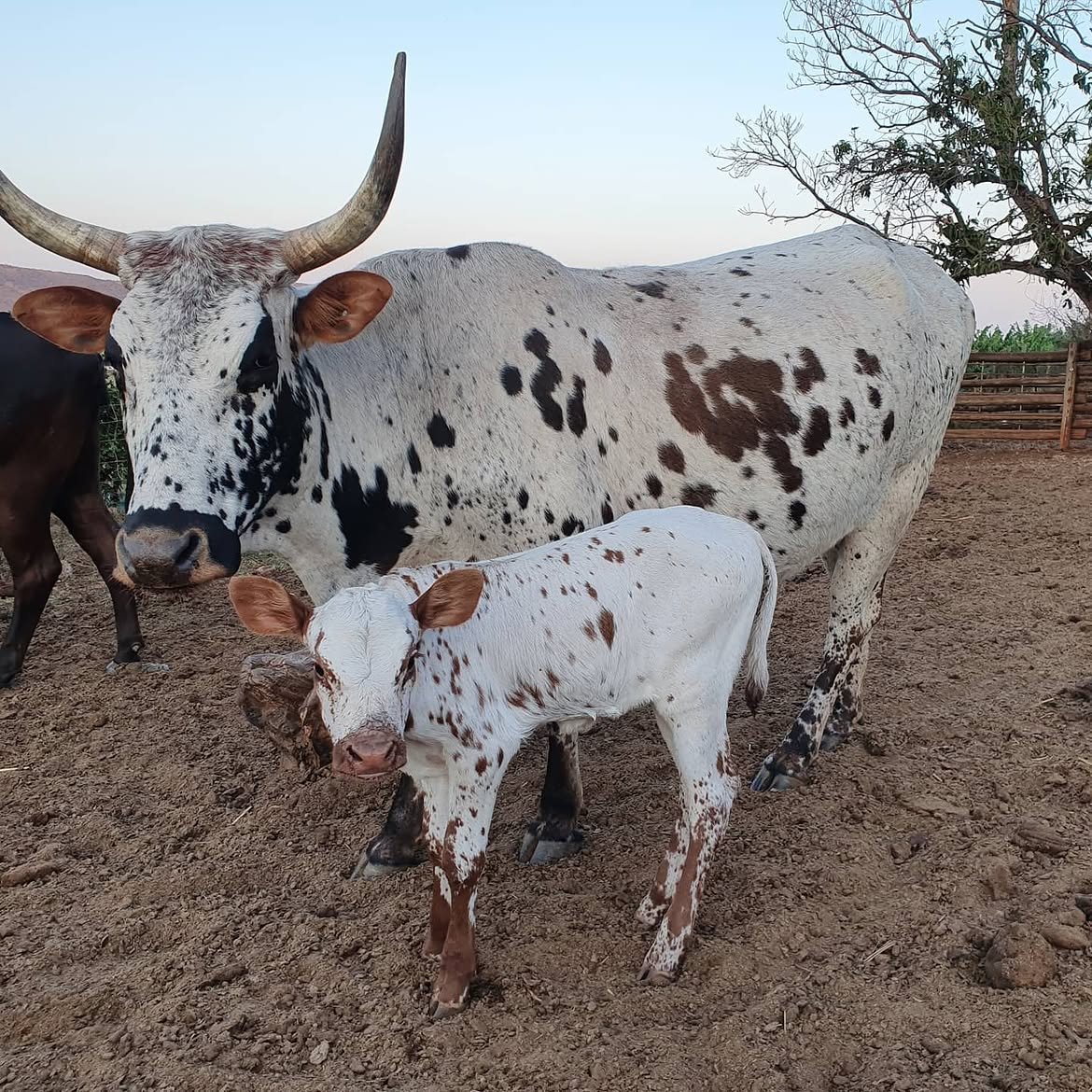
| Pregnant Nguni cows | In calf | Adding proven females that calve soon after arrival |
| Nguni breeding bulls | Adult | Breeding hardy, fertile Nguni or Nguni-cross calves |
Prices for our Nguni cattle for sale are on request, because they depend on the category, the number of animals and the market at the time. Every written quote includes current prices, availability and transport to your farm, usually within one working day.
Why Farmers Choose Nguni Cattle
The Nguni is an indigenous Sanga breed that has lived in southern Africa for centuries, shaped by drought, disease and ticks long before modern selection. That history shows in the animal:
- Tick and disease resistance: Ngunis carry fewer ticks than most breeds and cope well with the diseases they spread, which saves on dipping and losses.
- Fertility and longevity: Nguni cows are known for calving regularly and staying productive for many years.
- Easy calving: small calves at birth mean few calving problems, even in heifers.
- Efficiency: a moderate frame means lower maintenance needs, so more cows can be run on the same veld.
- Hardiness: they walk well, browse as well as graze, and hold condition on poor veld.
- Beautiful hides: the famous multi-coloured patterns are unique to each animal and valued in their own right.
For breed standards and registered breeders, visit the Nguni Cattle Breeders’ Society.
Where Nguni Cattle Do Best
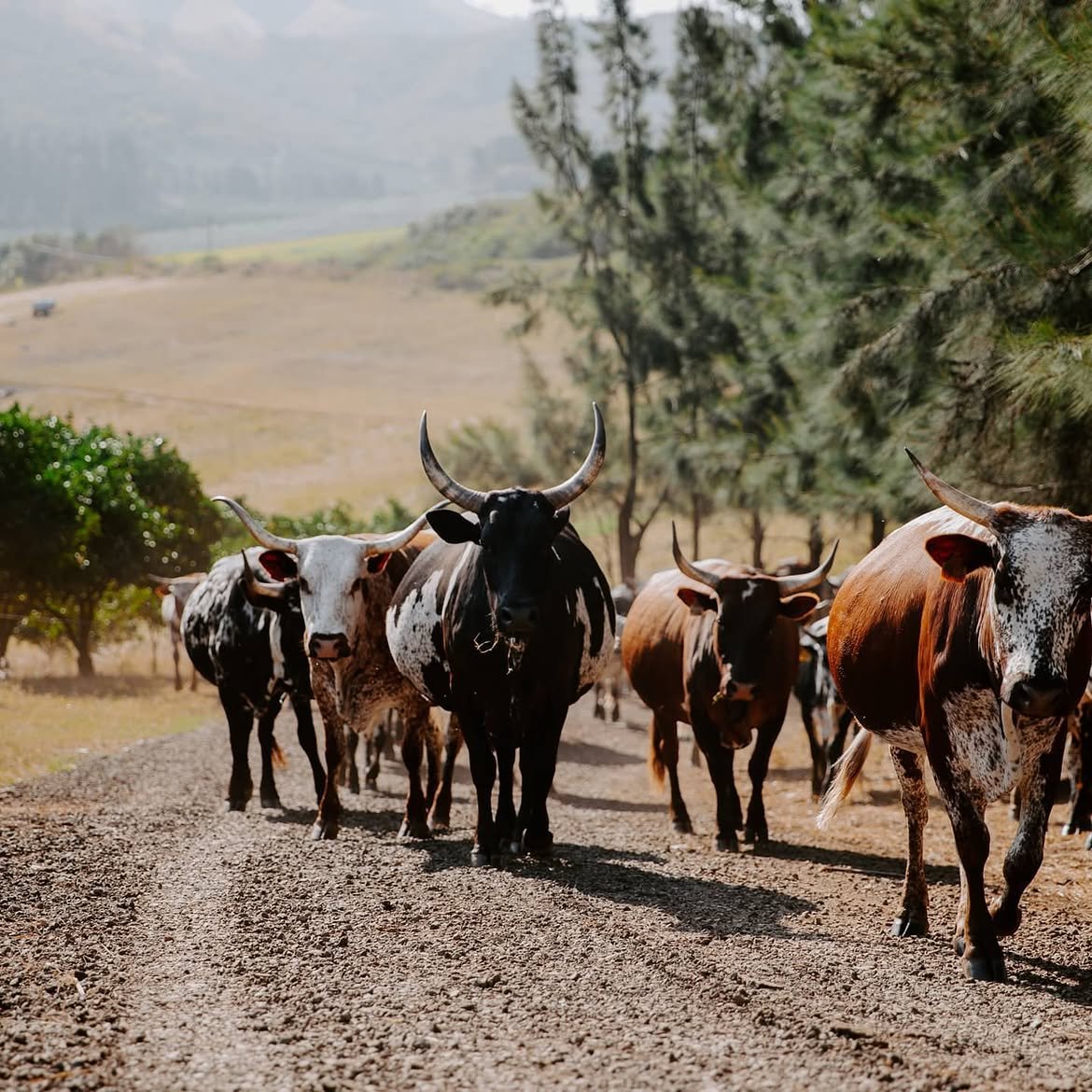
Ngunis shine where other breeds struggle: hot, tick-heavy bushveld, sourveld and coastal areas, communal grazing and low-input farms. They are a popular choice in KwaZulu-Natal, the Eastern Cape, Limpopo and Mpumalanga, but do well almost anywhere with sensible stocking.
The Nguni also makes an excellent crossbreeding cow. Mated to a bigger bull such as a Bonsmara, Angus or Simmentaler, she produces heavier weaners while keeping much of her own hardiness and fertility. Many commercial farmers keep a Nguni or Nguni-cross cow herd for exactly that reason.
Choosing the Right Nguni Animals
Not all Nguni cattle for sale suit every farm. Match the animal to the job you need it to do.
Nguni calves and young cattle
Calves and young cattle are an affordable way to start a Nguni herd. Look for alert, active animals that are well grown for their age. Remember that Ngunis are moderate in size, so judge them against other Ngunis, not against a big-framed breed.
Nguni heifers
A good Nguni heifer can stay in your herd for a decade or more. Look for a deep body, sound feet and legs, a good udder shape and a calm but alert temperament. Well-grown Nguni heifers reach breeding size fairly early and calve easily.
Pregnant Nguni cows
Pregnant cows are the quickest way to calves. Nguni cows usually calve without help, but handle them gently and plan transport around their calving dates.
Nguni bulls
Choose a bull that is sound on his feet and legs, well muscled for the breed and fertile, with good testicle development. If you are breeding Nguni replacements, a pure Nguni bull keeps the breed’s hardiness in your herd. If you are only selling weaners, a bigger terminal bull on Nguni cows can add weight. Have any bull tested for breeding soundness before the season.
What to Check Before You Buy
Before you commit to any Nguni cattle for sale, from us or anyone else, check:
- Feet and legs: watch the animal walk. A cow on veld walks every day, and a bull has to cover cows for a whole season.
- Condition: ribs not showing, but not over-fat. Fat bulls and heifers often have fertility problems.
- Udder and teats on cows and heifers: four functional teats, no lumps, no pendulous udders.
- Testicles on bulls: firm, even and well developed. Ask for a breeding soundness examination by a vet.
- Temperament: calm cattle are easier and safer to work, and temperament is partly inherited.
- Paperwork: a registered brand, a document of identification, vaccination history and, where required, a veterinary movement permit.
Delivery and Paperwork
Our Nguni cattle for sale are delivered to farms across South Africa, including the Eastern Cape, Western Cape, Northern Cape, Free State, KwaZulu-Natal, Gauteng, Mpumalanga, Limpopo and North West. Transport is quoted separately, because it depends on the number of animals, the distance and the route.
Because of the current foot-and-mouth disease controls, cattle may only move with the correct documents and, in affected areas, an official veterinary movement permit. We handle the identification documents with every sale and work with the state vet on movement requirements, so your cattle arrive legally and traceably. On arrival, keep new animals apart from your herd for at least 28 days and give them time to settle before you work them.
How to Order Nguni Cattle
- Tell us what you need: the number of animals, the category (calves, young cattle, heifers, pregnant cows or bulls), and your farm location.
- Get a written quote: we send current prices, availability and transport costs, usually within one working day.
- Confirm and pay: only into our business account, against an official invoice from DRM LIVE STOCK (Company No. K2023207798).
- Delivery: we arrange transport and paperwork to your farm.
Read more on our how to buy page, or request a Nguni quote now.
Frequently Asked Questions
How much do Nguni cattle cost in South Africa?
It depends on the category, the number of animals and the market at the time. We send current prices, availability and transport costs with every written quote.
Are Nguni cattle good for beginners?
Yes. Ngunis are hardy, fertile and easy calving, with fewer tick problems than most breeds, which makes them very forgiving for new farmers.
Are Nguni cattle good for beef?
Yes. Nguni beef is lean and flavourful. Ngunis are smaller than commercial beef breeds, so many farmers cross Nguni cows with a bigger bull to produce heavier weaners.
Why are Nguni cattle so many different colours?
The Nguni’s varied colours and patterns are a natural feature of the breed. No two hides are the same.
Do you deliver Nguni cattle to my farm?
Yes. We arrange delivery across South Africa. Transport is quoted separately, based on the number of cattle and the distance.
Do the cattle come with documents?
Yes. Every animal comes with a document of identification, and we work with the state vet on any movement permits required under the foot-and-mouth controls.
Looking for Nguni Cattle for Sale? Request a Quote
If you are ready to buy Nguni cattle, request a quote with the number and type of animals you need and your farm location. For more on running a cow herd, read our guide to cattle farming in South Africa, or compare the Bonsmara and Brahman. Torn between two breeds? Read our side-by-side comparison of Bonsmara vs Nguni. For current auction results and what drives the price of each category, see our guide to Nguni cattle prices in South Africa. You may also find our guides to weaner prices in South Africa, cattle diseases and feeding cattle useful.
Reviews
There are no reviews yet.