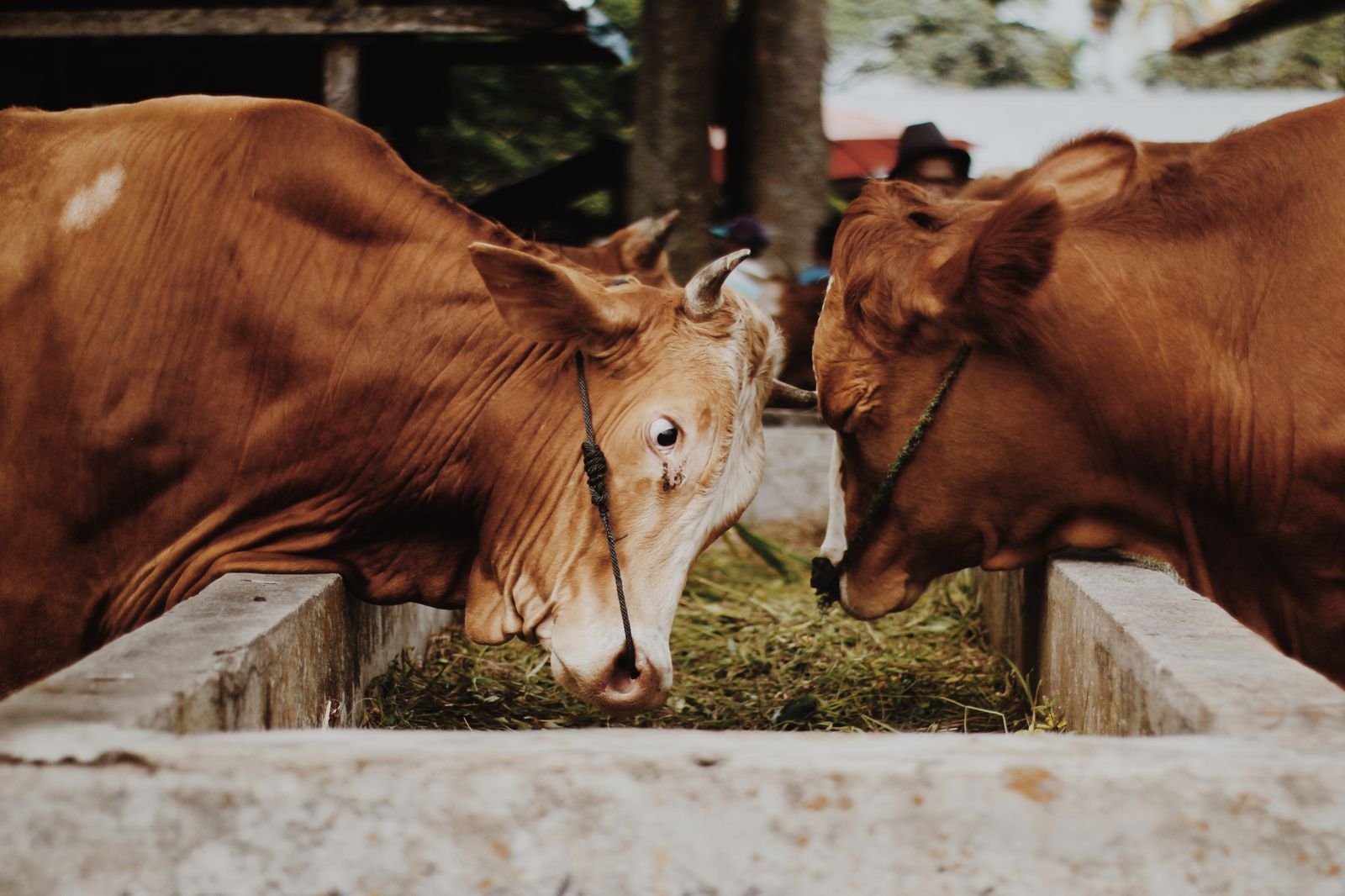
Feeding cattle in South Africa is mostly about managing the veld. Our cattle live on grass for most of the year, and the grass changes from green, protein-rich growth in summer to dry, low-quality standing hay in winter. The job of a cattle farmer is to fill the gaps the veld leaves at each time of year, as cheaply as possible, so that cows calve every year, wean heavy calves and do not lose too much condition in winter.
This guide covers feeding cattle through the year: how much cattle eat and drink, sweetveld and sourveld, summer, transition and winter licks, feeding cows around calving, weaners and bulls, drought feeding, and the most common mistakes. The figures are guidelines from the sources quoted below, so adjust them for your veld, your cattle and your feed supplier’s advice.
Feeding Cattle at a Glance
| Item | Guideline |
|---|---|
| Dry matter intake | About 10 kg a day for a 450 kg animal unit |
| Water | About 60 litres a day for a 500 kg cow in warm weather, more when she is milking |
| Veld protein danger level | Cattle tend to lose mass below about 6% protein |
| Summer lick (Nov to Feb) | Phosphate and trace minerals, about 100 to 200 g a day |
| Transition lick (Feb to Apr) | Protein and phosphate, about 200 to 300 g a day |
| Winter lick (Apr to Aug) | Protein lick, about 400 to 600 g a day |
| Urea limit | No more than 100 g per animal per day |
1. How Much Do Cattle Eat and Drink?
The KwaZulu-Natal Department of Agriculture’s guide to beef cattle on veld defines one animal unit as a 450 kg animal that eats about 10 kg of dry matter a day. That is a useful figure for planning: a herd of 50 such cows needs about 500 kg of dry matter every day, or about 15 tonnes a month. Because hay is roughly 90% dry matter, the same guide points out that you need a little more hay than the dry matter figure, plus whatever is wasted.
When feeding cattle, water matters just as much as feed. Cattle that drink less, eat less. Using a model from New Mexico State University, a 500 kg cow at about 27°C needs roughly 60 litres a day, and milking cows drink considerably more. Hot weather, salty licks and dry feed all push water needs up, so make sure troughs are clean, reliable and big enough for the whole herd.
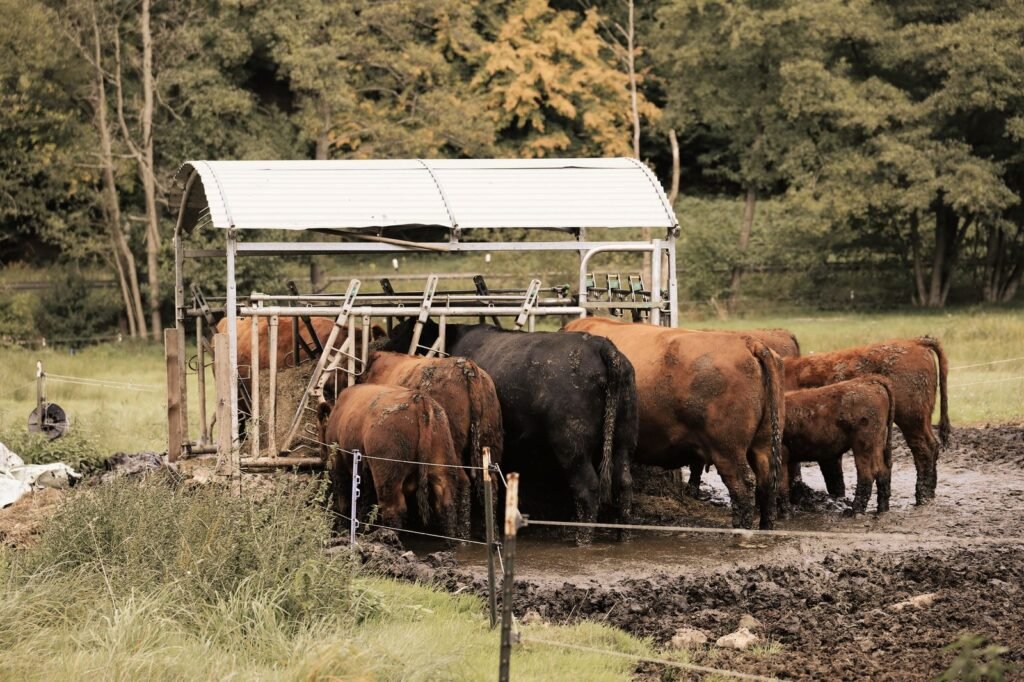
2. Know Your Veld: Sweetveld and Sourveld
Your veld type decides how you approach feeding cattle and which licks you use. In simple terms:
- Sourveld, found in the higher-rainfall eastern parts of the country, grows well in summer but loses its feeding value quickly as it matures. In a Voermol technical article, specialists note that sourveld lacks nutrients from autumn to spring and that protein supplements are needed for six to seven months of the year.
- Sweetveld, typical of drier areas, keeps more of its quality when it dries off, so cattle need less supplement in winter, as long as there is enough grass.
- Mixed veld falls in between.
The KZN guide notes that cattle tend to lose mass once the protein content of the grass falls below about 6% on a dry matter basis. That is the point where a protein lick starts to pay. Good veld management, with sensible stocking rates and rested camps, is still the cheapest feed you have. Our guide to sustainable livestock farming covers rotational grazing and drought planning.
3. Summer: Phosphate and Minerals
Green summer veld usually has enough protein and energy, but much of South Africa’s veld is short of phosphorus. Phosphorus deficiency lowers fertility, slows growth and can cause cattle to chew bones, which carries a risk of botulism. That is why a phosphate lick is the standard summer supplement for feeding cattle on veld.
According to the Voermol article, cattle need at least about 6 g of phosphate a day from a summer lick, depending on the veld, and a mineral lick is typically eaten at about 100 to 200 g per animal a day. Choose a lick formulated for your area, because trace mineral shortages, such as copper, cobalt or selenium, vary from region to region.
4. Autumn Transition: Protein and Phosphate
Feeding cattle in autumn is about bridging the gap. From about February to April, the veld starts to mature and its protein drops. A transition lick, combining protein and phosphate, helps cattle keep condition as the grass changes. The Voermol article suggests about 50 to 80 g of protein and 6 to 9 g of phosphate a day in this period, with typical lick intakes of about 200 to 300 g. This is also a good time to wean calves and check cow condition before winter.
5. Winter: Protein Licks
Winter veld, especially sourveld, is low in protein. Without enough protein, the rumen microbes cannot digest dry grass properly, so cattle eat less and lose condition even when there is plenty of grass standing. A winter protein lick, the most important cattle feed of the year on sourveld, feeds the rumen so that cattle can use the dry grass.
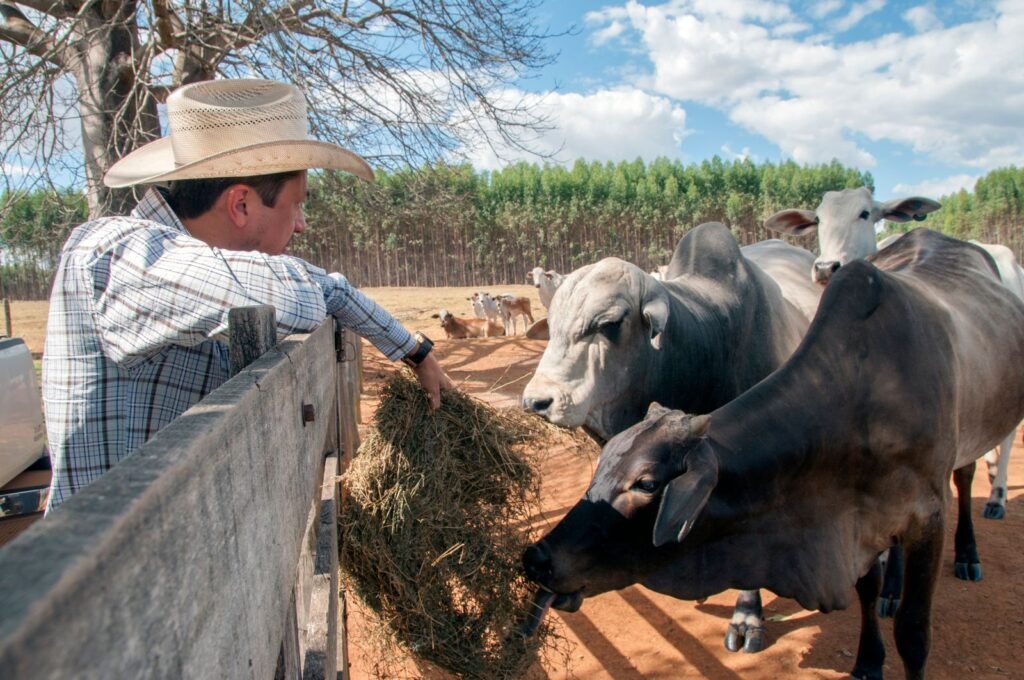
- How much. The Voermol article gives about 180 to 240 g of protein a day for cattle on dormant sourveld, with protein lick intakes of about 400 to 600 g a day.
- Urea. Many winter licks contain urea, a cheap source of nitrogen for the rumen. According to Jan Hoon of the Grootfontein Agricultural Development Institute, quoted in Farmer’s Weekly, cattle should get no more than 100 g of urea per animal a day, and salt needs should be met before a urea lick is offered. Too much urea can kill cattle, so follow the label exactly and never let hungry cattle gorge on a urea lick.
- Salt to control intake. Licks use salt to limit how much cattle eat. The Voermol article notes that licks for sourveld often contain about 40% salt, while sweetveld licks contain about 10% to 25%. Salty licks increase water needs, so water must always be available.
- Vitamin A. Dry grass contains no vitamin A, so many winter supplements include it.
A protein lick only works if there is enough grass for the cattle to eat. If the veld is grazed bare, a lick cannot replace roughage, and you will need hay or a drought ration.
6. Feeding Cows Around Calving
Late pregnancy and early lactation are the most demanding times for a cow, and the most important time for feeding cattle well. If she calves too thin, she produces less milk and takes longer to come back on heat, so she may not calve again the next year. In summer-rainfall areas, many herds calve in late winter or spring, when the veld is at its poorest, which is why this is often the most expensive feeding period.
The Voermol article recommends energy-focused supplements around calving, eaten at about 1 to 1.5 kg a day, the highest lick intake of the year. Aim for cows to calve in moderate condition, not fat and not thin, and keep heifers calving for the first time in a separate group with better feed, because they are still growing.
7. Feeding Weaners and Growing Cattle
Weaners need more protein and energy for growth than mature cows, so feeding cattle of different ages in separate groups pays. On good summer veld they grow well with a mineral lick, but in winter they need a protein lick or a production lick, and often some hay, to keep growing. Creep feeding calves before weaning can add weight, but it only pays when weaner prices are good compared with feed prices. Our guide to weaner prices in South Africa shows what calves are fetching.
Replacement heifers need to reach a good weight before their first mating, so do not let them stand still through their first winter. Feedlots finish most beef in South Africa on high-energy rations, but that is a specialised business with its own feeding programmes.
8. Feeding Bulls
When feeding cattle for breeding, remember the bulls. They need to be in good, fit condition, not fat, at the start of the breeding season. Overfed young bulls, especially those fed heavily for auctions, may lose condition quickly or have reduced fertility when they go onto veld. Bring bought-in bulls onto veld feeding slowly, and give them a few weeks to adapt before the breeding season.
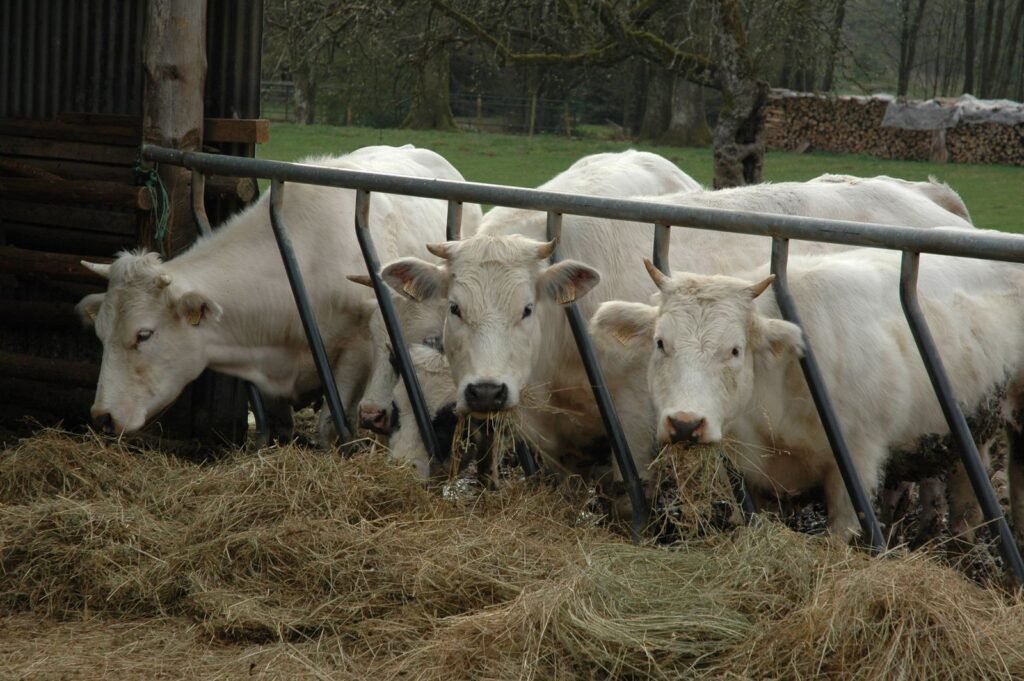
9. Drought Feeding
Droughts are part of farming in South Africa, and feeding cattle through one is expensive, so planning ahead saves cattle and money. In the Farmer’s Weekly article, Jan Hoon advises:
- starting the drought feeding plan before animals lose more than 15% of their body weight
- changing rations gradually, because the rumen needs two to three weeks to adapt
- feeding two to three times a week in bigger portions rather than small daily amounts
- keeping weak and strong animals in separate groups, with enough trough space for all
- continuing drought rations for two to three weeks after the rains
He also notes that it is better to keep a smaller number of your best animals well than to neglect the whole herd. Sell or reduce numbers early, before prices fall and cattle lose condition. Thin, stressed cattle are also more vulnerable to disease; our guide to cattle diseases in South Africa covers botulism, which is linked to phosphorus deficiency, along with other diseases.
Common Mistakes When Feeding Cattle
- Overstocking, so there is not enough grass for licks to work.
- Feeding the wrong lick for the season, such as a phosphate lick in winter when cattle need protein.
- Letting cattle gorge on urea licks, or feeding urea without enough water.
- Waiting too long to start drought feeding.
- Changing rations suddenly.
- Running heifers, cows and weaners together, so the young stock miss out.
- Poor water supply, which cuts feed intake.
Choosing a breed that suits your veld also makes feeding cattle easier. Adapted breeds such as the Bonsmara and Brahman are known for doing well on veld in hot areas. Our guide to cattle farming in South Africa covers the rest of the business.
Frequently Asked Questions
What is the best cattle feed for South African veld?
Good grazing is the cheapest cattle feed. Licks fill the gaps: phosphate in summer, protein and phosphate in autumn, and protein in winter.
How much does a cow eat per day?
As a planning figure, a 450 kg animal eats about 10 kg of dry matter a day. Larger, milking cows eat more.
How much water does a cow drink per day?
Roughly 60 litres a day for a 500 kg cow in warm weather, and considerably more for a milking cow or in hot conditions.
What lick should I give cattle in winter?
Usually a protein lick, often containing urea, at about 400 to 600 g a day, depending on the product, your veld and the condition of the cattle.
What lick should I give cattle in summer?
A phosphate and mineral lick, because summer veld usually has enough protein but is often short of phosphorus.
How much urea can cattle eat?
No more than about 100 g per animal per day. Follow the label exactly, because too much urea is poisonous.
Why are my cattle losing weight in winter even with grass?
Dry winter grass is low in protein, so cattle cannot digest it properly. A protein lick helps them use the grass.
When should I start drought feeding?
Before cattle lose more than about 15% of their body weight, and with gradual ration changes.
Final Thoughts
Feeding cattle well in South Africa means working with the seasons: minerals and phosphate in summer, protein and phosphate in autumn, protein in winter, extra energy around calving, and a drought plan before you need it. Add good water, sensible stocking rates and adapted cattle, and your herd will stay productive through the year. If you are building or improving a herd, have a look at our Bonsmara cattle for sale, or send us your requirements and we will get back to you with a written quote, including delivery to your farm.
Looking to buy cattle?
Tell us the breed, age group, quantity and delivery area. We reply with availability, pricing and transport costs, usually within one working day.
DRM LIVE STOCK is a registered South African livestock company (Company No. K2023207798, VAT No. 4640323079) based at 135 Rocklands Rd, Uitenhage Farms, Gqeberha. We supply cattle, goats, sheep and pigs, with delivery across South Africa.