Description
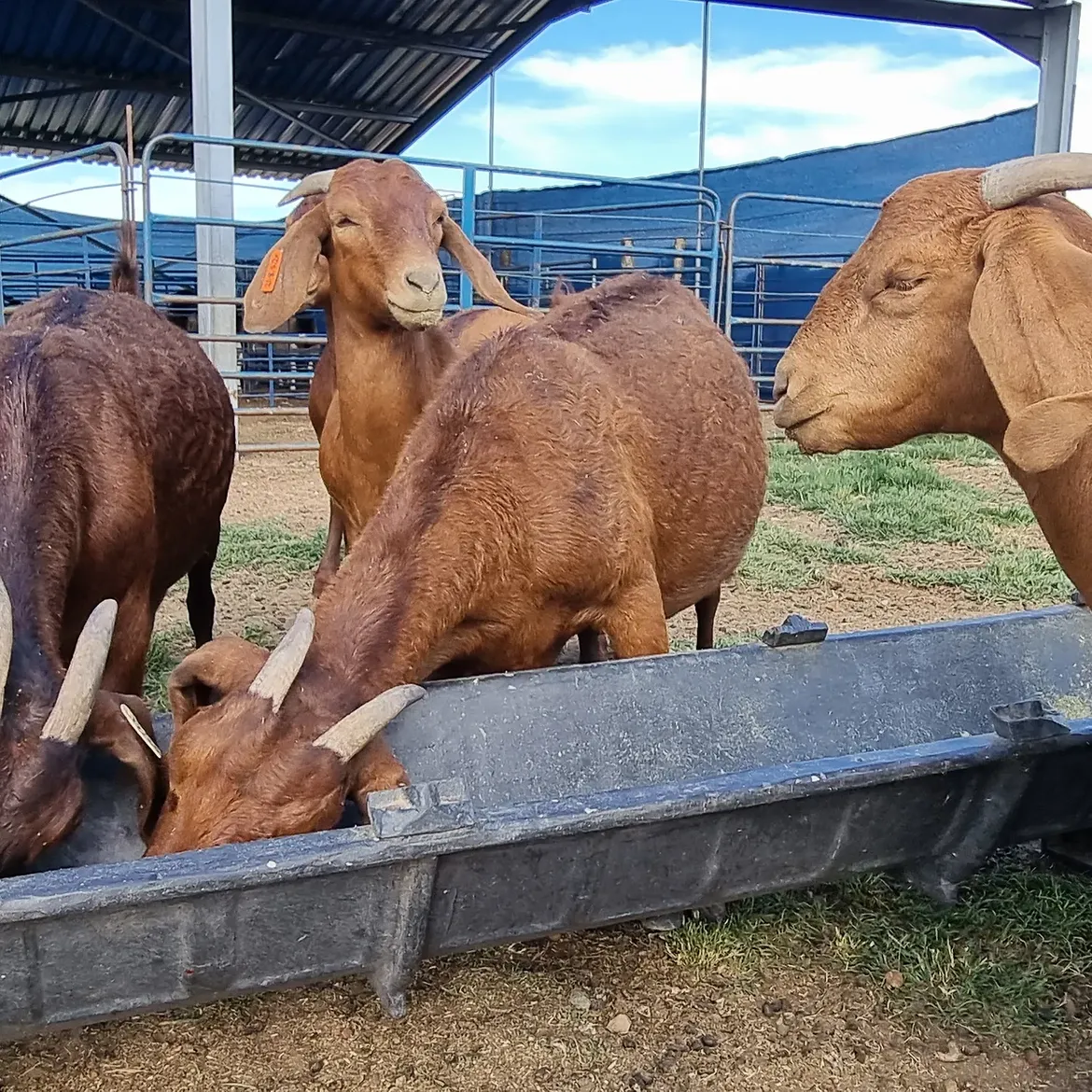
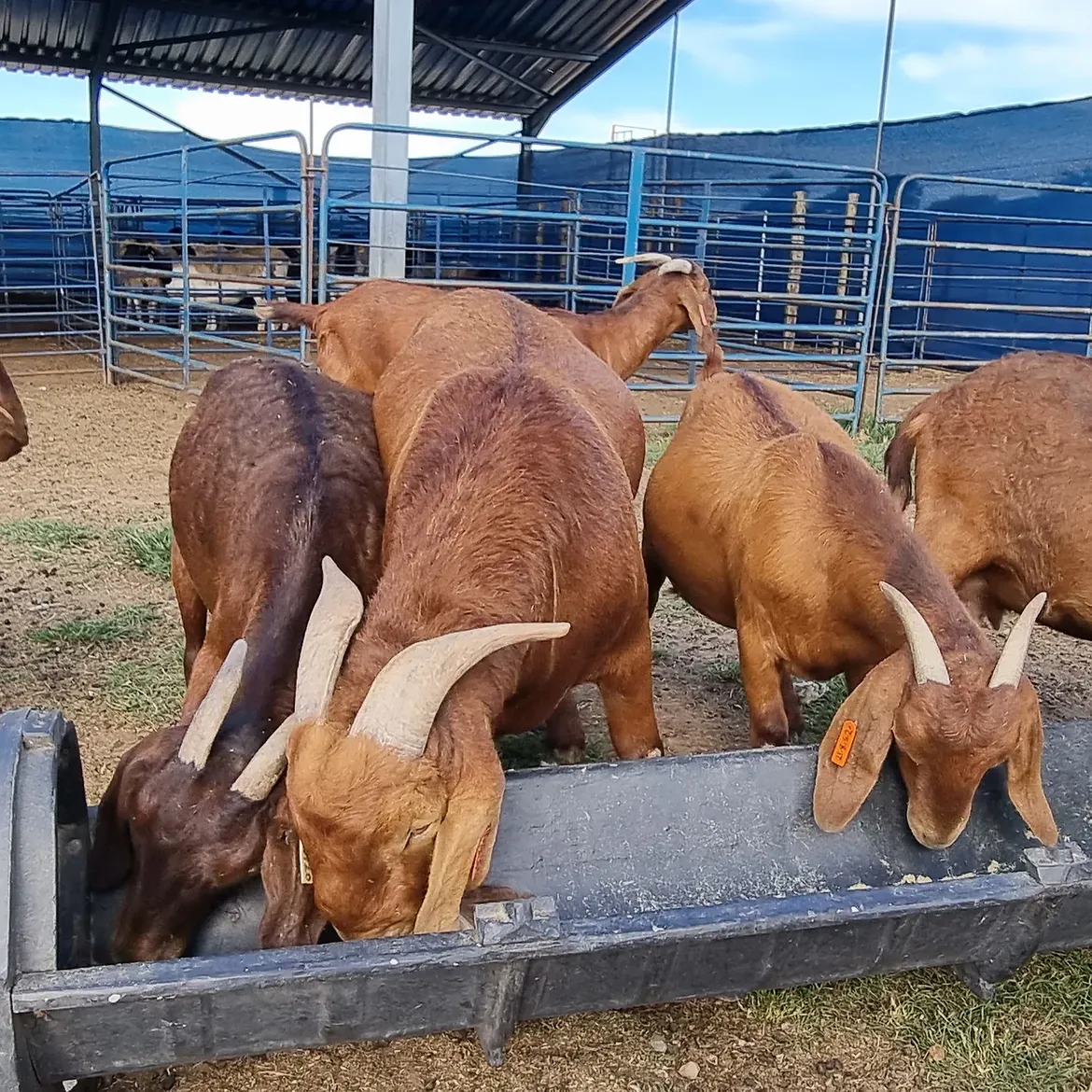
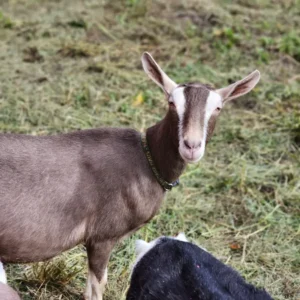
Kalahari Red goats for sale suit farmers who want a meat goat that looks after itself. The Kalahari Red was bred in the dry west of the country to walk far, handle the heat and raise its kids with very little help, and it does exactly that.
DRM Livestock supplies Kalahari Red kids, older kids, yearling does, pregnant does and breeding bucks, with delivery arranged to your farm anywhere in South Africa. Tell us what you need and we will send you a written quote with current prices and transport.
Kalahari Red Goats for Sale: What We Supply
We supply Kalahari Red goats in 5 categories, so you can buy exactly what your herd needs rather than whatever happens to be in the pen.
| Category | Age or stage | Best for |
|---|---|---|
| Kalahari Red kids | 1 to 3 months | Growing out, or raising your own replacements |
| Older Kalahari Red kids | 4 to 11 months | Growing out for the market, or future breeding stock |
| Yearling Kalahari Red does | 12 to 15 months | Building or growing a breeding herd |
| Pregnant Kalahari Red does | In kid | Adding does that kid soon after arrival |
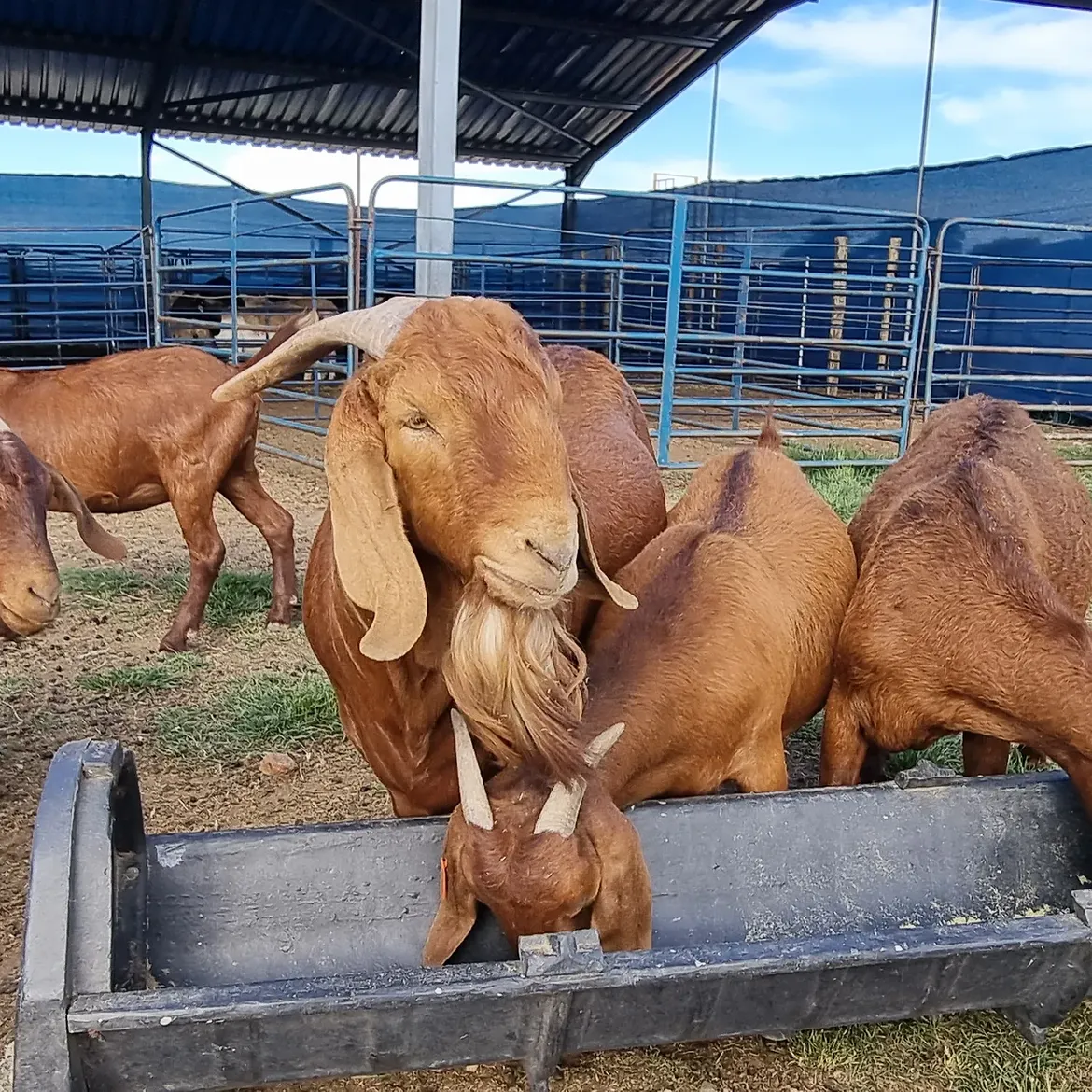
| Kalahari Red breeding bucks | Adult | Breeding hardy, heavy kids |
Prices for our Kalahari Red goats for sale are on request, because they depend on the category, the number of animals and the market at the time. Every written quote includes current prices, availability and transport to your farm, usually within one working day.
Why Farmers Choose Kalahari Red Goats
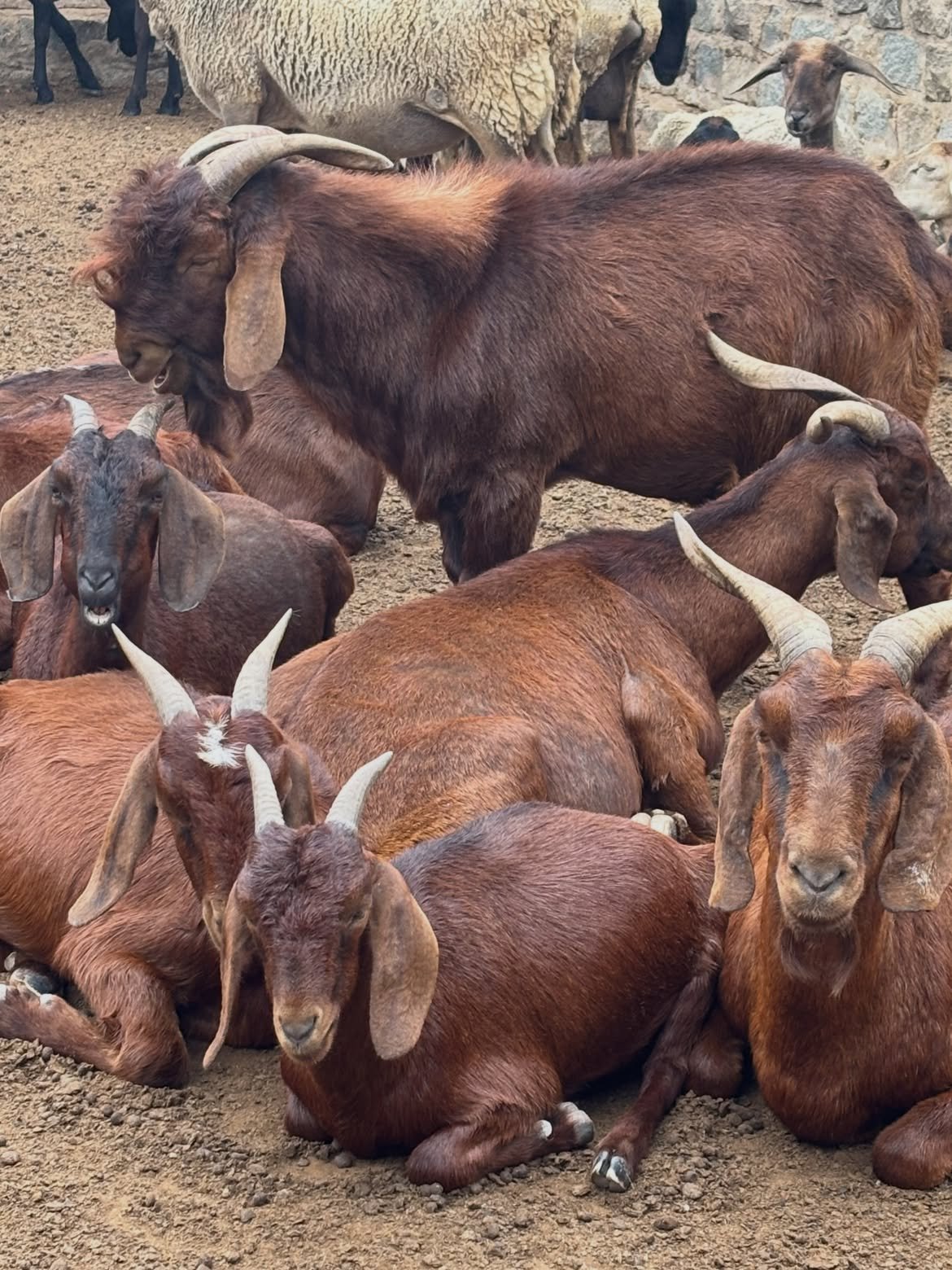
The Kalahari Red is a South African meat breed developed from hardy red goats in the arid parts of the country. It was selected for a solid red coat, good meat and the ability to thrive on extensive veld.
- Hardiness: Kalahari Reds walk long distances, browse widely and hold condition on dry veld.
- Sun and heat tolerance: the dark red coat and pigmented skin protect against strong sun.
- Camouflage: the red colour blends into the veld, which many farmers believe helps protect kids from predators.
- Mothering: does are protective, good mothers that raise their kids with little help.
- Low maintenance: they generally need less supplementary feed and handling than the more intensive meat breeds.
- Meat: a well-muscled carcass close to the Boer goat, on a hardier animal.
Registered goats of this breed are recorded with SA Stud Book, which is also a good place to find breed standards and registered breeders.
Where Kalahari Red Goats Do Best
Kalahari Reds are at their best on extensive, dry and hot farms: the Northern Cape, the Karoo, North West, Limpopo and the drier parts of the Free State and Eastern Cape. They also suit farmers who cannot check their goats every day, because they need less help than most breeds.
Kalahari Red bucks are widely used on indigenous and Boer-type does to add hardiness and colour while keeping good meat.
Choosing the Right Kalahari Red Goats
Not all Kalahari Red goats for sale suit every farm. Match the animal to the job you need it to do.
Kalahari Red kids and older kids
Kids are an affordable start. Look for active, well-grown kids with a good even red coat, bright eyes and no signs of scours or pneumonia.
Yearling Kalahari Red does
Choose does with a long, deep body, sound feet and legs, a correct mouth and a good udder. A doe’s mothering ability is her most valuable trait in an extensive system, so buy from herds where does raise their own kids.
Pregnant Kalahari Red does
Pregnant does give you kids within a few months. Kalahari Red does usually kid easily, but handle them gently and plan transport around their kidding dates.
Kalahari Red bucks
Look for a buck with good muscling, strong legs, two firm, even testicles and a solid red coat. He should be in fit working condition before mating.
What to Check Before You Buy
Before you commit to any Kalahari Red goats for sale, from us or anyone else, check:
- Mouth: teeth should meet the pad squarely. Check the age against the teeth.
- Feet and legs: watch the goat walk. Goats on veld cover a lot of ground every day.
- Condition: feel over the back and ribs. A good coat can hide a thin goat.
- Eyelids: pale inner eyelids can mean a heavy wireworm burden.
- Lumps: hard swellings near the jaw, neck or shoulder can be caseous lymphadenitis, a contagious abscess disease. Avoid those animals.
- Udder on does: two functional teats and a soft udder. Testicles on bucks: two, firm and even.
- Paperwork: the seller’s registered mark, a document of identification, vaccination history and, where required, a veterinary movement permit.
Delivery and Paperwork
Our Kalahari Red goats for sale are delivered to farms across South Africa, including the Eastern Cape, Western Cape, Northern Cape, Free State, KwaZulu-Natal, Gauteng, Mpumalanga, Limpopo and North West. Transport is quoted separately, because it depends on the number of animals, the distance and the route.
Goats are cloven-hoofed, so they fall under the current foot-and-mouth disease movement controls. They may only move with the correct documents and, in affected areas, an official veterinary movement permit. We handle the identification documents with every sale and work with the state vet on movement requirements. If you farm in a bont tick area, ask your vet about heartwater protection before goats from tick-free areas arrive. On arrival, keep new animals apart from your herd for at least 28 days and give them time to settle before you work them.
How to Order Kalahari Red Goats
- Tell us what you need: the number of animals, the category (kids, older kids, yearling does, pregnant does or bucks), and your farm location.
- Get a written quote: we send current prices, availability and transport costs, usually within one working day.
- Confirm and pay: only into our business account, against an official invoice from DRM LIVE STOCK (Company No. K2023207798).
- Delivery: we arrange transport and paperwork to your farm.
Read more on our how to buy page, or request a Kalahari Red quote now.
Frequently Asked Questions
How much do Kalahari Red goats cost in South Africa?
It depends on the category, the number of goats and the market at the time. We send current prices, availability and transport costs with every written quote.
Are Kalahari Red goats better than Boer goats?
They are different. Boer goats usually grow a little faster, while Kalahari Reds are hardier and need less care. On dry, extensive farms many farmers prefer the Kalahari Red.
Are Kalahari Red goats good mothers?
Yes. Kalahari Red does are known for strong mothering and protecting their kids.
Do Kalahari Reds need a lot of supplementary feed?
Generally less than more intensive breeds. They still need a lick in winter and extra feed in droughts and late pregnancy.
Do you deliver Kalahari Red goats to my farm?
Yes. We arrange delivery across South Africa. Transport is quoted separately, based on the number of goats and the distance.
Do the goats come with documents?
Yes. Every animal comes with a document of identification, and we work with the state vet on any movement permits required under the foot-and-mouth controls.
Looking for Kalahari Red Goats for Sale? Request a Quote
If you are ready to buy Kalahari Red goats, request a quote with the number and type of goats you need and your farm location. For more on running a herd, read our guide to goat farming in South Africa, or compare the Boer goat and Savanna. Torn between the two? Read our comparison of Kalahari Red vs Boer goats. For the breed standard, management tips and recent auction prices, see our complete guide to Kalahari Red goats in South Africa, and our guides to goat diseases and feeding goats for health and nutrition.
Reviews
There are no reviews yet.