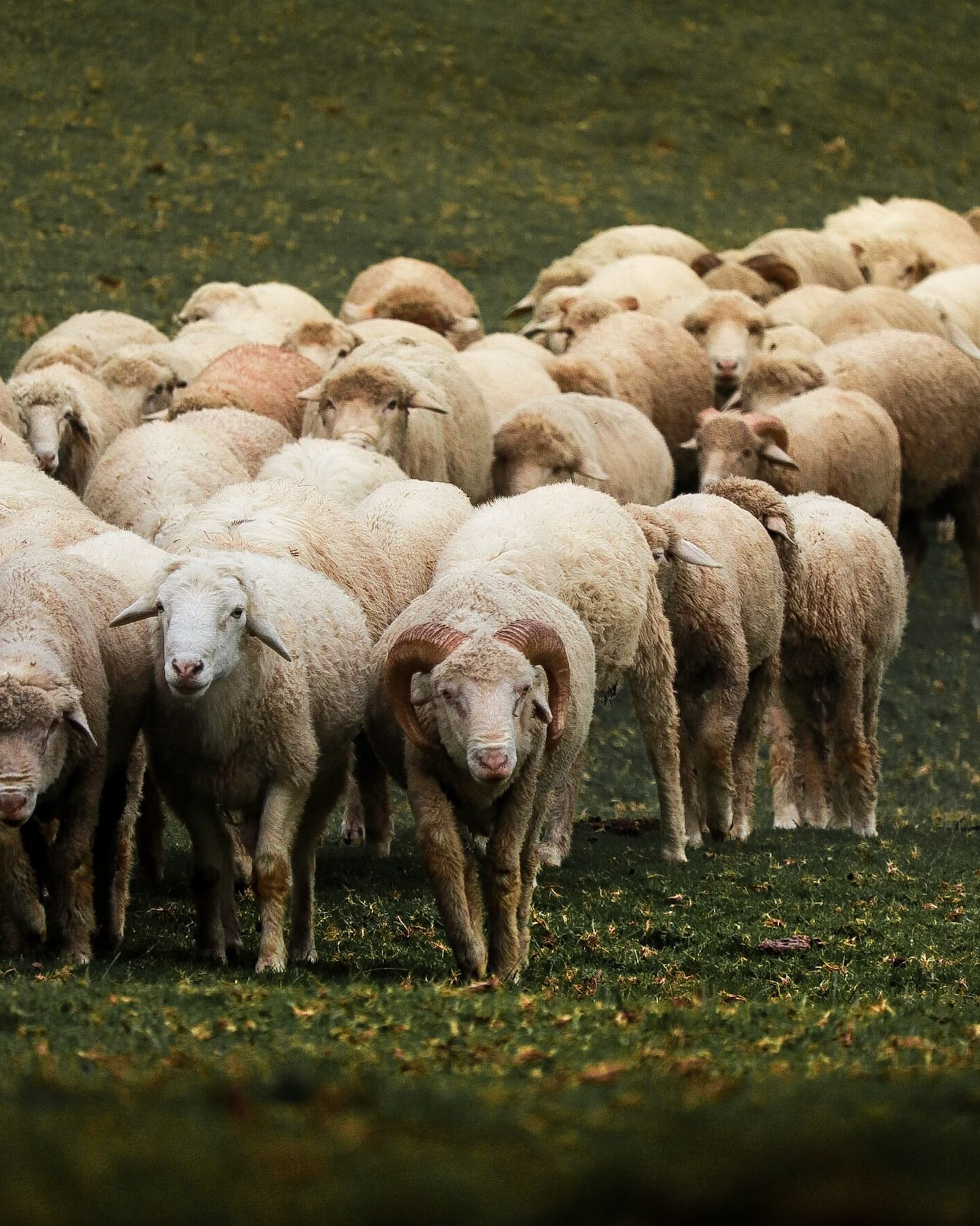
Dohne Merino sheep are one of South Africa’s great breeding success stories. Developed at a research station in the Eastern Cape to cope with tough sourveld, the breed gives farmers two incomes from one ewe: a fine Merino-type wool clip and a fast-growing, well-muscled lamb. Today Dohne Merino genetics are farmed across South Africa and have been exported to Australia, the Falkland Islands and Uruguay.
This guide covers what you need to know about Dohne Merino sheep in South Africa: where the breed comes from, its wool and meat, fertility and mothering, performance recording, where it farms best, what Dohne Merino rams and ewes cost in 2026, and what to check before you buy.
Dohne Merino Sheep at a Glance
| Trait | Dohne Merino |
|---|---|
| Origin | Dohne Research Station, near Stutterheim, Eastern Cape |
| Developed from | German Mutton Merino rams crossed with Merino ewes, from 1939 |
| Breed society founded | 1966, with about 2,500 ewes |
| Type | Dual-purpose: fine wool and meat |
| Wool | Merino-type wool, often about 18 to 21 micron |
| Breeding | Non-seasonal; accelerated lambing possible |
| Recording | Compulsory performance testing for registered breeders |
1. Where the Dohne Merino Comes From
Dohne Merino sheep were bred for a specific job. According to the Dohne Merino Breed Society, the first crosses between German Mutton Merino rams and Merino ewes were made in 1939 at the Dohne Research Station near Stutterheim, under the station’s director, Koot Kotze. The aim was a hardy, easy-care woolled sheep with high fertility and good growth under the harsh sourveld conditions of the Eastern Cape.
The breed society was formed in 1966 with only about 2,500 ewes. From the start it took a scientific approach: performance testing became compulsory for all breeders, shows were abolished, and the society introduced sire referencing and estimated breeding values (EBVs). Embryos were later exported to Australia and the Falkland Islands, leading to breed societies in Australia and Uruguay.
2. Dohne Merino Wool
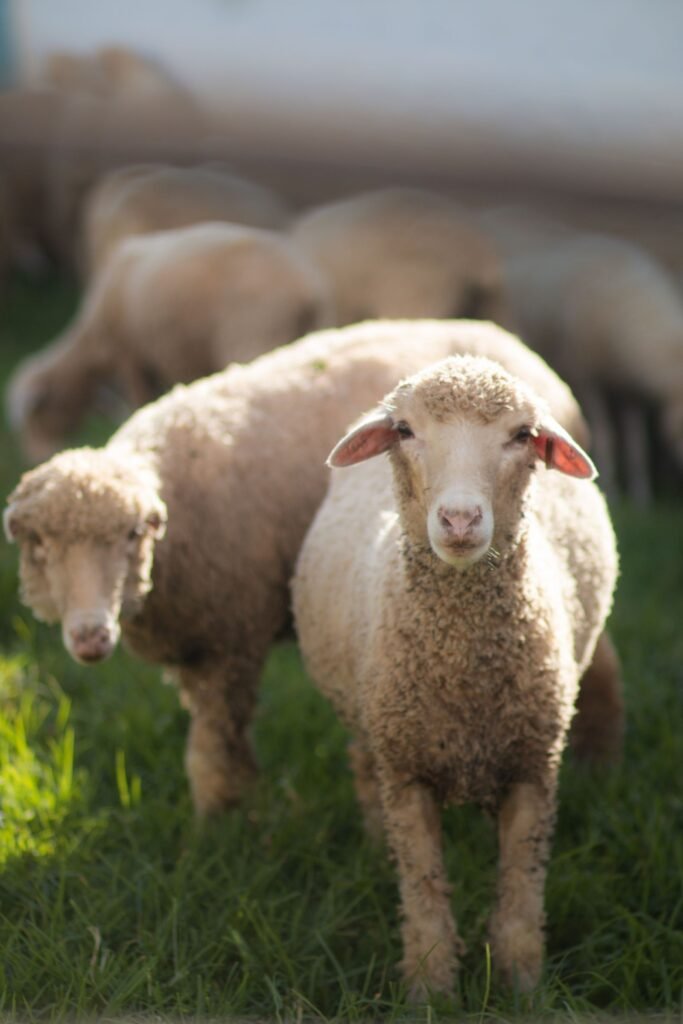
Dohne Merino sheep grow Merino-type wool, so it is sold through the normal wool market and earns a proper wool cheque. Dohne Merino Australia’s practical guide describes an average fleece of about 5 to 6 kg of 18 to 21 micron wool, with a staple length of about 90 to 110 mm. South African flocks vary, and the best studs have selected hard for fine wool: the Potberg Dohne stud near Bredasdorp reported rams testing at 14 and 15 micron at 12 months old, according to Farmer’s Weekly in September 2026.
The Australian society also notes that the breed has a naturally bare breech, which reduces the risk of blowfly strike. As with any wool sheep, you still need to shear, crutch and watch for flies. Some Dohne flocks shear about every eight months.
3. Meat and Growth
This is where the Dohne Merino differs most from a pure Merino. Its German Mutton Merino blood gives it a bigger frame, faster growth and a better carcass. Dohne Merino Australia reports lamb growth of up to 450 g a day under good conditions and describes the carcass as lean and high yielding.
A South African trial on the Langgewens research farm in the Swartland, published by the Association for the Advancement of Animal Breeding and Genetics, compared Dohne Merino and Merino ewes run together from 2007 to 2014. The Dohne Merino ewes weighed about 72.6 kg at mating against 60.7 kg for the Merinos, and they weaned about 48.0 kg of lamb per ewe lambed against 40.5 kg. Our comparison of Merino vs Dohne Merino covers the full trial results.
4. Fertility and Mothering
Fertility is one of the main reasons farmers choose Dohne Merino sheep, and it was part of the breeding goal from the beginning. The breed is a non-seasonal breeder, so it can be mated at most times of the year and suits accelerated lambing systems. Dohne Merino Australia notes that some breeders report up to 70% of ewes conceiving again with lambs at foot, and that maiden ewes lambing in autumn can reach up to 120%.
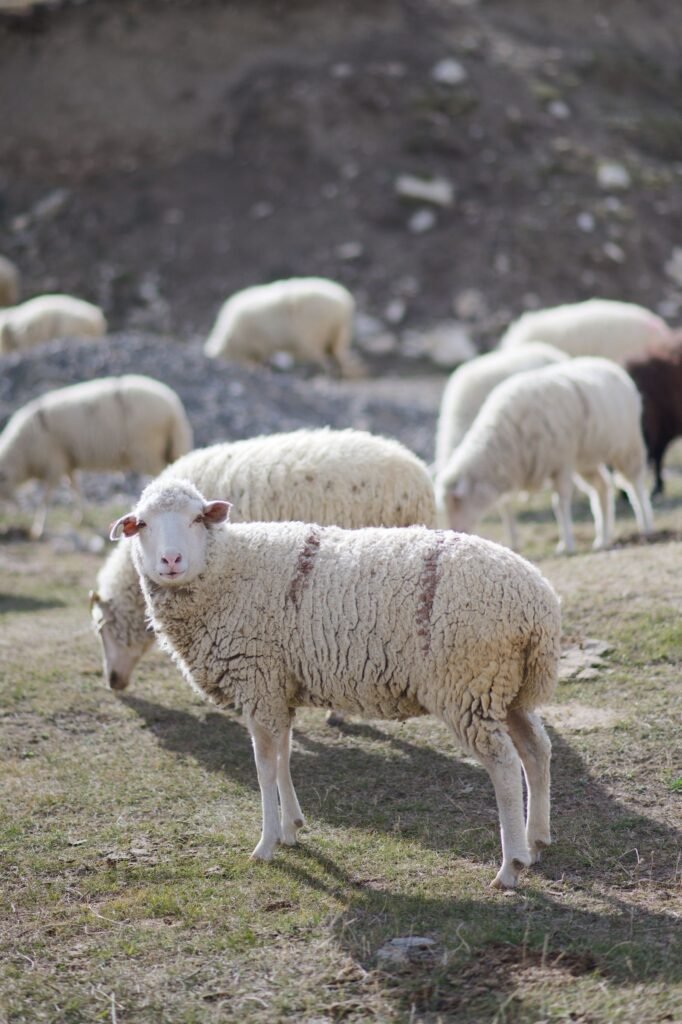
Individual South African studs report strong figures too. The Potberg stud told Farmer’s Weekly that its ewes reach a lambing percentage above 150%, with lamb losses of about 5% between lambing and weaning and three lambing seasons a year across the flock. Its top five ewes averaged 88.7 kg of lamb weaned per season from 2020 to 2025. These are one well-managed stud’s figures, not a breed average, but they show what the Dohne Merino can do. Our guide to sheep breeding covers mating, scanning and lambing management.
5. Performance Recording and Genetics
The Dohne Merino has one of the strongest performance-recording cultures of any South African sheep breed. Registered breeders record traits such as body weight, fleece weight and fibre diameter, and the breed uses estimated breeding values to compare animals across flocks. The Potberg stud, for example, uses SA Stud Book’s Logix database and BLUP figures to choose breeding animals.
For anyone buying Dohne Merino sheep, this is a real advantage. When you buy a Dohne Merino ram from a registered stud, you can usually see his breeding values for growth, wool weight and fineness, rather than judging him on looks alone. Ask for these figures every time.
6. Where the Dohne Merino Farms Best
Dohne Merino sheep were bred on Eastern Cape sourveld and does well in the higher-rainfall grassland and mixed farming areas, as well as in the Western Cape, the Free State and parts of the Northern Cape. Farmer’s Weekly quotes Dohne breeders who say the breed performs consistently in good and poor seasons, and the Potberg stud reported an excellent lambing season after one of the driest summers it had experienced.
Like all wool sheep, Dohne Merino sheep are less suited to very hot, humid areas with heavy fly pressure, where a hair breed such as the Dorper may be easier. On sourveld, Dohne flocks need a good winter lick programme. Our guide to feeding sheep covers licks and flushing.
7. Dohne Merino Prices in 2026
Prices vary with the stud, the season and the wool and lamb markets. Recent production auctions reported by African Farming give a good guide:
| Auction (2026) | Rams sold | Average | Top price |
|---|---|---|---|
| All-in-One Crux, Edenburg (5 February) | 65 | R13,269 | R60,000 |
| Weska, Bredasdorp (31 July) | 83 | R18,169 | R71,000 |
| Mullersvlei, Calvinia (26 August) | 42 | R12,214 | R22,000 |
| FEM, Burgersdorp district (September) | 40 | R17,725 | R65,000 |
At the All-in-One Crux sale, ewes also sold well: 49 two-tooth ewes averaged R2,850, 260 four-tooth to full-mouth ewes averaged R2,900 and 315 weaned ewe lambs averaged R2,250. The Weska and Calvinia figures come from African Farming reports on the Weska auction and the Calvinia ram auction. For wider market prices, see our guide to sheep prices in South Africa.
8. Managing a Dohne Merino Flock
Dohne Merino sheep are easy-care by wool sheep standards, but they still need a planned year. A typical management calendar includes:
- Mating. Because the breed is non-seasonal, you can choose a mating season that puts lambing on your best grazing, or run an accelerated system if your veld and feed allow it. Flush ewes before mating and check rams for fertility well in advance.
- Scanning. Scan ewes so you can feed twin-bearing ewes better in late pregnancy. Twins are common in well-fed Dohne flocks, and twin ewes need extra feed and shelter.
- Lambing. Lamb in sheltered camps, and keep ewes and lambs undisturbed for the first few days so they bond.
- Shearing and crutching. Plan shearing around mating and lambing, and crutch before lambing and in high-risk fly months.
- Health. Run a vaccination and worm-control programme with your vet, and watch for blowfly strike, footrot and internal parasites, especially in wetter areas.
- Records. Weigh and record lambs at weaning, and use the figures to choose replacement ewes and cull poor producers.
9. Crossbreeding With Dohne Merino Ewes
Dohne Merino ewes also make a useful base for crossbreeding. Because they are fertile, milky and grow good wool, some commercial farmers mate part of the flock to a meat breed ram to produce fast-growing slaughter lambs, while keeping the rest pure to breed replacement ewes. Our guide to Ile de France sheep explains how an Ile de France ram on Merino-type ewes adds growth and muscle to the lambs.
The trade-off is that crossbred lambs are usually sold for slaughter, not kept as breeding ewes, because their wool and type are less uniform. Keep enough pure Dohne Merino sheep mated to Dohne rams to replace your ewes, and buy rams with good breeding values so the pure flock keeps improving.
10. Buying Dohne Merino Sheep: What to Check
- Records. Ask for breeding values or performance figures for body weight, fleece weight and fibre diameter, especially for rams.
- Wool. Look for even, well-crimped white wool and ask for fleece test results.
- Conformation. Check for a correct mouth, sound feet and legs, a long, well-muscled body, and a good udder on ewes and sound testicles on rams.
- Adaptation. Sheep raised in conditions like yours settle faster.
- Health. Ask about vaccinations, worm control and any history of diseases such as footrot or sheep scab, and check current movement rules. Our guide to sheep diseases in South Africa covers the main risks.
Frequently Asked Questions
What is a Dohne Merino?
A South African dual-purpose sheep breed developed from 1939 by crossing German Mutton Merino rams with Merino ewes, bred for fine wool and good lamb production on sourveld.
Is the Dohne Merino a wool or meat breed?
Both. It grows Merino-type wool and produces a bigger, faster-growing lamb than a pure Merino.
Where was the Dohne Merino developed?
At the Dohne Research Station near Stutterheim in the Eastern Cape.
How fine is Dohne Merino wool?
Dohne Merino Australia gives a typical range of about 18 to 21 micron, and some South African studs breed considerably finer wool.
Can Dohne Merino ewes lamb more than once a year?
The breed is a non-seasonal breeder, so many farmers use accelerated systems, such as three lambings in two years, with good feeding and management.
How much does a Dohne Merino ram cost?
At 2026 production auctions, averages ranged from about R12,000 to R18,000 per ram, with top rams selling for R60,000 to R71,000.
Are Dohne Merino sheep good for beginners?
They can be, especially on sourveld and in mixed farming areas, but as wool sheep they need shearing, crutching and fly control.
Do Dohne Merino sheep need mulesing?
Dohne Merino Australia describes the breed as having a naturally bare breech, so it is bred to be mules-free.
Final Thoughts
The Dohne Merino gives South African farmers the best of two worlds: a fine wool clip and a strong lamb crop from the same ewe, backed by decades of performance recording. It suits farmers on sourveld and in mixed farming areas who want two incomes and are willing to manage a wool sheep. If you are building or improving a flock, have a look at our Dohne Merino sheep for sale, or send us your requirements and we will get back to you with a written quote, including delivery to your farm.
Looking to buy sheep?
Tell us the breed, age group, quantity and delivery area. We reply with availability, pricing and transport costs, usually within one working day.
DRM LIVE STOCK is a registered South African livestock company (Company No. K2023207798, VAT No. 4640323079) based at 135 Rocklands Rd, Uitenhage Farms, Gqeberha. We supply cattle, goats, sheep and pigs, with delivery across South Africa.